Mold in Your Refrigerator: How to Clean It and Stop It for Good
Out of the Mold Editorial Team
Our guides are research-backed and cite EPA, CDC, and peer-reviewed sources. Product reviews are based on hands-on testing, not manufacturer claims. Read our editorial standards.
Affiliate Disclosure: Out of the Mold is reader-supported. As an Amazon Associate, we may earn a commission when you buy through links on this page — at no extra cost to you. Our picks are based on independent standards, manufacturer specifications, and published research, not commissions.
Key Takeaways
- Your fridge isn't too cold for mold. Cladosporium grows at 32°F and Penicillium at 41°F — both are common fridge molds.
- Clean with undiluted white vinegar (60 minutes contact time), then scrub with baking soda paste.
- The door gasket is the #1 overlooked mold hotspot. Clean it monthly with a toothbrush and vinegar solution.
- USDA rule: discard perishables held above 40°F for 2+ hours during power outages. Never taste to check.
- Freezing doesn't kill mold — it just makes spores dormant. They reactivate when temperatures rise.
Yes, mold grows in your refrigerator — even at 37°F. Cold-tolerant species like Cladosporium can grow as low as 32°F, and Penicillium actively colonies at 41°F. The most common causes: forgotten food, a failing door gasket, or a power outage. Clean with undiluted white vinegar (let it sit 60 minutes), scrub with baking soda paste, and dry everything completely. The door gasket is the #1 overlooked mold hotspot — clean it monthly with a toothbrush. Total cleanup takes about an hour.
You opened the fridge and found something growing that definitely wasn't there when you bought groceries last week. Maybe it's fuzzy spots on the back wall, a suspicious smell you can't track down, or black patches around the rubber door seal. Refrigerator mold is more common than most people think — and it's one of the easier mold problems to solve once you know what you're doing.
What surprises most people: your fridge is not too cold for mold. The idea that refrigeration prevents mold is a myth. It slows growth, sure, but multiple mold species thrive at standard refrigerator temperatures. A 2019 study published in the Journal of Environmental Health found active mold colonization in home refrigerators set to normal temperatures, with Penicillium accounting for 29% of airborne fungi and Cladosporium growing at temperatures as low as 32°F.
What Causes Mold in a Refrigerator?
- Expired or forgotten food — The most common cause by far. That leftover takeout from two weeks ago is a mold colony waiting to happen. Spores from one moldy container spread to everything nearby through airflow inside the fridge.
- Power outages — A fridge without power reaches mold- favorable temperatures within 4 hours (door closed). After 24 hours, humidity inside the unpowered unit spikes and mold colonies start forming. After 48–72 hours, visible growth appears. This is a major concern during hurricane season.
- Damaged door gasket — A failing seal lets warm, humid air leak in continuously. The compressor runs more, condensation increases, and the gasket folds themselves become mold breeding grounds. More on this below.
- High humidity in crisper drawers — The crisper is designed to hold moisture for produce freshness, but that same humidity feeds mold if produce starts decaying.
- Spills left uncleaned — Juice, milk, sauce — any organic liquid that sits provides both moisture and nutrients for mold growth.
- Old water filter — A clogged or expired water filter can harbor mold and bacteria. Most manufacturers recommend replacement every 6 months.
Is Refrigerator Mold Dangerous?
For healthy adults, fridge surface mold is more gross than dangerous. But it's not harmless either.
Mold on food is the real concern. Some species produce mycotoxins — toxic compounds that can cause nausea, vomiting, and more serious effects with repeated exposure. The USDA is unambiguous: don't eat food with visible mold unless it's a type you can safely trim (hard cheese, firm vegetables — see the chart below).
Mold on fridge surfaces(walls, shelves, gasket) doesn't directly contact your food in most cases, but it releases spores into the air inside the fridge that settle on everything. If you're immunocompromised, elderly, or an infant, the risk is higher.
For detailed health guidance, see the CDC's mold and health resources.
Moldy Food: What to Toss vs. What to Trim
The USDA provides clear guidance here, and it's not "just cut the mold off." It depends on the food type:
| Food | Action | Why |
|---|---|---|
| Hard cheese (cheddar, Parmesan, Swiss) | Trim — cut 1 inch around and below mold | Dense structure prevents mold root penetration |
| Firm vegetables (cabbage, bell peppers, carrots) | Trim — cut 1 inch around and below mold | Low moisture, firm texture limits spread |
| Hard salami, dry-cured meats | Scrub off surface mold | Surface mold is normal in curing process |
| Soft cheese (Brie, cream cheese, ricotta) | Discard | High moisture allows mold to spread throughout |
| Bread, baked goods | Discard entire item | Porous — mold roots penetrate the whole loaf |
| Soft fruit (berries, peaches, grapes) | Discard | High moisture and sugar content, spores spread to adjacent fruit |
| Yogurt, sour cream | Discard | Surface mold has already contaminated below |
| Jams, jellies | Discard | Mycotoxins spread below the surface in jams |
| Cooked food, leftovers, lunch meat | Discard | When in doubt, throw it out |
Don't sniff moldy food.Bringing it to your nose deliberately inhales concentrated spores. If it looks moldy, toss it. You don't need to confirm with your nose. For more on identifying mold by smell, see our mold smell identification guide.
How to Clean Mold from Your Refrigerator (Step-by-Step)
- Unplug the refrigerator.Safety first — you'll be working with liquids around electrical components. Also makes it easier to access the back wall and drip pan.
- Remove all food. Inspect everything. Discard anything contaminated or past its use-by date. Put surviving food in a cooler with ice packs — this cleanup takes about an hour.
- Remove shelves, drawers, and bins. Take them all out. Wash in the sink with a solution of 1 tablespoon baking soda per quart of warm water. Scrub with a soft sponge. Let them air dry completely before reinstalling.
- Spray interior with undiluted white vinegar. Cover all surfaces — walls, ceiling, floor, and all shelf tracks. Let it sit for 60 minutes minimum. Vinegar at 5% acetic acid kills roughly 82% of mold species and is food-safe (unlike bleach-based cleaners). See our vinegar mold guide for the full science.
- Scrub with baking soda paste. Mix 2 tablespoons of baking soda with enough water to make a thick paste. Apply to any stubborn spots and scrub with a soft brush. Baking soda is a mild abrasive that removes mold residue without scratching fridge surfaces.
- Clean the door gasket thoroughly.This is the step most people skip, and it's why mold comes back. Use an old toothbrush dipped in baking soda solution to get into every fold and crevice of the rubber seal. The gasket traps moisture, food particles, and condensation — prime mold real estate.
- Wipe down with clean water. Remove all vinegar and baking soda residue with a clean, damp cloth.
- Dry everything completely. Wipe all surfaces with a dry cloth. Leave the door open for 30–60 minutes to air out. Moisture left behind restarts the cycle.
- Replace the water filter if it's overdue. Most should be swapped every 6 months. A clogged filter can harbor mold colonies.
- Place an open box of baking soda inside. Classic trick for a reason — it absorbs moisture and odors continuously. Replace every 30 days.
For residual odor that won't go away after cleaning, try leaving the fridge unplugged and open with activated charcoal bags or crumpled newspaper inside for 24–48 hours. Both absorb stubborn odors better than baking soda alone. In extreme cases (post-hurricane cleanup, fridge left closed for weeks), you may need to replace shelves and drawers entirely if the smell has permeated the plastic. For techniques on removing mold from other surfaces and materials, see our complete mold removal guide.
Mold After a Power Outage
Power outages are the #1 cause of severe refrigerator mold. Here's the timeline:
| Time Without Power | What's Happening | Action Needed |
|---|---|---|
| 0–4 hours | Fridge maintains safe temp (below 40°F) if door stays closed | Keep doors closed. Don't peek. |
| 4+ hours | Perishables enter danger zone (40–140°F). Bacteria multiply rapidly. | Discard perishables held above 40°F for 2+ hours |
| 24 hours | Humidity spikes. Mold germination begins on damp surfaces. | Remove all food. Clean interior surfaces. |
| 48–72 hours | Visible mold colonies forming on food and surfaces. | Full deep clean required. Discard all perishables. |
| 1–2 weeks | Severe mold colonization. Gaskets, drains, and all surfaces affected. | Complete teardown clean. May need shelf/drawer replacement. |
The USDA's rule is simple: discard any perishable food that has been above 40°F for 2 or more hours.Never taste food to determine safety — some bacteria and mycotoxins cause illness at levels you can't detect by taste or smell.
If you live in a hurricane-prone area, this scenario plays out every season. Our hurricane season 2026 mold prevention guide covers the full protocol — including what to buy before the storm and the 48-hour post-flood response timeline.
Mold in the Refrigerator Door Gasket
The door gasket is the single most overlooked mold hotspot in any kitchen. Those rubber folds trap moisture, crumbs, and condensation in a dark, warm-ish microenvironment — exactly what mold needs.
Cleaning the Gasket
Mix 1:1 white vinegar and water. Dip an old toothbrush in the solution and scrub every fold, groove, and crevice. Pay special attention to the bottom gasket — gravity pulls moisture and debris there. Let the vinegar sit for 10 minutes to break down mold, then wipe clean. Don't use bleach — it degrades rubber over time, which creates cracks where more mold hides.
For gel-based gasket cleaners that stay put on vertical surfaces, look at products like ACTIVE Mold Stain Remover Gel or HIHWEM Mold Remover Gel — apply evenly, wait 3–10 hours, then rinse.
The Dollar Bill Test
Close the door on a dollar bill. If you can pull it out easily, the gasket isn't sealing properly. A poor seal means warm air leaking in, more condensation, higher energy bills, and — you guessed it — more mold.
When to Replace the Gasket
Replace it if the rubber is cracked, warped, torn, or fails the dollar bill test even after cleaning. A replacement gasket costs $50–$75 for the partand takes about 30 minutes to install yourself. Professional installation runs $100–$400 depending on the fridge brand. It's a worthwhile investment — a bad gasket increases energy costs, forces the compressor to overwork, and creates a permanent mold-friendly environment.
Common Mold Species Found in Refrigerators
Your fridge isn't hosting random mold — specific mold species are adapted to cold conditions. Research from airborne fungi studies in food storage refrigerators identified these as the most common:
- Penicillium (29% of fridge fungi) — The blue-green mold on bread and cheese. Grows actively at 41°F. Some species produce mycotoxins; others are used to make the penicillin you take for infections and the blue in blue cheese.
- Aspergillus (12%) — Various colors. Most strains prefer warmer temperatures but some tolerate fridge conditions. A few produce aflatoxins (carcinogenic at high exposure). For more on this genus, see our green mold guide.
- Mucor (9%) — White to gray fuzzy mold found on meat, poultry, and dairy products.
- Cladosporium (8%)— The cold champion. Grows as low as 32°F. Appears dark green to black. Causes "thread mold" on vacuum-packed cheese. This is the species most likely growing on your fridge walls and gasket.
- Botrytis cinerea — Gray mold on berries and grapes. If your strawberries go gray-fuzzy in the fridge, this is the culprit.
Key fact: Freezing does not kill mold. It makes spores dormant. Once temperatures rise, they reactivate and resume growing. To actually kill mold, you need sustained temperatures of 140–160°F — which is why cleaning products (not temperature) are your weapon.
How to Prevent Refrigerator Mold
- Set the temperature to 37–38°F.Not just "below 40°F" — that's the maximum safe temperature. Aim for the lower end of the USDA range to slow mold growth further.
- Check expiration dates weekly. A 60-second fridge audit every Sunday prevents the forgotten-leftovers scenario that causes most fridge mold. Use leftovers within 3–4 days per USDA guidelines.
- Store food in airtight containers. This is the single most effective prevention method. Airtight containers prevent spores from one item spreading to others and reduce moisture release inside the fridge.
- Clean spills immediately. Any organic liquid left on a shelf is mold food. Wipe it up as soon as it happens.
- Clean the gasket monthly. A quick vinegar wipe of the door seal takes 5 minutes and prevents the #1 mold hotspot from colonizing.
- Replace the water filter every 6 months. Mark the date on a calendar or set a phone reminder. Overdue filters harbor both mold and bacteria.
- Keep 1–2 inches of clearance around the fridge. Airflow around the unit helps the compressor and condenser work efficiently, reducing condensation inside.
- Keep a box of baking soda inside. Replace it every 30 days. It absorbs moisture and odors — cheap insurance against mold-friendly conditions.
Concrobium Mold Control
Concrobium
$10–15
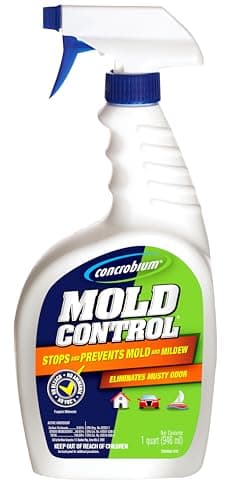
A patented, EPA-registered mold control solution that kills mold without bleach, ammonia, or VOCs. The tri-salt polymer formula crushes mold spores as it dries and leaves an invisible antimicrobial barrier to prevent regrowth. Safe for indoor use on virtually any surface.
Pros
- Non-toxic, no bleach or ammonia
- Kills mold and prevents regrowth
- Safe for use around children and pets
Cons
- Does not remove existing mold stains
- Takes longer to work than bleach-based products
- May require multiple applications for severe infestations
For the broader context on mold in your home beyond the fridge, our black mold removal guide covers the fundamentals of moisture control, prevention, and when to bring in a pro. And if you're dealing with mold in other kitchen areas, check our hydrogen peroxide for mold guide — peroxide is the safest kitchen-surface mold killer since it breaks down to water and oxygen.
Dealing With Mold Right Now?
Our step-by-step mold removal guide walks you through testing your home, choosing the right products, and knowing when a job is too big for DIY.
Read the Removal GuideFrequently Asked Questions
Can refrigerator mold spread to other food?
Yes. Mold releases spores that travel through the air inside your fridge and settle on other surfaces and food items. One moldy container can contaminate adjacent items within days. This is why airtight containers are so important — they contain spores to the original item rather than letting them spread throughout the fridge.
Should I throw away my refrigerator if it has mold?
Almost never. Fridge mold is a cleaning problem, not a replacement problem. Even severe post-power-outage mold can be cleaned with vinegar, baking soda, and thorough drying. The only scenario where replacement might be warranted: if the evaporator coils or internal drain system are contaminated beyond accessible cleaning, and the fridge is already 10+ years old, it may be more cost-effective to replace than to pay for professional appliance service.
Can mold grow in a freezer?
Mold doesn't actively grow at freezer temperatures (0°F / -18°C), but spores survive indefinitely in a dormant state. If your freezer loses power and warms up, those dormant spores reactivate and begin growing. Mold that was already present on food before freezing remains on the food — freezing preserves spores rather than killing them.
What temperature kills mold in a refrigerator?
No refrigerator temperature kills mold. Even the coldest fridge setting (33–35°F) only slows growth — Cladosporiumgrows at 32°F. You need sustained temperatures of 140–160°F to actually kill mold spores by denaturing their proteins. That's why you need cleaning agents (vinegar, hydrogen peroxide, commercial products) rather than relying on cold to do the job.
How do I get mold smell out of my refrigerator?
Clean with vinegar first, then scrub with baking soda. After cleaning, place an open box of baking soda, activated charcoal bags, or crumpled newspaper inside with the door closed for 24–48 hours. For stubborn smells, unplug the fridge, leave the door open, and let it air out overnight. If the odor persists after two cleaning cycles, the mold may be in the drip pan (under the fridge) or in drainage tubes you can't easily access.
Is black mold in a fridge dangerous?
Dark-colored mold in your fridge is almost certainly Cladosporium or Aspergillus niger, not the Stachybotrys chartarum that people worry about. Stachybotrysrequires chronically saturated cellulose material (drywall, wood) to grow — conditions that don't exist inside a refrigerator. The mold in your fridge is still worth removing, but it's not the "toxic black mold" scenario. For more on this distinction, see our black mold guide.
Frequently Asked Questions
Can refrigerator mold spread to other food?
Should I throw away my refrigerator if it has mold?
Can mold grow in a freezer?
What temperature kills mold in a refrigerator?
How do I get mold smell out of my refrigerator?
Is black mold in a fridge dangerous?
Related Articles
How to Get Rid of Black Mold: DIY Removal Guide
Green Mold: Types, Dangers, and How to Remove It
Mold on Mattress: How to Clean It, When to Replace It
What Does Mold Smell Like? How to Identify Mold by Smell
Hydrogen Peroxide for Mold: Does It Actually Work?
Hurricane Season 2026: How to Prevent and Handle Mold After a Storm
Dealing With Mold Right Now?
Our step-by-step mold removal guide walks you through testing your home, choosing the right products, and knowing when a job is too big for DIY.
Read the Removal Guide