Mold Killer Spray: Which Type Works on Which Surface
Out of the Mold Editorial Team
Our guides are research-backed and cite EPA, CDC, and peer-reviewed sources. Product reviews are based on hands-on testing, not manufacturer claims. Read our editorial standards.
Affiliate Disclosure: Out of the Mold is reader-supported. As an Amazon Associate, we may earn a commission when you buy through links on this page — at no extra cost to you. Our picks are based on real testing and independent standards, not commissions.
Key Takeaways
- Three types of sprays — bleach, tri-salt, botanical — each safe on different surfaces.
- Bleach on drywall or wood is the #1 mistake: it kills surface mold but feeds roots deeper in the material.
- Concrobium's tri-salt polymer physically crushes mold — no chemical resistance possible.
- Botanical (thymol) sprays are the only safe option for natural stone surfaces.
- Always address the moisture source before spraying mold.
There are three types of active ingredients in mold killer sprays, and each one works on different surfaces. Sodium hypochlorite (bleach-based) removes stains fast but fails on porous surfaces. Tri-salt polymers (Concrobium) kill and prevent regrowth on everything. Botanical formulas (Benefect, Mighty Mint) are safest for occupied spaces. The biggest mistake is using bleach on drywall or wood — it kills surface mold but the water content actually feeds mold roots deeper in the material.
The "mold killer spray" label on a bottle tells you almost nothing useful. What matters is the active ingredient, because that determines three things: which surfaces it's safe for, whether it kills or just removes stains, and whether it prevents regrowth or just treats what's there now.
I've watched homeowners spray bleach on moldy drywall, feel satisfied when the stains fade, and then wonder why the mold came back worse two months later. That's because bleach is a sporicidal oxidizer on non-porous surfaces — tile, glass, porcelain — but on porous materials like wood and drywall, the water in the bleach solution feeds the mold roots while only killing the surface layer. The CDC and EPA both note this limitation.
Three Types of Mold Killer Sprays
Every mold spray sold in the U.S. uses one of these active ingredient categories. Understanding the chemistry saves you money and frustration.
Sodium Hypochlorite (Bleach-Based)
How it works: Oxidizes mold cell structures and bleaches melanin pigments — the same dark pigments that make mold stains visible. Professional-strength formulas like RMR-86 use higher concentrations than household bleach (5.25%).
Works best on: Tile, grout, fiberglass, porcelain, sealed concrete — any non-porous surface where stain removal is the primary goal.
Don't use on: Drywall, unfinished wood, fabric, natural stone (marble, granite, travertine), or colored surfaces. It will bleach colors, etch natural stone, and make porous mold problems worse.
Safety: Produces toxic chlorine fumes. Requires N95 respirator with organic vapor cartridges, safety goggles, nitrile gloves, and serious ventilation. Never mix with ammonia (chloramine gas) or acids (chlorine gas). This is non-negotiable.
RMR-86 Instant Mold & Mildew Stain Remover Spray (1 Gallon)
RMR Brands
$25–35
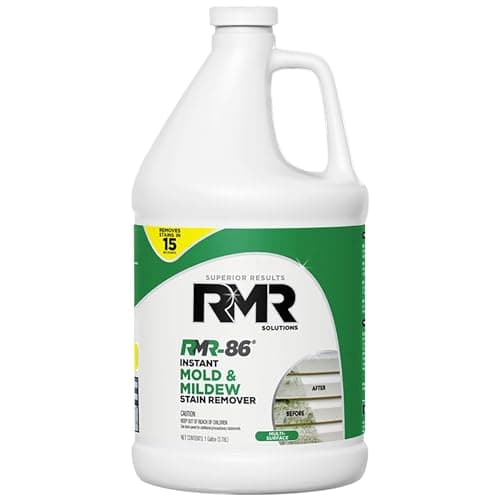
A fast-acting, commercial-strength mold stain remover that eliminates black mold stains on contact. The sodium hypochlorite formula penetrates porous surfaces to lift deep stains without scrubbing. Best used in well-ventilated areas with proper respiratory protection.
Pros
- Removes stains in as little as 15 seconds
- Works on wood, concrete, drywall, and tile
- No scrubbing required
Cons
- Strong bleach-based formula with harsh fumes
- Not safe for fabrics or colored surfaces
- Requires good ventilation and PPE
Tri-Salt Polymers
How it works:A blend of sodium carbonate, sodium bicarbonate, and trisodium phosphate. As the spray dries, the salt crystals physically crush mold spores and hyphae through mechanical action. The dried film continues preventing regrowth — mold can't develop resistance to being physically crushed.
Works best on:Everything. Wood, drywall, concrete, fabric, tile — any surface where you need to kill mold and prevent it from coming back. The only category that's genuinely effective on porous materials.
Limitation:Does not remove stains. Dead mold leaves behind dark pigments that this formula doesn't address. You'll need to follow up with a stain remover or mold-resistant primer for cosmetic purposes.
Safety: Zero VOCs, no fumes, no irritation. EPA-registered with the safest toxicity rating (Category IV). Safe around children and pets once dry. See our full Concrobium review for detailed performance data.
Concrobium Mold Control
Concrobium
$10–15
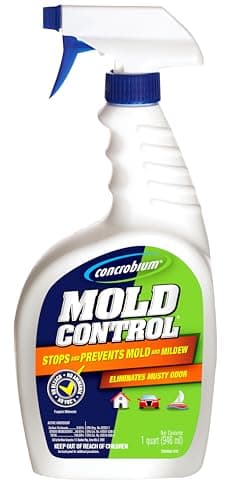
A patented, EPA-registered mold control solution that kills mold without bleach, ammonia, or VOCs. The tri-salt polymer formula crushes mold spores as it dries and leaves an invisible antimicrobial barrier to prevent regrowth. Safe for indoor use on virtually any surface.
Pros
- Non-toxic, no bleach or ammonia
- Kills mold and prevents regrowth
- Safe for use around children and pets
Cons
- Does not remove existing mold stains
- Takes longer to work than bleach-based products
- May require multiple applications for severe infestations
Botanical / Thymol-Based
How it works: Thymol (from thyme oil) disrupts fungal cell membranes, causing cell contents to leak out. Other botanical antimicrobials include citric acid and tea tree oil. Studies in the Journal of Applied Microbiology confirm thymol is effective against Aspergillus, Penicillium, and Cladosporium — see our types of mold guide for identification and health risks of each species.
Works best on:Natural stone (the only safe option for marble and granite), food prep areas, occupied spaces, anywhere you can't tolerate chemical fumes.
Limitation: Slower acting — requires 10+ minutes of contact time vs. seconds for bleach. May need light scrubbing. Limited stain removal on heavy contamination.
Safety: Pleasant thyme scent, no respiratory protection needed, safe around food after rinsing. Benefect Decon 30 is the professional-grade version using the same active ingredient at higher concentration.
Benefect Decon 30 Disinfectant Cleaner
Benefect
$30–45
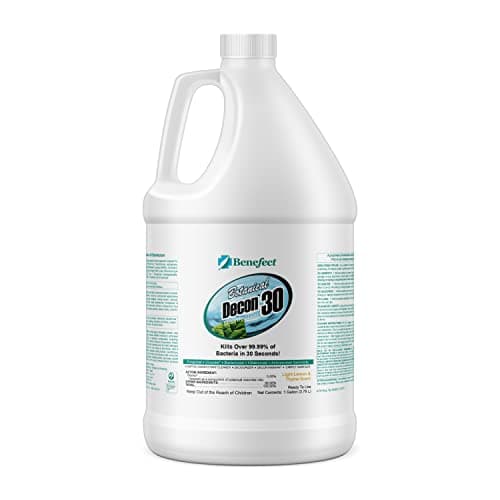
A botanical, hospital-grade disinfectant made from thyme oil that kills 99.99% of bacteria, fungi, and mold. Registered by the EPA as a broad-spectrum disinfectant with no synthetic chemicals, no rinse required, and no re-entry time. The go-to disinfectant for professional mold remediation companies.
Pros
- Botanical, hospital-grade disinfectant
- No rinse required, safe for food-contact surfaces
- Used by professional mold remediators
Cons
- Premium price compared to conventional cleaners
- Thymol scent may be strong for some users
- Not widely available in retail stores
Which Spray for Which Surface
Using the wrong spray on the wrong surface is the most common mold remediation mistake. This guide prevents expensive errors.
| Surface | Recommended | Avoid | Why |
|---|---|---|---|
| Tile & grout (white) | Bleach-based or tri-salt | — | Non-porous, forgiving surface |
| Colored grout | Tri-salt or botanical | Bleach | Bleach strips color |
| Drywall (painted) | Tri-salt | Bleach | Bleach feeds porous mold roots |
| Drywall (raw) | Cut out & replace | All sprays | Mold in paper backing = replacement |
| Unfinished wood | Tri-salt | Bleach | Penetrates wood fibers effectively |
| Natural stone | Botanical only | Bleach, tri-salt | Bleach etches; alkaline salts dull polish |
| Concrete | Any (tri-salt via fogger for large areas) | — | Extremely porous, apply liberally |
| Silicone caulk | Replace it | — | Mold embeds in microscopic texture; $5 fix |
| Fabric | Botanical (washable) or tri-salt (non-washable) | Bleach | Bleach destroys colored fabrics |
For bathroom-specific mold removal, including grout vs. caulk vs. glass treatments, see our shower mold removal guide. For ceiling mold, which typically requires different prep and overhead application techniques, see our bathroom ceiling guide.
Killing Mold vs. Removing Stains: Know the Difference
These are two separate jobs that people constantly conflate.
- Sporicidal sprays (RMR-86, bleach) kill mold spores and remove stains through chemical oxidation. Fast, dramatic results. But no residual protection — mold can recolonize within weeks.
- Fungistatic sprays(Concrobium) kill mold and prevent regrowth by leaving a protective barrier. But they don't touch stains — dead mold pigments remain visible.
The best approach for most situations: kill with a fungistatic spray first, then address stains cosmetically with a mold-killing primer (which also adds another preventive layer). Using only a sporicidal spray without prevention is why mold keeps coming back. For a full comparison of products at every stage of remediation, see our complete mold removal guide.
Safety: The Non-Negotiable Rules
Every mold spray job releases concentrated spores into the air. Disturbing a colony during cleaning can increase airborne spore counts by 10–1,000x. Minimum PPE for any spray application:
- N95 respirator — filters 95% of particles including mold spores (2–20 microns). Upgrade to P100/OV cartridges when using bleach products.
- Sealed goggles — not safety glasses. Mold spores and chemical splash cause severe eye irritation.
- Nitrile gloves — resist chemical degradation better than latex.
- Ventilation — open windows on opposite sides of the room. A box fan pointing out a window works well.
Critical: Never mix two different spray products without rinsing between applications. Bleach + ammonia produces chloramine gas. Bleach + acids produces chlorine gas. Even mixing Concrobium with bleach reduces the effectiveness of both.
For a full breakdown of when DIY spraying is appropriate vs. when to call a professional, see our black mold removal guide. The EPA draws the line at 10 square feet.
When Sprays Aren't Enough
Spray-and-scrub remediation works for accessible surface mold under 10 square feet. Beyond that:
- Large areas (basements, attics) — A mold fogger disperses antimicrobial mist to hard-to-reach surfaces. One gallon of Concrobium in a fogger treats 800–1,200 sq ft in 20 minutes.
- HVAC contamination — Fog through the air intake with the system fan on. See our AC mold guide.
- Behind walls or under floors — No spray reaches hidden mold. You need to open the wall, remove contaminated materials, treat the framing, and rebuild. Our mold on walls guide covers detection and full removal.
Need Professional Mold Removal?
Get free, no-obligation quotes from licensed mold remediation specialists in your area.
Get Free QuotesFrequently Asked Questions
How long does mold killer spray take to work?
Bleach-based sprays like RMR-86 remove stains in 15 seconds to 3 minutes. Concrobium needs 24–48 hours to fully cure its protective barrier. Botanical sprays require 10–15 minutes of contact time. Faster isn't always better — Concrobium's slower drying is what creates its lasting protection.
Can I use mold killer spray on drywall?
Tri-salt sprays (Concrobium): yes, safe and effective on painted drywall. Bleach sprays: not recommended — they kill surface mold but the water content feeds roots in the porous paper. If mold has penetrated through the paper face, cut out and replace that section.
Do I need to wear a mask when using mold spray?
Always. An N95 respirator is the minimum for any mold disturbance. When using bleach-based products, upgrade to a half-face respirator with P100/organic vapor cartridges. For botanical products, an N95 is sufficient.
Frequently Asked Questions
How long does mold killer spray take to work?
Can I use mold killer spray on drywall?
Do I need to wear a mask when using mold spray?
Related Articles
How to Remove Mold with Spray: The Complete 7-Step Process
Mold Removal Products: A Complete Guide to What Works and Why
Concrobium Mold Control Review: What It Does (and What It Won't)
Best Mold Removal Products: What Works for Every Surface & Situation
Does Vinegar Kill Mold? The Science, the Limits, and How to Use It Right
Does Bleach Kill Mold? The EPA Says No — Here's What Actually Works
Need Professional Mold Removal?
Get free, no-obligation quotes from licensed mold remediation specialists in your area.
Get Free Quotes