How to Get Rid of Black Mold: DIY Removal Guide
Out of the Mold Editorial Team
Our guides are research-backed and cite EPA, CDC, and peer-reviewed sources. Product reviews are based on hands-on testing, not manufacturer claims. Read our editorial standards.
Affiliate Disclosure: Out of the Mold is reader-supported. As an Amazon Associate, we may earn a commission when you buy through links on this page — at no extra cost to you. Our picks are based on independent standards, manufacturer specifications, and published research, not commissions.
Key Takeaways
- Fix the moisture source first — removal without addressing the cause is wasted effort.
- White vinegar kills 82% of mold species and penetrates porous surfaces better than bleach.
- The EPA says areas under 10 square feet are safe for DIY; larger areas need a professional.
- Professional black mold remediation costs $2,000–$6,000 depending on severity.
- Most 'black mold' in homes is Cladosporium or Aspergillus, not the toxic Stachybotrys chartarum.
To get rid of black mold, spray undiluted white vinegar directly on the mold, wait 60 minutes, scrub with a stiff brush, and wipe clean. For stubborn stains, use a commercial remover like RMR-86. But here's what most guides skip: kill the moisture source first. Every dollar you spend on removal is wasted if you don't fix the leak, improve ventilation, or address the humidity driving the growth. The EPA says areas under 10 square feet (a 3×3 foot patch) are safe for DIY. Anything bigger — call a pro. Professional remediation runs $1,200–$6,000 depending on severity.
⚡ Quick Assessment — What's Your Situation?
Small patch (<10 sq ft)?
Safe for DIY. You'll need vinegar, an N95 mask, and 2–4 hours.
Jump to DIY steps →Large area or behind walls?
Call a professional. Budget $2,000–$6,000 for remediation.
When to call a pro →Know your surface?
Each surface needs a different approach. We cover 8 surface types.
Go to your surface →"Black mold" has become a catch-all scare term, but here's the reality: most black-colored mold in homes is Cladosporium or Aspergillus niger— common household molds that happen to be dark. They can trigger allergies, but they're not the infamous toxic Stachybotrys chartarum that news stories warn about. Regardless of species, the removal process is the same: gear up, clean it, fix the moisture, and prevent regrowth.
Is It Actually Black Mold? Quick Identification
Color alone tells you almost nothing. Multiple mold species look black, and they range from harmless to concerning. Not all discoloration is even fungal mold — pink mold, for example, is actually a bacterium that requires a completely different removal approach. And yellow mold includes dry rot fungus that can destroy structural wood, while orange mold is often a harmless slime mold that panics people for no reason. For a full color-by-color comparison, see our complete mold identification guide. Here's how to narrow it down without a lab test:
- Cladosporium— The most common "black mold" in homes. Appears olive-green to dark brown/black with a suede-like or powdery texture. Grows on painted walls, fabrics, and wood. Tolerates cooler temperatures and drier conditions than most molds. Generally low risk for healthy people. (It's also one of the most common green mold species.)
- Aspergillus niger— Appears black with a powdery or granular texture. Extremely common — it's the black mold you see on old bread and in soil. Found on damp drywall, around windows, and in HVAC systems. Can trigger allergies and asthma.
- Stachybotrys chartarum — The one people worry about. Greenish-black with a distinctive slimy or wet-looking surface (not powdery). Requires sustained saturation of cellulose materials — chronically wet drywall, wood, or cardboard. Produces mycotoxins linked to severe respiratory problems. Relatively rare compared to Cladosporium and Aspergillus.
The honest answer:you can't reliably identify mold species by looking at it. If you need a definitive ID — for health concerns, insurance claims, or real estate transactions — get a lab test. An ERMI mold test identifies 36 species via DNA analysis and costs about $200. For basic screening, a DIY mold test kit will identify the genus within a week.
For most homeowners, though, the species doesn't change what you do next. The CDC and EPA both say the same thing: remove the mold and fix the moisture source, regardless of type. Don't wait for test results to start remediation on small areas.
Safety Gear You Need (Non-Negotiable)
Mold spores go airborne the second you disturb a colony. Scrubbing without protection is like sanding lead paint without a mask — the cleanup makes the exposure worse than leaving it alone. Gear up before you touch anything.
- N95 respirator — Filters 95% of airborne particles including mold spores. Not a dust mask, not a bandana. An actual NIOSH-approved N95. This is the single most important piece of equipment.
- Safety goggles — Sealed, not vented. Mold spores and cleaning solution in your eyes is painful and potentially dangerous.
- Rubber or nitrile gloves — Protects from both mold contact and chemical exposure from cleaning products.
- Old clothes or Tyvek suit — Wear clothes you can throw away, or use a disposable Tyvek coverall. Mold spores cling to fabric and can spread to other rooms.
At minimum, you need an N95 respirator, sealed goggles, and rubber or nitrile gloves. For larger jobs, add a disposable Tyvek coverall to keep spores off your clothes. Our mold PPE buyer's guide breaks down exactly what to wear by project size, including when to step up from an N95 to a reusable P100.
3M 8511 N95 Particulate Respirator
3M
$20–30
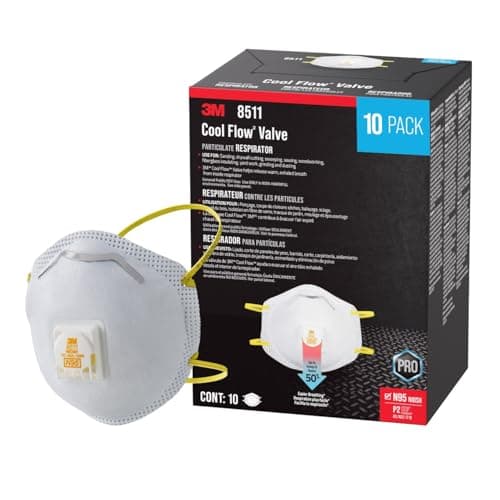
A NIOSH-approved N95 particulate respirator with Cool Flow exhalation valve for comfortable breathing during mold remediation. Filters at least 95% of airborne particles including mold spores. The adjustable M-noseclip and dual-strap design provide a secure seal. OSHA-recommended for mold work.
Pros
- NIOSH-approved N95 filtration
- Cool Flow valve reduces heat buildup
- Adjustable nose clip for secure fit
Cons
- Disposable, not reusable long-term
- Does not protect against chemical fumes or VOCs
- May not fit all face shapes comfortably
DIY Black Mold Removal: Step-by-Step
Before you reach for a spray bottle, answer one question: where is the water coming from? A leaky pipe, condensation on cold surfaces, poor ventilation, a roof leak, groundwater seeping into the basement — mold is a symptom of a moisture problem. Remove the mold without fixing the moisture and it'll be back within weeks. I've seen it happen dozens of times.
Fix the water first. Then proceed with removal.
Method 1: White Vinegar (Best All-Around Choice)
White vinegar is my default recommendation. Research shows it kills approximately 82% of mold species, and — crucially — its acetic acid penetrates porous surfaces like drywall and wood to reach mold roots underneath. Bleach only kills surface mold on non-porous materials. On drywall, bleach is essentially cosmetic — the mold underneath survives and regrows. (For the clean-vs-replace decision on walls specifically, see our mold on drywall guide, and for the cabinet under a leaking kitchen or bathroom sink, our mold under sink walkthrough.)
- Fill a spray bottle with undiluted white vinegar (5% acidity). Don't dilute it — that weakens effectiveness.
- Lay plastic sheeting on the floor to catch drips. Seal adjacent doorways with plastic if possible to prevent spore spread.
- Spray the entire moldy area until visibly wet. Go 6–12 inches beyond the visible edge — mold extends further than what you see.
- Wait 60 minutes. The acid needs time to penetrate and kill roots.
- Scrub with a stiff-bristled brush in small circles. For grout lines, an old toothbrush works well.
- Wipe clean with a damp cloth. Bag and dispose of all cleaning cloths in sealed plastic bags.
- Repeat if staining persists. Deep-set black stains often need 2–3 treatments.
- Dry the area completely — point a fan at it and run for several hours.
Vinegar's main downside is the smell, which dissipates within a few hours. Add a few drops of tea tree oil to the spray bottle for extra antifungal action — tea tree oil is one of the strongest natural fungicides.
Method 2: Hydrogen Peroxide (Best for Painted or Light-Colored Surfaces)
Three percent hydrogen peroxide— the standard brown bottle from any pharmacy — kills mold and lightens stains without damaging paint. It's effective on non-porous and semi-porous surfaces like tile, painted walls, and glass.
- Pour 3% hydrogen peroxide into a spray bottle. Use it straight.
- Spray the mold and let it sit for 10–15 minutes.
- Scrub with a brush, then wipe clean with a damp cloth.
- Dry the area thoroughly.
Critical safety warning: Never mix hydrogen peroxide with vinegar. The combination creates peracetic acid, which can seriously irritate your skin, eyes, and lungs. Use one or the other, never both at the same time. You can alternate between them on separate cleaning sessions, but never combine them in the same spray bottle or apply one while the other is still wet on the surface.
Method 3: Commercial Mold Remover (Best for Stubborn Stains)
When vinegar and peroxide can't cut through deep black stains, a commercial product gets the job done. Two approaches, depending on your priorities:
- For fast stain removal: RMR-86 dissolves black mold stains in as little as 15 seconds with no scrubbing. The sodium hypochlorite formula is powerful but produces harsh fumes — open windows and wear your N95. Not safe for fabrics or colored surfaces.
- For non-toxic treatment: Concrobium Mold Control kills mold using a tri-salt polymer that crushes spores as it dries, then leaves an antimicrobial barrier that prevents regrowth. No bleach, no ammonia, no VOCs — EPA Category IV (safest rating). The trade-off: it kills mold but doesn't remove dark stains. You'll need to prime and repaint after treatment.
| Product | Rating | Price | Best For | Link |
|---|---|---|---|---|
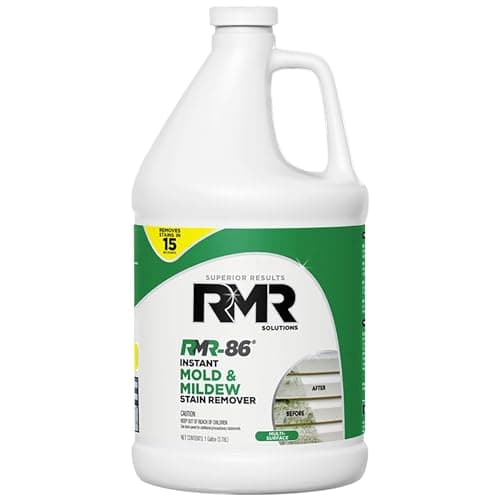 RMR-86 Instant Mold & Mildew Stain Remover Spray (1 Gallon) RMR Brands | 4.4 | $25–35 | Deep mold stains on hard surfaces like bathroom tile, grout, and basement walls | View |
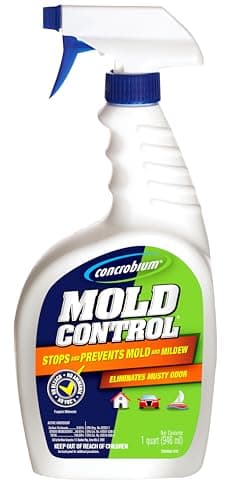 Concrobium Mold Control Concrobium | 4.3 | $10–15 | Families who want a non-toxic solution for killing and preventing mold | View |
For more product options and head-to-head comparisons, see our mold killer spray guide, mold removal spray comparison, our roundup of the best mold removal products for every situation, or our complete mold removal products guide for the full decision framework.
A Note on Bleach
Bleach is the go-to recommendation you'll hear from every hardware store employee. It works on non-porous surfaces like tile and glass. But on porous materials — drywall, wood, concrete — the sodium hypochlorite stays on the surface while the water in the solution soaks deeper, actually feeding subsurface mold growth. The EPA does not recommend bleach for mold remediation on porous surfaces. Stick with vinegar, peroxide, or a purpose-built mold product. For the full science, see our guide on bleach and mold.
Removing Black Mold by Surface Type
Different surfaces need different approaches. Here's what works (and what doesn't) for each:
Walls and Drywall
If the mold is only on the paint surface and the drywall underneath is still firm, spray with vinegar, wait 60 minutes, scrub gently, and repaint with mold-resistant paint over a Zinsser primer.
If the drywall is soft, crumbling, or sagging when you press on it, the mold has penetrated through and the drywall needs to be cut out and replaced. Cut at least 12 inches beyond the visible mold in every direction. For the full wall-by-wall approach (painted drywall, plaster, concrete), see our mold on walls removal guide. This is a more involved project that may require professional help if the affected area exceeds 10 square feet.
Bathroom Ceilings and Tile
Bathroom ceiling mold is almost always a ventilation problem. Vinegar or hydrogen peroxide for the ceiling drywall, bleach solution (1 cup per gallon of water) for tile and grout. For grout that won't come clean, re-grouting is cheaper than you'd think — about $3 per linear foot DIY. See our bathroom ceiling mold removal guide and shower mold removal guide for step-by-step instructions. Mold on a ceiling in another room — a bedroom, kitchen, or living room — usually has a different cause, so see our mold on ceiling guide for room-by-room diagnosis.
Wood Surfaces and Floors
Unfinished wood is porous, so vinegar is your best bet — it penetrates to kill subsurface mold. Sand lightly after cleaning to remove remaining stain. Sealed or painted wood can be treated with hydrogen peroxide or a commercial spray. Never pressure-wash moldy wood — it drives spores deeper into the grain. If the mold has reached your hardwood floors or the subfloor underneath, the approach and costs change significantly — see our mold on wood floor guide for the full restore-vs-replace decision framework.
Carpet
Carpet with mold on the surface (from a spill or leak that was caught quickly) can sometimes be saved — see our full carpet mold removal guide for the save-or-replace decision framework. But if mold has reached the carpet pad or backing, the carpet needs to go. The pad is basically a sponge — once mold gets into it, no amount of cleaning will remove it. Rip it out, treat the subfloor, and replace.
Mattresses and Bedding
Black mold on a mattress is a special case because you're spending 8 hours a night with your face inches from it. Surface mold on spring mattresses can often be cleaned, but memory foam usually needs to be replaced — the foam absorbs spores deep into its structure. See our mold on mattress guide for the full save-or-replace decision framework.
Leather Items
Black mold on leather jackets, bags, shoes, and furniture is usually a surface problem that's fully treatable — but the cleaning method is different from hard surfaces. Never use bleach on leather. Rubbing alcohol and proper conditioning are the way to go. See our leather mold removal guidefor item-by-item instructions and the bloom-vs-mold test that saves you from cleaning something that isn't even mold.
Car Interiors
Black mold in vehicles typically follows a water leak — a clogged sunroof drain, worn door seals, or a spill left uncleaned. The confined space makes DIY removal feasible but the approach differs from household surfaces. See our car mold removal guide for the full process, including seat and carpet treatment.
HVAC Systems and Air Ducts
Mold in your HVAC system distributes spores throughout your entire home every time the system runs. This is one situation where I strongly recommend professional help. If you want to attempt DIY treatment first, a Concrobium fogger run through the air intake can treat ductwork — see our black mold in AC guide for the full process. But be honest with yourself about the severity before going DIY on HVAC mold.
When to Call a Professional
DIY is fine for small areas. But some situations genuinely require a licensed mold remediation company. Here's the line:
- More than 10 square feet of mold— That's the EPA's official DIY threshold, roughly a 3×3 foot patch. Beyond that, containment, HEPA filtration, and professional equipment are needed to prevent spore spread during removal.
- Mold in the HVAC system — Ductwork mold requires specialized equipment to clean without distributing spores throughout the house.
- Structural involvement — If mold has caused wood rot, compromised framing, or saturated insulation inside wall cavities, this is a construction project as much as a cleaning one.
- Recurring mold after two DIY cleanings— If it's coming back, you're missing the moisture source. A professional can find hidden leaks with thermal imaging and moisture meters. If you smell mold but can't see it, it may be behind walls or under flooring.
- Health symptoms — If anyone in the household has worsening respiratory issues, chronic headaches, or allergy symptoms that improve when they leave the house, get professional help promptly.
What Does Professional Remediation Cost?
According to 2026 data from Angi and HomeGuide, professional mold remediation costs $1,200–$3,750 for most projects, with a national average of about $2,300. Cost per square foot runs $10–$25. Black mold specifically can push costs to $2,000–$6,000 because of the additional containment and protective equipment required.
A professional mold inspection before remediation typically adds $250–$350 — worth it for large or uncertain projects. Use our mold removal cost calculator to estimate your specific project.
Dealing With Mold Right Now?
Our step-by-step mold removal guide walks you through testing your home, choosing the right products, and knowing when a job is too big for DIY.
Read the Removal GuidePreventing Black Mold From Coming Back
Mold removal without prevention is a temporary fix. Spores are always present in the air — you can't eliminate them. What you can control is whether your home gives them what they need to grow: moisture, warmth, and an organic food source. If you've had water damage or flooding, our post-flood mold prevention guide covers the critical 48-hour response timeline.
Control Humidity
The single most effective thing you can do. Keep indoor relative humidity below 50% — ideally between 30–50%. A $10 hygrometer from any hardware store lets you monitor this. If your humidity is consistently above 50%, a dehumidifier is one of the best investments you can make. Basements, crawl spaces, and bathrooms without windows are the usual problem areas.
Fix Ventilation
Bathroom exhaust fans should be rated at minimum 1 CFM per square foot of floor space (50 CFM for a 50 sq ft bathroom). Run the fan during every shower and for 30 minutes after. If your fan is loud, it's not getting used — replace it with a quiet model rated under 1.0 sone. Timer or humidity-sensing switches eliminate the "forgot to turn it on" problem.
Use Mold-Resistant Products
After remediation, don't just repaint with standard latex. Prime with Zinsser Mold Killing Primer to neutralize remaining spores, then topcoat with Rust-Oleum Perma-White — it carries a 5-year mold-proof guarantee. See our mold-resistant paint guide for application details.
Zinsser Mold Killing Primer
Zinsser
$18–25
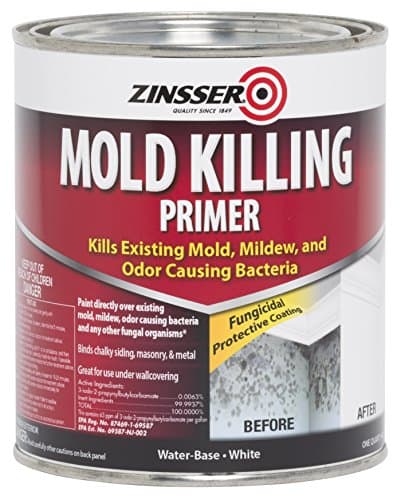
An EPA-registered fungicidal primer that kills existing mold, mildew, and odor-causing bacteria on contact. Creates a mold-resistant barrier on interior and exterior surfaces including drywall, wood, concrete, and masonry. Essential for mold remediation projects before applying topcoat paint.
Pros
- Kills existing mold on contact while priming
- EPA-registered fungicidal protective coating
- Bonds to all interior and exterior surfaces
Cons
- Strong odor during application, requires ventilation
- Water-based formula can raise grain on bare wood
- Must be topcoated with paint for lasting protection
Apply Preventive Coatings
Concrobium Mold Control can be applied to cleaned surfaces as a preventive barrier. For large-area prevention — basements, attics, crawl spaces — a cold foggerdistributes the solution into every crack and crevice, including areas spray alone won't reach.
Inspect Regularly
Check high-risk areas monthly: under sinks, behind toilets, around windows, basement walls, and attic sheathing. Don't forget inside the refrigerator — the door gasket and drip pan are mold magnets that most people overlook. Early mold is a 5-minute vinegar spray. Established mold is a weekend project. Catch it early.
Frequently Asked Questions
Is black mold dangerous?
Most black-colored household mold is Cladosporium or Aspergillus, which can trigger allergies, nasal congestion, and asthma flare-ups but are not severely toxic. The mold people worry about — Stachybotrys chartarum — produces mycotoxins that can cause serious respiratory problems with prolonged exposure. The CDC advises treating all mold the same way: remove it and fix the moisture source. For medical concerns, consult your doctor and see the CDC's mold health guidance.
Can I remove black mold myself?
Yes, for areas under 10 square feet (the EPA's DIY limit). Wear an N95 respirator, goggles, and gloves. Use vinegar or hydrogen peroxide on porous surfaces, a commercial spray for stubborn stains. For areas larger than 10 square feet, mold in HVAC systems, or mold behind walls, hire a professional.
Does bleach kill black mold?
On non-porous surfaces like tile, glass, and metal — yes. On porous materials like drywall, wood, and concrete — not effectively. Bleach kills surface mold but doesn't penetrate to reach roots in porous materials. The water content in bleach solution can actually feed subsurface mold growth. Vinegar and hydrogen peroxide are better choices for porous surfaces.
How long does black mold removal take?
A small DIY project (under 10 sq ft) takes 2–4 hours including prep, cleaning, and drying. Allow additional time for the surface to fully dry before priming and painting. Professional remediation for a larger project typically takes 1–5 days depending on the scope, including containment setup, air filtration, removal, and post-remediation verification.
What kills black mold permanently?
To kill black mold permanently you have to do two things at once: destroy the existing colony andremove the moisture feeding it. Killing the mold alone never lasts, because spores are always present in the air and resettle on any surface that stays damp. Scrub non-porous surfaces with an EPA-registered mold killer or undiluted white vinegar, cut mold out of porous materials like drywall, then keep indoor humidity under 50%, fix the leak or condensation source, and protect cleaned areas with mold-resistant paint or Concrobium's tri-salt barrier. Moisture control — not any single spray — is what makes black mold removal permanent.
Frequently Asked Questions
Is black mold dangerous?
Can I remove black mold myself?
Does bleach kill black mold?
How long does black mold removal take?
What kills black mold permanently?
Related Articles
What Does Mold Smell Like? How to Identify Mold by Smell
Does Vinegar Kill Mold? The Science, the Limits, and How to Use It Right
Does Bleach Kill Mold? The EPA Says No — Here's What Actually Works
Mold on Walls: How to Remove It (and When to Replace the Wall)
Best Mold Test Kits for Home Use: What Works & What's a Waste of Money (2026)
Types of Mold in Your Home: Color Identification Guide
Dealing With Mold Right Now?
Our step-by-step mold removal guide walks you through testing your home, choosing the right products, and knowing when a job is too big for DIY.
Read the Removal Guide