ERMI Mold Test: Cost, Accuracy & When You Actually Need One
Out of the Mold Editorial Team
Our guides are research-backed and cite EPA, CDC, and peer-reviewed sources. Product reviews are based on hands-on testing, not manufacturer claims. Read our editorial standards.
Affiliate Disclosure: Out of the Mold is reader-supported. As an Amazon Associate, we may earn a commission when you buy through links on this page — at no extra cost to you. Our picks are based on real testing and independent standards, not commissions.
Key Takeaways
- ERMI uses DNA analysis to detect 36 mold species — far more than any other home test.
- An ERMI score above 5 indicates significant mold contamination needing remediation.
- DIY ERMI kits cost $200-$250; professional testing runs $400-$800.
- Collect the sample yourself with ImmunoLytics or hire a certified inspector for formal testing.
- ERMI is most valuable for home purchases, legal disputes, and post-remediation verification.
- The HERTSMI-2 screening test analyzes 5 high-risk species at roughly half the cost of a full ERMI.
The ERMI (Environmental Relative Moldiness Index) is the most comprehensive mold test available — developed by the EPA and Dr. Stephen Vesper, it uses MSQPCR (Mold Specific Quantitative PCR) to analyze dust samples for all 36 species in the EPA mold panel. An ERMI score above 5.0 indicates high mold levels requiring remediation. The DIY ImmunoLytics ERMI kit costs $200-$250 with AIHA-accredited lab analysis included. For a quicker screening, ask for a HERTSMI-2 test — it analyzes only 5 high-risk species (including Stachybotrys chartarum and Aspergillus versicolor) at roughly half the cost.
If you've ever researched mold testing beyond the basic home test kits sold at hardware stores, you've likely encountered the term ERMI. The Environmental Relative Moldiness Index is widely considered the gold standard for residential mold assessment — a DNA-based analysis that identifies and quantifies 36 different mold species from a single dust sample. Developed by the U.S. Environmental Protection Agency in 2007, ERMI testing provides a level of precision and comprehensiveness that standard air sampling and surface swab tests simply cannot match.
But ERMI tests are also significantly more expensive than basic alternatives, and they aren't always the right choice. For a broader look at every testing method and when each one makes sense, see our complete mold testing decision guide. This article explains exactly what ERMI testing is, how it works, how to interpret the results, and when it's worth the investment versus when a simpler test will do.
What Is ERMI Testing?
ERMI is a DNA-based dust analysis that tests for 36 mold species using MSQPCR technology, producing a single score that compares your home's mold levels to a national database. ERMI was developed by Dr. Stephen Vesper at the EPA's National Exposure Research Laboratory as part of the HUD American Healthy Homes Survey. The ERMI scale was calibrated using the 2006 HUD American Healthy Homes Survey of 1,096 homes across the United States. The goal was to create a standardized, objective method for assessing the overall mold burden in a home — something that existing testing methods couldn't reliably provide.
Unlike traditional mold tests that capture a snapshot of airborne spore counts at a single moment in time, ERMI analyzes settled dust — which accumulates over weeks and months, providing a more representative picture of the home's mold environment over time. The analysis uses a DNA-based technology called MSQPCR (Mold-Specific Quantitative Polymerase Chain Reaction) to identify and quantify 36 specific mold species that have been statistically associated with water-damaged buildings. MSQPCR results are reported in spore equivalents (SE) per milligram of dust, providing precise quantification for each species.
These 36 species are divided into two groups:
- Group 1 (26 species): Molds associated with water-damaged buildings. These are species that are significantly more common and abundant in homes with moisture problems. The group includes well-known genera like Aspergillus niger, Aspergillus flavus, Aspergillus fumigatus, Penicillium (common green mold species), Stachybotrys (toxic black mold), Chaetomium globosum, and Trichoderma viride. See our types of mold guide for visual identification of common species.
- Group 2 (10 species): Molds commonly found in all homes regardless of water damage, including Aureobasidium pullulans, Alternaria alternata, and Epicoccum nigrum. These serve as a baseline comparison. The presence of Group 2 molds is normal and expected — Alternaria in particular is a common outdoor mold used for baseline comparison.
The ERMI score is calculated by subtracting the sum of Group 2 species concentrations from the sum of Group 1 species concentrations (on a logarithmic scale). A higher score means more water-damage-associated molds relative to the baseline species — in other words, a higher likelihood that the home has or has had a significant moisture problem.
ERMI vs. Standard Mold Tests
ERMI is more accurate and comprehensive than both air sampling and surface swabs because it analyzes accumulated dust (weeks of data) with DNA-based identification, rather than a snapshot from one moment or one spot. Understanding how ERMI compares to other testing methods helps you decide which is appropriate for your situation.
Air Sampling (Spore Trap)
Standard air sampling uses a device that draws a measured volume of air across a collection slide over a set period (typically 5 to 15 minutes). The slide is sent to a lab where a technician identifies and counts spores under a microscope. This method captures what's in the air right now, at this moment, in this specific location.
The advantage of air sampling is that it measures current exposure — the spores people are actually breathing. The disadvantage is variability. Air spore counts fluctuate dramatically based on recent activity in the room (vacuuming can spike counts tenfold), HVAC operation, outdoor conditions, time of day, and even whether anyone walked through the room recently. Two air samples taken an hour apart in the same room can yield very different results. Air sampling also cannot identify all species — many mold spores look similar under a microscope, and some species can only be distinguished by DNA analysis.
Surface Sampling (Tape Lift / Swab)
Surface tests involve pressing clear adhesive tape or a swab against a visible growth to collect a sample. The sample is examined under a microscope or cultured in a lab. This method confirms whether visible growth is actually mold (as opposed to dirt or staining) and can identify the genus present.
Surface sampling tells you what's growing in a specific spot but nothing about the overall mold burden in the home. It's useful for confirming mold identity but not for assessing overall indoor air quality or making decisions about the health of the home environment. For localized problems — like mold on shower grout or a bathroom ceiling — a surface swab confirms the species, and you can proceed directly to removal without the expense of ERMI testing.
How ERMI Differs
ERMI testing addresses the weaknesses of both methods. By analyzing settled dust rather than transient air samples, it captures weeks to months of mold spore accumulation, smoothing out the variability that plagues air sampling. By using DNA analysis rather than visual identification, it precisely identifies all 36 target species even at low concentrations — including species that produce similar-looking spores and would be indistinguishable under a microscope.
The trade-off is cost and turnaround time. An ERMI test costs $200 to $400 for a DIY kit with lab analysis, compared to $30 to $80 for a basic air or surface test kit — see our best mold test kits guide for affordable alternatives, or read our mold test kit reviews for a deeper comparison. Lab turnaround time is typically 7 to 14 business days for ERMI versus 3 to 5 days for standard tests.
How ERMI Testing Works
You vacuum a 6-square-foot area of flooring to collect settled dust, mail the sample to an AIHA-accredited lab, and receive a full 36-species DNA analysis within 7 to 14 business days. The collection is straightforward — the laboratory analysis is where the sophistication lies.
Dust Sample Collection
The standard ERMI protocol involves collecting settled dust from a defined area of carpet or flooring. You'll receive a dust collection device — typically a specialized cassette that attaches to your vacuum cleaner — or a swiffer-type cloth for hard floors. The collection area is standardized: a 2-foot by 3-foot section (6 square feet) of carpeting or flooring in the main living area and/or bedroom.
For carpet, vacuum the designated area slowly for about 5 minutes using the collection cassette — note that mold growing in carpetitself doesn't affect the ERMI sample, as the test measures overall airborne spore deposition, not carpet contamination. For hard floors, use the provided cloth to wipe the designated area. The cloth captures settled dust that has accumulated in the micro-textured surface of the floor, on baseboards, and in corners.
Ideally, the floor should not have been vacuumed for at least 3 to 5 days before sample collection. This allows enough dust to accumulate for accurate analysis. However, don't wait more than 2 weeks, as very old dust can over-represent species from past conditions that may have already been resolved.
MSQPCR DNA Analysis
Once the lab receives your sample, they extract DNA from the dust and run it through Mold-Specific Quantitative Polymerase Chain Reaction (MSQPCR) analysis. This technology works by using species-specific DNA primers — short synthetic DNA sequences that bind only to the DNA of one specific mold species. The PCR process amplifies (makes billions of copies of) any matching DNA present, and a fluorescent detection system measures how much DNA was amplified for each species.
This process is repeated for all 36 target species, producing a precise count of each species present in the sample. The sensitivity is remarkable — MSQPCR can detect mold species at concentrations far below what air sampling or culture-based methods can identify. It also detects dead mold and mold fragments, not just viable spores, which gives a more complete picture of the mold present in the environment (dead mold can still cause allergic reactions).
Interpreting Your ERMI Score
An ERMI score below 0 is considered low (healthy), 0 to 5 is moderate and warrants investigation, and above 5 indicates high mold levels requiring professional remediation. The national median ERMI score is approximately -1.3, meaning half of US homes score below this level. Your ERMI report will include individual concentrations for all 36 target species and a single composite ERMI score, calculated on a logarithmic scale and typically ranging from about -10 to 20 or higher, though most homes fall between -4 and 10.
ERMI Score Ranges
- Below -4 (very low): Your home has very low levels of water-damage-associated mold species. This is an excellent result that suggests no significant current or past moisture problems. Homes in dry climates with no history of water intrusion commonly score in this range.
- -4 to 0 (low): Low mold levels that are typical of homes in good condition without moisture issues. No remediation is needed, and this range is considered healthy for all occupants, including those with mold sensitivities. The national median ERMI score is approximately -1.3.
- 0 to 5 (moderate): Elevated levels of water-damage- associated molds that suggest a past or present moisture issue. Investigation is warranted to identify and correct any moisture sources. For most healthy individuals, this range may not cause symptoms, but people with mold allergies, asthma, or compromised immune systems may be affected. Scores in this range should not be ignored, especially in homes with occupants who report health symptoms potentially related to mold.
- Above 5 (high): The home has significantly elevated levels of mold species associated with water damage. Professional inspection and likely remediation are recommended. Scores above 5 are in the upper 25th percentile nationally and indicate that the home has substantially more water-damage mold than the average American home. Scores above 10 represent serious contamination. Above 15 indicates severe conditions that typically correlate with visible mold growth, active water damage, and significant health risk to occupants.
Looking Beyond the Score
While the composite ERMI score is the headline number, the individual species data in the report is equally important. Pay attention to:
- Stachybotrys chartarum: Any detection of this species (commonly called toxic black mold) is significant regardless of the overall ERMI score. If your ERMI report shows Stachybotrys, see our guide on how to get rid of black mold for removal steps. Stachybotrys requires sustained saturation of cellulose-based materials (drywall, wood) and its presence indicates active or very recent water damage. Common locations include behind shower walls, inside HVAC air handlers, and the backside of drywall in flood-damaged areas.
- Chaetomium: Like Stachybotrys, this mold requires chronic moisture and is a strong indicator of water-damaged building materials. It's often found alongside Stachybotrysin damp drywall.
- Aspergillus species: Several Aspergillus species are included in Group 1. Elevated Aspergillus levels are particularly relevant for immunocompromised individuals due to the risk of invasive aspergillosis.
- Wallemia sebi: This xerophilic (dry-loving) mold can grow at lower humidity levels than most species. Its presence may indicate humidity problems even in the absence of visible water damage.
For a quicker and cheaper screening, ask your lab about the HERTSMI-2 (Health Effects Roster of Type-Specific Formers of Mycotoxins and Inflammagens, 2nd version). The HERTSMI-2 is a shortened version that tests only 5 high-risk species: Aspergillus penicillioides, Aspergillus versicolor, Chaetomium globosum, Stachybotrys chartarum, and Wallemia sebi. It costs roughly half the price of a full ERMI and is sufficient for follow-up testing or initial screening.
When ERMI Testing Is Worth the Investment
ERMI is worth the cost for pre-purchase home inspections, unexplained chronic health symptoms, post-remediation verification, and insurance or legal documentation — for visible mold you can already see, a cheaper surface test is sufficient. Its strengths make it particularly valuable in these specific situations.
Pre-Purchase Home Inspection
If you're buying a home and want an objective assessment of its mold history, ERMI testing is the best tool available. Because it analyzes accumulated dust rather than air at a single moment, it can reveal past moisture problems that have been cosmetically repaired but may have left residual mold contamination. This is especially important in regions prone to flooding, hurricane damage, or high ambient humidity. An ERMI score above 5 on a home you're considering purchasing should prompt professional inspection before closing.
Unexplained Health Symptoms
If household members have chronic respiratory symptoms, recurring sinus infections, unexplained fatigue, or worsening allergies that improve when they spend extended time away from the home, ERMI testing can determine whether elevated mold levels are a contributing factor. The comprehensive species identification also helps medical providers understand exactly which molds their patients are being exposed to.
Post-Remediation Verification
After professional mold remediation — or a DIY treatment using Concrobium Mold Control or a mold fogger (see our best mold removal products for more options) — ERMI testing provides an objective measure of whether the work was successful. A pre-remediation ERMI test establishes a baseline, and a post-remediation test should show a significant decrease in the ERMI score and reduction in Group 1 species concentrations. Many remediation contractors include post-testing in their scope of work, but having an independent test provides an unbiased verification.
Insurance and Legal Documentation
ERMI testing carries significant weight in insurance claims and litigation related to mold damage. Because the methodology was developed by the EPA and is based on peer-reviewed research using a national database of housing data, ERMI results are broadly accepted as scientifically credible evidence. If you're filing an insurance claim for mold damage or pursuing legal action against a landlord or builder, ERMI testing provides stronger documentation than standard air or surface tests.
What ERMI Testing Costs
A DIY ERMI kit costs $200 to $250 with lab analysis included; professional collection and testing runs $400 to $800. Costs vary significantly between DIY collection kits and professional services.
DIY ERMI Kits ($200 to $250)
DIY kits include the dust collection device, detailed instructions, shipping materials, and prepaid laboratory analysis. You collect the sample yourself and mail it to the laboratory. Results are typically delivered via email within 7 to 14 business days. This is the most cost-effective way to get ERMI testing and produces the same laboratory analysis as professional collection. The main risk is improper sample collection technique, which can skew results. Follow the instructions exactly.
Professional ERMI Testing ($400 to $800)
Professional testing includes a certified mold inspector who comes to your home, collects the sample using standardized protocols, and handles submission to an accredited laboratory. The inspector typically collects samples from multiple rooms and may also perform a visual inspection of the home for moisture issues. The higher cost covers the inspector's time, expertise, and the assurance that samples were collected correctly. For real estate transactions, insurance claims, or legal purposes, professional collection is recommended because it establishes chain of custody and eliminates questions about sample integrity.
Both options include the same MSQPCR laboratory analysis for all 36 species and the calculated ERMI score. Some labs offer an expanded panel that tests for additional species beyond the standard 36 at additional cost, but the standard ERMI panel is sufficient for most purposes.
Our Recommended ERMI Test Kit
The ImmunoLytics ERMI test kit is our top pick — it includes the full 36-species MSQPCR analysis from a CLIA-certified, AIHA-accredited laboratory at the lowest available price for DIY collection.
ImmunoLytics ERMI Mold Test Kit
ImmunoLytics
$190–220
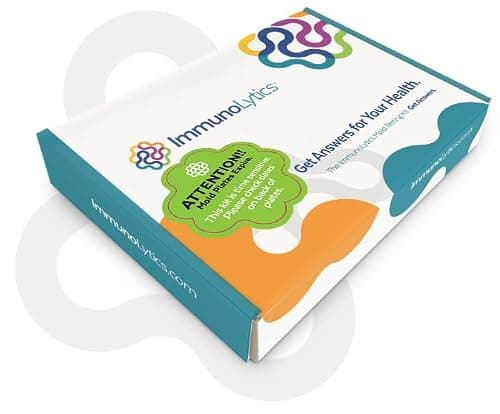
The most comprehensive home mold test available. Uses EPA-developed ERMI methodology with DNA-based MSQPCR analysis to quantify 36 mold species. Generates a standardized Relative Moldiness Index score that compares your home to a national database. Preferred by environmental consultants and real estate inspectors.
Pros
- ERMI (EPA Relative Moldiness Index) is the gold standard
- DNA-based analysis identifies 36 mold species
- Lab analysis included in price
Cons
- Most expensive home test kit
- Results take 7-10 business days
- Requires careful dust collection with included vacuum cassette
ImmunoLytics is a CLIA-certified, AIHA-accredited laboratory that specializes in environmental mold testing. Their ERMI kit includes everything needed for sample collection, a prepaid shipping envelope, and the full 36-species MSQPCR analysis. Results are delivered within 10 to 14 business days and include a detailed report with individual species concentrations, the ERMI score, and an interpretation guide. Their lab is one of the few that also offers phone consultation with a microbiologist to discuss your results at no additional charge.
ERMI Test Kits: DIY Options for Homeowners
If you want to run an ERMI test yourself without hiring a professional, a DIY ERMI test kit is the most cost-effective option. Several AIHA-accredited laboratories sell direct-to-consumer kits that include everything you need: a dust collection cassette (or swiffer cloth for hard floors), detailed collection instructions, a prepaid shipping envelope, and the full 36-species MSQPCR analysis.
The ImmunoLytics ERMI kit ($200-$250) is the most widely recommended DIY option. It includes a vacuum cassette that fits standard vacuum hoses, step-by-step instructions, and prepaid shipping to their CLIA-certified laboratory. Results arrive in 10-14 business days via email, and you can schedule a free phone consultation with a microbiologist to discuss your results.
Other ERMI test kit providers include EnviroLogix, EMSL Analytical, and Mycometrics. Prices range from $195 to $350 depending on the lab and turnaround time. When choosing a kit, verify that the laboratory holds both AIHA-LAP LLC accreditation (for environmental testing) and uses the EPA's standardized MSQPCR methodology. Labs that deviate from the EPA protocol may produce scores that aren't comparable to the national database — which defeats the purpose of the ERMI scoring system.
For a cheaper alternative that still uses DNA analysis, ask about the HERTSMI-2 test. It analyzes only 5 of the most dangerous species (Stachybotrys chartarum, Aspergillus versicolor, Aspergillus penicillioides, Chaetomium globosum, and Wallemia sebi) and costs roughly $100-$150. It's a good screening option when budget is a concern. If you just need a basic mold presence check without species-level detail, see our best mold test kits guide for options starting at $10.
When to Do an ERMI Test
Timing your ERMI test correctly matters — both in terms of when in a home's lifecycle and how you prepare the space. Here are the most common situations where ERMI testing provides the most value:
Before Buying or Renting a Home
ERMI is especially valuable during home inspections because it reveals mold history that visual inspections miss. Cosmetic repairs — fresh paint, new drywall, replaced flooring — can hide past water damage, but settled dust retains the DNA evidence. Request an ERMI test during the inspection contingency period. A score above 5 gives you negotiating leverage or a reason to walk away.
During New Construction or Renovation
New builds can develop mold during construction if materials get wet and aren't properly dried before being enclosed. An ERMI test before the drywall goes up (or after it's up but before finishing) establishes a baseline. For renovations, test before and after to verify the work didn't introduce or spread mold — this is particularly important when opening up walls in older homes where hidden moisture damage may exist.
When Health Symptoms Persist Without Explanation
Chronic respiratory issues, recurring sinus infections, persistent fatigue, and worsening allergies that improve when you leave the home all suggest possible mold exposure. If standard air quality tests come back normal, ERMI can detect species that air sampling misses — especially slow-growing or heavy-spored molds that don't become airborne easily but still produce allergens and mycotoxins. Share the species-level results with your healthcare provider for targeted treatment.
After Remediation or Water Damage Cleanup
A post-remediation ERMI test is the most objective way to verify that cleanup was successful. Compare the post-treatment score to the pre-treatment baseline — you should see a significant decrease in both the overall ERMI score and the specific Group 1 species that were elevated. If you used a mold fogger or hydrogen peroxide treatment as part of your DIY remediation, wait at least 2 weeks before testing to allow any remaining dead spores to settle into the dust.
ERMI Testing Near Me: Professional vs. DIY
If you'd prefer a professional to handle the ERMI testing process, there are several ways to find qualified inspectors in your area. The key credential to look for is a certification from one of these organizations:
- ACAC (American Council for Accredited Certification): Offers the CMRS (Council-certified Microbial Remediation Supervisor) and CMI (Council-certified Microbial Investigator) credentials.
- IICRC (Institute of Inspection, Cleaning and Restoration Certification): Offers the AMRT (Applied Microbial Remediation Technician) certification.
- NORMI (National Organization of Remediators and Mold Inspectors): Offers the CMI (Certified Mold Inspector) credential.
Professional ERMI testing typically costs $400-$800 and includes an on-site visit, sample collection from multiple rooms, chain-of-custody documentation, and a written report with recommendations. The chain-of-custody documentation is what makes professional testing more credible for insurance claims and legal proceedings — it proves the sample wasn't contaminated or tampered with. Use our mold removal cost calculator to estimate total remediation costs if your ERMI results indicate a problem.
For most homeowners doing routine testing or pre-purchase screening, DIY kits produce laboratory results identical to professional collection. The only difference is who physically collected the dust sample. Save the $200-$500 professional premium unless you specifically need chain-of-custody documentation.
Limitations of ERMI Testing
ERMI captures an average over time (not a precise moment), does not identify where the mold source is located, and has no regulatory pass/fail threshold — it is a comparative tool, not a diagnostic one. These limitations are important to understand so you can interpret results appropriately and set realistic expectations.
ERMI captures a period of time, not a precise moment. Because settled dust accumulates over weeks, the ERMI score reflects an average over that accumulation period. It can't distinguish between a steady low-level mold source and a brief high-exposure event (like opening a window during high outdoor mold season) that deposited a large number of spores at once. This averaging effect is generally an advantage, but it means a single elevated species count doesn't necessarily indicate an ongoing problem.
ERMI doesn't identify the source location. The test tells you what mold is present and in what quantities, but not where it's coming from. A high Stachybotrys count tells you there is or was water-damaged drywall somewhere in the home, but you still need a visual inspection or more targeted testing to find the specific location. ERMI results guide the investigation but don't complete it.
Outdoor mold can influence results. In homes with poor air sealing or in rural environments with high outdoor mold counts, outdoor species can contribute significantly to indoor dust samples. This is why some laboratories recommend collecting a companion outdoor dust or air sample for comparison. Without an outdoor reference, it can be difficult to determine whether elevated indoor counts reflect an indoor problem or simply high outdoor mold levels entering through normal air exchange.
Hard floor homes may produce different results. The original ERMI database was developed primarily from carpeted homes. Carpet traps dust and mold spores more effectively than hard floors, which means dust samples from hard floor homes may under-represent actual mold spore deposition. Some labs adjust their scoring for hard-floor collection, but this isn't standardized. If your home has all hard floors, discuss collection methodology with the laboratory before testing.
ERMI doesn't detect bacteria. If your problem is pink mold (actually Serratia marcescensbacteria, not a fungus), ERMI testing won't detect it. ERMI is designed exclusively for fungal mold species.
ERMI is not a pass/fail test.There is no regulatory standard that defines a "safe" or "unsafe" ERMI score. The score is a statistical comparison to a national housing database — it tells you how your home compares to others, not whether it meets a defined health standard. The score ranges provided in this guide and by laboratories are guidelines based on research correlations, not regulatory thresholds. Decisions about remediation should be made in consultation with a qualified mold professional, especially for scores in the moderate range where the appropriate response depends on the specific species present and the health status of the occupants. For visible mold you can already identify, a mold killer spray, mold removal spray, or a DIY solution like hydrogen peroxide is a more practical starting point than ERMI — see our black mold removal guide for step-by-step instructions. After remediation, seal surfaces with mold-resistant paint to prevent regrowth. Use our mold removal cost calculator to estimate remediation expenses before hiring a pro.
Need Professional Mold Removal?
Get free, no-obligation quotes from licensed mold remediation specialists in your area.
Get Free QuotesFrequently Asked Questions
What does the ERMI score mean?
How is an ERMI test different from a regular mold test?
When should I get an ERMI test instead of a basic test?
Can I do an ERMI test myself or do I need a professional?
How much does an ERMI test cost?
How long does it take to get ERMI test results?
Is ERMI testing worth the money?
Related Articles
How to Test for Mold at Home: DIY Methods That Actually Work
Black Mold in Your AC: How to Identify, Remove & Prevent It
How to Get Rid of Black Mold: DIY Removal Guide
Best Mold Fogger & Mold Bomb: Machines, Solutions & Safety Guide (2026)
Mold Testing Guide: Do You Need a Test & Which Type Is Best?
Musty Smell in House? Here's How to Find & Fix the Source
Need Professional Mold Removal?
Get free, no-obligation quotes from licensed mold remediation specialists in your area.
Get Free Quotes