Musty Smell in House? Here's How to Find & Fix the Source
Out of the Mold Editorial Team
Our guides are research-backed and cite EPA, CDC, and peer-reviewed sources. Product reviews are based on hands-on testing, not manufacturer claims. Read our editorial standards.
Affiliate Disclosure: Out of the Mold is reader-supported. As an Amazon Associate, we may earn a commission when you buy through links on this page — at no extra cost to you. Our picks are based on real testing and independent standards, not commissions.
Key Takeaways
- A persistent musty smell almost always means hidden mold. The odor comes from mVOCs (microbial volatile organic compounds) released as mold digests organic materials.
- Use a moisture meter ($20–$40) to find the source. Normal drywall reads 5–12% moisture; anything above 17% indicates active moisture and likely mold.
- Check the 7 most-missed locations: behind furniture on exterior walls, inside wall cavities, under vinyl flooring, return air ducts, on top of ceiling tiles, fridge drip pans, and bathroom fan housings.
- Fix the moisture first, then remove mold, then treat the air. Air fresheners mask the problem while mold grows unchecked.
- Professional mold inspection costs $300–$600. Call a pro when: smell persists after cleaning, health symptoms are present, area exceeds 10 sq ft, or you need documentation for sale/insurance.
A persistent musty smell in your house almost always means hidden mold or mildew growing somewhere you can't see — behind walls, under flooring, inside HVAC ducts, or in a crawl space. The odor comes from microbial volatile organic compounds (mVOCs) that mold releases as it digests organic material. If the smell doesn't disappear after 48–72 hours of ventilation and cleaning, you have an active moisture problem. Use a moisture meter ($20–$40) to trace the source, fix the leak or humidity issue, then remove the mold.
You know the smell. It's that damp, stale, earthy odor that hits you when you open a basement door or walk into a closet that hasn't been opened in a while. Some people describe it as "old house smell" or "grandma's basement." It's not charming — it's a warning sign.
That smell is mold talking. Specifically, it's microbial volatile organic compounds (mVOCs) — chemical byproducts that mold produces as it digests wood, paper, drywall, fabric, and other organic materials in your home. Different mold species produce different mVOCs, which is why mold can smell musty, earthy, sweet, or even like rotting meat depending on the species.
The uncomfortable truth: if you can smell mold, airborne spore counts are already elevated. You're breathing it. And the source is usually hidden somewhere you haven't thought to look.
Why Your House Smells Musty (The 5 Real Causes)
Not every musty smell is mold — but about 85% of the time, it is. Here's the full list from most to least common:
1. Hidden mold growth (most common)
Mold growing behind drywall, under flooring, inside wall cavities, or in ceiling spaces above a leak. You can't see it, but you can definitely smell it. Mold can develop within 24–48 hours of a surface getting wet, and a slow pipe leak can feed a colony for months before you notice the odor.
2. High humidity without ventilation
When indoor humidity stays above 60% (common in basements, bathrooms without exhaust fans, and coastal homes), mold and mildew colonize any organic surface. You might not see visible growth, but the colony is producing mVOCs in carpet backing, inside wall cavities, and on the backside of furniture against exterior walls.
3. HVAC system contamination
Your HVAC system is a mold highway. If mold grows on the evaporator coil, drip pan, or inside ductwork, it distributes spores (and that musty smell) to every room in the house every time the system runs. The telltale sign: the smell gets worse when the AC or heat kicks on. See our guide to mold in HVAC systems for the full diagnostic.
4. Stagnant water traps
P-traps under sinks that don't get used regularly (guest bathrooms, laundry sinks, basement floor drains) can dry out, letting sewer gas seep in. This smells different from mold — more sulfurous — but gets confused for musty odor. The fix: run water in every drain monthly to keep the trap sealed.
5. Old, damp insulation
Fiberglass insulation in attics and crawl spaces absorbs moisture over time. Once it's wet, it won't dry on its own, and the paper backing becomes a mold food source. Damp insulation is one of the sneakiest hidden mold sources because most homeowners never inspect their attic or crawl space.
Room-by-Room Guide: Where to Check First
Narrow down the source by following your nose. The smell is always strongest closest to the colony. Walk through each room and rank where the odor intensifies.
| Location | Where to Check | Common Cause |
|---|---|---|
| Basement | Foundation walls, floor-wall joints, sump pit, stored boxes | Groundwater seepage, high humidity (>60% RH) |
| Bathroom | Behind toilet, under vanity, exhaust fan duct, wall behind shower | Slow leaks, poor ventilation, grout failure |
| Kitchen | Under sink, behind dishwasher, behind refrigerator (ice maker line) | Supply line leaks, garbage disposal drips |
| Bedroom | Behind furniture against exterior walls, closets, window condensation | Condensation on cold walls, poor air circulation |
| Attic | Roof sheathing, around vents, bathroom exhaust termination | Roof leak, exhaust fan venting into attic (not outside) |
| Laundry room | Behind washer, dryer vent connection, drain pan | Supply hose leak, lint buildup trapping moisture |
| Crawl space | Floor joists, vapor barrier, foundation walls | Ground moisture, missing/damaged vapor barrier |
| Whole house | HVAC ducts, return air vents, evaporator coil | Mold in ductwork distributed throughout home |
Pro tip: the smell is often strongest in the morning before you open windows and doors. Check right after waking up when your nose is most sensitive and the air has been stagnant all night.
How to Find Hidden Mold You Can't See
Once you've narrowed the smell to a room or area, use these methods to pinpoint the colony:
Method 1: Moisture meter ($20–$40)
This is the single most useful tool for tracking hidden mold. A pin-type moisture meter reads the water content in drywall, wood, and flooring. Normal drywall reads 5–12%. Anything above 17% has active moisture — and likely mold behind or inside the material.
Systematically check walls in the area where the smell is strongest. Move the meter every 6 inches in a grid pattern. When you hit a spike, you've found your problem area. A decent pin meter costs $25–$35 on Amazon and pays for itself the first time you use it.
Method 2: Thermal imaging (smartphone attachment $200–$350)
Infrared cameras don't "see" mold directly, but they reveal temperature anomalies that indicate hidden moisture. A cold spot on a warm wall suggests water intrusion or evaporative cooling from a damp surface. FLIR ONE attaches to your phone and gives a useful thermal image for under $300.
Thermal imaging works best when there's a temperature differential — run the heat or AC for 30 minutes before scanning. The thermal image shows wet areas as distinctly cooler patches.
Method 3: Air quality test
An air sampling kit compares indoor spore counts to outdoor baseline levels. If indoor counts are 3x+ higher than outdoor, you have an active indoor mold source. This won't tell you where the mold is, but it confirms whether your nose is right about there being a problem.
My Mold Detective MMD103 Multi-Room Mold Test Kit
My Mold Detective
$40–50
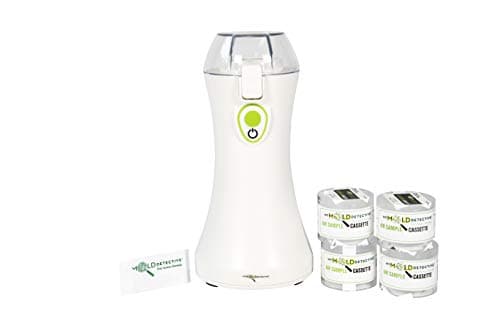
A multi-room air sampling kit that uses cassette-style collectors for more accurate spore counts than settling plates. Lab analysis is included in the purchase price, and results are delivered via email with a detailed breakdown of mold species and concentration levels.
Pros
- Tests up to 3 rooms in a single kit
- Lab analysis included in the price
- Uses cassette-style air sampling for professional-grade results
Cons
- Requires a box fan or pump for air sampling
- More complex setup than settling-plate kits
- Results take 3-5 business days
Method 4: The systematic nose test
Low-tech but surprisingly effective. Close all windows and doors in the suspect room. Leave the room for 30 minutes, then re-enter. Stand in the center and slowly turn, breathing through your nose. The direction where the smell is strongest gives you a wall to focus on. Crouch low and stand tall — mVOCs are heavier than air, so the smell often concentrates near the floor near the source.
"I Smell Mold but Can't Find It" — The 7 Hidden Spots
This is the most common frustration I hear from homeowners. The smell is obvious, but there's no visible mold anywhere. Check these locations that people consistently miss:
- Behind furniture against exterior walls.Pull beds, dressers, and bookshelves away from walls. Condensation forms on cold exterior walls, and furniture blocks airflow. I've seen colonies covering entire wall sections behind bookcases that have been in place for years.
- Inside wall cavities from old leaks. A past plumbing repair may have fixed the leak but never dried the wall cavity. Mold can grow undetected inside walls for years after the moisture source is gone — it just needs residual dampness.
- Under vinyl or laminate flooring.These floors trap moisture between the surface and the subfloor. The mold grows on the subfloor where you'll never see it. Check edges and transitions where the flooring meets the wall — visible discoloration here indicates a problem underneath.
- Inside return air ducts. Pop off the return vent cover and look inside with a flashlight. Ductwork collects dust and moisture, creating perfect conditions for mold. If you see dark patches or smell intensifies at the vent, your HVAC system needs professional cleaning.
- On top of ceiling tiles (drop ceilings). Push up a tile and look at the backside and the space above. Roof leaks, pipe condensation, and bathroom exhaust ducts that terminate in the ceiling space all create hidden mold colonies on top of tiles.
- Refrigerator drip pan.The drain pan under your fridge collects condensate and is almost never cleaned. It's warm, wet, and dark — a perfect mold habitat. Pull the fridge out and check the pan. Our mold in refrigerator guide covers the full cleaning process.
- Bathroom exhaust fan housing.Remove the cover and look inside the fan housing and the duct connection. Moisture gets pulled through here every shower, and the housing rarely dries completely. It's one of the most overlooked mold spots in any home.
Confirm What You're Dealing With
If you can smell mold but can't find it, an air quality test tells you whether spore levels are actually elevated — and which species are present.
Compare Mold Test Kits →How to Eliminate a Musty Smell (The Right Order)
Air fresheners, candles, and odor sprays mask the smell without addressing the cause. Worse — they let you ignore a growing mold problem. Here's the correct sequence:
Step 1: Fix the moisture source
This is non-negotiable. No amount of cleaning, fogging, or air purifying solves a musty smell if water is still feeding the mold. Common fixes:
- Repair plumbing leaks ($150–$500 for most fixes)
- Improve bathroom ventilation (run exhaust fans 20+ min after showering)
- Fix gutter drainage away from the foundation ($5–$15 for a splash block)
- Add a dehumidifier to basements or crawl spaces ($200–$400 for a 50-pint unit)
- Seal crawl space with a vapor barrier ($0.50–$2/sqft for DIY)
Step 2: Remove the mold
Once you've found it and fixed the moisture, kill and remove the colony. For areas under 10 square feet (EPA threshold for DIY):
- On hard surfaces: vinegar or hydrogen peroxide
- On drywall with deep penetration: cut out and replace the section
- On wood: scrub with vinegar, sand if needed
- Inside HVAC: hire a duct cleaning professional ($400–$800 for whole-house)
For areas over 10 square feet or mold inside wall cavities, hire a certified mold remediation company ($1,500–$4,500).
Step 3: Dry everything completely
After mold removal, the area must be bone-dry before you close walls, lay flooring, or return furniture. Use fans, dehumidifiers, and open windows. Moisture meter readings should be below 15% before declaring the area safe. Closing up a damp area restarts the cycle.
Step 4: Treat the air
Even after removing the mold, airborne spores and mVOCs can linger. Options for clearing the air:
- HEPA air purifier: Captures airborne spores and, with an activated-carbon layer, the musty mVOC odor itself. Run continuously for 48–72 hours after remediation. Look for units rated for your room size.
- Mold fogger: For whole-room treatment, a Concrobium fogger disperses antimicrobial mist into cracks, voids, and HVAC spaces that wiping can't reach.
- Cross-ventilation: Open windows on opposite sides of the house for 2–4 hours. Fresh air exchange physically replaces contaminated indoor air.
Concrobium Mold Control
Concrobium
$10–15
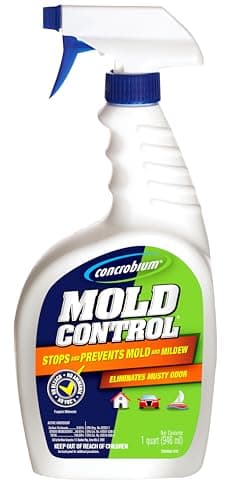
A patented, EPA-registered mold control solution that kills mold without bleach, ammonia, or VOCs. The tri-salt polymer formula crushes mold spores as it dries and leaves an invisible antimicrobial barrier to prevent regrowth. Safe for indoor use on virtually any surface.
Pros
- Non-toxic, no bleach or ammonia
- Kills mold and prevents regrowth
- Safe for use around children and pets
Cons
- Does not remove existing mold stains
- Takes longer to work than bleach-based products
- May require multiple applications for severe infestations
Step 5: Prevent recurrence
The musty smell stays gone only if moisture stays controlled:
- Keep indoor humidity below 50% (invest in a hygrometer, $10–$15)
- Run exhaust fans during and 20+ minutes after cooking and showering
- Inspect under sinks, behind toilets, and around water heaters monthly
- Clean HVAC drip pans and replace filters every 1–3 months
- Don't push furniture flush against exterior walls — leave 2–3 inches for air circulation
When to Call a Professional
Not every musty smell needs a mold remediation company. But some situations are beyond DIY:
- Smell persists after thorough cleaning— hidden mold behind walls or under floors requires destructive inspection (cutting into drywall) that most homeowners shouldn't DIY.
- Health symptoms present — respiratory issues, persistent headaches, worsening allergies that improve when you leave the house. These indicate elevated spore exposure that needs professional assessment.
- Area exceeds 10 square feet— EPA's threshold for professional remediation.
- Recent water damage — flooding, burst pipes, or roof leaks within the past 48 hours. Fast professional drying prevents mold from establishing. After 48 hours, mold is likely already growing.
- Selling your home — a professional mold inspection ($300–$600) with an ERMI test provides legally defensible documentation that the home is clear.
Professional mold inspection costs $300–$600 for a standard assessment. Remediation averages $1,500–$4,500 depending on scope. That sounds expensive until you compare it to the cost of a mold problem that damages structural wood for months while you're covering the smell with scented candles.
Frequently Asked Questions
Is a musty smell always mold?
Usually, but not always. Other causes include dried-out P-traps (sewer gas), bacterial growth in HVAC drain pans, old water-damaged building materials (even if the mold is dead), and improperly stored damp clothing or towels. If cleaning and ventilating doesn't resolve the smell within 72 hours, mold is the most likely culprit.
Can musty smell make you sick?
Yes. The mVOCs that create the musty smell can cause headaches, dizziness, and nausea at elevated concentrations. More importantly, if you can smell mold, you're breathing spores — which can trigger allergic reactions, asthma attacks, and respiratory infections. The CDC notes that people with chronic respiratory disease may experience difficulty breathing, and immunocompromised individuals face risk of mold infections.
How do I get rid of musty smell in basement?
Basements smell musty because humidity is almost always above 60%. The fix: run a dehumidifier (50-pint unit minimum, $200–$400), set it to maintain 45–50% RH, and empty or drain the tank regularly. Check for foundation cracks where groundwater seeps in, and ensure gutters direct water at least 6 feet from the foundation. For existing mold on concrete block walls, spray vinegar and scrub with a stiff brush.
Does opening windows help with musty smell?
Temporarily, yes. Cross-ventilation replaces musty indoor air with fresh air and reduces humidity. But opening windows doesn't fix the moisture source. In humid climates (Gulf Coast, Pacific Northwest), opening windows can actually make things worse by introducing more moisture. Use a dehumidifier instead.
How long does musty smell last after mold removal?
The mVOC odor typically fades within 24–72 hours after thorough remediation and ventilation. If the smell persists after a week, either mold wasn't fully removed, there's a second source, or the mVOCs have been absorbed into porous materials (carpet, furniture, curtains) that need cleaning or replacement. An air purifier with activated carbon filter helps absorb lingering mVOCs faster.
Can an air purifier remove musty smell?
An air purifier with a HEPA filter captures spores, and one with activated carbon absorbs mVOC odor molecules. It helps with symptoms but doesn't fix the problem. Think of it as treating the cough instead of the infection. Use an air purifier while you locate and remove the mold source — not as a substitute for remediation.
Ready to Find the Source?
Our complete mold testing guide walks through every method — from $10 DIY kits to professional inspections — so you know exactly what you're dealing with.
See Testing Methods →Frequently Asked Questions
Is a musty smell always mold?
Can musty smell make you sick?
How do I get rid of musty smell in basement?
Does opening windows help with musty smell?
How long does musty smell last after mold removal?
Can an air purifier remove musty smell?
Related Articles
What Does Mold Smell Like? How to Identify Mold by Smell
Best Mold Test Kits for Home Use: What Works & What's a Waste of Money (2026)
How to Test for Mold at Home: DIY Methods That Actually Work
Best Mold Fogger & Mold Bomb: Machines, Solutions & Safety Guide (2026)
Black Mold in Your AC: How to Identify, Remove & Prevent It
Mold Testing Guide: Do You Need a Test & Which Type Is Best?
Need Professional Mold Removal?
Get free, no-obligation quotes from licensed mold remediation specialists in your area.
Get Free Quotes