Does Bleach Kill Mold? The EPA Says No — Here's What Actually Works
Out of the Mold Editorial Team
Our guides are research-backed and cite EPA, CDC, and peer-reviewed sources. Product reviews are based on hands-on testing, not manufacturer claims. Read our editorial standards.
Affiliate Disclosure: Out of the Mold is reader-supported. As an Amazon Associate, we may earn a commission when you buy through links on this page — at no extra cost to you. Our picks are based on real testing and independent standards, not commissions.
Key Takeaways
- The EPA does not recommend bleach for mold remediation. Bleach kills mold on non-porous surfaces only (tile, glass, sealed countertops).
- On porous surfaces (drywall, wood, grout, carpet), bleach's water component feeds mold roots while the chlorine stays on the surface.
- White vinegar kills ~82% of mold species and penetrates where bleach can't. 3% hydrogen peroxide has even higher kill rates.
- Concrobium is the only common product that both kills mold AND prevents regrowth with a tri-salt polymer barrier.
- Never mix bleach with vinegar (creates chlorine gas) or ammonia (creates chloramine gas). Both are potentially fatal.
Bleach kills mold on non-porous surfaces (tile, glass, sealed countertops) but fails on porous materials like drywall, wood, and grout. The EPA does not recommend bleach for mold remediation. Bleach is 90–95% water — the chlorine evaporates on contact while the water soaks into porous materials and actually feeds mold roots deeper in the substrate. Use white vinegar or 3% hydrogen peroxide for porous surfaces, and Concrobium for prevention. Only use bleach on hard, non-porous surfaces where you can see the mold clearly.
Here's the frustrating thing about this question: the top Google results literally disagree with each other. Clorox says yes. The EPA says no. Reddit says maybe. A mold remediation company says "definitely not, hire us instead."
The actual answer is more nuanced than any of those, and it comes down to one question: what surface is the mold growing on?
I've seen too many people scrub their bathroom tile with bleach (which works fine) and then apply the same logic to moldy drywall (which makes it worse). The surface determines everything. Let me break down exactly what happens with bleach and mold — the chemistry, the EPA position, and what to use instead on each surface.
Why Bleach Fails on Porous Surfaces (The Chemistry)
Standard household bleach (sodium hypochlorite) is about 3–8% active chlorine and 92–97% water. That ratio is the whole problem on porous materials.
When you spray bleach on drywall, wood, or grout, here's what actually happens at a molecular level:
- The chlorine stays on the surface.Hypochlorite ions are large molecules that can't penetrate porous substrates. They kill whatever mold they contact on the surface layer.
- The water absorbs into the material.Water molecules are much smaller — they soak right through the pores into the substrate where mold's root structure (hyphae) lives.
- The surface looks clean. You see white tile, clean wood, bleached drywall. Looks like it worked.
- The mold comes back in 1–3 weeks. The root system was never killed. Worse — you just fed it a fresh dose of moisture. It regrows faster and stronger.
This isn't theoretical. OSHA's 2017 guidance update removed bleach from their recommended mold cleaning protocols. The EPA's current position is explicit: "The use of a chemical or biocide that kills organisms such as mold (chlorine bleach, for example) is not recommended as a routine practice during mold cleanup."
That quote is directly from EPA.gov's mold guidance page.
When Bleach Actually Works (Non-Porous Surfaces)
Bleach isn't useless — it's just overused. On genuinely non-porous surfaces where mold can only grow on the surface (no substrate to burrow into), bleach works fine. These include:
| Surface | Bleach Effective? | Dilution Ratio | Contact Time |
|---|---|---|---|
| Ceramic/porcelain tile | ✅ Yes | 1 cup per gallon | 10–15 minutes |
| Glass (shower doors, windows) | ✅ Yes | 1 cup per gallon | 5–10 minutes |
| Sealed granite/marble | ✅ Yes (diluted) | ½ cup per gallon | 5 minutes max |
| Bathtub/shower surround | ✅ Yes | 1 cup per gallon | 10–15 minutes |
| Stainless steel | ✅ Yes (diluted) | ½ cup per gallon | 5 minutes |
| Painted drywall | ⚠️ Surface only | — | — |
| Unpainted drywall | ❌ No | — | — |
| Wood (any finish) | ❌ No | — | — |
| Grout (unsealed) | ❌ No | — | — |
| Carpet/fabric | ❌ No | — | — |
| Concrete (unsealed) | ⚠️ Partially | — | — |
The painted drywall entry deserves an asterisk. If the paint layer is intact and the mold is only growing on the paint surface (not through it), a dilute bleach solution can work. But the moment mold has penetrated through the paint film into the paper face of the drywall, bleach won't reach it. Check by pressing the wall — if it's soft or spongy, the drywall needs to be cut out and replaced.
Bleach vs Vinegar vs Hydrogen Peroxide: Which Kills Mold Better?
This is the comparison everyone wants but nobody gives honest numbers for. Here's the real breakdown based on available research and EPA guidance:
| Factor | Bleach | White Vinegar | 3% Hydrogen Peroxide | Concrobium |
|---|---|---|---|---|
| Kills surface mold | Yes | Yes | Yes | Yes |
| Penetrates porous surfaces | ❌ No | ✅ Yes | ✅ Yes | ✅ Yes |
| Species kill rate | ~60% on surface | ~82% of species | ~99.9% at 5%+ conc. | Broad spectrum |
| Prevents regrowth | ❌ No | ❌ No | ❌ No | ✅ Yes (barrier) |
| Removes stains | ✅ Excellent | ❌ Poor | ⚠️ Moderate | ❌ No |
| Toxic fumes | Yes (chlorine gas risk) | Mild acetic acid | None | None |
| Safe around pets/kids | ❌ No | ✅ Yes | ✅ Yes (after drying) | ✅ Yes |
| Cost per treatment | $0.10–$0.30 | $0.50–$1.00 | $0.30–$0.75 | $2.00–$4.00 |
| EPA recommended | ❌ No | Not listed | Not listed | ✅ EPA-registered |
The takeaway: vinegar kills more mold species and penetrates where bleach can't. Hydrogen peroxide does the same with better kill rates at higher concentrations. But neither prevents regrowth — that's where Concrobium's tri-salt polymer comes in. For the full breakdown on each alternative, see our guides on vinegar for mold, hydrogen peroxide for mold, and our Concrobium review. Not sure if your growth is actually mold? Learn the difference between mold and mildew.
What to Use Instead of Bleach (By Surface)
Stop thinking about "what kills mold" and start thinking "what kills mold on this specific material." Here's the surface-by-surface guide:
Drywall (Painted or Unpainted)
Use Concrobium Mold Control. Spray it on, let it dry completely (don't wipe), and the tri-salt polymer crushes mold spores as it dries — including the root structure inside the porous paper face. For severe cases where the drywall is soft or crumbling, no product will save it — you need to cut out and replace the affected section.
Concrobium Mold Control
Concrobium
$10–15
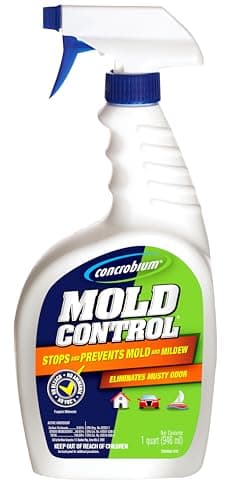
A patented, EPA-registered mold control solution that kills mold without bleach, ammonia, or VOCs. The tri-salt polymer formula crushes mold spores as it dries and leaves an invisible antimicrobial barrier to prevent regrowth. Safe for indoor use on virtually any surface.
Pros
- Non-toxic, no bleach or ammonia
- Kills mold and prevents regrowth
- Safe for use around children and pets
Cons
- Does not remove existing mold stains
- Takes longer to work than bleach-based products
- May require multiple applications for severe infestations
Wood (Flooring, Framing, Furniture)
White vinegar (undiluted) is your best first option. Spray it on, wait 60 minutes, scrub with a stiff brush, and wipe clean. The acetic acid penetrates wood grain to reach hyphae. For stubborn stains after cleaning, follow up with 3% hydrogen peroxideto lighten discoloration. Mold killed but the black stain won't come off? That's a job for a dedicated mold stain remover — bleach kills, a stain remover erases the mark. For structural wood with deep penetration, see our mold on wood floor guide.
Grout (Bathroom Tile Lines)
Make a paste with baking soda and water, apply to grout lines, spray vinegar over it (the fizzing action lifts mold from grout pores), wait 15 minutes, scrub with a grout brush. For deep black stains that won't come out, RMR-86 works specifically on grout — but it's bleach-based, so it's the one exception where bleach is acceptable on grout since you're treating stains, not trying to prevent regrowth.
RMR-86 Instant Mold & Mildew Stain Remover Spray (1 Gallon)
RMR Brands
$25–35
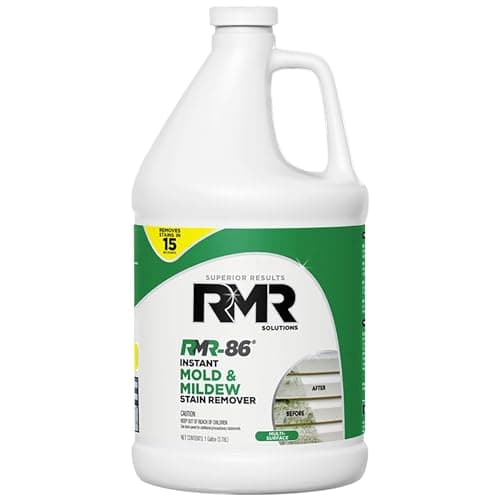
A fast-acting, commercial-strength mold stain remover that eliminates black mold stains on contact. The sodium hypochlorite formula penetrates porous surfaces to lift deep stains without scrubbing. Best used in well-ventilated areas with proper respiratory protection.
Pros
- Removes stains in as little as 15 seconds
- Works on wood, concrete, drywall, and tile
- No scrubbing required
Cons
- Strong bleach-based formula with harsh fumes
- Not safe for fabrics or colored surfaces
- Requires good ventilation and PPE
Carpet and Fabric
Hydrogen peroxide at 3% concentration. Spray generously, let it fizz for 10–15 minutes, blot (don't rub), and repeat. The effervescent action physically lifts spores from carpet fibers. Bleach will destroy the color and won't reach the backing anyway. For extensive carpet mold (more than a few square feet), the carpet usually needs to go — see our mold in carpet removal guide.
Large Areas (Over 10 Square Feet)
The EPA draws a hard line at 10 square feet for DIY mold removal. Beyond that, you need containment, HEPA filtration, and proper protocols. For whole-room treatment of moderate contamination, a mold foggerdisperses antimicrobial solution into cracks, crevices, and HVAC voids that sprays can't reach. For anything structural or widespread, hire a certified remediator — average cost is $1,500–$4,500 depending on scope.
Not Sure What's Growing?
Identify the mold type first — different molds require different treatments and urgency levels.
Identify Your Mold Type →Where the "Bleach Kills Mold" Myth Came From
For decades, bleach was the official recommendation. FEMA's old flood cleanup guides said to use it. The CDC recommended it until 2009. Your parents probably used it because that's what the government told them to do.
What changed? Three things happened between 2009 and 2017:
- Better research.Studies on porous substrate penetration showed bleach's chlorine component couldn't physically reach mold roots in materials like wood and drywall. The water component — making up 92–97% of the solution — was feeding regrowth.
- Industry shifted. Professional mold remediation moved to enzymatic cleaners, botanical disinfectants (thymol-based like Benefect Decon 30), and tri-salt polymers. Nobody in the professional world was using bleach anymore.
- EPA updated guidance.The EPA quietly removed bleach from its mold cleanup recommendations and added the explicit "not recommended as a routine practice" language that's still on their website today.
Meanwhile, Clorox's website still says bleach kills mold. They're technically not wrong — it does kill mold on non-porous surfaces. But they don't make the porous/non-porous distinction because it would reduce their sales. Take that for what it's worth.
Critical Safety Warnings
If you do use bleach on appropriate non-porous surfaces, these rules are non-negotiable:
- Never mix bleach with vinegar. Creates chlorine gas — the same poison gas used in WWI. Even small amounts cause respiratory distress. If you use bleach on tile and vinegar on grout in the same bathroom session, you can create toxic fumes from residue mixing in the drain.
- Never mix bleach with ammonia. Creates chloramine gas. Many household cleaners contain ammonia (Windex, some multi-surface sprays). Check labels.
- Ventilate aggressively. Open windows, run exhaust fans. Chlorine fumes accumulate in enclosed bathrooms fast.
- Wear an N95 minimum. Bleach kills mold but also disturbs spores into the air. Disturbing mold without respiratory protection exposes you to concentrated spore release.
- Never use bleach on HVAC systems.The corrosive nature damages metal ductwork, and you can't rinse the residue from inside ducts. Use a fogger with Concrobium solution for HVAC treatment.
After Cleaning: Prevent Mold from Returning
Killing mold without fixing the moisture source is like mopping the floor while the faucet runs. The mold will return in 24–48 hours if conditions stay favorable (relative humidity above 60%, organic material present, temperature between 40–100°F).
After removing mold from any surface:
- Find and fix the moisture source. Leak? Condensation? Poor ventilation? This is the root cause, not the mold itself.
- Get humidity below 50%.A hygrometer ($10–$15) tells you exactly where you stand. Below 50% relative humidity, most mold species can't grow.
- Apply a preventive coating. On walls, use mold-killing primer before repainting. On other surfaces, a thin coat of Concrobium left to dry creates a long-lasting antimicrobial barrier.
- Improve airflow. Stagnant air lets moisture accumulate on surfaces. Exhaust fans in bathrooms should run 20+ minutes after showers.
For a complete product-by-product breakdown of what to use at each stage of mold remediation, see our mold removal guide.
When to Stop DIY and Call a Professional
Bleach or no bleach, some situations are beyond any spray bottle:
- Area exceeds 10 square feet — EPA threshold for professional remediation.
- Mold is inside walls or HVAC — You need containment barriers and HEPA filtration. See our guide to finding hidden mold.
- Health symptoms are present — Respiratory issues, headaches, or allergic reactions mean exposure levels are already too high for unprotected work.
- Structural damage is visible — Soft drywall, warped wood, crumbling plaster. The material is compromised and needs professional replacement.
- You need documentation — Insurance claims and landlord disputes require professional testing and remediation records. Consider getting an ERMI test for legally defensible evidence.
Professional mold remediation averages $1,500–$4,500 in 2026 depending on scope. That sounds steep until you compare it to the cost of a mold problem that spreads for months because you kept bleaching the surface while the colony grew behind the wall.
Still Seeing Mold After Cleaning?
If mold keeps coming back, the problem is deeper than the surface. Test your home's mold levels to find hidden sources.
Compare Mold Test Kits →Frequently Asked Questions
Does Clorox kill black mold?
On non-porous surfaces like tile and glass, yes. On porous surfaces like drywall, wood, and carpet — where black mold (Stachybotrys chartarum) most commonly grows — no. The chlorine can't reach the root system. Use Concrobium or white vinegar instead, or follow our full black mold removal guide.
Can I mix bleach and vinegar for mold?
Absolutely not. Mixing bleach (sodium hypochlorite) with vinegar (acetic acid) creates chlorine gas, which causes coughing, chest pain, respiratory failure, and can be fatal at high concentrations. Use them separately, on different days, with thorough rinsing between. Better yet, pick one approach and stick with it.
Why does mold come back after cleaning with bleach?
Two reasons: (1) bleach didn't kill the root system on porous surfaces, so the colony regrows from surviving hyphae, and (2) the moisture source that caused the mold in the first place is still present. Fix the water problem first, then treat with a product that actually penetrates.
What kills mold permanently?
No product kills mold "permanently" because spores are naturally present in all indoor air. What prevents regrowth is removing the conditions mold needs: moisture above 50% RH, an organic food source, and stagnant air. Kill the existing colony, fix the moisture, and apply a preventive barrier (Concrobium or mold-resistant primer). See our complete mold removal guide for the full prevention protocol.
Is bleach or vinegar better for killing mold?
Vinegar is better for most household situations because it penetrates porous materials. Research indicates white vinegar kills approximately 82% of mold species. Bleach is only better on non-porous surfaces where you also want stain removal (tile, glass, sealed countertops). For the best results on porous surfaces, use 3% hydrogen peroxide — it has the highest kill rate of common household products.
Does bleach kill mold on drywall?
No. Drywall is porous — it's literally made of paper and gite. Bleach kills the surface layer but the water component soaks into the paper face and feeds the root system deeper in the material. Use Concrobium on surface-level drywall mold, or cut out and replace the section if the mold has penetrated through.
Frequently Asked Questions
Does Clorox kill black mold?
Can I mix bleach and vinegar for mold?
Why does mold come back after cleaning with bleach?
What kills mold permanently?
Is bleach or vinegar better for killing mold?
Does bleach kill mold on drywall?
Related Articles
Does Vinegar Kill Mold? The Science, the Limits, and How to Use It Right
Hydrogen Peroxide for Mold: Does It Actually Work?
Concrobium Mold Control Review: What It Does (and What It Won't)
Mold on Walls: How to Remove It (and When to Replace the Wall)
Best Mold Removal Products: What Works for Every Surface & Situation
Mold vs Mildew: How to Tell the Difference & What to Do About Each
Need Professional Mold Removal?
Get free, no-obligation quotes from licensed mold remediation specialists in your area.
Get Free Quotes