What Does Mold Smell Like? How to Identify Mold by Smell
Out of the Mold Editorial Team
Our guides are research-backed and cite EPA, CDC, and peer-reviewed sources. Product reviews are based on hands-on testing, not manufacturer claims. Read our editorial standards.
Affiliate Disclosure: Out of the Mold is reader-supported. As an Amazon Associate, we may earn a commission when you buy through links on this page — at no extra cost to you. Our picks are based on independent standards, manufacturer specifications, and published research, not commissions.
Key Takeaways
- You're not smelling mold spores (they're odorless) — you're smelling mVOCs, gases released as mold digests organic material. Over 200 compounds identified.
- Different species produce different smells: Aspergillus is earthy/sweet, Penicillium is ammonia-like, Stachybotrys (black mold) is pungent and sulfurous.
- Geosmin — the 'smell of rain' compound — is detectable by humans at 5 parts per trillion. Your nose is hardwired to notice mold.
- If you smell mold but can't see it: check behind furniture, under carpet, inside walls (moisture meter), and in HVAC ducts.
- Air fresheners and ozone generators mask the odor but don't fix the problem. The smell goes away when the mold does.
Mold smells musty, earthy, and damp — like wet socks left in a gym bag, old books in a basement, or soil after rain. That smell comes from microbial volatile organic compounds (mVOCs), not the spores themselves. Different mold species produce slightly different odors: Aspergillus leans earthy and sweet, Penicillium skews more ammonia-like, and Stachybotrys(black mold) has a pungent, rotting quality. If you smell it but can't see it, the mold is probably behind a wall, under carpet, or inside your HVAC system. A persistent musty smell always warrants investigation — mold can grow hidden for months before you spot it.
You walk into a room and something smells off. Not like garbage or food gone bad — more like a damp towel that never fully dried. Maybe it's been there for weeks and you've gotten nose-blind to it. Maybe you only notice it after being away for a few days.
That smell is almost certainly mold. And here's the thing most people don't realize: you're not actually smelling the mold itself. Mold spores are odorless. What you're smelling are mVOCs — microbial volatile organic compounds — which are gases that mold releases as it digests organic material. The EPA confirms that mVOCs are the source of the "moldy odor" associated with mold growth. Over 200 different mVOC compounds have been identified, which is why mold can smell slightly different depending on the species, what it's growing on, and how much moisture is present.
What Mold Smells Like: Descriptions by Type
Asking "what does mold smell like?" is a bit like asking "what does food smell like?" — it depends. But there are common patterns, and the smell can actually give you clues about what type of mold is growing.
| Smell Description | Likely Mold Type | Typical Location | Severity |
|---|---|---|---|
| Musty, earthy, like old books or damp soil | Aspergillus, Cladosporium | Basements, walls, HVAC | Low–moderate |
| Wet socks, damp towel, locker room | Active mold with high moisture | Bathrooms, laundry areas, crawl spaces | Moderate |
| Sweet, slightly fruity or fermented | Some Aspergillus species | Food storage, kitchens | Low |
| Sharp, ammonia-like | Penicillium | Walls, fabrics, drywall | Moderate |
| Pungent, rotting, sulfurous | Stachybotrys (black mold) | Water-damaged drywall, chronically wet areas | High |
| Sour, vinegar-like | Bacterial growth alongside mold | Standing water, AC drip pans | Moderate |
Smell alone can't tell you the species — but color narrows it down. Orange mold (often Acremonium or Fuligo septica) tends toward the wet-sock end of the spectrum, while yellow mold (especially Aspergillus flavus and Serpula lacrymans) produces a sharper, earthy-to-musty odor.
One compound worth knowing about: geosmin. It's the chemical responsible for the "smell of rain" and also a primary mVOC produced by Aspergillus, Penicillium, and Stachybotrys. The human nose can detect geosmin at concentrations as low as 5 parts per trillion — we're literally hardwired to notice it. So when you catch a faint musty whiff, trust your nose. It's detecting something real.
What Does Black Mold Smell Like?
This is the question that drives the most anxiety, so let me be direct: Stachybotrys chartarum(the species people mean when they say "black mold") typically produces a stronger, more pungent version of the classic musty smell. People describe it as:
- Rotting wood — which makes sense, because Stachybotrys primarily colonizes chronically wet cellulose materials like drywall and wood
- Wet, decaying cardboard — heavy, damp, and sharp
- Sulfurous or earthy-sharp — more intense than the mild mustiness of Cladosporium
Here's what you can't do: identify mold species by smell alone. Many mold species look black — Cladosporium, Aspergillus niger, and Alternaria all produce dark-colored colonies. Color and smell are clues, not diagnoses — and many people confuse mold with mildew, which has a milder, damp-paper smell (see our mold vs mildew comparison). If you suspect Stachybotrys, get a DNA-based ERMI test for definitive identification. For more on black mold specifically, see our black mold removal guide.
For health guidance on mold exposure, refer to the CDC's mold and health resources.
Where Mold Smell Comes From (By Location)
The location of the smell narrows down what you're dealing with and how urgent it is. Here's what to look for room by room.
Basement
The most common place to smell mold — and often the hardest to fix. Basement mustiness typically comes from Aspergillus or Penicillium growing on concrete walls, stored cardboard boxes, or the back of paneling. High humidity is the root cause. If your basement consistently reads above 50% on a hygrometer, mold is either growing or about to. A dehumidifier set to 45% solves most basement mold smells.
Bathroom
Steam from showers creates ideal conditions, but the mold you smell isn't always the mold you see. Visible ceiling spots and shower grout stainsare obvious, but the real concern is mold growing behind walls, under the vanity, or inside the ceiling cavity. If the smell persists after you've cleaned all visible mold, the source is hidden.
Bedroom
A musty bedroom usually points to one of three things: a moldy mattress (check the underside), mold on window sillsfrom condensation, or mold under carpet near exterior walls. The smell is often strongest when you first wake up — you've been breathing at bed level for 8 hours. Flip your mattress and check. A $25 waterproof mattress protector prevents mattress mold entirely.
Kitchen
Check under the sink first — slow drips from garbage disposal connections and dishwasher drain hoses are the #1 kitchen mold source. Also check behind the refrigerator (the drip pan is a petri dish), inside the dishwasher gasket, and in any cabinets adjacent to plumbing. A musty smell that appears only when you run the dishwasher points directly to the drain hose or gasket.
Car
Mold smell in cars comes from two places: the cabin air filter and trapped moisture under seats or in the trunk. If the smell gets worse when you turn on the AC, the evaporator or filter is contaminated. Replace the cabin air filter ($15–$30) and run the AC on max heat with windows open for 20 minutes. For more detailed steps, see our car mold removal guide.
Behind Walls
This is the scenario people dread — and it's more common than you'd think. Mold behind drywall grows silently on the paper face of the wall, fed by condensation or slow plumbing leaks. Signs beyond smell include: bubbling or peeling paint, discolored spots that won't clean off, warped or swollen drywall, and allergy symptoms that improve when you leave the house. A moisture meter ($20–$30) can detect elevated moisture behind walls without cutting into them — and if you're wondering whether a plug-in gadget could just sniff it out for you, our guide to what actually detects mold explains why your nose and a test kit beat any “electronic mold detector.” When the smell says there's mold in a wall you can't open, follow the full detect-mold-behind-walls ladder — moisture meter, borescope, air test — before you ever cut drywall.
I Smell Mold But Can't See It — What to Do
This is one of the most common mold situations, and it's frustrating because you know something is wrong but can't find the source. Our complete musty smell guide covers the full room-by-room diagnostic. Here's the quick systematic approach:
- Step 1: Narrow the location — Walk room to room and rate the smell intensity. Get your nose close to baseboards, outlets, vents, and under sinks. The smell will be strongest closest to the source. Pay attention to which rooms smell worse with the HVAC running vs. off — that tells you if the system is involved.
- Step 2: Check the usual suspects — Behind furniture against exterior walls, under carpet edges (peel back a corner), inside closets, under bathroom vanities, around water heaters, behind the fridge.
- Step 3: Use a moisture meter — Scan walls, especially near bathrooms, kitchens, and exterior walls. Readings above 15% in wood or 1% in drywall indicate a moisture problem. Moisture means mold is either present or imminent.
- Step 4: Test the air — A mold test kit ($10–$45) confirms whether elevated mold spore counts are present — our mold testing guide walks through each method. Set up the test in the smelliest room.
- Step 5: Check your HVAC — Pull a supply register cover and look inside the duct. Shine a flashlight. If you see discoloration or dust buildup, the system may be circulating mold throughout the house.
- Step 6: Call a professional— If you've exhausted the easy checks and the smell persists, a mold inspector ($300–$600) uses thermal cameras, professional moisture meters, and air sampling to find hidden mold without tearing open walls.
Mold Armor FG500 Do It Yourself Mold Test Kit
Mold Armor
$9–15
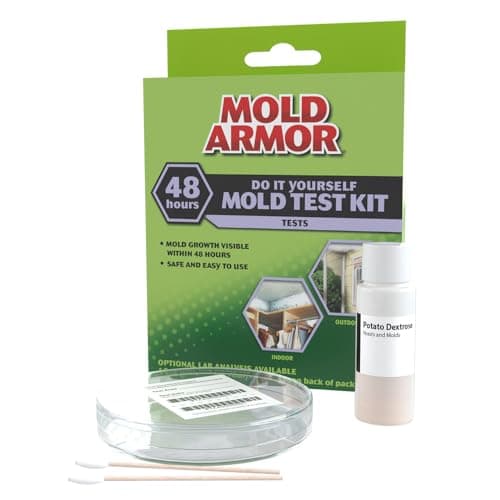
The most popular DIY mold test kit on Amazon. Includes a settling plate, swab, and pre-paid postage for AIHA-accredited lab analysis. The kit detects airborne mold spores and surface mold, identifying species like Aspergillus, Stachybotrys, and Penicillium.
Pros
- Very affordable entry-level test
- Includes petri dish, swab, and postage for lab analysis
- Results identify mold species
Cons
- Lab fee is separate (~$40)
- Takes 5-7 days for lab results
- Only tests one location per kit
How to Get Rid of Mold Smell
Here's the uncomfortable truth: you can't get rid of the smell without getting rid of the mold. Air fresheners, candles, and even ozone generators just mask the odor. The mold is still growing, still producing mVOCs, and still releasing spores. Fix the source.
If You Can See the Mold
For areas under 10 square feet (the EPA's DIY threshold): clean with white vinegar, 3% hydrogen peroxide, or a commercial spray like Concrobium. The smell should fade within 24–48 hours of removing the mold and drying the area.
If the Mold Is Hidden
You need to find it first (see the section above). Once located, hidden mold behind walls requires cutting out the affected drywall section, removing contaminated insulation, treating the framing with an antimicrobial, and drying the cavity before rebuilding. This is typically professional territory.
If the Smell Is in Your HVAC System
A mold fogger treats the entire duct system from the air intake. Run it with the system fan on and all supply registers open. The Concrobium fogger is non-toxic and specifically designed for HVAC treatment. Also replace your air filter and clean the drip pan.
After the Mold Is Gone
- Run a HEPA air purifier for 48–72 hours to capture residual spores. A HEPA filter traps 99.97% of particles 0.3 microns or larger — mold spores are 1–30 microns.
- Keep humidity below 50% — use a dehumidifier and monitor with a hygrometer ($10–$15).
- Improve ventilation — bathroom exhaust fans running 30 minutes after showers, kitchen vents while cooking.
Concrobium Mold Control
Concrobium
$10–15
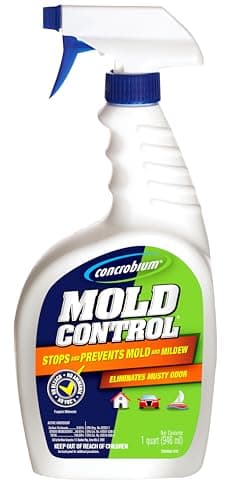
A patented, EPA-registered mold control solution that kills mold without bleach, ammonia, or VOCs. The tri-salt polymer formula crushes mold spores as it dries and leaves an invisible antimicrobial barrier to prevent regrowth. Safe for indoor use on virtually any surface.
Pros
- Non-toxic, no bleach or ammonia
- Kills mold and prevents regrowth
- Safe for use around children and pets
Cons
- Does not remove existing mold stains
- Takes longer to work than bleach-based products
- May require multiple applications for severe infestations
When Mold Smell Means You Need Professional Help
Not every musty whiff needs a remediation crew. But certain situations warrant calling a professional inspector ($300–$600) or remediation company ($2,000–$6,000):
- The affected area is larger than 10 square feet— the EPA's line in the sand for DIY vs. professional
- The smell persists after you've cleaned all visible mold — hidden mold behind walls or under floors
- You or family members have persistent health symptoms — congestion, coughing, or wheezing that improves when you leave the house (refer to CDC mold health guidance)
- After water damage, flooding, or sewage backup — mold colonizes wet materials within 24–48 hours
- You're buying or selling a home — a professional inspection with an ERMI test provides legally defensible documentation
- Mold is in the HVAC system — professional duct cleaning costs $300–$500 and prevents whole-house spore circulation
Dealing With Mold Right Now?
Our step-by-step mold removal guide walks you through testing your home, choosing the right products, and knowing when a job is too big for DIY.
Read the Removal GuideCommon Myths About Mold Smell
"If I can't smell it, there's no mold"
False. Not all mold produces a strong odor, and you can become nose-blind to persistent smells over time. The EPA notes that the absence of a musty smell doesn't rule out mold. If you have unexplained allergy symptoms or visible water damage, test even if you don't smell anything.
"Musty smell always means dangerous mold"
Not necessarily. Most household mold is allergenic, not toxic. The common species that produce musty odors — Cladosporium, Aspergillus, Penicillium— are everywhere in the environment. They cause symptoms in people with allergies and asthma, but they're not the crisis-level Stachybotrysthat drives panic. That said, all mold should be removed. The CDC doesn't distinguish between species when it comes to remediation advice: find it, fix it, clean it up.
"Air fresheners or ozone will fix it"
Air fresheners mask the smell. Ozone generators reduce the odor temporarily by oxidizing mVOC molecules, but they don't kill the mold or stop it from producing new mVOCs. The EPA actually warns against using ozone generators in occupied spaces because ozone itself is a lung irritant. Fix the mold. The smell goes away when the mold does.
Frequently Asked Questions
Can you smell mold through walls?
Yes. mVOCs are gases that pass through drywall, gaps around outlets and fixtures, and any unsealed penetrations. Mold behind a wall will produce a musty smell on the room side, especially near electrical outlets (which have gaps to the wall cavity) and along baseboards.
Does mold always smell musty?
Usually, but not always. Some mold species produce very faint odors. The strength of the smell depends on the colony size, species, moisture level, and airflow. A small colony in a well-ventilated room might not be noticeable. A large colony behind a sealed wall will be obvious.
How long before mold starts to smell?
Mold can begin producing mVOCs within 24–48 hours of initial growth, but the smell typically becomes noticeable to humans after several days to a few weeks of active colonization. By the time you detect a persistent musty smell, the colony is usually well-established.
What does dead mold smell like?
Dead mold still smells musty because the dead hyphae and spores continue to off-gas mVOCs, just more slowly. The smell gradually fades over weeks as the organic material breaks down. To speed it up, physically remove the dead mold, don't just leave it in place.
Does mold smell go away on its own?
Only if the moisture source dries up completely and stays dry long enough for the mold to die and decompose. In practice, this rarely happens because indoor humidity fluctuates. If you can smell mold today, you'll probably smell it next month unless you intervene.
What does mold taste like?
Mold tastes earthy, bitter, and unpleasant — often described as like dirt or stale, damp cardboard. If you accidentally eat a small amount of mold on food, you'll likely notice a sharp, off-putting bitterness immediately. The taste comes from the same mVOC compounds that produce the musty smell, plus mycotoxins in some species. A single accidental bite of moldy food is unlikely to harm a healthy adult — your stomach acid destroys most mold spores. But discard the rest of the food. For immunocompromised individuals, the CDC advises extra caution with any mold exposure. Follow USDA guidelines for which foods to trim versus discard.
Can mold smell make you sick?
mVOCs themselves can cause headaches, dizziness, and nasal irritation in some people. But the bigger health concern is the mold spores released alongside the mVOCs. The CDC notes that mold exposure can trigger allergic reactions, asthma attacks, and upper respiratory symptoms. Mold contributes to an estimated 4.6 million asthma cases annually in the U.S.
Frequently Asked Questions
Can you smell mold through walls?
Does mold always smell musty?
How long before mold starts to smell?
What does dead mold smell like?
Does mold smell go away on its own?
What does mold taste like?
Can mold smell make you sick?
Related Articles
ERMI Mold Test: Cost, Accuracy & When You Actually Need One
How to Get Rid of Black Mold: DIY Removal Guide
How to Test for Mold at Home: DIY Methods That Actually Work
Is There a Mold Detector? What Actually Detects Mold in Your Home
How to Remove Mold from Your Bathroom Ceiling (And Keep It Gone)
Musty Smell in House? Here's How to Find & Fix the Source
Dealing With Mold Right Now?
Our step-by-step mold removal guide walks you through testing your home, choosing the right products, and knowing when a job is too big for DIY.
Read the Removal Guide