Orange Mold: Identification, Risks, and Removal by Surface
Out of the Mold Editorial Team
Our guides are research-backed and cite EPA, CDC, and peer-reviewed sources. Product reviews are based on hands-on testing, not manufacturer claims. Read our editorial standards.
Affiliate Disclosure: Out of the Mold is reader-supported. As an Amazon Associate, we may earn a commission when you buy through links on this page — at no extra cost to you. Our picks are based on independent standards, manufacturer specifications, and published research, not commissions.
Key Takeaways
- Orange mold includes 4+ organisms: Acremonium (allergenic), Aspergillus flavus (carcinogenic aflatoxins), Fuligo septica (harmless slime mold), and Serratia marcescens (shower bacterium).
- Fuligo septica — 'dog vomit slime mold' — looks alarming but is completely harmless. It dries up in 1–3 days. Don't panic.
- Aspergillus flavus is the one to worry about. Its aflatoxins are IARC Group 1 carcinogens. If you see fuzzy powdery orange mold on basement walls or stored food, get it tested.
- Remove with white vinegar (60 min contact) or 3% hydrogen peroxide (10–15 min). Don't use bleach on porous surfaces — it doesn't reach the roots.
- Fix the moisture source. Every organism in this article needs persistent dampness to grow.
Orange mold is usually one of four things: Acremonium (slimy, on damp surfaces), Fuligo septica("dog vomit" slime mold — looks alarming but harmless), Aspergillus flavus (produces carcinogenic aflatoxins), or the bacterium Serratia marcescens (the pinkish-orange film in showers). Most orange mold in homes is allergenic but not toxic. The exception is Aspergillus flavus — an IARC Group 1 carcinogen producer that needs immediate removal. Clean small areas with white vinegar or 3% hydrogen peroxide. Fix the moisture source or it returns within weeks.
You spotted something orange growing in your shower, on a piece of wood, or maybe something that looks like a bright orange blob on your mulch. The internet is full of vague answers about "orange mold," so let me cut through it: what you're looking at depends entirely on where it's growing and what texture it has.
I've seen people panic over Fuligo septica — a harmless slime mold that looks like someone vomited scrambled eggs on their lawn — while ignoring a fuzzy orange Aspergilluscolony on basement drywall that's actually producing mycotoxins. Context matters more than color.
What Is Orange Mold?
"Orange mold" isn't a species — it's a description. Like green mold or pink mold, the term covers multiple organisms that happen to look orange. Here are the ones you're most likely dealing with:
Acremonium
Acremonium strictumis the most common true orange mold in homes. It starts as a small, moist, pinkish-orange colony and develops a powdery texture as it matures. You'll find it on window sills, shower tiles, humidifier reservoirs, and around leaky pipes. It needs persistent dampness — not just occasional humidity.
Health-wise, Acremoniumis an opportunistic pathogen. In healthy people, it's mostly allergenic (sneezing, itchy eyes). In immunocompromised individuals, it can cause fungal sinusitis and nail infections. It's not the orange mold that should keep you up at night — but it does indicate a moisture problem you need to fix.
Aspergillus flavus
This is the one to take seriously. Aspergillus flavus can appear yellow-green to orange depending on growth stage and substrate. It produces aflatoxins — classified as Group 1 human carcinogens by the International Agency for Research on Cancer (IARC). Aflatoxin B1 is the most potent naturally occurring carcinogen known, primarily linked to liver cancer.
At household concentrations, the cancer risk from airborne aflatoxins is low compared to dietary exposure (contaminated grains and nuts). But A. flavus also causes aspergillosis— a spectrum of lung infections that the CDC calls the second most common fungal infection requiring hospitalization in the U.S. If you see fuzzy, powdery orange-to-greenish mold on basement walls, stored grain, or HVAC surfaces, don't just wipe it down. Get it tested with an ERMI mold test or test kit to confirm species.
Fuligo septica ("Dog Vomit Slime Mold")
If you found a bright yellow-orange blob on mulch, wood chips, or a rotting log, this is almost certainly Fuligo septica. It looks exactly like what its nickname suggests — chunky, slimy, and alarming. Reddit threads about it blow up regularly because people think their yard has been contaminated with something toxic.
Here's the reality: Fuligo septicaisn't even a true mold. It's a slime mold — a completely different biological group. It feeds on bacteria and decaying organic matter, not your home. It won't damage structures, won't spread indoors, and is considered harmless by mycologists. The only health concern is that its spores can trigger allergic reactions in sensitive individuals — roughly 40% of allergy sufferers may react to slime mold spores. Leave it alone and it dries up on its own in a few days. If it grosses you out, scoop it up and toss it.
Serratia marcescens (The Shower Bacterium)
That pinkish-orange film on your shower grout, around the drain, or on your toilet? Probably Serratia marcescens — a bacterium, not a mold. It feeds on fatty residues from soap and shampoo, which is why it loves bathrooms. It overlaps heavily with what people call pink mold — the same organism, just varying in shade from pink to orange depending on the strain and substrate.
While harmless on tile, Serratia can cause urinary tract infections, respiratory infections, and eye infections if it enters the body. Keep it out of contact lens cases, open wounds, and catheter sites. A weekly bleach spray on bathroom surfaces prevents it from establishing.
Epicoccum nigrum
Less common indoors but worth mentioning: Epicoccum nigrum produces orange-brown colonies on damp drywall, wood, and paper. It's primarily allergenic — a common airborne allergen found in outdoor and indoor air studies worldwide. If you find it, the removal methods below handle it the same as any other surface mold.
Is Orange Mold Dangerous?
The short answer: most orange mold is a nuisance, not an emergency. But species matters — and you can't tell by looking.
| Organism | Type | Health Risk | Typical Location | Urgency |
|---|---|---|---|---|
| Acremonium | True mold | Low — allergenic, opportunistic infections in immunocompromised | Windows, bathrooms, pipes | Moderate |
| Aspergillus flavus | True mold | High — aflatoxins (Group 1 carcinogen), aspergillosis | Basement walls, stored food, HVAC | High |
| Fuligo septica | Slime mold | Very low — mild allergen only | Mulch, wood chips, outdoors | None |
| Serratia marcescens | Bacterium | Low — UTIs, eye infections if it enters body | Showers, toilets, sinks | Low |
| Epicoccum nigrum | True mold | Low — common airborne allergen | Drywall, wood, paper | Moderate |
The CDC's guidance applies regardless of color: when you find mold, remove it and fix the moisture source. Don't wait for test results to start cleaning — but do get tested if health symptoms persist or you suspect Aspergillus. For medical guidance, see the CDC's mold and health resources and the EPA's mold guide.
How to Remove Orange Mold (By Location)
The removal method depends more on the surface than the mold species. For areas under 10 square feet — the EPA's DIY threshold — you can handle this yourself. Wear an N95 mask, gloves, and eye protection.
Shower and Bathroom Tile
Orange growth in showers is almost always Serratia marcescens (bacterium) or Acremonium (mold). Either way, the cleaning process is the same:
- Spray undiluted white vinegar on all orange-stained surfaces
- Wait 30–60 minutes (longer is better — vinegar kills ~82% of mold species)
- Scrub grout lines with an old toothbrush or stiff bristle brush
- Rinse thoroughly and dry with a towel
- For persistent stains, follow up with a baking soda paste (baking soda + water to thick consistency), scrub, and rinse
Prevention: Run your exhaust fan during and 30 minutes after every shower. Squeegee walls and glass doors. This single habit prevents 80% of bathroom mold. For more, see our bathroom ceiling mold guide.
Wood Surfaces
Orange mold on wood — framing, furniture, decking, or structural lumber — is concerning because wood is porous and mold roots penetrate below the surface. Don't use bleach on wood — the EPA doesn't recommend it for porous materials because it doesn't reach the roots (our bleach vs. mold guide explains when bleach works and when it backfires).
- Spray 3% hydrogen peroxide directly on the mold and let it sit 10–15 minutes
- Scrub with a stiff brush along the wood grain
- Wipe clean and let dry completely
- For deep stains on unfinished wood, light sanding (120-grit) after the wood dries to 6–9% moisture content
- Apply Concrobium after cleaning to prevent regrowth
If you find orange mold on structural wood (floor joists, wall studs, subflooring), check our wood floor mold guide for the save-or-replace decision framework. Structural mold often requires professional remediation ($10–$25/sq ft in 2026).
Concrobium Mold Control (32 oz Spray, 2-Pack)
Concrobium
$30–35 (2 bottles)
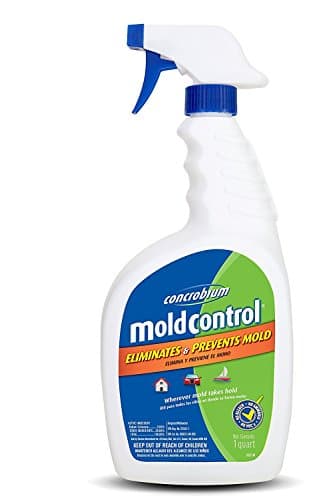
A patented, EPA-registered mold control solution that kills mold without bleach, ammonia, or VOCs. The tri-salt polymer formula crushes mold spores as it dries and leaves an invisible antimicrobial barrier to prevent regrowth. Safe for indoor use on virtually any surface.
Pros
- Non-toxic, no bleach or ammonia
- Kills mold and prevents regrowth
- Safe for use around children and pets
Cons
- Does not remove existing mold stains
- Takes longer to work than bleach-based products
- May require multiple applications for severe infestations
Drywall and Ceiling
Orange mold on drywall means moisture has been present long enough for colonization — drywall's paper backing is a prime food source. Surface mold on painted drywall can be cleaned:
- Spray with vinegar or hydrogen peroxide
- Scrub gently (don't soak the drywall — you'll make it worse)
- Dry immediately with fans
If the drywall is soft, crumbling, or has mold on the back side, it needs to be cut out and replaced. FEMA's rule for flood-damaged drywall: cut 12 inches above the visible water line. For ceiling-specific guidance, see our ceiling mold guide, or our mold on walls guide for wall-specific removal techniques.
Food
Orange mold on food is typically Aspergillus or Penicillium — follow the USDA's guidelines from our green mold food safety section. Hard cheese and firm vegetables: trim 1 inch around and below. Everything else (bread, soft cheese, fruit, leftovers): toss the whole thing. Don't sniff it to check — you're inhaling concentrated spores.
Outdoor Surfaces (Mulch, Wood Chips, Decking)
Bright orange blobs on mulch or garden wood? That's Fuligo septica— harmless slime mold. It feeds on bacteria in decaying organic matter and dries up within 1–3 days on its own. No treatment needed. If it's on your deck or siding, spray it off with a garden hose.
True mold on outdoor wood (decking, fencing) can be treated with a deck cleaner containing sodium percarbonate, or a spray of undiluted vinegar. Power washing works but use caution — too close and you'll damage the wood grain.
Orange Mold vs. Other Mold Colors
Mold color is the least reliable indicator of danger, but it's what people notice first. Here's how orange compares to the other common household mold colors:
| Feature | Orange | Green | Pink | Black |
|---|---|---|---|---|
| Common species | Acremonium, A. flavus, Fuligo septica | Aspergillus, Penicillium, Cladosporium | Serratia marcescens (bacterium) | Stachybotrys, Aspergillus niger |
| Texture | Slimy, powdery, or blobby | Fuzzy, powdery, velvety | Slimy biofilm | Slimy or sooty |
| Moisture needed | Moderate to high | Moderate | High + soap residue | Very high (chronic wetness) |
| Worst-case risk | Aflatoxins (A. flavus) | Aflatoxins, ochratoxin A | UTIs, eye infections | Satratoxins (Stachybotrys) |
| DIY removal | Yes, under 10 sq ft | Yes, under 10 sq ft | Yes — surface cleaning | Often needs a pro |
The bottom line: color doesn't determine toxicity. A bright orange Aspergillus flavus colony is objectively more dangerous than some black mold that turns out to be Cladosporium. For a side-by-side breakdown of every common household mold color, see our complete mold identification guide. If you want to know exactly what you're dealing with, a mold test kit ($10–$45) or ERMI DNA test ($200–$250) identifies the species.
Mold Armor FG500 Do It Yourself Mold Test Kit
Mold Armor
$9–15
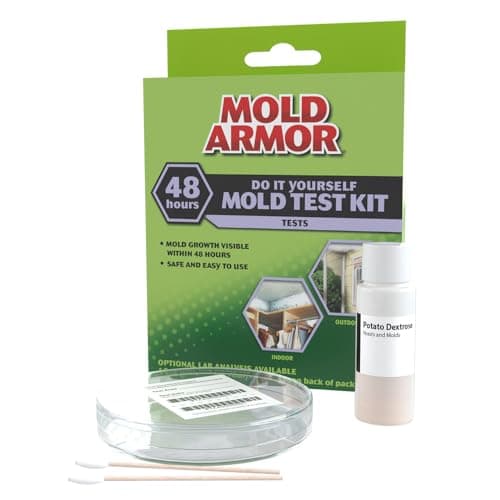
The most popular DIY mold test kit on Amazon. Includes a settling plate, swab, and pre-paid postage for AIHA-accredited lab analysis. The kit detects airborne mold spores and surface mold, identifying species like Aspergillus, Stachybotrys, and Penicillium.
Pros
- Very affordable entry-level test
- Includes petri dish, swab, and postage for lab analysis
- Results identify mold species
Cons
- Lab fee is separate (~$40)
- Takes 5-7 days for lab results
- Only tests one location per kit
When to Call a Professional
Handle orange mold yourself if the affected area is under 10 square feet and on accessible surfaces. Call a certified remediation company (IICRC or ACAC) when:
- The area exceeds 10 sq ft— EPA's threshold for professional remediation
- It's in your HVAC system — Duct mold circulates spores through every room. DIY duct cleaning is ineffective at best, dangerous at worst. See our AC mold guide.
- It keeps coming back— Recurring mold means you're treating the symptom, not the cause. A pro will find the moisture source (hidden leak, condensation issue, foundation seepage).
- You or family members have health symptoms — Persistent coughing, wheezing, sinus congestion, or skin rashes that worsen at home and improve when you leave.
- Structural wood is affected— Mold on floor joists, wall studs, or roof sheathing isn't a DIY project.
Professional mold remediation costs $10–$25 per square foot in 2026, with most contained projects running $1,200–$3,750. Get at least three quotes from certified companies. For a detailed cost breakdown, see our mold remediation cost guide.
Preventing Orange Mold
Every orange mold organism in this article needs the same thing: moisture. Cut off the moisture and the mold can't establish.
- Keep indoor humidity below 50% — The EPA recommends 30–50%. A $10 hygrometer lets you monitor. If your basement or bathroom consistently reads above 50%, run a dehumidifier.
- Fix leaks within 24 hours — Mold colonizes damp surfaces within 24–48 hours. A $5 pipe drip today prevents a $3,000 remediation next month.
- Ventilate bathrooms — Run exhaust fans during and 30 minutes after showers. Squeegee walls after use. This prevents both Serratia and Acremonium.
- Apply preventive spray — Concrobium Mold Control leaves an invisible antimicrobial barrier. Spray it on basement walls, window frames, and bathroom corners after cleaning.
- Improve airflow — Pull furniture 2–3 inches from exterior walls. Stagnant air behind a bookcase or couch creates cold spots where condensation forms and mold thrives.
- Manage outdoor mulch — If Fuligo septica keeps appearing, it's because your mulch stays too wet. Rake it to improve airflow, or switch to rock or rubber mulch in problem areas.
Dealing With Mold Right Now?
Our step-by-step mold removal guide walks you through testing your home, choosing the right products, and knowing when a job is too big for DIY.
Read the Removal GuideFrequently Asked Questions
Is orange mold dangerous?
Most orange mold species are allergenic but not highly toxic. The exception is Aspergillus flavus, which produces aflatoxins — IARC Group 1 carcinogens linked to liver cancer. You can't tell species by color alone. If health symptoms persist or you suspect Aspergillus, get a mold test to identify the species.
What causes orange mold in the shower?
The orange or pinkish-orange film in showers is usually Serratia marcescens, a bacterium that feeds on soap and shampoo residue. It thrives in warm, constantly damp environments with poor ventilation. Run your exhaust fan, squeegee walls, and clean weekly with white vinegar or a bleach solution to prevent it.
Is the orange blob in my yard dangerous?
Almost certainly Fuligo septica— "dog vomit slime mold." Despite the alarming appearance, it's harmless. It's not even a true mold — it's a slime mold that feeds on bacteria in decaying mulch. It dries up and disappears within 1–3 days. Leave it alone or scoop it up if it bothers you.
Can I use bleach on orange mold?
On non-porous surfaces like tile, glass, and sealed countertops, yes — dilute 1:3 with water. On porous surfaces like wood, drywall, and grout, no. Bleach doesn't penetrate porous materials, so it kills surface mold but leaves the roots intact. Use white vinegar or hydrogen peroxide instead — both penetrate better and kill a broader range of species.
How do I test for orange mold?
A standard mold test kit ($10–$45) collects spore samples you mail to a lab for species identification. For the most comprehensive analysis — 36 species quantified by DNA — an ERMI test costs $200–$250. Both are DIY options. Testing is worth it if mold keeps returning or someone in the household has persistent respiratory symptoms.
Frequently Asked Questions
Is orange mold dangerous?
What causes orange mold in the shower?
Is the orange blob in my yard dangerous?
Can I use bleach on orange mold?
How do I test for orange mold?
Related Articles
Green Mold: Types, Dangers, and How to Remove It
Pink Mold: What It Really Is, How to Remove It, and How to Prevent It
Yellow Mold: Why It's More Dangerous Than You Think
How to Get Rid of Black Mold: DIY Removal Guide
Hydrogen Peroxide for Mold: Does It Actually Work?
Concrobium Mold Control Review: What It Does (and What It Won't)
Dealing With Mold Right Now?
Our step-by-step mold removal guide walks you through testing your home, choosing the right products, and knowing when a job is too big for DIY.
Read the Removal Guide