Green Mold: Types, Dangers, and How to Remove It
Out of the Mold Editorial Team
Our guides are research-backed and cite EPA, CDC, and peer-reviewed sources. Product reviews are based on hands-on testing, not manufacturer claims. Read our editorial standards.
Affiliate Disclosure: Out of the Mold is reader-supported. As an Amazon Associate, we may earn a commission when you buy through links on this page — at no extra cost to you. Our picks are based on independent standards, manufacturer specifications, and published research, not commissions.
Key Takeaways
- Green mold isn't one species — it's an umbrella term covering Aspergillus, Penicillium, and Cladosporium.
- Color doesn't determine danger. A green Aspergillus colony producing aflatoxins is more hazardous than some 'black mold.'
- Mold contributes to 4.6 million U.S. asthma cases annually — remove it and fix the moisture source.
- Green mold on food: trim hard cheese and firm veggies (cut 1 inch around), but toss bread, soft fruit, and leftovers entirely.
- The CDC says treat all mold the same: remove it, fix the moisture, and keep humidity below 50%.
Green mold isn't one species — it's a catch-all for any mold that looks green. The three most common culprits in homes are Aspergillus, Penicillium, and Cladosporium. Most green mold is less dangerous than the dreaded "black mold" but it's not harmless — Aspergillus produces aflatoxins classified as Group 1 carcinogens at high exposure, and Penicillium produces ochratoxin A linked to kidney damage. Remove green mold with white vinegar, 3% hydrogen peroxide, or a commercial spray like Concrobium. Fix the moisture problem or it'll be back within weeks.
You found something green and fuzzy growing on a wall, on your food, or in some damp corner of your house. Your first question is probably: "Is this dangerous?" Your second: "How do I get rid of it?"
I'll answer both, but here's the thing most articles about green mold get wrong — they treat it like one thing. It's not. "Green mold" describes hundreds of different species, and the health risks, removal methods, and urgency depend entirely on which one you're dealing with and where it's growing.
What Is Green Mold?
"Green mold" is an umbrella term for any mold that produces green-colored spores or mycelium. It's like saying "brown dog" — it describes how it looks, not what it is. Three genera account for the vast majority of green mold found in homes:
- Aspergillus — The most common indoor mold genus, period. Over 180 species, many of them green. Fuzzy or powdery texture. Grows on walls, food, HVAC systems, and just about any damp organic material.
- Penicillium— Blue-green to bright green. The mold genus that gave us penicillin (and also ruins your bread). Requires less moisture than most molds, which is why it shows up in places that don't seem "that damp." The most common indoor mold by some measures.
- Cladosporium — Olive-green to dark green-black. Prefers cooler temperatures than the other two, which is why you see it on window frames and sills, basement walls, and outdoor-facing surfaces. One of the world's most widespread mold genera.
You can't reliably distinguish these three with the naked eye. The texture gives some clues — Aspergillus tends toward powdery, Penicillium often looks velvety with a white edge, and Cladosporium has a suede-like feel — but overlap is massive. If knowing the exact species matters (insurance claims, real estate transactions, persistent health symptoms), you need a DNA-based ERMI test or a mold test kit with lab analysis.
Is Green Mold Dangerous?
The honest answer: it depends on the species, the exposure level, and your health. Here's what the science actually says.
Aspergillus — The One to Watch
Aspergillus is the most medically significant of the three. Some species produce aflatoxins — classified as Group 1 carcinogens by the International Agency for Research on Cancer (IARC). These are primarily a food contamination risk (grains, nuts, spices), not an airborne hazard at normal household levels. But other Aspergillus species cause aspergillosis, a spectrum of lung infections ranging from allergic reactions to invasive disease. According to the CDC, aspergillosis is the second most common fungal infection requiring hospitalization in the United States.
For healthy people, normal household exposure to Aspergillus spores usually causes nothing worse than nasal congestion or allergy symptoms. For immunocompromised individuals — transplant patients, people on chemotherapy, those with uncontrolled HIV — it can be life-threatening.
Penicillium — The Allergy Trigger
Penicillium is one of the top allergens in indoor air. It produces ochratoxin A, a mycotoxin linked in research to kidney damage and classified as a possible human carcinogen (Group 2B) by IARC. The practical risk at household levels is mostly allergic — sneezing, itchy eyes, sinus congestion, and asthma aggravation. But chronic exposure in heavily contaminated homes has been associated with more serious respiratory complaints.
Cladosporium — Mostly Allergenic
Cladosporiumis the least concerning of the three, but it's still one of the most common triggers for mold allergies. It rarely causes infections except in severely immunocompromised people. If you're getting seasonal allergy symptoms indoors, especially near windows or in basements, Cladosporium is a likely contributor.
The Bottom Line on Risk
The CDC's position is straightforward: when mold is present, remove it and fix the moisture source. They don't differentiate by color or species for practical purposes. That's good advice. Mold contributes to an estimated 4.6 million asthma casesannually in the U.S., and reducing household mold has been shown to cut asthma symptoms by 25–45%. Color alone doesn't determine toxicity. Species does.
For medical guidance on mold exposure, see the CDC's mold and health resources and the EPA's mold guide.
Green Mold on Food: Trim or Toss?
Green mold on food is usually Penicillium or Aspergillus— the same genera that grow on your walls, but different species optimized for food substrates. The USDA has clear guidelines on what's safe:
Safe to Trim (Cut 1 Inch Around and Below the Mold)
- Hard cheeses— cheddar, Parmesan, Swiss. Mold can't penetrate dense cheese easily. Cut 1 inch around the mold without touching it with the knife, then re-wrap in fresh packaging.
- Firm vegetables — cabbage, bell peppers, carrots. Same rule: cut 1 inch around and below.
- Hard salami and dry-cured meats — Surface mold on these is normal in production. Scrub it off.
Must Toss (Discard the Entire Item)
- Bread and baked goods — Porous structure means mold roots penetrate the entire loaf even when you can only see one green spot. Toss it.
- Soft cheese — cottage cheese, cream cheese, Brie, ricotta. High moisture lets mold spread fast.
- Soft fruits — strawberries, peaches, grapes, tomatoes. If one strawberry in the package is moldy, check all of them — spores spread through the container.
- Yogurt, sour cream — Toss the whole container. The mold you see on top has already contaminated the product below.
- Jams and jellies — The USDA says discard. Mold on preserves can produce mycotoxins that penetrate below the surface.
- Cooked food, leftovers, lunch meat — When in doubt, throw it out.
One thing people overlook: don't sniff moldy food. Bringing it close to your nose deliberately inhales concentrated spores. If it looks moldy, just toss it — you don't need to confirm with your nose.
How to Remove Green Mold
For areas under 10 square feet — the EPA's threshold for DIY remediation — you can handle green mold yourself. Wear an N95 mask, gloves, and eye protection. Open windows for ventilation.
Method 1: White Vinegar (Best for Porous Surfaces)
White vinegar kills roughly 82% of mold species and penetrates porous materials better than bleach. Spray undiluted white vinegar on the mold, wait one hour, scrub with a brush, and wipe clean. This is my go-to for green mold on drywall, wood, or grout. Our vinegar mold guide covers the full technique. For surface-specific removal, see our guides on bathroom ceiling mold, mold on walls, and black mold removal.
Method 2: Hydrogen Peroxide (Best for Sensitive Surfaces)
Spray 3% hydrogen peroxide (the standard pharmacy kind) directly on the mold. Wait 10–15 minutes until the fizzing stops, then scrub and wipe. No harsh fumes, no surface damage on most materials. Our hydrogen peroxide for mold guide covers concentrations, contact times, and surface compatibility in detail.
Method 3: Commercial Mold Spray (Best for Stubborn Stains)
For green mold that's left deep stains — especially on grout, concrete, or wood — Concrobium Mold Control kills and prevents regrowth without toxic fumes, while RMR-86 removes stains fast but has strong bleach-based fumes. Use Concrobium if you have kids or pets; RMR-86 if the stain is your main concern.
Concrobium Mold Control
Concrobium
$10–15
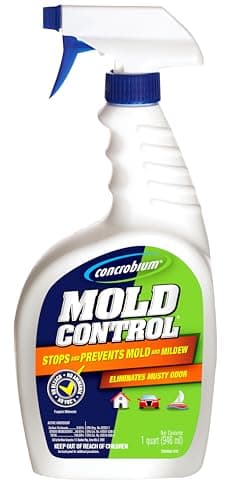
A patented, EPA-registered mold control solution that kills mold without bleach, ammonia, or VOCs. The tri-salt polymer formula crushes mold spores as it dries and leaves an invisible antimicrobial barrier to prevent regrowth. Safe for indoor use on virtually any surface.
Pros
- Non-toxic, no bleach or ammonia
- Kills mold and prevents regrowth
- Safe for use around children and pets
Cons
- Does not remove existing mold stains
- Takes longer to work than bleach-based products
- May require multiple applications for severe infestations
For Large Areas or HVAC Systems
If green mold has colonized a basement, attic, or your ductwork, a mold fogger treats entire rooms including hard-to-reach areas. The Concrobium fogger is the go-to for HVAC treatment — run it near the air intake with the fan on. For areas over 10 square feet, or if the mold is behind walls, hire a certified remediation pro.
Green Mold vs. Other Mold Colors
Color is the first thing people notice, but it's one of the least reliable indicators of danger. Here's how the common household mold colors actually compare:
| Feature | Green Mold | Black Mold | Pink Mold | White Mold |
|---|---|---|---|---|
| Common species | Aspergillus, Penicillium, Cladosporium | Stachybotrys, Aspergillus niger, Cladosporium | Serratia marcescens (bacteria) | Penicillium, Aspergillus, Sclerotinia |
| Texture | Fuzzy, powdery, or velvety | Slimy or sooty | Slimy biofilm | Fuzzy or cotton-like |
| Typical locations | Walls, food, HVAC, fabrics | Drywall, wood, HVAC | Shower, toilet, sinks | Basements, crawl spaces, attics |
| Moisture needed | Moderate (Penicillium needs less than most) | High (Stachybotrys needs chronic wetness) | High + soap residue | Moderate to high |
| Health risk | Low–moderate (allergies, mycotoxins at high exposure) | Moderate–high (respiratory, mycotoxins) | Low–moderate (UTIs, eye infections) | Low–moderate (allergies) |
| Removal difficulty | Moderate | Hard (often needs a pro) | Easy — surface only | Moderate |
The key takeaway: color doesn't determine danger. A bright green Aspergilluscolony producing aflatoxins is objectively more hazardous than some "black mold" that turns out to be harmless Cladosporium. The only way to know what you're dealing with is testing. For a full overview of every common household mold color and what each one means, see our complete mold identification guide. You can also read our individual guides on black mold, orange mold, and yellow mold (which includes dry rot — a structural threat most people overlook).
Where Green Mold Grows in Homes
Green mold isn't picky, but it has favorite spots:
- Bathrooms — The #1 spot. Steam plus organic residue (soap, skin cells) is a perfect storm. Check behind the toilet, under the sink, and on the ceiling. Green discoloration on bathroom surfaces is often Cladosporium.
- Kitchens — Under the sink (check for slow leaks), in the fridge drip pan, around the dishwasher seal.
- Basements — Foundation walls with moisture seepage are Aspergillus territory. If the walls feel damp and you see green growth, you likely have a waterproofing issue.
- Window sills — Condensation feeds Cladosporium on wood and vinyl frames, especially in winter. See our window sill mold guide for removal by material type.
- HVAC ducts and air handlers — Dark, moist, and full of dust. Green mold in your ductwork circulates spores through every room. If you smell must when the AC kicks on, mold in the system is likely. See our AC mold guide.
- Food — Bread, cheese, fruit, leftover takeout. Penicillium is the classic blue-green food mold. See the food safety section above.
Preventing Green Mold
All three common green mold species need the same thing: moisture and organic material. Deny them moisture and the problem doesn't start.
- Keep indoor humidity below 50% — Use a hygrometer ($10–15) to monitor. Run a dehumidifier in basements and bathrooms that consistently read above 50%. The EPA recommends 30–50% as the ideal indoor range.
- Ventilate wet areas — Run bathroom exhaust fans during and 30 minutes after showers. Open kitchen windows when cooking with steam. These two habits alone prevent most household mold.
- Fix leaks immediately — A dripping pipe under the sink is a mold colony waiting to happen. Mold can colonize a damp surface within 24–48 hours.
- Improve air circulation — Move furniture a few inches from exterior walls. Cold spots behind bookcases and couches are where Cladosporium sneaks in.
- Store food properly— Seal bread and baked goods. Don't leave produce sitting out for days. Check your fridge temperature — it should be 40°F (4°C) or below.
- Apply preventive treatments — Concrobium leaves an invisible antimicrobial barrier after drying. Spray it on high-risk areas (basement walls, window frames, bathroom corners) as a preventive measure.
Dealing With Mold Right Now?
Our step-by-step mold removal guide walks you through testing your home, choosing the right products, and knowing when a job is too big for DIY.
Read the Removal GuideFrequently Asked Questions
Is green mold toxic?
Some species are, some aren't. Aspergillus species can produce carcinogenic aflatoxins and cause serious lung infections in immunocompromised people. Penicillium produces ochratoxin A, linked to kidney damage. Cladosporiumis mostly allergenic. You can't determine toxicity by color — it requires lab testing or a DNA-based ERMI test.
What causes green mold in a house?
Moisture plus organic material. The most common triggers are: poor bathroom ventilation, plumbing leaks, high humidity (above 50%), condensation on cold surfaces, and water intrusion through foundations or roofs. Fix the moisture and you fix the mold.
Is green mold the same as black mold?
No. "Black mold" typically refers to Stachybotrys chartarum, which requires chronic water saturation (like a leaking roof dripping onto drywall for weeks). Green mold species like Aspergillus, Penicillium, and Cladosporium grow in less extreme conditions. Some species appear in both green and black forms, which is why color alone is unreliable for identification. See our black mold removal guide for more.
Can green mold on food make you sick?
Yes. Some food molds produce mycotoxins that cause nausea, vomiting, and more serious effects with repeated exposure. Don't eat visibly moldy soft foods. For hard cheese and firm vegetables, cut at least 1 inch around and below the mold — see the USDA guidelines in our food safety section above.
How do I know what type of mold I have?
You can't tell by looking at it. A standard mold test kit ($10–$45) with lab analysis identifies species from spore samples. For the most comprehensive results — 36 species quantified by DNA — use an ERMI test (~$200). Both are DIY options you can do without a professional.
Frequently Asked Questions
Is green mold toxic?
What causes green mold in a house?
Is green mold the same as black mold?
Can green mold on food make you sick?
How do I know what type of mold I have?
Related Articles
Pink Mold: What It Really Is, How to Remove It, and How to Prevent It
How to Get Rid of Black Mold: DIY Removal Guide
ERMI Mold Test: Cost, Accuracy & When You Actually Need One
Mold in Your Refrigerator: How to Clean It and Stop It for Good
Orange Mold: Identification, Risks, and Removal by Surface
Yellow Mold: Why It's More Dangerous Than You Think
Dealing With Mold Right Now?
Our step-by-step mold removal guide walks you through testing your home, choosing the right products, and knowing when a job is too big for DIY.
Read the Removal Guide