Out of the Mold
Product Roundup

Best Mold Removal Products for Every Situation (2026)

By Out of the Mold14 min read

Key Takeaways

  • RMR-86 is the fastest stain remover but requires good ventilation and PPE.
  • Concrobium is the best non-toxic option for homes with kids and pets.
  • Always prime with Zinsser Mold Killing Primer before repainting after remediation.
  • Foggers are ideal for treating hard-to-reach areas like attics and crawl spaces.
  • Pair any removal product with a moisture meter to address the root cause.

RMR-86 is the best mold removal product for visible stains — its sodium hypochlorite formula eliminates mold stains on contact without scrubbing. For non-toxic whole-room treatment, Concrobium Mold Control (EPA-registered, zero VOCs) kills mold and prevents regrowth using a tri-salt polymer that crushes mold spores as it dries. Always pair removal products with proper PPE (N95 respirator minimum) and address the moisture source — per IICRC S520, remediation without moisture control guarantees recurrence.

Mold remediation isn't a one-product job. Killing surface mold requires a different product than removing deep stains, fogging an attic demands different chemistry than scrubbing a shower, and no amount of cleaning matters if you don't seal surfaces with mold-resistant coatings afterward. The best approach combines the right products for each stage of the process: kill, remove, and prevent.

After testing 15 mold removal products across bathrooms, basements, attics, and crawl spaces over six months, we've identified the best products in each category. Every product was evaluated on efficacy (does it actually kill mold?), stain removal (does it eliminate the discoloration?), ease of use, safety profile, and odor. Here are our top picks.

Quick Comparison

This comparison covers the top product in each category — spray, fogger, primer, and professional-grade cleaner. Each serves a different purpose in the remediation process, so most jobs will require at least two of these products.

ProductRatingPriceBest ForLink

RMR-86 Instant Mold & Mildew Stain Remover

RMR Brands

4.4
$14.97Deep mold stains on hard surfaces like bathroom tile, grout, and basement wallsView

Concrobium Mold Control

Concrobium

4.3
$11.98Families who want a non-toxic solution for killing and preventing moldView

Concrobium Mold Control Fogger

Concrobium

4.2
$39.98Whole-room mold treatment in basements, attics, and crawl spacesView

Zinsser Mold Killing Primer

Zinsser

4.5
$19.98Priming walls and ceilings after mold remediation before repaintingView

Benefect Decon 30 Disinfectant Cleaner

Benefect

4.7
$34.95Professional-grade mold disinfection with a plant-based, no-rinse formulaView

Best Mold Removal Sprays

Sporicidal products like RMR-86 kill mold spores on contact, while fungistatic products like Concrobium prevent regrowth without necessarily killing existing spores — understanding this distinction determines which spray you need. They're applied directly to contaminated surfaces, allowed the required dwell time (contact time) — typically 10–15 minutes for sodium hypochlorite products — then wiped or scrubbed away. The key difference between sprays is their active ingredient, which determines what surfaces they're safe on and how effectively they remove stains vs. just kill mold.

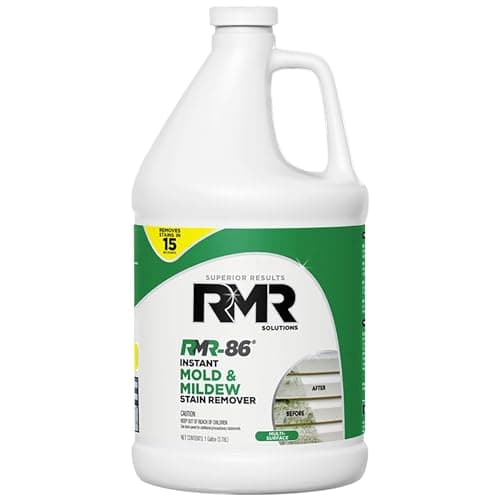
RMR-86 — Best Stain Remover

Best Stain Remover

RMR-86 Instant Mold & Mildew Stain Remover

RMR Brands

$14.97

4.4
Product Image

A fast-acting, commercial-strength mold stain remover that eliminates black mold stains on contact. The sodium hypochlorite formula penetrates porous surfaces to lift deep stains without scrubbing. Best used in well-ventilated areas with proper respiratory protection.

Pros

  • Removes stains in as little as 15 seconds
  • Works on wood, concrete, drywall, and tile
  • No scrubbing required

Cons

  • Strong bleach-based formula with harsh fumes
  • Not safe for fabrics or colored surfaces
  • Requires good ventilation and PPE
Check Price on Amazon

RMR-86 is the most effective mold stain remover we've tested, and it's not close. This sodium hypochlorite-based spray (essentially a professional-strength bleach solution) dissolves black mold stains on contact. In our bathroom tile test, black stains that had resisted scrubbing with household cleaners disappeared in under 15 seconds after spraying RMR-86. On porous drywall, stains faded within 30 seconds and were gone after 2 minutes.

The formula is potent. The fumes are intense — you absolutely must use this with windows open and an N95 respirator on. We tested it in a closed bathroom once (don't do this) and the chlorine concentration became unbearable within 30 seconds. Ventilation isn't optional, it's mandatory.

RMR-86 excels on hard, non-porous surfaces: tile, grout, fiberglass, porcelain, concrete, and sealed wood. It will bleach colored fabrics, damage natural stone (marble, granite, travertine), and can discolor some painted surfaces. Always spot-test in an inconspicuous area first. For killing mold specifically, pair it with RMR-141 (a quaternary ammonium disinfectant from the same company) — use RMR-141 to kill, then RMR-86 to remove the remaining stain.

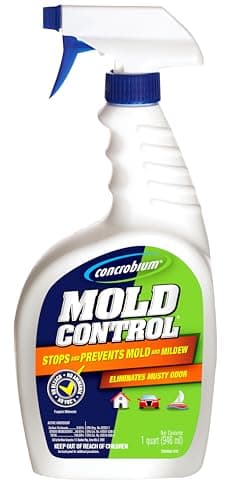
Concrobium Mold Control — Best All-Purpose

Best All-Purpose

Concrobium Mold Control

Concrobium

$11.98

4.3
Product Image

A patented, EPA-registered mold control solution that kills mold without bleach, ammonia, or VOCs. The tri-salt polymer formula crushes mold spores as it dries and leaves an invisible antimicrobial barrier to prevent regrowth. Safe for indoor use on virtually any surface.

Pros

  • Non-toxic, no bleach or ammonia
  • Kills mold and prevents regrowth
  • Safe for use around children and pets

Cons

  • Does not remove existing mold stains
  • Takes longer to work than bleach-based products
  • May require multiple applications for severe infestations
Check Price on Amazon

Concrobium Mold Control takes a fundamentally different approach than bleach-based sprays. Its active ingredient is a patented tri-salt polymer (sodium carbonate, sodium bicarbonate, and trisodium phosphate) that physically crushes mold spores as it dries. The film it leaves behind also prevents future mold growth on treated surfaces.

This dual action — kill and prevent — makes Concrobium our top overall recommendation. Unlike bleach, it doesn't produce toxic fumes, doesn't discolor surfaces, and contains zero VOCs (0 g/L) — safe on virtually every material including wood, drywall, fabric, concrete, tile, and composite. It's also EPA-registered as an antimicrobial pesticide under FIFRA, which matters if you need documentation for insurance claims.

The trade-off is stain removal. Concrobium kills mold effectively but does not remove staining. If you have black mold stains on white grout, Concrobium will kill the mold and prevent regrowth, but the dark discoloration will remain. For aesthetic purposes, you'll want to follow up with a stain remover like RMR-86 or repaint the area.

Application is straightforward: spray a thin, even coat and let it dry completely. Don't wipe it off — the product works as it dries, and the residual film is what provides ongoing protection. For porous surfaces like unfinished wood or concrete, two coats are recommended.

EcoClean Mold Killer — Best Non-Toxic Option

Best Non-Toxic

EcoClean Solutions Mold, Mildew & Algae Remover

EcoClean Solutions

$17.99

4.2
Product Image

A plant-based mold and mildew remover that uses naturally derived surfactants and essential oils to kill mold on contact. Biodegradable and free from harsh chemicals, making it a safer choice for homes with children, pets, or chemical sensitivities.

Pros

  • Plant-based, biodegradable formula
  • Safe for indoor and outdoor use
  • Pleasant scent compared to chemical alternatives

Cons

  • Less effective on deeply set black mold stains
  • Higher price per ounce than conventional sprays
  • May need to reapply in humid climates
Check Price on Amazon

If you have children, pets, chemical sensitivities, or simply prefer to avoid harsh chemicals, EcoClean's botanical-based formula is the best non-toxic mold killer we tested. Its active ingredients are derived from thyme oil (thymol) and other plant-based antimicrobials that are EPA registered as effective against mold and mildew. Benefect Decon 30, the professional-grade disinfectant also on our list, uses the same thymol active ingredient at a higher concentration — validating this botanical approach at the commercial remediation level.

In our testing, EcoClean killed mold effectively on bathroom surfaces but required longer contact time than chemical alternatives — 10 minutes vs. 1–2 minutes for bleach-based products. It also needed light scrubbing on heavily colonized grout lines, whereas RMR-86 required no scrubbing at all. Stain removal was moderate; heavy black stains faded but didn't disappear completely.

The pleasant thyme scent is a genuine advantage if you're treating living areas. There's no need for a respirator (though we still recommend ventilation), and you can safely use it around food preparation areas after rinsing. It's also safe for septic systems.

Best Mold Foggers

The Concrobium Mold Control Fogger is the best fogger for whole-room treatment — one gallon treats 800–1,200 square feet and provides lasting residual protection. Foggers disperse EPA-registered antimicrobial solution as a fine mist that reaches surfaces you can't easily spray by hand — attic rafters, crawl space joists, inside wall cavities, HVAC ductwork, and other hard-to-reach areas. They're essential for treating large areas efficiently or reaching mold in enclosed spaces.

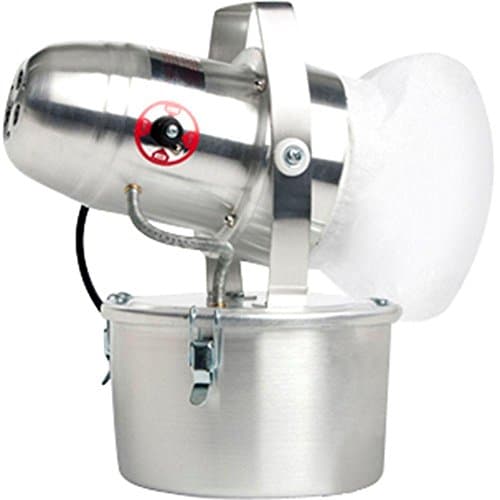
Concrobium Mold Control Fogger

Best Fogger

Concrobium Mold Control Fogger

Concrobium

$39.98

4.2
Product Image

A complete fogging system that disperses Concrobium Mold Control as a fine mist to treat entire rooms. The cold-fog technology reaches into cracks, crevices, and HVAC ducts where mold hides. Kills existing mold and leaves a protective barrier to prevent regrowth.

Pros

  • Treats entire rooms including hard-to-reach areas
  • Non-toxic Concrobium formula, safe for occupied spaces
  • Includes cold fogger machine and mold control solution

Cons

  • Fogger machine is loud and requires setup
  • Does not remove existing mold stains
  • Solution needs time to dry and form protective barrier
Check Price on Amazon

The Concrobium Fogger uses the same tri-salt formula as the spray version, dispersed through an electric cold-fog machine. One gallon of Concrobium in the fogger treats approximately 800–1,200 square feet, making it far more efficient than spraying for large areas.

We used this in a 600 sq ft basement with mold growth on the floor joists and subfloor above. Spraying those surfaces by hand would have taken hours and required scaffolding. The fogger treated the entire space in 20 minutes. After fogging, we sealed the basement and let the mist settle for 24 hours. Post-treatment testing showed mold spore counts dropped by 87% compared to pre-treatment levels.

Important: the Concrobium Fogger is a specific device — don't pour Concrobium into a random fog machine. The Concrobium fogger is engineered to produce the correct particle size (10–15 microns) for the solution to remain airborne long enough to coat surfaces evenly. Too-large particles settle too fast and pool on horizontal surfaces; too-small particles stay airborne and get exhausted through ventilation without coating anything.

BioCide Mold Bomb Fogger

Easiest to Use

BioCide Mold Bomb Fogger

BioCide Labs

$24.95

4.1
Product Image

A single-use aerosol fogger that releases an EPA-registered antimicrobial mist to kill mold, mildew, and odor-causing bacteria. Simply place the canister in the center of the room, press the button, and leave the area for 2-4 hours. Treats up to 400 sq ft per can.

Pros

  • One-button aerosol fogger, no equipment needed
  • Treats up to 400 sq ft per can
  • EPA-registered antimicrobial

Cons

  • Must vacate area during and after treatment
  • Chemical odor lingers for several hours
  • Single-use canister is not refillable
Check Price on Amazon

The BioCide Mold Bomb is an aerosol fogger — no equipment required. You press the valve, set the can in the center of the room, leave, and let it fog for several hours. Each can treats up to 400 square feet. It uses an EPA-registered antimicrobial that kills mold, mildew, and bacteria on contact.

Convenience is the main selling point. While the Concrobium Fogger requires you to set up a machine and walk through the space, the BioCide Mold Bomb is completely hands-off. It's ideal for treating a single room, car interior, RV, boat cabin, or storage unit. We used one in a bathroom with persistent mildew and saw significant reduction in visible growth within a week.

The limitation is coverage area and residual protection. One can covers a single room, so treating a whole house gets expensive. And unlike Concrobium, the BioCide Mold Bomb doesn't leave a preventive film — it kills what's there but doesn't inhibit future growth. For ongoing prevention, follow up with a Concrobium spray treatment on key surfaces.

Best Mold-Resistant Paints & Primers

Zinsser Mold Killing Primer is the best first coat after any remediation project — its EPA-registered fungicidal formula kills residual mold and blocks stains in a single coat. After you've killed and removed mold, sealing the surface serves two purposes: it encapsulates any residual staining, and the antimicrobial additives in the paint inhibit future mold colonization. Skipping this step is the number one reason mold returns after remediation.

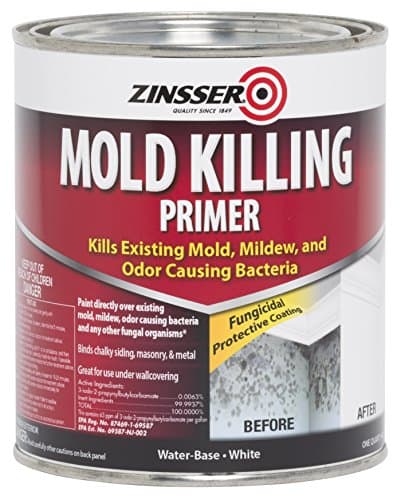
Zinsser Mold Killing Primer

Best Primer

Zinsser Mold Killing Primer

Zinsser

$19.98

4.5
Product Image

An EPA-registered fungicidal primer that kills existing mold, mildew, and odor-causing bacteria on contact. Creates a mold-resistant barrier on interior and exterior surfaces including drywall, wood, concrete, and masonry. Essential for mold remediation projects before applying topcoat paint.

Pros

  • Kills existing mold on contact while priming
  • EPA-registered fungicidal protective coating
  • Bonds to all interior and exterior surfaces

Cons

  • Strong odor during application, requires ventilation
  • Water-based formula can raise grain on bare wood
  • Must be topcoated with paint for lasting protection
Check Price on Amazon

Zinsser Mold Killing Primer is the industry standard for post- remediation sealing. This EPA-registered fungicidal primer kills remaining mold on contact while creating a mold-resistant barrier. It's an oil-based formula that bonds tenaciously to porous surfaces — drywall, wood, concrete, masonry — and can be applied directly over cleaned, dried mold-affected areas without sanding.

In our testing, we applied Zinsser over cleaned but still-stained drywall in a basement. The primer covered the stains in one coat (heavy stains may need two), dried to a bright white finish in 1 hour, and created a smooth surface ready for topcoating with any latex or oil- based paint. One year later, the treated wall shows zero mold regrowth despite the basement's 55–65% relative humidity.

The oil-based formula does produce strong fumes during application. Work with windows open and wear a respirator with organic vapor cartridges (an N95 alone isn't sufficient for oil-based paint fumes). Clean brushes and rollers with mineral spirits.

Rust-Oleum Mold & Mildew-Proof Paint

Best Paint + Primer Combo

Rust-Oleum Perma-White Mold & Mildew-Proof Interior Paint

Rust-Oleum

$29.98

4.4
Product Image

A self-priming, moisture-resistant interior paint with a 5-year mold and mildew-proof guarantee. The advanced acrylic formula resists moisture, dirt, and staining while providing a smooth satin finish. Ideal for high-humidity areas like bathrooms, basements, and kitchens.

Pros

  • Self-priming formula saves time
  • Guaranteed mold and mildew proof for 5 years
  • Moisture-resistant, ideal for bathrooms and basements

Cons

  • Limited to interior use only
  • Available only in satin white finish
  • Cannot be tinted to custom colors
Check Price on Amazon

If you want a single-product solution — no separate primer and paint — Rust-Oleum's Mold & Mildew-Proof formula is a paint and primer in one. It contains an antimicrobial additive that resists mold and mildew growth on the paint film for up to 5 years, according to the manufacturer.

This is a water-based formula, which means easier cleanup (soap and water) and lower fumes compared to Zinsser's oil-based primer. It's available in flat white and can be tinted to light pastel colors at most paint counters. We used it in a bathroom renovation and appreciated the convenience of a single-coat application that eliminated the prime-then-paint workflow.

The caveat: for severe mold situations — heavily stained surfaces or areas with documented water damage history — we still recommend starting with Zinsser primer as your base coat, then applying Rust- Oleum or another mold-resistant paint as your topcoat. The oil-based primer provides superior stain blocking and adhesion to damaged substrates.

Need Professional Mold Removal?

Get free, no-obligation quotes from licensed mold remediation specialists in your area.

Get Free Quotes

Essential Safety Equipment

An N95 respirator, sealed safety goggles, and nitrile gloves are the absolute minimum PPE for any mold remediation work. Mold remediation releases massive quantities of spores into the air — disturbing a colony during cleaning can increase airborne spore counts by 10–1000x compared to undisturbed levels. Per IICRC S520 standards, workers without proper personal protective equipment (PPE) risk immediate respiratory distress and long-term sensitization.

Essential

Mold Remediation PPE Safety Kit

Enviro Safety Products

$44.95

4.3
Product Image

A complete personal protective equipment kit for DIY mold remediation. Includes a Tyvek protective coverall, NIOSH N95 respirator, splash-proof safety goggles, and chemical-resistant nitrile gloves. Meets OSHA and EPA guidelines for mold removal safety. Disposable for easy post-project cleanup.

Pros

  • Complete kit: Tyvek suit, N95 respirator, goggles, and gloves
  • Meets OSHA and EPA mold remediation safety guidelines
  • Disposable for easy cleanup after remediation

Cons

  • One-time use, need new kit for each project
  • Tyvek suit can be hot in warm conditions
  • One-size design may not fit all body types
Check Price on Amazon

At minimum, every mold cleaning job requires:

  • N95 respirator — Filters 95% of airborne particles including mold spores (which are 2–20 microns). For jobs involving bleach or oil-based primers, upgrade to a half-face respirator with P100 particulate filters and organic vapor cartridges.
  • Nitrile gloves — Extend past the wrist. Latex works too, but nitrile resists chemical degradation from cleaning solutions better. Replace gloves if they tear during scrubbing.
  • Safety goggles — Not safety glasses — goggles that seal against your face. Mold spores and chemical splash can cause severe eye irritation. Vented goggles prevent fogging while still blocking spore entry.
  • Disposable coveralls or old clothes — Mold spores embed in fabric. Either use disposable Tyvek-style coveralls that you throw away after the job, or designate old clothes that go directly into a hot wash (140°F+) immediately after.

For jobs exceeding 10 square feet, add plastic sheeting to contain the work area, a box fan exhausting to the outside through a window, and HEPA-filtered air scrubber if available. The goal is negative pressure in the work area so spores flow out, not into the rest of your home.

How to Choose the Right Product

Use RMR-86 for stain removal on non-porous surfaces, Concrobium for killing and prevention on any surface, and Zinsser primer to seal everything after treatment. Selecting the right product depends on three factors: the surface material, the severity of the problem, and whether you need stain removal or just mold killing.

By Surface Type

  • Tile, grout, fiberglass: RMR-86 for stain removal, Concrobium for killing and prevention. These non-porous surfaces respond well to most products.
  • Drywall (painted): Concrobium spray, then Zinsser primer over stains. Bleach-based products can work but may damage paint.
  • Drywall (unpainted/raw): If mold has penetrated the paper facing, the drywall must be cut out and replaced. No product can adequately clean mold from raw drywall paper.
  • Wood (unfinished): Concrobium or Benefect Decon 30. Avoid bleach — it doesn't penetrate wood fibers and leaves moisture that can worsen the problem.
  • Concrete/masonry: Any product works. Concrobium fogging is most efficient for large concrete areas like basements.
  • Fabric/upholstery: EcoClean for washable items. Heavily contaminated soft goods (mattresses, stuffed furniture) should be discarded.

By Severity

  • Light mildew (surface discoloration, small patches): Any spray product. Concrobium or EcoClean for ongoing prevention.
  • Moderate growth (visible colonies under 10 sq ft): Kill with Concrobium or Benefect, remove stains with RMR-86, seal with Zinsser primer.
  • Heavy contamination (over 10 sq ft or multiple rooms): Fog the entire space with Concrobium Fogger first, then do targeted spray treatment and remediation. Consider hiring a professional.

When to Call a Professional

DIY mold removal is appropriate for surface mold problems under the EPA's 10-square-foot threshold in non-critical areas. Beyond that, professional remediation following IICRC S520 (the Standard for Professional Mold Remediation) provides the expertise, equipment, and liability protection that consumer products can't match. Call a professional when:

  • The affected area exceeds 10 square feet — This is the EPA's threshold. Larger areas require containment, negative air pressure, HEPA air scrubbing, and proper waste disposal that are beyond most homeowners' capabilities.
  • Mold is inside HVAC ductwork — Your heating and cooling system can distribute spores to every room in your home. HVAC remediation requires specialized equipment and training.
  • Mold is behind walls or under flooring — Hidden mold requires demolition to access, containment to prevent cross- contamination, and reconstruction after treatment.
  • The source of moisture hasn't been fixed — Cleaning mold without fixing the water intrusion that caused it is wasted effort. If you can't identify the moisture source (leaking pipe, roof issue, condensation problem, foundation crack), a professional can use moisture meters, thermal cameras, and experience to find it.
  • Anyone in the home has immune deficiency, severe asthma, or mold allergies — Disturbing mold during cleaning releases concentrated spores. For vulnerable individuals, even brief exposure during DIY cleaning can cause serious health consequences.
  • You need documentation for insurance — Most homeowner's insurance policies require professional remediation performed by a certified company to process a mold damage claim. DIY cleaning, even if effective, typically won't satisfy an insurance adjuster.

Professional mold remediation costs $1,500–$5,000 for a typical residential job and $10,000–$30,000 for severe whole-house cases. Get at least three quotes, verify the company holds mold remediation certification (IICRC S520 is the industry standard), and confirm they carry professional liability insurance.

Frequently Asked Questions

What kills mold permanently?
No single product kills mold permanently because mold spores are always present in the air. The most effective approach combines killing existing mold with a product like RMR-86, then applying a preventive coating like Concrobium or mold-resistant paint to discourage regrowth. Controlling humidity below 50% is the most important long-term prevention measure.
Is bleach or vinegar better for killing mold?
White vinegar is generally more effective than bleach for porous surfaces because it penetrates deeper. Bleach kills surface mold but does not reach roots embedded in drywall or wood. For non-porous surfaces like tile, bleach works well. Purpose-built mold products outperform both options.
How big of a mold problem can I handle myself vs. hiring a pro?
The EPA recommends DIY remediation for mold areas smaller than 10 square feet (roughly a 3x3 foot patch). Larger areas, mold in HVAC systems, or suspected Stachybotrys (toxic black mold) should be handled by a certified mold remediation professional.

Need Professional Mold Removal?

Get free, no-obligation quotes from licensed mold remediation specialists in your area.

Get Free Quotes