Best Mold Removal Products: What Works for Every Surface & Situation
Out of the Mold Editorial Team
Our guides are research-backed and cite EPA, CDC, and peer-reviewed sources. Product reviews are based on hands-on testing, not manufacturer claims. Read our editorial standards.
Affiliate Disclosure: Out of the Mold is reader-supported. As an Amazon Associate, we may earn a commission when you buy through links on this page — at no extra cost to you. Our picks are based on independent standards, manufacturer specifications, and published research, not commissions.
Key Takeaways
- Killing mold, removing stains, and preventing regrowth are three different jobs requiring three different products.
- The EPA does NOT recommend bleach for mold on porous surfaces (wood, drywall, concrete). Use vinegar or hydrogen peroxide instead.
- DIY is safe for areas under 10 sq ft. Above that threshold, professional containment prevents spore spread to clean areas.
- Concrobium is the gold standard for killing + prevention. RMR-86 is the gold standard for stain removal. They serve different purposes.
- No product works permanently if the moisture source isn't fixed. A $10 hygrometer and 30-minute exhaust fan habit prevent more mold than any spray.
For mold under 10 square feet on accessible surfaces, you can handle removal yourself — the EPA agrees. Use white vinegar or 3% hydrogen peroxide on porous surfaces (wood, drywall, grout) and scrub non-porous surfaces with detergent. Never use bleach on porous materials— the EPA doesn't recommend it because it can't reach mold roots. For areas over 10 sq ft, in HVAC systems, behind walls, or after flooding: hire a certified professional ($10–$25/sq ft, typically $1,200–$3,750 for residential projects in 2026). The product you need depends on three things: what surface, how much area, and whether you need to kill, clean stains, or prevent regrowth.
There are hundreds of mold removal products on Amazon, and most of them do roughly the same thing. What they don't tell you on the label: killing mold, removing mold stains, and preventing mold regrowth are three separate jobs that require three different types of products. A spray that kills mold won't necessarily remove the stains. A stain remover won't prevent regrowth. And almost nothing works if you don't fix the moisture source underneath.
The good news: the most affordable mold removal products are often the ones that actually work. Undiluted white vinegar ($3–$5) kills roughly 82% of mold species; a bottle of Concrobium or RMR-86handles the jobs vinegar can't. You rarely need the expensive stuff. This guide organizes every product by the job it does — kill, de-stain, or prevent — so you buy the one that fits your surface and skip the rest.
I've researched the remediation industry extensively — talking to certified inspectors, cross-referencing EPA guidelines, and checking product claims against documented results. Here's what genuinely works, organized by situation so you can find the right product in 30 seconds.
Quick Decision Guide: Which Product Do You Need?
Answer two questions and you'll know what to buy:
| Your Situation | Surface | Product Category | Cost |
|---|---|---|---|
| Small patch on tile/glass | Non-porous | Any mold spray or white vinegar | $5–$15 |
| Mold on drywall or wood | Porous | Vinegar, H2O2, or Concrobium (NOT bleach) | $5–$20 |
| Black stains that won't come off | Any | RMR-86 (bleach-based stain remover) | $15–$25 |
| Large area (crawl space, basement) | Mixed | Fogger (Concrobium or BioCide) | $15–$60 |
| Mold keeps coming back | Any | Concrobium (preventive barrier) + fix moisture | $12–$20 |
| After cleanup, before paint | Walls/ceiling | Mold-killing primer (Zinsser) | $20–$35 |
| Over 10 sq ft or behind walls | Any | Skip products — call a professional | $1,200–$9,000+ |
The EPA's 10-square-foot rule is your DIY boundary. That's roughly a 3-by-3-foot area. Below that threshold, any of the products below will work with proper technique. Above it, the risk of spreading spores to clean areas during amateur removal outweighs the cost savings of DIY.
Mold Removal Product Categories
There are five categories of mold products, and they serve different purposes. Using the wrong category is the most common DIY mistake.
1. Kill Sprays (Antimicrobial)
These kill live mold on contact but may leave stains behind. The gold standard is Concrobium Mold Control— it's EPA-registered, contains no bleach or VOCs, and leaves an invisible antimicrobial barrier that prevents regrowth. Professionals use it alongside commercial-grade products like Moldex and Benefect.
When to use:First step on any mold you're cleaning yourself. Spray, wait 10–15 minutes, then scrub.
Concrobium Mold Control (32 oz Spray, 2-Pack)
Concrobium
$34–40 (2 bottles)
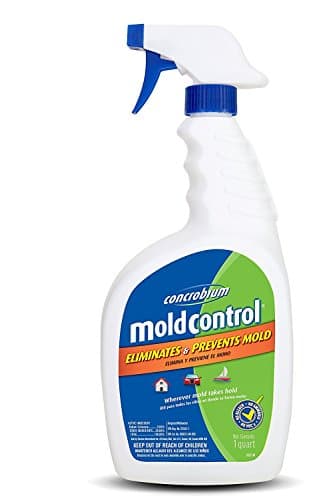
A patented, EPA-registered mold control solution that kills mold without bleach, ammonia, or VOCs. The tri-salt polymer formula crushes mold spores as it dries and leaves an invisible antimicrobial barrier to prevent regrowth. Safe for indoor use on virtually any surface.
Pros
- Non-toxic, no bleach or ammonia
- Kills mold and prevents regrowth
- Safe for use around children and pets
Cons
- Does not remove existing mold stains
- Takes longer to work than bleach-based products
- May require multiple applications for severe infestations
2. Stain Removers (Bleach-Based)
After killing the mold, you often have dark stains left on grout, caulk, or painted surfaces. RMR-86is the industry-standard stain remover — it works in seconds on non-porous surfaces without scrubbing. The active ingredient is sodium hypochlorite (bleach), so it's effective on stains but not recommended as your primary mold killer on porous materials.
When to use: After killing mold, to remove cosmetic staining. Not a substitute for actually killing the mold first.
RMR-86 Instant Mold & Mildew Stain Remover Spray (1 Gallon)
RMR Brands
$25–35
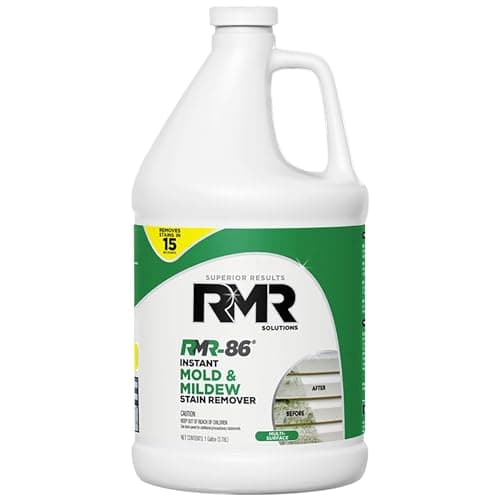
A fast-acting, commercial-strength mold stain remover that eliminates black mold stains on contact. The sodium hypochlorite formula penetrates porous surfaces to lift deep stains without scrubbing. Best used in well-ventilated areas with proper respiratory protection.
Pros
- Removes stains in as little as 15 seconds
- Works on wood, concrete, drywall, and tile
- No scrubbing required
Cons
- Strong bleach-based formula with harsh fumes
- Not safe for fabrics or colored surfaces
- Requires good ventilation and PPE
3. Foggers & Mold Bombs
Foggers disperse antimicrobial solution as a fine mist that reaches surfaces a spray can't — inside HVAC ducts, under floorboards, in crawl spaces, and on ceiling rafters. The Concrobium fogger is the most popular consumer option. Commercial remediation companies use fogging as a final step after physical removal.
When to use: Large areas that are impractical to spray individually. Crawl spaces, basements, attics, and rooms with confirmed airborne spore issues. Not a substitute for physical mold removal — it kills airborne spores and treats surfaces, but heavy mold colonies still need scrubbing first.
For our full comparison of fogger types and brands, see the mold fogger & mold bomb guide.
Concrobium Mold Control Fogger
Concrobium
$40–100
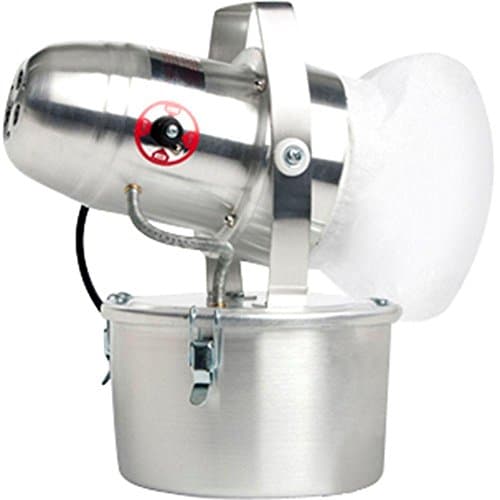
A complete fogging system that disperses Concrobium Mold Control as a fine mist to treat entire rooms. The cold-fog technology reaches into cracks, crevices, and HVAC ducts where mold hides. Kills existing mold and leaves a protective barrier to prevent regrowth.
Pros
- Treats entire rooms including hard-to-reach areas
- Non-toxic Concrobium formula, safe for occupied spaces
- Includes cold fogger machine and mold control solution
Cons
- Fogger machine is loud and requires setup
- Does not remove existing mold stains
- Solution needs time to dry and form protective barrier
4. Natural & DIY Solutions
Three household products genuinely kill mold, and they're cheaper than any commercial spray:
- White vinegar (undiluted) — Kills ~82% of mold species. Spray, wait 60 minutes, scrub. Safe on all surfaces including porous materials. The most underrated mold treatment. See our complete vinegar guide for surface-specific instructions.
- 3% hydrogen peroxide — Antifungal and antibacterial. Spray, wait 10–15 minutes, scrub. Mild bleaching properties lighten stains. Safe on most surfaces but test on colored fabrics first. See our full hydrogen peroxide for mold guide.
- Baking soda— Absorbs moisture and deodorizes but doesn't reliably kill established mold. Use as a supplementary scrub, not a standalone treatment.
Why NOT bleach? This is the most important thing in this article: the EPA does not recommend bleach for mold removal on porous surfaces.Bleach kills surface mold on non-porous surfaces (tile, glass, countertops), but on wood, drywall, concrete, and grout, it can't penetrate to reach the roots. Worse, the water in bleach solution soaks into porous materials and feeds mold regrowth. You kill the visible mold but feed the subsurface colony. This is why mold "comes back" after bleaching.
Never mix hydrogen peroxide and vinegar. Used together they create peracetic acid — corrosive and dangerous. Use them sequentially (one, then rinse, then the other) if you want both.
5. Mold-Resistant Paint & Encapsulants
After removing mold and fixing the moisture source, sealing the surface prevents recurrence. Two options:
- Mold-killing primer (Zinsser Mold Killing Primer) — Apply before repainting. Kills residual mold and creates a mold-resistant base coat. Required if you're painting over a surface that previously had mold. See our mold-resistant paint guide.
- Mold encapsulant— A thick coating that seals mold in place on surfaces that can't be fully cleaned (attic sheathing, crawl space joists). This is a containment strategy, not a removal strategy. Professionals use it when full removal would cause more damage than encapsulating.
Surface-Specific Removal Guide
The right product depends on what it's growing on. Here's your quick reference:
| Surface | Best Product | Technique | Full Guide |
|---|---|---|---|
| Bathroom tile & grout | Vinegar → RMR-86 for stains | Spray, 60 min, scrub grout with brush | Bathroom guide |
| Drywall (painted) | H2O2 or vinegar | Spray lightly (don't soak), scrub, dry fast | Black mold guide |
| Wood (sealed) | H2O2 then Concrobium | Spray, 10–15 min, scrub with grain | Wood floor guide |
| Carpet | Concrobium spray + replace padding | Saturate, dry thoroughly, consider replacing | Carpet guide |
| Leather | Rubbing alcohol 1:1 with water | Wipe, air dry, condition after | Leather guide |
| Window sills | Vinegar (wood), bleach (vinyl) | Clean + fix condensation source | Window guide |
| Mattress | Alcohol or H2O2 (springs only) | Surface only — replace if memory foam | Mattress guide |
| Refrigerator | Vinegar + baking soda | Empty, spray, 60 min, scrub, dry | Fridge guide |
| Car interior | Vinegar or Concrobium + HEPA vacuum | Ventilate, spray, scrub, vacuum, dry | Car guide |
What Professionals Use (And Why It's Different)
Professional mold remediation costs $10–$25 per square foot — not because they use magic products, but because they use a systematic process with specialized equipment that you can't replicate at home:
- Containment — Negative air pressure with HEPA filtration prevents spores from spreading to clean areas during removal. This is the #1 reason pros get better results. DIY scrubbing without containment sends spores airborne and can contaminate adjacent rooms.
- HEPA vacuuming — Commercial HEPA vacuums capture particles down to 0.3 microns. Standard household vacuums blow mold spores right through the filter and back into the air — which is exactly why you need a HEPA vacuum for mold for the final cleanup, not the shop vac in the garage.
- Commercial antimicrobials— Products like Benefect (botanical, thyme-based), RMR-141 (EPA-registered disinfectant, no bleach), and Moldex are professional-grade versions of consumer products. They're stronger but work on the same principles.
- Air scrubbers — Portable HEPA air filtration units that continuously clean the air during and after remediation. A remediation company running air scrubbers for 48–72 hours after work removes residual spores that no spray can reach.
- Moisture verification — Pros use pin and pinless moisture meters to verify surfaces are dry enough (below 16% for wood) before sealing or painting. Sealing over damp material guarantees the mold returns.
When to call a pro:
- Area exceeds 10 square feet (EPA threshold)
- Mold is behind walls, under floors, or in HVAC systems
- Water damage from flooding or sewage
- Mold keeps returning after DIY treatment
- Anyone in the household has asthma or is immunocompromised
- You need insurance documentation or legal evidence
When you do hire one, vet the credential, not the sales pitch. Ask for IICRC certification and a written scope of work built on the industry standard — Connecticut now requires exactly that of commercial remediators, and the same checklist protects you in any state.
3M 8511 N95 Particulate Respirator
3M
$20–30
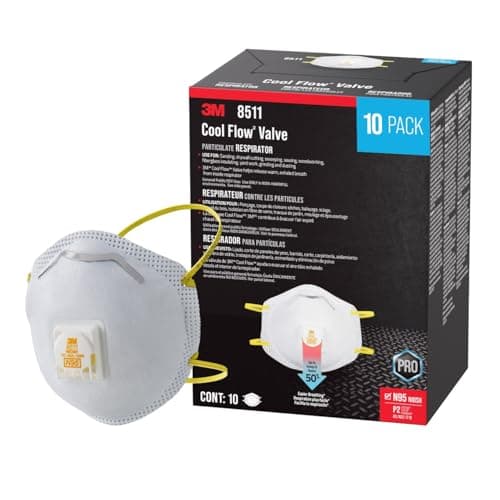
A NIOSH-approved N95 particulate respirator with Cool Flow exhalation valve for comfortable breathing during mold remediation. Filters at least 95% of airborne particles including mold spores. The adjustable M-noseclip and dual-strap design provide a secure seal. OSHA-recommended for mold work.
Pros
- NIOSH-approved N95 filtration
- Cool Flow valve reduces heat buildup
- Adjustable nose clip for secure fit
Cons
- Disposable, not reusable long-term
- Does not protect against chemical fumes or VOCs
- May not fit all face shapes comfortably
DIY Mold Removal: Step by Step
For areas under 10 square feet on accessible surfaces, here's the process that certified remediators recommend for homeowners:
- Gear up.N95 respirator mask (not a surgical mask — you need the seal), rubber gloves, and safety goggles. Long sleeves. This isn't paranoia — you're about to disturb spores, and inhaling them defeats the purpose.
- Isolate the area. Close doors to adjacent rooms. Open a window in the affected room if possible (lets spores out instead of circulating through the house). Turn off HVAC to prevent spore distribution through ducts.
- Spray the mold before scrubbing.This is the step most people skip. Misting the mold first (vinegar, H2O2, or Concrobium) wets the spores so they don't go airborne when you start scrubbing. Wait the recommended contact time.
- Scrub and remove.Stiff brush for hard surfaces, cloth for delicate ones. Wipe toward the center of the growth (don't spread outward). Use disposable rags and bag them immediately.
- Dry completely. Fans, dehumidifier, or open windows. The surface must be bone-dry before the next step. If you seal or paint over dampness, the mold returns within weeks.
- Apply preventive treatment. Concrobium leaves an antimicrobial barrier. Or use a mold-killing primer before repainting. This step prevents regrowth as long as the moisture source is also fixed.
- Fix the moisture source. This is the actual fix. Every product in this guide is a temporary solution if moisture persists. Find and fix the leak, improve ventilation, or reduce humidity below 50%. A $10 hygrometer lets you monitor.
Cost Comparison: DIY vs. Professional
| Approach | Cost Range | Best For | Limitations |
|---|---|---|---|
| DIY (household products) | $5–$30 | Small areas (<10 sq ft), non-porous surfaces | No containment, no HEPA, incomplete on porous |
| DIY (commercial products) | $30–$100 | Moderate areas, mixed surfaces | Same limitations, better products |
| Professional (contained area) | $1,200–$3,750 | 10–100 sq ft, behind walls, HVAC | Cost; need to vet credentials |
| Professional (full home) | $4,000–$30,000+ | Post-flood, extensive contamination | Major expense; check insurance first |
For a detailed cost breakdown by area size, severity, and region, use our mold removal cost calculator.
Insurance note: Most homeowner policies cover mold only if it resulted from a sudden, covered event (burst pipe, appliance failure). Gradual moisture damage and flooding are typically excluded. Most policies cap mold claims at $1,000–$10,000. File claims promptly — waiting reduces coverage eligibility. For hurricane-related mold, see our hurricane season mold guide for the insurance claims process.
Dealing With Mold Right Now?
Our step-by-step mold removal guide walks you through testing your home, choosing the right products, and knowing when a job is too big for DIY.
Read the Removal GuidePrevention: Keeping Mold From Coming Back
Every mold remediation company will tell you the same thing: the removal isn't the hard part — keeping it gone is. Mold returns 100% of the time if the moisture source isn't fixed.
- Keep humidity below 50%— The EPA recommends 30–50%. A $10 hygrometer monitors levels. Basements and bathrooms are the usual problem spots. Run a dehumidifier if you're consistently above 50%.
- Ventilate bathrooms — Run the exhaust fan during and 30 minutes after every shower. Squeegee walls and glass doors. This single habit prevents 80% of bathroom mold.
- Fix leaks within 24 hours — Mold colonizes damp surfaces in 24–48 hours. A $5 pipe repair today prevents a $3,000 remediation next month.
- Improve airflow — Pull furniture 2–3 inches from exterior walls. Open closet doors periodically. Stagnant air creates cold spots where condensation forms. (Not sure which room is your weak spot? Our room-by-room mold map shows where it hides in a house.)
- Apply Concrobium to vulnerable surfaces — After cleaning, spray it on basement walls, bathroom corners, window frames, and crawl space surfaces. The invisible barrier prevents regrowth for months.
For mold identification before removal — figuring out what species you're dealing with — see our types of mold identification guide. Not sure if it's even mold? Our mold vs mildew comparison explains the differences and when a simple wipe is all you need. If you suspect hidden mold from a musty smell in your house, start with our detection guide. If you think you need testing but aren't sure, our mold testing decision guide walks through when testing is worth the money and when you should just skip it.
Frequently Asked Questions
What is the best product to remove mold?
It depends on the surface. For porous materials (wood, drywall, grout): white vinegar or 3% hydrogen peroxide. For non-porous surfaces (tile, glass, metal): any commercial mold spray works fine. For prevention after cleanup: Concrobium Mold Control. For stain removal: RMR-86. No single product does everything.
Does Concrobium really work on mold?
Yes — it's EPA-registered (meaning its antimicrobial claims are verified by the EPA), bleach-free, and used by both professionals and homeowners. It kills mold on contact and leaves a preventive barrier. It doesn't remove stains — you need RMR-86 or bleach for that. But for killing and preventing mold, it's the most trusted consumer product on the market.
What kills mold permanently?
No product kills mold permanently if the moisture source remains. Mold spores are everywhere — they're in outdoor air, and they enter your home constantly. Products kill active colonies, but new spores will recolonize any surface that stays damp. The only permanent fix is eliminating the moisture: fix leaks, improve ventilation, reduce humidity below 50%.
Is hydrogen peroxide or bleach better for mold?
Hydrogen peroxideis better for porous surfaces (wood, drywall, fabric) because it penetrates the material to reach mold roots. Bleach works on non-porous surfaces (tile, glass, sealed countertops) but the EPA does not recommend it for porous materials. Bleach's water content soaks into porous surfaces and feeds mold regrowth.
What do professionals use to remove mold?
EPA-registered antimicrobials (Concrobium, Moldex, Benefect), commercial stain removers (RMR-86, RMR-141), HEPA vacuums, air scrubbers with HEPA filtration, negative air machines for containment, and moisture meters for verification. The products aren't magic — the containment and HEPA filtration are what separate professional results from DIY results.
Can you paint over mold?
Never paint directly over mold — the mold continues growing under the paint and eventually breaks through. Remove the mold first, dry the surface completely, then apply a mold-killing primer (like Zinsser) before painting. The primer seals any residual spores. See our mold-resistant paint guide for product recommendations.
How much does professional mold removal cost?
$10–$25 per square foot in 2026. Most contained residential projects run $1,200–$3,750. Full-home remediation after flooding: $10,000– $30,000+. Costs increase 20–40% immediately after hurricanes due to demand. Always get at least three quotes from IICRC-certified companies. Use our cost calculator for a personalized estimate.
What kills black mold instantly?
RMR-86 removes black mold stains in seconds (it's concentrated bleach). But "instant" killing isn't really the goal. Killing surface mold without addressing roots and moisture means it returns within weeks. Use vinegar or H2O2 (proper contact time: 10–60 minutes), fix the moisture, and apply Concrobium. For confirmed Stachybotrys (true toxic black mold), hire a professional — it grows on chronically wet drywall and usually indicates a much larger hidden problem. See our black mold removal guide.
Frequently Asked Questions
What is the best product to remove mold?
What are the most affordable mold removal products?
Does Concrobium really work on mold?
What kills mold permanently?
Is hydrogen peroxide or bleach better for mold?
What do professionals use to remove mold?
Can you paint over mold?
How much does professional mold removal cost?
What kills black mold instantly?
Related Articles
Concrobium Mold Control Review: What It Does (and What It Won't)
Hydrogen Peroxide for Mold: Does It Actually Work?
Best Mold Fogger & Mold Bomb: Machines, Solutions & Safety Guide (2026)
Mold-Resistant Paint: How It Works, When to Use It, and What It Can't Do
How to Get Rid of Black Mold: DIY Removal Guide
Types of Mold in Your Home: Color Identification Guide
Dealing With Mold Right Now?
Our step-by-step mold removal guide walks you through testing your home, choosing the right products, and knowing when a job is too big for DIY.
Read the Removal Guide