Types of Mold in Your Home: Color Identification Guide
Out of the Mold Editorial Team
Our guides are research-backed and cite EPA, CDC, and peer-reviewed sources. Product reviews are based on hands-on testing, not manufacturer claims. Read our editorial standards.
Affiliate Disclosure: Out of the Mold is reader-supported. As an Amazon Associate, we may earn a commission when you buy through links on this page — at no extra cost to you. Our picks are based on independent standards, manufacturer specifications, and published research, not commissions.
Key Takeaways
- Color is your first filter for mold identification, but the same species can appear in multiple colors. Lab testing is the only way to confirm species.
- The three most common indoor mold genera are Aspergillus, Penicillium, and Cladosporium — all can appear green.
- Not all 'black mold' is the toxic Stachybotrys chartarum. Most dark mold in homes is Cladosporium or Aspergillus niger.
- Yellow mold is the most underestimated — Serpula lacrymans (dry rot) destroys structural wood, and Aspergillus flavus produces Group 1 carcinogens.
- The CDC says treat all mold the same: remove it and fix the moisture source. Don't wait for test results to start cleaning.
There are thousands of mold species, but only about a dozen show up regularly in homes. The fastest way to narrow down what you're looking at is by color: black, green, pink, orange, yellow, or white. Each color points to different species with different health risks — from completely harmless slime molds to Stachybotrys producing satratoxins. Color alone can't tell you the species, but it's the right starting point. Below, I break down every common household mold by color, species, danger level, and what to actually do about it.
You spotted something growing on a wall, in a shower, or on food — and now you want to know what it is. Fair enough. The problem is that "mold identification" articles online tend to list 12–20 species with stock photos, tell you to "consult a professional," and call it a day. Not helpful when you're staring at a fuzzy patch on your basement wall at 10 PM.
Here's what I've learned after researching hundreds of mold cases: color is your first filter, location is your second, and texture is your third.Together, those three observations narrow the possibilities to 2–3 species in most cases. You don't need a lab to figure out what to do next — but you do need a lab if you want legal documentation, insurance evidence, or if someone in your house has unexplained respiratory symptoms.
How to Identify Mold by Color
Color is the least reliable indicator of danger — a green Aspergillus flavus colony producing aflatoxins is objectively more hazardous than some black Cladosporium on a window sill. But color is what you notice first, and it does narrow the species list significantly. Use the chart below as your starting point, then click through to the detailed guide for your specific color.
| Color | Common Species | Danger Level | Where You'll Find It | Action |
|---|---|---|---|---|
| Black | Stachybotrys, A. niger, Cladosporium | Low to High (species-dependent) | Drywall, ceiling tiles, AC ducts | Test if concerned; pro for >10 sq ft |
| Green | Aspergillus, Penicillium, Cladosporium | Moderate (aflatoxins possible) | Walls, bread, fruit, leather | DIY under 10 sq ft; toss soft food |
| Pink | Serratia marcescens (bacterium), Aureobasidium | Low (but causes UTIs/eye infections) | Shower grout, toilet, humidifiers | Weekly bleach cleaning prevents it |
| Orange | Acremonium, A. flavus, Fuligo septica | Low to High (depends on species) | Mulch, wood, showers, food | Outdoor blobs = harmless; test indoors |
| Yellow | Serpula lacrymans, A. flavus, Mucor | High (dry rot, aflatoxins) | Structural wood, basement, ceiling | Check for dry rot immediately |
| White | Penicillium, Cladosporium, Aspergillus | Low to Moderate | Crawl spaces, basements, wood, leather | Confirm it's not efflorescence |
Important: The same species can appear in multiple colors depending on growth stage, substrate, and moisture level. Aspergillus alone can be green, yellow, orange, black, or white. The chart above reflects the most common color associations, not absolutes. For definitive species identification, you need a lab — either a DIY test kit ($10–$45 with lab analysis) or an ERMI DNA test ($200–$250).
Black Mold (Stachybotrys chartarum)
"Black mold" is the most feared and most misunderstood term in home maintenance. When people say it, they usually mean Stachybotrys chartarum— a dark greenish-black mold that produces satratoxins and other mycotoxins. But here's what most articles won't tell you: the majority of dark-colored mold in homes is not Stachybotrys. It's usually Cladosporium (allergenic but not toxic) or Aspergillus niger (moderate concern).
Stachybotryshas very specific requirements — it needs chronically saturated cellulose (drywall, ceiling tiles, cardboard) for 7+ days. It doesn't grow on tile, glass, or concrete. If your "black mold" is on a shower tile or window sill, it's almost certainly Cladosporium.
That said, any mold larger than 10 square feet deserves professional attention regardless of species. The EPA doesn't distinguish between mold types when setting the DIY threshold — they say anything over a 3-by-3-foot patch warrants professional remediation. For our complete black mold guide with step-by-step removal, see how to get rid of black mold.
Green Mold (Aspergillus, Penicillium, Cladosporium)
Green is the most common mold color in homes, largely because the three most prevalent indoor mold genera — Aspergillus, Penicillium, and Cladosporium — all produce green colonies under typical household conditions.
Health risks vary dramatically within the "green mold" category. Cladosporium is mostly a nuisance allergen. Penicillium produces ochratoxin A, linked to kidney damage at sustained exposure. Aspergillus species can produce aflatoxins (IARC Group 1 carcinogens) and cause aspergillosis — the CDC calls it the second most common fungal infection requiring hospitalization in the U.S., with over 75,000 cases annually.
Green mold on food follows USDA rules: trim hard cheese and firm vegetables (cut 1 inch around and below the mold), but discard bread, soft fruit, and leftovers entirely. Don't sniff moldy food to check — you're inhaling concentrated spores at close range.
For species-by-species identification, removal methods, and food safety rules, read our full green mold guide.
Pink Mold (Serratia marcescens, Aureobasidium)
Pink mold isn't mold at all — the pink or salmon-colored film you see in showers and around drains is almost always Serratia marcescens, a gram-negative bacterium. It feeds on fatty residues from soap and shampoo, which is why it loves bathrooms. The other pink culprit, Aureobasidium pullulans, is a true fungus that thrives on wet window frames and caulk.
Serratia is harmless on tile, but it can cause urinary tract infections, respiratory infections, and eye infections if it enters the body. Keep it away from contact lens cases, open wounds, and catheter sites. A weekly bleach spray on bathroom surfaces prevents colonization.
The removal approach is different from true mold because you're dealing with bacteria, not fungi. Our pink mold guide covers the distinction and gives surface-specific cleaning steps.
Orange Mold (Acremonium, Fuligo septica, A. flavus)
Orange mold is a mixed bag. The bright yellow-orange blob on your mulch is almost certainly Fuligo septica— "dog vomit slime mold" — which looks terrifying but is completely harmless. It's not even a true mold. It dries up in 1–3 days. Leave it alone.
Indoors, orange growth is more concerning. Acremoniumforms slimy pinkish-orange colonies on window sills and bathroom surfaces — it's allergenic and occasionally causes infections in immunocompromised people. The real worry is Aspergillus flavus, which can appear orange-ish depending on substrate and growth stage. It produces aflatoxins — the most potent naturally occurring carcinogens known, per the IARC.
Our orange mold guide breaks down all five species you might encounter, with removal instructions for each surface type.
Yellow Mold (Serpula lacrymans, A. flavus, Mucor)
Yellow mold deserves more respect than it gets. Two of the species in this group are genuinely dangerous:
- Serpula lacrymans (dry rot)— This fungus destroys structural wood by transporting water through its mycelium up to 5 meters. It attacks wood that isn't even wet. Properties with dry rot damage have lost an average of 62% of their market value in UK surveys. Repair costs range from $2,000 for contained outbreaks to $50,000+ for structural failures.
- Mucor— Causes mucormycosis, which has a roughly 50% mortality rate in immunocompromised patients. It's rare in healthy people but common enough that the CDC tracks it nationally.
Early-stage yellow mold on ceilings often looks like aging paint or faint water stains — people ignore it for months. If the same spot keeps discoloring after you clean it, you have a living colony. Our yellow mold guide covers the screwdriver test for dry rot, early detection tips, and 2026 repair cost data.
White Mold (Penicillium, Aspergillus, Cladosporium)
White mold is common in basements, crawl spaces, and on stored leather or wood — and it's the most frequently misidentified. The main confusion is with efflorescence, a white crystalline deposit left behind when water evaporates from concrete or masonry. The test is simple: spray the white substance with water. Efflorescence dissolves; mold doesn't.
On leather goods, white buildup can also be fatty bloom (spew) — palmitic and stearic acids migrating from inside the leather to the surface. The hairdryer test works here: bloom temporarily melts under heat; mold stays fuzzy. Our leather mold guide walks through this distinction.
White mold species are generally allergenic rather than toxigenic, but the same genera (Aspergillus, Penicillium) that produce white colonies can also produce mycotoxins depending on strain and conditions. Removal follows the same process as any other surface mold: vinegar or hydrogen peroxide, fix the moisture source, and prevent recurrence with Concrobium.
Concrobium Mold Control (32 oz Spray, 2-Pack)
Concrobium
$34–40 (2 bottles)
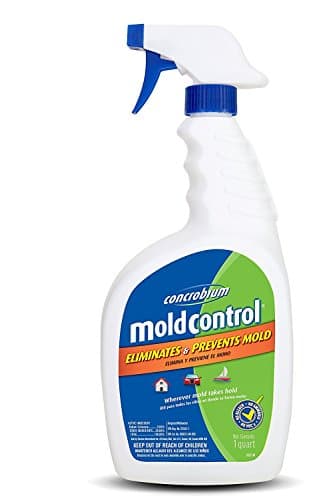
A patented, EPA-registered mold control solution that kills mold without bleach, ammonia, or VOCs. The tri-salt polymer formula crushes mold spores as it dries and leaves an invisible antimicrobial barrier to prevent regrowth. Safe for indoor use on virtually any surface.
Pros
- Non-toxic, no bleach or ammonia
- Kills mold and prevents regrowth
- Safe for use around children and pets
Cons
- Does not remove existing mold stains
- Takes longer to work than bleach-based products
- May require multiple applications for severe infestations
Mold vs. Mildew: What's the Difference?
People use these terms interchangeably, but they're different organisms with different implications:
| Feature | Mold | Mildew |
|---|---|---|
| Appearance | Fuzzy, raised, 3D growth | Flat, powdery or downy |
| Color | Any color (black, green, orange, etc.) | Usually white or gray |
| Penetration | Grows into porous materials | Surface-level only |
| Health risk | Allergenic to toxic depending on species | Mild allergen |
| Structural damage | Can destroy wood, drywall, carpet | Cosmetic only |
| Removal | May need professional remediation | Easy surface cleaning |
The practical takeaway: if it's flat and wipes off easily with a damp cloth, it's probably mildew and a basic cleaning solves it. If it's fuzzy, raised, or comes back after cleaning, it's mold and you need to address the moisture source underneath. For the complete identification guide with 4 DIY tests, see our mold vs mildew comparison.
Which Types of Mold Are Dangerous?
The CDC's official position: all mold should be treated the same — remove it and fix the moisture source. They don't distinguish "toxic" from "non-toxic" in their recommendations because individual sensitivity varies widely. That said, some species produce mycotoxins that are objectively more hazardous:
| Species | Mycotoxin | Health Effect | Priority |
|---|---|---|---|
| Stachybotrys chartarum | Satratoxins, roridin | Pulmonary hemorrhage, neurological | Professional removal |
| Aspergillus flavus | Aflatoxins (IARC Group 1) | Liver cancer, aspergillosis | Remove + test |
| Aspergillus fumigatus | Gliotoxin | Invasive aspergillosis (75K+ cases/yr in U.S.) | Remove + test if symptomatic |
| Serpula lacrymans | None (structural threat) | Destroys structural wood | Structural engineer |
| Mucor species | None (direct infection) | Mucormycosis (~50% mortality) | Immunocompromised: evacuate |
Most household mold is allergenic, not toxigenic. Mold contributes to an estimated 4.6 million asthma cases annually in the U.S., according to research published in Environmental Health Perspectives. That's the most common health impact — not the dramatic mycotoxin exposure that makes headlines. For health-specific information, see the CDC's mold and health resources and the EPA's guide to mold.
How to Test for Mold Type
You can't identify mold species by looking at it. Even experienced inspectors can't — they use lab analysis. Here are your options:
- DIY test kits ($10–$45)— Settle plates or surface swabs with lab analysis. Consumer Reports rated all DIY kits "Not Recommended" — not because they can't detect mold, but because results without professional context lead to bad decisions. Still useful as a screening tool. See our mold test kit comparison.
- ERMI DNA test ($200–$250) — Tests for 36 species simultaneously using DNA analysis. The most comprehensive consumer option — worth it for home purchases, insurance claims, and chronic health symptoms. See our ERMI mold test guide.
- Professional inspection ($300–$900) — A certified inspector (ACAC, IICRC, or AIHA credentials) uses calibrated air pumps, moisture meters, and thermal imaging. You get lab results plus professional interpretation plus a remediation plan. Worth it for insurance documentation and large-scale problems. Read our mold testing guide for the full decision framework.
Mold Armor FG500 Do It Yourself Mold Test Kit
Mold Armor
$9–15
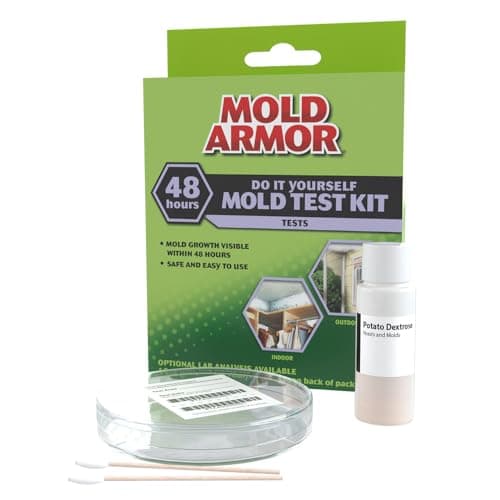
The most popular DIY mold test kit on Amazon. Includes a settling plate, swab, and pre-paid postage for AIHA-accredited lab analysis. The kit detects airborne mold spores and surface mold, identifying species like Aspergillus, Stachybotrys, and Penicillium.
Pros
- Very affordable entry-level test
- Includes petri dish, swab, and postage for lab analysis
- Results identify mold species
Cons
- Lab fee is separate (~$40)
- Takes 5-7 days for lab results
- Only tests one location per kit
What to Do About Each Type
The CDC says treat all mold the same: remove it and fix the moisture source. The EPA sets a 10 square foot DIY threshold — roughly a 3-by-3-foot patch. Anything larger, in HVAC systems, behind walls, or caused by contaminated water warrants professional remediation ($10–$25 per square foot, with most residential projects running $1,200–$3,750 in 2026).
For DIY removal on areas under 10 square feet:
- Non-porous surfaces (tile, glass, metal) — Spray undiluted white vinegar, wait 60 minutes, scrub and rinse. Or use 3% hydrogen peroxide (10–15 minute contact time).
- Porous surfaces (wood, drywall, grout) — Use vinegar or hydrogen peroxide instead of bleach. Bleach doesn't penetrate porous materials — it kills surface mold but leaves roots intact. The EPA does not recommend bleach for porous surfaces.
- After cleaning — Apply Concrobium Mold Control to leave an invisible antimicrobial barrier. It's EPA-registered, bleach-free, and prevents regrowth.
For product-by-product guidance — sprays, foggers, natural solutions, and encapsulants — see our mold removal products guide.
Dealing With Mold Right Now?
Our step-by-step mold removal guide walks you through testing your home, choosing the right products, and knowing when a job is too big for DIY.
Read the Removal GuideFrequently Asked Questions
What does toxic mold look like?
There's no visual indicator of toxicity. Stachybotrys ("toxic black mold") is dark greenish-black and slimy, but so is harmless Cladosporium. Toxigenic Aspergillus flavus can be green, yellow, or orange. The only way to confirm a mold is producing mycotoxins is through lab analysis — either a test kit or an ERMI test.
Can you identify mold by color alone?
Not definitively. Color narrows the possibilities to 2–4 likely species, but the same species can appear in different colors depending on growth stage, substrate, and moisture. Color plus location plus texture gets you close. Lab testing gets you certain.
What is the most common household mold?
Cladosporiumis the most common indoor and outdoor mold worldwide, per the American Academy of Allergy, Asthma & Immunology. It appears olive-green to brown-black and grows in both warm and cold conditions — it's one of the few mold genera that thrives at refrigerator temperatures (as low as 32°F).
Is green mold dangerous?
It depends on the species. Green Cladosporium is mostly allergenic. Green Aspergillus can produce aflatoxins (Group 1 carcinogens) and cause aspergillosis. Green Penicillium produces ochratoxin A. You can't tell which one you have by looking. Our green mold guide breaks down each species.
What color mold is the most dangerous?
No single color is inherently most dangerous. The highest-risk species span multiple colors: Stachybotrys (black), Aspergillus flavus (green/yellow/orange), Serpula lacrymans (yellow-brown), Mucor (white/yellow/gray). Yellow mold is arguably the most underestimated because it includes both dry rot and aflatoxin producers. See our yellow mold guide.
Should I get mold tested or just remove it?
If you can see the mold and the area is under 10 square feet, skip testing and just remove it — the CDC agrees. Testing makes sense when: (1) you smell mold but can't find it, (2) you're buying or selling a home, (3) you need insurance documentation, (4) health symptoms persist after cleaning, or (5) remediation is complete and you need clearance testing. Read our mold testing guide for the full decision framework.
How fast does mold grow in a home?
Mold spores begin germinating on damp surfaces within 12–24 hours. Visible colonies typically appear at 48–72 hours. By one week, growth is well-established. This is why the 48-hour drying rule after water damage is critical — dry everything within that window and you prevent most colonization. After flooding, see our hurricane mold guide for the critical response timeline.
Can mold grow in winter?
Yes. Cladosporium grows at temperatures as low as 32°F. Winter mold is common around windows (condensation), in poorly insulated attics, and in basements where relative humidity stays high. In cold climates, indoor humidity from cooking, showering, and breathing can drive condensation on cold surfaces — creating ideal mold conditions. See our window sill mold guide for condensation-specific solutions.
Frequently Asked Questions
What does toxic mold look like?
Can you identify mold by color alone?
What is the most common household mold?
Is green mold dangerous?
What color mold is the most dangerous?
Should I get mold tested or just remove it?
How fast does mold grow in a home?
Can mold grow in winter?
Related Articles
How to Get Rid of Black Mold: DIY Removal Guide
Green Mold: Types, Dangers, and How to Remove It
Pink Mold: What It Really Is, How to Remove It, and How to Prevent It
Orange Mold: Identification, Risks, and Removal by Surface
Yellow Mold: Why It's More Dangerous Than You Think
Mold Testing Guide: Do You Need a Test & Which Type Is Best?
Dealing With Mold Right Now?
Our step-by-step mold removal guide walks you through testing your home, choosing the right products, and knowing when a job is too big for DIY.
Read the Removal Guide