How to Remove Mold from Your Bathroom Ceiling (And Keep It Gone)
Out of the Mold Editorial Team
Our guides are research-backed and cite EPA, CDC, and peer-reviewed sources. Product reviews are based on hands-on testing, not manufacturer claims. Read our editorial standards.
Affiliate Disclosure: Out of the Mold is reader-supported. As an Amazon Associate, we may earn a commission when you buy through links on this page — at no extra cost to you. Our picks are based on independent standards, manufacturer specifications, and published research, not commissions.
Key Takeaways
- White vinegar kills 82% of mold species and penetrates porous drywall better than bleach.
- Run your exhaust fan during every shower and for 30 minutes after — this prevents most bathroom ceiling mold.
- The EPA says mold under 10 square feet is safe to DIY; larger areas need a professional.
- After cleaning, prime with Zinsser Mold Killing Primer and topcoat with Rust-Oleum Perma-White for lasting protection.
- If mold keeps returning despite cleaning, suspect a hidden leak from above — not just shower steam.
To remove mold from your bathroom ceiling, spray undiluted white vinegar on the affected area, wait 60 minutes, then scrub with a stiff brush and wipe clean. Vinegar kills roughly 82% of mold species and penetrates porous surfaces like drywall better than bleach. For stubborn black stains, a commercial spray like RMR-86 removes discoloration in under 15 seconds. The real fix is prevention: run your exhaust fan during every shower and for at least 30 minutes after. If the mold covers more than 10 square feet — roughly a 3×3 foot patch — call a professional. That crosses the EPA's DIY threshold.
Those dark spots spreading across your bathroom ceiling aren't just ugly — they're a sign that moisture is winning. Bathroom ceilings are the single most common location for residential mold growth because hot shower steam rises, hits the coldest surface in the room (the ceiling), and condenses. Do that twice a day for a few weeks without proper ventilation, and you've got a mold colony.
I've seen homeowners repaint over ceiling mold three times before finally addressing the root cause. Don't be that person. This guide covers how to remove bathroom ceiling mold yourself, when to call a pro, and — most importantly — how to make sure it doesn't come back. (Dealing with mold on a ceiling in another room? Bedrooms, kitchens, and living rooms have different causes — see our mold on ceiling guide.)
Why Mold Grows on Bathroom Ceilings
Mold needs three things: moisture, warmth, and a food source. Your bathroom ceiling delivers all three. The drywall paper face is an all-you-can-eat buffet for mold spores, and the warm humid air from your shower provides everything else.
Here are the most common causes:
- Poor ventilation:This is the #1 cause. If your bathroom has no exhaust fan, or the fan is undersized, or you're just not running it — moisture has nowhere to go. The Home Ventilating Institute recommends a minimum of 1 CFM per square foot of bathroom floor space. A 50 sq ft bathroom needs at least a 50 CFM fan. Most bathrooms need 60–120 CFM.
- Steam condensation: Hot shower steam rises to the ceiling and condenses on the cooler surface. This is worse in winter when the temperature difference between the warm air and cold ceiling is greater.
- Leaks from above: If the mold is concentrated in one spot rather than spread across the ceiling near the shower, suspect a leak. Roof leaks, upstairs bathroom plumbing, or condensation from uninsulated pipes in the attic can all drip onto the backside of your bathroom ceiling.
- No mold-resistant paint:Standard latex paint offers zero mold resistance. If your bathroom ceiling was painted with the same paint as your living room, it's vulnerable. See our mold-resistant paint guide for better options.
How to Identify Mold on Your Bathroom Ceiling
Not every dark spot on a bathroom ceiling is mold. Here's how to tell the difference:
- Mold:Appears as clusters of black, green, or dark brown spots. Often has a slightly fuzzy or raised texture. Spreads outward over time. Doesn't wipe away easily with a dry cloth.
- Mildew:Typically lighter in color (white, gray, or light brown). Stays flat on the surface. Easier to wipe off. Mildew is technically surface-level fungal growth and less concerning than mold that's penetrated into the drywall.
- Water stains:Yellowish-brown rings or patches. Usually from a past leak that has dried. No texture change — the surface is smooth. These don't require mold treatment, but you should confirm the leak is fixed.
If the growth is pink or orange and slimy rather than dark and fuzzy, you're dealing with pink mold or orange mold — often a bacterium, not a fungus — which requires a different cleaning approach. Faint yellow spotting on ceilings that keeps returning is likely yellow mold, which can include structurally damaging dry rot on wood framing above.
The quick test:Dab a small amount of household bleach on the spot with a cotton swab. If it lightens within a minute or two, it's likely mold or mildew. If it doesn't change, it's probably dirt or a water stain.
If you want a definitive answer on what species you're dealing with, grab a DIY mold test kit. The $10 settling plate kits from Mold Armor or Pro-Lab will identify the genus within a week. For most bathroom ceiling mold, though, you don't need a test — you need to clean it and fix your ventilation.
How to Remove Mold from Your Bathroom Ceiling (Step-by-Step)
Safety First
Mold spores become airborne the moment you start scrubbing. Protect yourself:
- N95 respirator — not a dust mask, not a bandana. An actual N95 that filters 95% of airborne particles including mold spores. This is non-negotiable.
- Safety goggles — mold spores and cleaning solution in your eyes is miserable.
- Rubber gloves — both for mold protection and chemical protection from cleaning products.
3M 8511 N95 Particulate Respirator
3M
$20–30
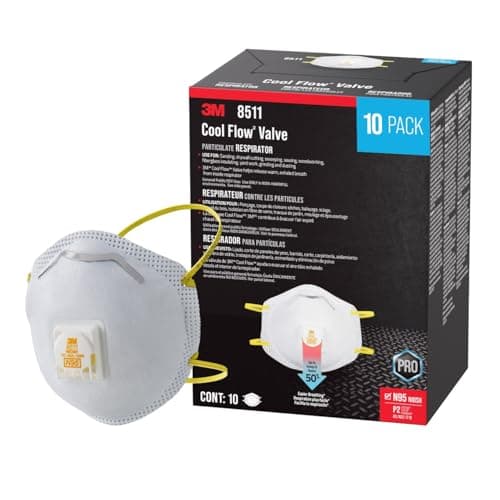
A NIOSH-approved N95 particulate respirator with Cool Flow exhalation valve for comfortable breathing during mold remediation. Filters at least 95% of airborne particles including mold spores. The adjustable M-noseclip and dual-strap design provide a secure seal. OSHA-recommended for mold work.
Pros
- NIOSH-approved N95 filtration
- Cool Flow valve reduces heat buildup
- Adjustable nose clip for secure fit
Cons
- Disposable, not reusable long-term
- Does not protect against chemical fumes or VOCs
- May not fit all face shapes comfortably
Method 1: White Vinegar (Best for Most Situations)
White vinegar is my go-to recommendation for bathroom ceiling mold. Studies show it kills approximately 82% of mold species, and unlike bleach, vinegar's acetic acid penetrates porous surfaces like drywall to reach mold roots underneath. Bleach only kills surface mold on non-porous materials — on drywall, it's essentially cosmetic.
- Fill a spray bottle with undiluted white vinegar (5% acidity). Don't dilute it — that reduces effectiveness.
- Lay plastic sheeting or old towels on the floor below the work area to catch drips.
- Spray the moldy area thoroughly until it's visibly wet. Get the edges too — mold extends beyond what you can see.
- Wait 60 minutes. Don't rush this. The acid needs time to work.
- Scrub with a stiff-bristled brush or non-scratch scrubbing pad. Work in small circles.
- Wipe the area with a clean, damp cloth. Dispose of the cloth in a sealed plastic bag.
- Repeat if staining remains. Some deep stains need two or three treatments.
- Dry the ceiling completely — point a fan at it or run the exhaust fan for several hours.
The vinegar smell dissipates within a few hours. If it bothers you, add a few drops of tea tree oil to the spray bottle — it's also a natural antifungal.
Method 2: Hydrogen Peroxide (Best for Painted Surfaces)
Three percent hydrogen peroxide(the brown bottle from any pharmacy) kills mold and lightens stains without damaging paint or discoloring surfaces. It's effective against up to 85% of mold species on non-porous surfaces.
- Pour 3% hydrogen peroxide into a spray bottle. Use it straight — no diluting.
- Spray the moldy area and let it sit for 10–15 minutes.
- Scrub with a soft brush, then wipe clean.
- Dry the area thoroughly.
Warning: Never mix hydrogen peroxide with vinegar. The combination creates peracetic acid, which can irritate your skin, eyes, and lungs. Use one or the other, never both at the same time.
Method 3: Commercial Mold Remover (Best for Stubborn Stains)
When vinegar and peroxide can't cut through deep black stains, a commercial mold removal spray does the job. RMR-86 is the fastest option — it removes mold stains in as little as 15 seconds without scrubbing. The trade-off is strong chemical fumes, so ventilation is critical.
For households with kids or pets, Concrobium Mold Controlis the better choice. It's non-toxic (no bleach, no ammonia, no VOCs), kills mold on contact, and leaves an invisible antimicrobial barrier that prevents regrowth. The downside: it doesn't remove stains. You might need to prime and repaint after treatment.
| Product | Rating | Price | Best For | Link |
|---|---|---|---|---|
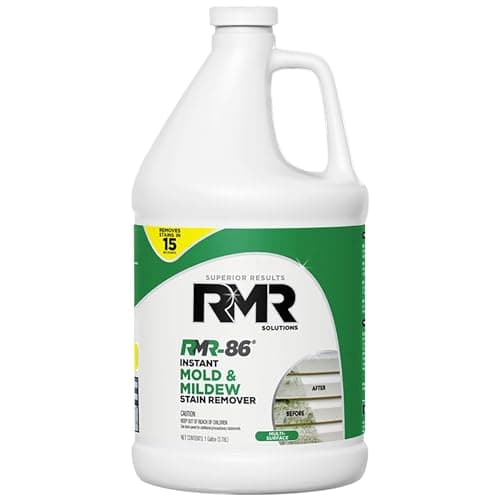 RMR-86 Instant Mold & Mildew Stain Remover Spray (1 Gallon) RMR Brands | 4.4 | $25–35 | Deep mold stains on hard surfaces like bathroom tile, grout, and basement walls | View |
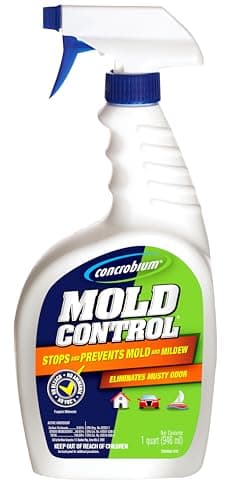 Concrobium Mold Control Concrobium | 4.3 | $10–15 | Families who want a non-toxic solution for killing and preventing mold | View |
See our full mold killer spray comparison and mold removal spray guide, and complete mold removal guide for more product options and methods.
Method 4: Bleach Solution (Non-Porous Surfaces Only)
Bleach works on tile, glass, and metal — surfaces where mold sits on top rather than growing roots into the material. For a painted drywall ceiling, bleach is not the best choice because it doesn't penetrate to kill subsurface mold. The water in the bleach solution can actually feed mold growth deeper in the drywall.
If your bathroom ceiling is tile (common in some older homes and shower enclosures), mix one cup of bleach per gallon of water, spray the area, wait 15 minutes, scrub, and rinse. Open a window and run the fan — bleach fumes in a small bathroom are intense.
Black Mold on Bathroom Ceiling: When to Worry
"Black mold" gets a lot of fear-mongering online, so let's separate fact from panic. Most black-colored mold on bathroom ceilings is Cladosporium or Aspergillus— common household molds that happen to be dark in color. They're not great for you, but they're not the infamous toxic black mold.
The mold people are actually worried about is Stachybotrys chartarum, which produces mycotoxins linked to serious respiratory problems. Stachybotrysneeds sustained saturation of cellulose materials (drywall, wood) to grow — it's more common behind walls with chronic leaks than on bathroom ceilings. That said, it's not impossible. For a deeper dive on identifying and removing black mold throughout your home, see our complete black mold removal guide.
When professional remediation is required:
- Mold covers more than 10 square feet (the EPA's DIY limit — about a 3×3 foot area)
- Mold returns within weeks of cleaning despite fixing ventilation
- The drywall is soft, crumbling, or visibly water-damaged beneath the mold
- Anyone in the household has asthma, immune system issues, or chronic respiratory symptoms that worsen at home
- You suspect the mold is coming from inside the ceiling cavity (roof leak, plumbing leak above)
Professional bathroom ceiling mold remediation typically costs $1,000 to $5,000, depending on severity and whether drywall replacement is needed. Use our mold removal cost calculator to estimate your project. The national average for mold remediation projects overall is about $2,300 according to 2026 data from Angi and HomeGuide. Expect to pay $10–$25 per square foot. If the remediation company also needs to find and fix the moisture source (a roof leak, for example), add that cost separately.
How to Prevent Mold on Your Bathroom Ceiling
Cleaning mold off your ceiling is treating the symptom. Prevention means treating the cause: excess moisture. If you get ventilation right, you'll likely never deal with bathroom ceiling mold again. If your shower area also has mold, tackle both at once — see our shower mold removal guide for step-by-step instructions.
Upgrade Your Exhaust Fan
This is the single most impactful change you can make. A properly sized exhaust fan that vents to the outside (not into your attic — that just moves the problem) removes humid air before it condenses on your ceiling.
- Sizing:The Home Ventilating Institute says 1 CFM per square foot of bathroom floor area. A standard 50 sq ft bathroom needs a 50 CFM fan minimum. I'd recommend going one size up — a 70–80 CFM fan gives you a buffer for longer showers.
- Noise:Loud fans don't get used. Look for fans rated under 1.0 sone (almost silent). Panasonic WhisperCeiling and Broan-NuTone are solid picks.
- Timer switch: Replace your fan switch with a timer or humidity-sensing switch. Timer switches automatically run the fan for a set period after you flip them off. Humidity-sensing switches turn on automatically when moisture rises above a threshold. Either one removes the human error factor.
Run the Fan Properly
Having a fan means nothing if you don't use it. Run it during every shower and for at least 20–30 minutes after. That's the minimum time needed to bring bathroom humidity back to normal levels. Closing the door while the fan runs creates negative pressure that pulls dry air from the hallway under the door gap, speeding up the process.
Use Mold-Resistant Paint
After cleaning mold from your ceiling, don't just repaint with standard latex. First apply a mold-killing primer like Zinsser to neutralize any remaining spores, then topcoat with a mold-resistant paint like Rust-Oleum Perma-White, which carries a 5-year mold-proof guarantee.
Zinsser Mold Killing Primer
Zinsser
$18–25
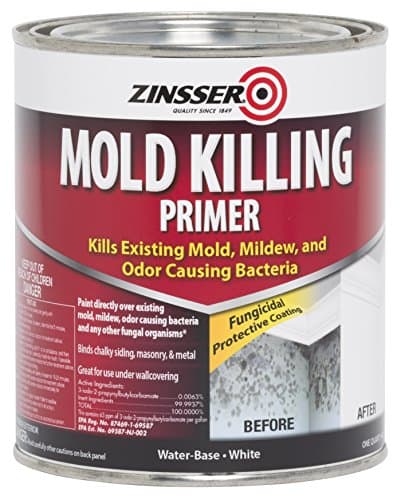
An EPA-registered fungicidal primer that kills existing mold, mildew, and odor-causing bacteria on contact. Creates a mold-resistant barrier on interior and exterior surfaces including drywall, wood, concrete, and masonry. Essential for mold remediation projects before applying topcoat paint.
Pros
- Kills existing mold on contact while priming
- EPA-registered fungicidal protective coating
- Bonds to all interior and exterior surfaces
Cons
- Strong odor during application, requires ventilation
- Water-based formula can raise grain on bare wood
- Must be topcoated with paint for lasting protection
Rust-Oleum Perma-White Mold & Mildew-Proof Interior Paint
Rust-Oleum
$25–35
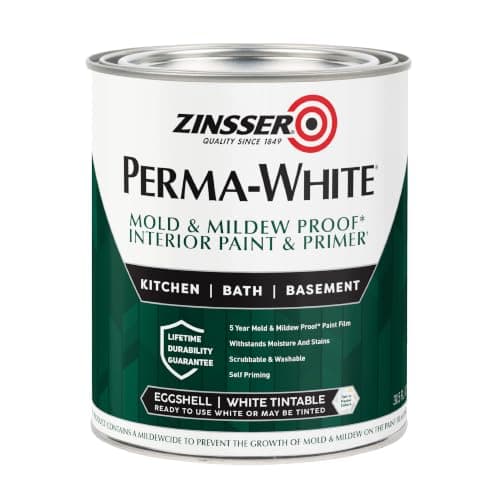
A self-priming, moisture-resistant interior paint with a 5-year mold and mildew-proof guarantee. The advanced acrylic formula resists moisture, dirt, and staining while providing a smooth satin finish. Ideal for high-humidity areas like bathrooms, basements, and kitchens.
Pros
- Self-priming formula saves time
- Guaranteed mold and mildew proof for 5 years
- Moisture-resistant, ideal for bathrooms and basements
Cons
- Limited to interior use only
- Available only in satin white finish
- Cannot be tinted to custom colors
Read our full mold-resistant paint comparison for application tips and coverage details.
Control Humidity
- Keep indoor humidity below 50% — you can measure it with a $10 hygrometer from any hardware store.
- Squeegee or wipe shower walls after use. This alone reduces bathroom moisture by up to 75%.
- If your bathroom has a window, crack it after showers when weather permits. (Watch for mold on the window sill — bathroom windows are high-condensation zones.)
- In basement bathrooms or naturally humid climates, a small dehumidifier in the bathroom can make a meaningful difference.
Inspect Regularly
Check your bathroom ceiling monthly, especially in the corners above the shower and around the exhaust fan vent. Early mold is much easier (and cheaper) to deal with than mold that's had months to spread and penetrate. If you see the very first signs of discoloration, spray with vinegar right away — a 5-minute intervention prevents a 5-hour project.
Best Products for Bathroom Ceiling Mold
Here's what I'd buy for a complete bathroom ceiling mold project, from removal through prevention:
- For killing mold (non-toxic):Concrobium Mold Control — safe around families, leaves a protective barrier, but won't remove stains.
- For removing stains fast: RMR-86 — dissolves black mold stains in seconds. Use with an N95 mask and open a window.
- For repainting: Zinsser Mold Killing Primer + Rust-Oleum Perma-White topcoat. This combo prevents regrowth for years.
- For weekly prevention: Wet & Forget Shower Cleaner — a no-scrub weekly spray that keeps mold from getting a foothold.
For whole-bathroom treatment after remediation, a mold foggercan reach hidden surfaces behind walls and above the ceiling that spray alone won't cover. For a deeper look at all your options, see our best mold removal products roundup.
Frequently Asked Questions
Can I just paint over bathroom ceiling mold?
No. Painting over active mold is one of the most common mistakes I see. The mold continues growing underneath the paint, and within a few months it pushes through again — now with fresh paint as an additional food source. Always kill and remove the mold first, prime with a fungicidal primer, then apply mold-resistant topcoat paint.
Is mold on my bathroom ceiling dangerous?
Most bathroom ceiling mold is a nuisance, not a health emergency. Common species like Cladosporium and Aspergillus can trigger allergic reactions, nasal congestion, and eye irritation in sensitive individuals. The CDC notes that mold exposure can worsen asthma and cause upper respiratory symptoms even in otherwise healthy people. If anyone in your household has respiratory issues that improve when they leave the house, take that seriously and address the mold promptly.
How much does it cost to remove mold from a bathroom ceiling?
DIY removal costs $15–$50 in supplies (vinegar or spray, N95 mask, gloves, and goggles). Professional remediation for a bathroom ceiling runs $1,000–$5,000 depending on severity and whether drywall replacement is needed. If you're also repainting with mold-resistant paint, add $50–$100 for primer and paint.
Should I replace drywall if there's mold on the ceiling?
Only if the drywall is structurally compromised. If the drywall is soft, crumbling, or sagging when you press on it, the mold has penetrated through and the drywall needs to go. If the surface is still firm and the mold is only on the paint surface, cleaning and repainting with mold-resistant products is sufficient.
Dealing With Mold Right Now?
Our step-by-step mold removal guide walks you through testing your home, choosing the right products, and knowing when a job is too big for DIY.
Read the Removal GuideFrequently Asked Questions
Can I just paint over bathroom ceiling mold?
Is mold on my bathroom ceiling dangerous?
How much does it cost to remove mold from a bathroom ceiling?
Should I replace drywall if there is mold on the ceiling?
Related Articles
How to Remove Mold from Your Shower (Step-by-Step)
Mold on Walls: How to Remove It (and When to Replace the Wall)
Mold on Window Sill: Why It Grows and How to Stop It
Does Bleach Kill Mold? The EPA Says No — Here's What Actually Works
Mold-Resistant Paint: How It Works, When to Use It, and What It Can't Do
Mold Killer Spray: Which Type Works on Which Surface
Dealing With Mold Right Now?
Our step-by-step mold removal guide walks you through testing your home, choosing the right products, and knowing when a job is too big for DIY.
Read the Removal Guide