Yellow Mold: Why It's More Dangerous Than You Think
Out of the Mold Editorial Team
Our guides are research-backed and cite EPA, CDC, and peer-reviewed sources. Product reviews are based on hands-on testing, not manufacturer claims. Read our editorial standards.
Affiliate Disclosure: Out of the Mold is reader-supported. As an Amazon Associate, we may earn a commission when you buy through links on this page — at no extra cost to you. Our picks are based on independent standards, manufacturer specifications, and published research, not commissions.
Key Takeaways
- Yellow mold is more dangerous than most colors. It includes Aspergillus flavus (aflatoxin carcinogen), Serpula lacrymans (structural wood destroyer), and Mucor (50% mortality in immunocompromised).
- Serpula lacrymans (dry rot) transports water up to 5 meters through its mycelium — it attacks wood that isn't even wet. Properties with dry rot damage lost an average of 62% of their market value.
- Early-stage yellow mold on ceilings looks like aging paint or faint spotting. If it returns to the same location after cleaning, you have a moisture problem feeding a colony.
- Dry rot test: push a screwdriver into the wood. If it sinks in or the wood crumbles into cube shapes, call a structural engineer immediately.
- Standard mold cleanup: $1,200–$3,750. Dry rot structural repair: $2,000–$50,000+. Insurance usually excludes dry rot.
Yellow mold is usually Aspergillus flavus (produces carcinogenic aflatoxins), Serpula lacrymans (dry rot — destroys structural wood), or Mucor (causes mucormycosis with ~50% mortality in immunocompromised patients). Unlike most household mold colors, yellow mold includes two genuinely dangerous organisms. Serpula lacrymans can transport moisture up to 5 meters through its mycelium, attacking even dry wood — it costs hundreds of millions in structural repairs across North America and Europe annually. Remove small areas yourself with vinegar or hydrogen peroxide. Call a professional immediately if you suspect dry rot or if the area exceeds 10 square feet.
🔍 Quick Assessment — Is Your Yellow Mold an Emergency?
Is it on structural wood (joists, studs, sheathing)?
Push a screwdriver into the wood. If it sinks in or the wood crumbles into cube shapes → This is dry rot. Call a structural engineer now.
On walls, ceiling, or tile?
Likely Aspergillus or Epicoccum. DIY-safe if under 10 sq ft → Removal by surface type
On mulch, garden beds, or houseplant soil?
Almost certainly harmless Fuligo septica (slime mold). It dries up in 1–3 days on its own → Soil and houseplants
Yellow mold gets less attention than black or green, and that's a problem. Most people assume lighter-colored mold is less dangerous. In reality, yellow mold includes Aspergillus flavus — whose aflatoxins are classified as Group 1 carcinogens — and Serpula lacrymans, the dry rot fungus that can literally collapse your floor.
I've seen homeowners ignore yellow patches on basement joists for months, thinking it was just cosmetic. By the time they called a remediation company, the wood crumbled when touched. The repair bill was $22,000. Yellow mold on structural wood is not cosmetic.
What Is Yellow Mold?
Like green mold and orange mold, "yellow mold" describes any mold or fungus-like organism that appears yellow — see our complete mold identification guide for a side-by-side comparison of every common color. Five organisms account for most yellow growth found in homes:
Aspergillus flavus
The most common true yellow mold indoors. A. flavus forms powdery yellow-green colonies on walls, stored food, and in HVAC systems. It produces aflatoxins — classified as Group 1 human carcinogens by IARC. Aflatoxin B1 is the most potent naturally occurring carcinogen known, primarily linked to liver cancer. The National Cancer Institute confirms that long-term aflatoxin exposure significantly increases hepatocellular carcinoma risk.
Beyond cancer risk, A. flavus causes aspergillosis— lung infections ranging from allergic reactions to invasive disease. The CDC calls aspergillosis the second most common fungal infection requiring hospitalization in the U.S. For healthy adults, household-level exposure is mostly allergenic. For immunocompromised individuals, it's a medical emergency.
Serpula lacrymans (Dry Rot)
This is yellow mold's unique threat — and the reason this article matters. Serpula lacrymans is the primary wood-destroying dry rot fungus in buildings. It produces yellow to brownish fruiting bodies and yellow-white mycelium on affected wood.
What makes Serpula terrifying is its ability to transport water up to 5 meters through its own mycelium network(called rhizomorphs). This means it can attack wood that isn't even wet — it brings its own moisture supply. Most other molds stop growing when the surface dries. Dry rot doesn't.
The structural damage is severe: cuboidal cracking patterns in affected wood, where the wood breaks into cube-shaped fragments that crumble to dust. Under optimal conditions (around 68°F with adequate moisture), visible damage appears within 2–6 months. A 2025 ScienceDirect study found that properties with S. lacrymans damage lost an average of 62% of their market value, with 16 properties losing over 80%.
Dry rot costs hundreds of millions of dollars in structural repairs across North America and Europe every year. Recent research links increasing S. lacrymans insurance claims to climate change — warmer, wetter conditions expand its range. If you see yellow-brownish growth on structural wood with cuboidal cracking, stop reading and call a structural engineer.
Mucor
Mucorspecies form cottony yellow-white colonies on food, soil, and damp building materials. They're common bread molds — the fuzzy growth on forgotten fruit in the back of your fridge is often Mucor.
For healthy people, Mucor is a minor nuisance. For immunocompromised individuals, it causes mucormycosis — an invasive fungal infection with a mortality rate of approximately 50%. Disseminated mucormycosis (spread through the body) has a 68% case fatality rate. The CDC identifies diabetes, organ transplant recipients, cancer patients on chemotherapy, and people on long-term corticosteroids as high-risk groups. Mucormycosis became globally notorious during the COVID-19 pandemic when cases surged in immunocompromised patients.
Fuligo septica ("Dog Vomit Slime Mold")
This bright yellow-orange blob on mulch or garden beds isn't actually mold — it's a slime mold. Despite the alarming appearance (yes, it looks like vomit), it's completely harmless. It feeds on bacteria in decaying organic matter and dries up within 1–3 days. No treatment needed. See our orange mold guide for more on Fuligo.
Epicoccum nigrum
Epicoccum produces yellow-brown to orange colonies on damp drywall, paper, and wood. Primarily allergenic — one of the most common airborne mold allergens detected in both indoor and outdoor air studies. Not structurally dangerous, but another sign that you have a moisture problem.
Is Yellow Mold Dangerous?
More so than most people think. Yellow mold includes two organisms that can cause serious harm — one to your health, one to your house.
| Organism | Type | Health Risk | Structural Risk | Urgency |
|---|---|---|---|---|
| Aspergillus flavus | True mold | High — aflatoxins (Group 1 carcinogen) | None | High |
| Serpula lacrymans | Wood-rot fungus | Low — allergenic | Critical — destroys structural wood | Critical |
| Mucor | True mold | Critical for immunocompromised (~50% mortality) | None | High (if immunocompromised) |
| Fuligo septica | Slime mold | Very low — mild allergen | None | None |
| Epicoccum | True mold | Low — common allergen | None | Moderate |
Mold contributes to an estimated 4.6 million asthma cases annuallyin the U.S. Regardless of species, the CDC's advice is the same: remove the mold and fix the moisture. For medical guidance, see the CDC's mold and health resources.
Early-Stage Yellow Mold on Ceilings and Walls
"Early stage yellow mold on ceiling" is one of the most common searches that leads people to this article — and spotting it early is the difference between a $30 cleaning job and a $5,000 remediation.
Here's what early-stage yellow mold actually looks like:
- Faint yellow spotting that looks like aging paint or water stains — but it keeps reappearing in the same location
- Thin powdery film that wipes away easily but returns within days
- Tiny pale dots near ceiling corners, above showers, or around vents
- A musty smell in the room even when no visible growth is obvious — see our mold smell guide for what to listen to with your nose
The key diagnostic clue isn't the color — it's the location pattern. If yellowish discoloration keeps appearing in the same spot (above a shower, near a vent, at a wall-ceiling junction), you have a persistent moisture problem feeding a growing colony.
The 48-Hour Rule
Mold spores germinate within 12–24 hours on damp surfaces. Visible colonies appear at 48–72 hours. If you catch yellow spots early and act within 48 hours:
- Spray the area with undiluted white vinegar
- Wait 60 minutes, then wipe clean
- Dry the area with a fan
- Find and fix the moisture source (roof leak, condensation, poor ventilation)
If you skip step 4, the mold returns. Every time.
How to Remove Yellow Mold (By Surface)
For areas under 10 square feet — the EPA's DIY threshold — wear an N95 mask, gloves, and eye protection. Ventilate the area.
Bathroom (Ceiling, Walls, Tile)
Bathrooms are the #1 location for yellow mold because warm steam rises to the ceiling and condenses. Ceilings collect more moisture than walls because heat and humidity concentrate at the highest point.
- Spray undiluted white vinegar on all yellow-stained surfaces
- Wait 60 minutes — vinegar kills approximately 82% of mold species
- Scrub tile and grout with a stiff brush; use a sponge on painted surfaces
- Rinse and dry immediately
- Apply Concrobium as a preventive barrier on cleaned areas
If your bathroom exhaust fan is weak (you should feel airflow with your hand held 6 inches away), replace it. A 50 CFM fan isn't enough for most bathrooms — you need 1 CFM per square foot minimum. For detailed ceiling removal, see our bathroom ceiling mold guide.
Wood (Structural and Furniture)
This is where yellow mold gets serious. If you see yellow growth on structural wood — floor joists, wall studs, roof sheathing — check for dry rot before cleaning:
- Poke the wood with a screwdriver. If it sinks in easily or the wood crumbles into cube-shaped fragments, you have dry rot. Stop and call a structural engineer.
- Look for rhizomorphs. These are root-like strands extending from the colony across surfaces — sometimes traveling along masonry, behind plaster, or through floors. Rhizomorphs mean Serpula lacrymans is actively spreading.
- Check moisture content. Use a moisture meter — healthy structural wood reads 6–12%. Above 20% is the danger zone for dry rot.
Klein Tools ET140 Pinless Moisture Meter
Klein Tools
$45–60
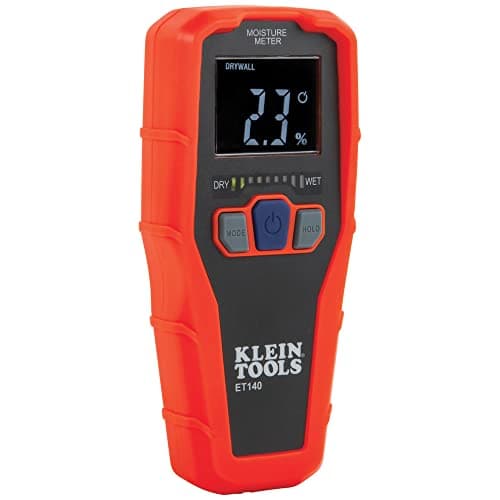
A professional-grade pinless moisture meter that detects hidden moisture in drywall, wood, and masonry without leaving holes. Uses electromagnetic sensor technology to measure moisture content up to 3/4 inch below the surface. Essential for identifying moisture problems before mold develops.
Pros
- Non-invasive pinless technology, no holes in walls
- Detects moisture up to 3/4 inch deep
- Visual and audible moisture alerts
Cons
- Less precise than pin-type meters on exact moisture percentage
- Battery not included
- Can give false readings on metallic or foil-backed surfaces
For surface-level yellow mold on solid wood (not dry rot):
- Spray 3% hydrogen peroxide and wait 10–15 minutes
- Scrub along the wood grain with a stiff brush
- Wipe clean and allow to dry to 6–9% moisture content
- Sand lightly (120-grit) if stains persist
- Apply Concrobium to prevent regrowth
For wood floor mold specifically, see our mold on wood floor guide — it covers the save-or-replace decision framework with 2026 costs.
Concrobium Mold Control (32 oz Spray, 2-Pack)
Concrobium
$34–40 (2 bottles)
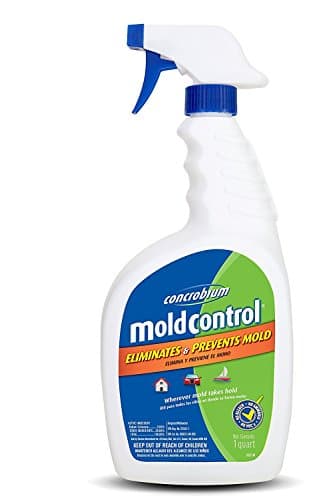
A patented, EPA-registered mold control solution that kills mold without bleach, ammonia, or VOCs. The tri-salt polymer formula crushes mold spores as it dries and leaves an invisible antimicrobial barrier to prevent regrowth. Safe for indoor use on virtually any surface.
Pros
- Non-toxic, no bleach or ammonia
- Kills mold and prevents regrowth
- Safe for use around children and pets
Cons
- Does not remove existing mold stains
- Takes longer to work than bleach-based products
- May require multiple applications for severe infestations
Drywall
Yellow mold on drywall means moisture has penetrated the paper backing — mold's favorite food source. Surface mold on painted drywall can be cleaned with vinegar, but don't soak the drywall — excess water worsens the problem.
If the drywall is soft, crumbling, or bulging, cut it out and replace it. Patch the area, then figure out where the moisture came from before repainting. If you skip the moisture source, the new drywall will grow mold too.
Carpet and Fabric
Yellow mold on carpet usually means the padding underneath is saturated. Surface cleaning won't reach the pad, and pads that have been wet for more than 48 hours should be replaced regardless — they're cheap ($0.25–$3/sq ft) and virtually impossible to fully decontaminate. See our carpet mold guide for the save-or-replace framework.
For fabric (curtains, upholstery), brush off loose mold outdoors, then machine wash on the hottest setting the fabric allows with white vinegar added to the rinse cycle. Air dry in direct sunlight if possible — UV light kills remaining spores.
Soil and Houseplants
Yellow mold on potting soil is typically Leucocoprinus birnbaumii(flowerpot parasol) or saprophytic fungi feeding on organic matter in the soil mix. It's cosmetically unpleasant but doesn't harm the plant.
To remove: scrape off the top inch of soil and replace with fresh potting mix. Reduce watering frequency and improve drainage. If it persists, repot entirely with sterile soil. The mold is a sign of consistently overwatered soil, not a plant disease.
Dry Rot: Why Yellow Mold on Wood Is an Emergency
This section exists because no other guide on "yellow mold" adequately covers Serpula lacrymans— and it's the single most financially devastating mold problem a homeowner can face.
How Dry Rot Spreads
Unlike typical mold that needs the surface to be wet, S. lacrymans grows rhizomorphs — root-like structures that transport water from a damp source to dry wood up to 5 meters away. This means it can:
- Cross masonry walls and concrete foundations
- Travel through plaster, behind wallpaper, under floors
- Attack wood that has never been directly wet
- Spread between rooms and even between floors
A damp patch in the basement can feed a dry rot colony that destroys floor joists two rooms away. This is why dry rot remediation always involves investigating beyond the visible damage.
Signs of Dry Rot
- Cuboidal cracking — Wood breaks into small cube-shaped pieces instead of splintering along the grain
- Fruiting bodies — Flat, pancake-like structures with orange-rust centers and white edges, sometimes appearing on walls or floors
- White/yellow mycelium — Cotton-like growth on wood surfaces
- Musty mushroom smell — Distinct from typical mold mustiness
- Springy or sagging floors — By this point, structural damage is advanced
Dry Rot Repair Costs (2026)
Dry rot repair is significantly more expensive than standard mold remediation because it involves structural work:
- Localized repair (1–2 joists): $2,000–$5,000
- Moderate damage (subfloor + joists): $5,000–$15,000
- Extensive damage (multiple rooms, structural): $15,000–$50,000+
Insurance note:Most homeowner's policies exclude dry rot damage because it's considered a maintenance issue. Some policies cover it if caused by a sudden event (burst pipe), but gradual moisture and neglect are universally excluded. A 2025 study found properties with dry rot damage lost an average of 62% of their market value.
Yellow Mold vs. Other Mold Colors
| Feature | Yellow | Orange | Green | Black |
|---|---|---|---|---|
| Biggest threat | Structural collapse (dry rot) | Aflatoxins (A. flavus) | Aflatoxins, ochratoxin A | Satratoxins (Stachybotrys) |
| Structural risk | High (Serpula) | None | None | Indicates chronic water damage |
| Moisture needed | Serpula brings its own | Moderate to high | Moderate | Very high (chronic) |
| Common species | A. flavus, S. lacrymans, Mucor | Acremonium, A. flavus | Aspergillus, Penicillium | Stachybotrys, A. niger |
| Avg. repair cost | $2,000–$50,000+ (if dry rot) | $1,200–$3,750 | $1,200–$3,750 | $1,500–$6,000 |
When to Call a Professional
Yellow mold has a lower DIY threshold than other mold colors because of the dry rot risk. Call a certified pro (IICRC or ACAC) when:
- You suspect dry rot— Cuboidal cracking, soft wood, visible rhizomorphs, fruiting bodies. This isn't a cleaning job — it's a structural job. You need a remediation company and possibly a structural engineer.
- The affected area exceeds 10 sq ft— EPA's DIY threshold applies to all mold colors.
- Mold is on structural wood — Joists, studs, headers, or roof sheathing. Even without dry rot, you need professional assessment.
- Anyone in the household is immunocompromised — Mucor in particular is life-threatening for these individuals (50% mortality rate for mucormycosis).
- It keeps returning— Recurring yellow mold means the moisture source hasn't been fixed. A pro will do moisture mapping to find the hidden source.
Standard mold remediation costs $10–$25 per square foot in 2026. Dry rot structural repair is significantly more — $2,000 to $50,000+ depending on extent. For cost details, see our mold remediation cost guide.
Mold Armor FG500 Do It Yourself Mold Test Kit
Mold Armor
$9–15
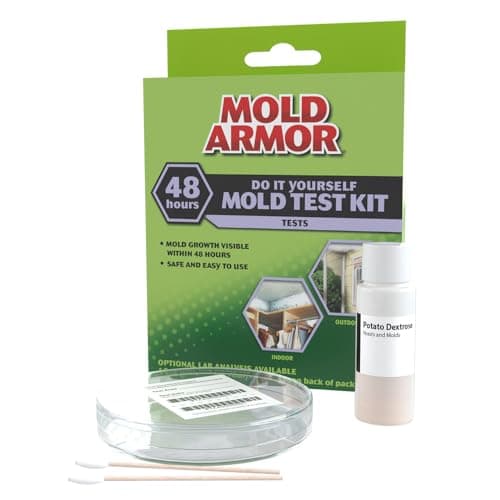
The most popular DIY mold test kit on Amazon. Includes a settling plate, swab, and pre-paid postage for AIHA-accredited lab analysis. The kit detects airborne mold spores and surface mold, identifying species like Aspergillus, Stachybotrys, and Penicillium.
Pros
- Very affordable entry-level test
- Includes petri dish, swab, and postage for lab analysis
- Results identify mold species
Cons
- Lab fee is separate (~$40)
- Takes 5-7 days for lab results
- Only tests one location per kit
Preventing Yellow Mold
- Keep indoor humidity below 50% — EPA recommends 30–50%. Use a hygrometer to monitor. Run a dehumidifier in basements, crawl spaces, and bathrooms that consistently exceed 50%.
- Monitor structural wood moisture — A moisture meter ($25–$50) lets you spot problems before mold appears. Healthy structural wood reads 6–12%. Above 20% is the danger zone for dry rot. Check joists, sill plates, and window frames quarterly.
- Ventilate properly— Run bathroom fans during and 30 minutes after showers. Ensure attic and crawl space ventilation meets code. Stagnant, humid air is dry rot's best friend.
- Fix leaks immediately — Mold colonizes within 24–48 hours. A small roof drip can feed a dry rot colony for months before you notice structural damage.
- Inspect annually — Check basement joists, crawl space wood, and behind appliances (washing machine, dishwasher). Catching dry rot early can save $20,000+ in repairs.
- Apply preventive spray — Concrobium leaves an antimicrobial barrier on treated surfaces. Use it on basement walls, window frames, and crawl space wood after cleaning or as preventive treatment.
Dealing With Mold Right Now?
Our step-by-step mold removal guide walks you through testing your home, choosing the right products, and knowing when a job is too big for DIY.
Read the Removal GuideFrequently Asked Questions
Is yellow mold dangerous?
Yes — more than most people assume. Yellow mold includes Aspergillus flavus (produces Group 1 carcinogenic aflatoxins), Serpula lacrymans (destroys structural wood), and Mucor (50% mortality rate in immunocompromised patients). Not all yellow mold is dangerous — Fuligo septica and Epicoccumare harmless to mildly allergenic — but you can't determine species by color alone.
What does early-stage yellow mold look like?
Early-stage yellow mold appears as faint yellowish spotting that looks like aging paint or water stains. It may present as a thin powdery film that wipes away easily but returns within days, or tiny pale dots near ceiling corners and above showers. The key indicator is persistence — if the same spot keeps discoloring, it's mold, not paint aging.
How can I tell if yellow mold is dry rot?
Three tests: (1) Push a screwdriver into the wood — if it sinks in easily, the wood is compromised. (2) Look for cuboidal cracking — wood breaking into small cube shapes instead of splintering. (3) Check for rhizomorphs — root-like strands extending from the colony across surfaces. Any of these = call a structural professional immediately.
Can I remove yellow mold myself?
Yes, if the area is under 10 square feet and on accessible surfaces (not structural wood). Use white vinegar (60-minute contact time) or 3% hydrogen peroxide (10–15 minutes). Fix the moisture source or the mold returns. If you suspect dry rot on structural wood, do not attempt DIY — call a certified remediation company.
Does yellow mold on food mean the food is unsafe?
Follow USDA guidelines: hard cheese and firm vegetables can be trimmed (cut 1 inch around and below the mold). Soft foods — bread, soft cheese, fruit, leftovers — must be discarded entirely. Yellow food mold may be Aspergillus flavus, which can produce aflatoxins. When in doubt, throw it out. See our green mold guide for the complete USDA food safety breakdown.
How much does it cost to fix yellow mold damage?
Standard surface mold remediation: $1,200–$3,750 ($10–$25/sq ft). Dry rot structural repair: $2,000–$50,000+ depending on extent. Insurance typically excludes dry rot as a maintenance issue. Most homeowner's policies cap mold coverage at $1,000–$10,000 even when it applies. Get three quotes from IICRC-certified companies.
Frequently Asked Questions
Is yellow mold dangerous?
What does early-stage yellow mold look like?
How can I tell if yellow mold is dry rot?
Can I remove yellow mold myself?
Does yellow mold on food mean the food is unsafe?
How much does it cost to fix yellow mold damage?
Related Articles
Green Mold: Types, Dangers, and How to Remove It
Orange Mold: Identification, Risks, and Removal by Surface
How to Get Rid of Black Mold: DIY Removal Guide
Mold on Wood Floors: Remove It, Refinish, or Replace?
What Does Mold Smell Like? How to Identify Mold by Smell
How to Remove Mold from Your Bathroom Ceiling (And Keep It Gone)
Dealing With Mold Right Now?
Our step-by-step mold removal guide walks you through testing your home, choosing the right products, and knowing when a job is too big for DIY.
Read the Removal Guide