How to Remove Mold from Your Car Interior
Out of the Mold Editorial Team
Our guides are research-backed and cite EPA, CDC, and peer-reviewed sources. Product reviews are based on hands-on testing, not manufacturer claims. Read our editorial standards.
Affiliate Disclosure: Out of the Mold is reader-supported. As an Amazon Associate, we may earn a commission when you buy through links on this page — at no extra cost to you. Our picks are based on real testing and independent standards, not commissions.
Key Takeaways
- Park in sunlight and crack windows to dry out a moldy car before cleaning.
- Use non-toxic sprays like Concrobium inside vehicles to avoid chemical fumes.
- Clean the cabin air filter and run the AC on recirculate with treatment.
- Fix the moisture source (leaky seals, clogged drains) to prevent recurrence.
- Professional ozone treatment is the most effective option for severe car mold.
To remove mold from a car, start by parking in direct sunlight with all doors open, then HEPA-vacuum (H13 filtration) all surfaces before applying an EPA-registered mold removal spray. The entire process takes 4-6 hours for moderate cases. Professional auto mold remediation costs $200-$600 and includes ozone treatment (0.05-0.10 PPM for 1-2 hours), which is the most effective method for eliminating deeply embedded spores and MVOCs (microbial volatile organic compounds) that cause musty odors.
Discovering mold inside your car is more than just unpleasant — it can pose real health risks and tank your vehicle's resale value. Cars are surprisingly vulnerable to mold growth because they create enclosed, humid environments that trap moisture for hours or even days at a time. Whether it started from a forgotten water bottle, a window left cracked during a rainstorm, a slow sunroof leak, or simply parking in a humid climate, mold in a car interior demands prompt, thorough attention.
The good news is that most car mold problems can be handled yourself with the right products and approach — see our mold removal guide for a full product breakdown. This guide walks you through every step of identifying, removing, and preventing mold in your vehicle's interior — from fabric seats and carpets to dashboards, door panels, and even the AC system.
Signs Your Car Has a Mold Problem
A musty odorwhen you open the door is the earliest sign of car mold — you'll smell MVOCs before you see visible growth. Aspergillus, Penicillium, and Cladosporium are the most common car mold species, and they all produce these microbial volatile organic compounds (MVOCs) as colonies metabolize organic material. If the smell is strongest when the car has been sitting closed up in the sun, that's a strong indicator — heat intensifies off-gassing from active mold growth.
Visual signs to look for include fuzzy or discolored patches on fabric seats, carpet, headliner materials (polyester fabric bonded to polyurethane foam), or trunk lining. Mold often appears as dark green, black, or white spots, though it can also show up as gray or brown discoloration. Check under floor mats, in seat crevices, inside the glovebox, and along the rubber seals around doors and windows. The trunk is another common hotspot, especially if there's a spare tire well that collects water.
Health symptoms can also tip you off. If you or your passengers notice sneezing, watery eyes, throat irritation, or headaches that start within minutes of getting in the car and improve after leaving, airborne mold spores are a likely cause. People with asthma or mold allergies may experience more severe reactions, including coughing fits or difficulty breathing during drives.
Safety First: Protect Yourself Before You Start
Wear an N95 respirator (minimum) and nitrile gloves before touching any mold-affected surfaces in your car. Disturbing mold colonies releases massive numbers of spores into the air — in an enclosed car interior, concentrations can spike rapidly. At a minimum, you need an N95 respirator (not a basic dust mask or surgical mask), safety goggles without ventilation holes, and nitrile gloves.
An N95 respirator is rated to filter out 95% of airborne particles, including mold spores which typically range from 2 to 100 microns in diameter. Make sure the mask fits snugly against your face with no gaps around the nose or cheeks. If you can smell the mold through the mask, the fit is inadequate.
3M 8511 N95 Particulate Respirator
3M
$20–30
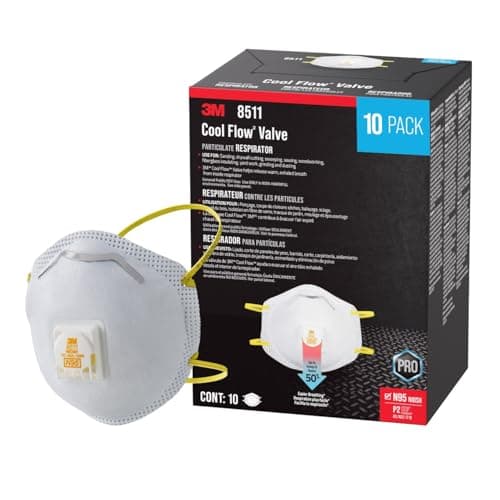
A NIOSH-approved N95 particulate respirator with Cool Flow exhalation valve for comfortable breathing during mold remediation. Filters at least 95% of airborne particles including mold spores. The adjustable M-noseclip and dual-strap design provide a secure seal. OSHA-recommended for mold work.
Pros
- NIOSH-approved N95 filtration
- Cool Flow valve reduces heat buildup
- Adjustable nose clip for secure fit
Cons
- Disposable, not reusable long-term
- Does not protect against chemical fumes or VOCs
- May not fit all face shapes comfortably
If you have a significant mold infestation — visible growth covering more than a square foot, or mold in areas you can smell but can't see — consider adding disposable coveralls or at least wearing old clothes you can wash in hot water immediately afterward. Long sleeves protect your skin from both mold spores and cleaning chemicals.
Step-by-Step Car Mold Removal Process
The removal process follows five stages: ventilate, vacuum, spray, scrub, and dry — skipping any stage risks recontamination. Follow these steps in order for the most thorough and effective car mold removal. Skipping steps, especially the drying phase at the end, is the most common reason mold returns within weeks.
Step 1: Park in Direct Sunlight and Open Everything
Choose a sunny, dry day and park the car in direct sunlight. Open all four doors, the trunk, and the sunroof if you have one. Ultraviolet light from the sun is a natural mold inhibitor, and the open airflow will help disperse concentrated spore clouds as you work. Let the car air out for at least 15 to 20 minutes before you start cleaning. This initial ventilation phase reduces the spore concentration you'll be working in.
Step 2: Vacuum All Loose Mold and Debris
Using a vacuum with HEPA H13 filtration (captures 99.95% of particles ≥0.3 microns) — this is critical, as a standard vacuum will just blow mold spores back into the air — thoroughly vacuum every surface in the car. Start with the seats and work downward to the floors and carpet. Don't forget seat crevices, between the center console and seats, under floor mats, and the trunk area.
For enclosed vehicles, a mold fogger like the BioCide Mold Bomb is an effective alternative — one can treats a full car interior. A HEPA filter captures particles as small as 0.3 microns, trapping mold spores rather than recirculating them. If you don't have a HEPA vacuum, a shop vac can work — just take it outside to empty it afterward and clean the filter. Never use your regular household vacuum for mold cleanup unless it has a true HEPA filter.
Step 3: Apply Mold Removal Spray to Affected Surfaces
Spray your chosen mold killer spray or mold removal spray directly onto all visibly affected areas. Be thorough — mold growth you can see on the surface usually means there's microscopic growth in surrounding areas too. For hard surfaces like plastic trim, vinyl, and leather, spray and let the product sit for the contact time specified on the label, typically 5 to 10 minutes.
Step 4: Scrub and Wipe Hard Surfaces Clean
Using a stiff-bristled brush (an old toothbrush works well for tight spots), scrub all hard surfaces where mold was present. This includes the dashboard, center console, door panel trim, steering wheel, and seatbelt buckle housings. After scrubbing, wipe surfaces clean with microfiber cloths. Use fresh sections of the cloth as you go — you don't want to spread mold from one surface to another.
Step 5: Treat Fabric Seats and Carpet
Fabric and carpet require a different approach because they're porous and mold grows down into the fibers. Saturate the affected fabric with your mold removal spray and let it sit for at least 10 minutes. Then scrub with a medium-bristle brush in overlapping circular motions. Blot the area with clean towels to absorb the dissolved mold and excess moisture. Repeat the spray-scrub-blot cycle if staining remains.
For heavily affected carpet, you may need to pull up the carpet to treat the padding underneath. If the padding is saturated with mold, it's often more practical to replace it — padding is inexpensive, and mold embedded in foam padding is extremely difficult to fully eliminate.
Step 6: Clean All Hard Interior Surfaces
Even surfaces that don't show visible mold should be wiped down. Mold spores are microscopic and settle everywhere inside a car. Wipe the entire dashboard, all trim pieces, the rearview mirror, sun visors, seat adjustment controls, and the inside surfaces of all doors. Pay special attention to textured surfaces and seams where spores accumulate.
Step 7: Treat the AC System
The air conditioning system is one of the most overlooked areas during car mold remediation, yet it's often the reason mold returns. The evaporator coil inside the HVAC housing is constantly wet with condensation, creating ideal conditions for mold growth. When you turn on the AC, it can blow mold spores directly into the cabin.
To treat the system, spray a dedicated automotive HVAC cleaner or disinfectant directly into the air intake vents (usually located at the base of the windshield). For more on HVAC mold, see our guide to black mold in AC systems. With the car running, turn the AC to maximum cold, set the fan to high, and switch to recirculate mode. Open all windows and let the system run for 10 minutes. This circulates the cleaning product through the ductwork and across the evaporator coil. Then switch to fresh air mode and run for another 5 minutes to flush.
Step 8: Dry Everything Completely
This is the single most important step. Mold cannot grow without moisture, and any dampness left behind from cleaning will lead to regrowth, sometimes within 48 hours. Place portable fans inside the car aimed at the seats and floor. If you have a small dehumidifier, position it on the back seat or floor. Leave the windows cracked (not wide open, to prevent new moisture entry from dew or rain) and let the car dry for a full 24 hours.
Check the carpet by pressing a clean paper towel firmly into it. If any moisture transfers to the towel, the carpet needs more drying time. Seats can be tested the same way. Don't close up the car and consider the job done until everything is bone dry.
Recommended Products for Car Mold Removal
RMR-86 works best on hard interior surfaces (dashboard, console, door panels), while Concrobium Mold Control is safer for fabric seats and carpet. Not every mold removal product is suitable for car interiors — you need something strong enough to kill mold but safe for automotive fabrics, plastics, and leather. These two products stand out for vehicle use.
RMR-86 Instant Mold & Mildew Stain Remover Spray (1 Gallon)
RMR Brands
$25–35
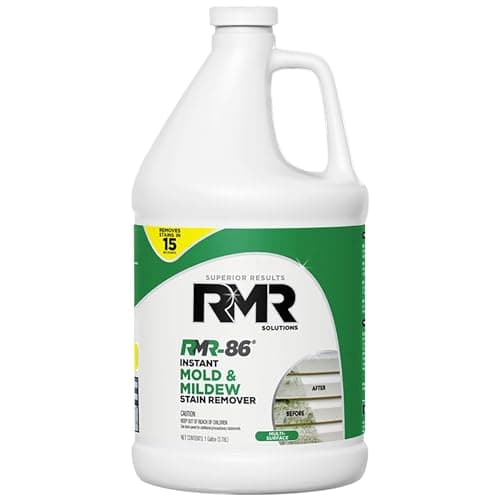
A fast-acting, commercial-strength mold stain remover that eliminates black mold stains on contact. The sodium hypochlorite formula penetrates porous surfaces to lift deep stains without scrubbing. Best used in well-ventilated areas with proper respiratory protection.
Pros
- Removes stains in as little as 15 seconds
- Works on wood, concrete, drywall, and tile
- No scrubbing required
Cons
- Strong bleach-based formula with harsh fumes
- Not safe for fabrics or colored surfaces
- Requires good ventilation and PPE
RMR-86 is a powerful stain remover that eliminates mold staining on contact. It's particularly effective on headliner materials (polyester fabric bonded to polyurethane foam) and light-colored fabric seats where mold has left visible discoloration. Use it in a well-ventilated environment (doors and windows open) as it has a strong bleach-based formula. Test on a small hidden area first to check for color-fastness, especially on colored fabrics.
Concrobium Mold Control
Concrobium
$10–15
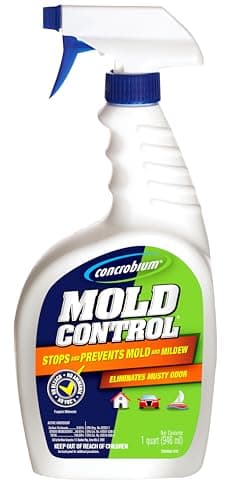
A patented, EPA-registered mold control solution that kills mold without bleach, ammonia, or VOCs. The tri-salt polymer formula crushes mold spores as it dries and leaves an invisible antimicrobial barrier to prevent regrowth. Safe for indoor use on virtually any surface.
Pros
- Non-toxic, no bleach or ammonia
- Kills mold and prevents regrowth
- Safe for use around children and pets
Cons
- Does not remove existing mold stains
- Takes longer to work than bleach-based products
- May require multiple applications for severe infestations
Concrobium Mold Control is an excellent follow-up product and the better choice for leather and delicate surfaces. It's non-toxic, leaves no harsh odor, and creates an invisible antimicrobial barrier that prevents mold from returning. Spray it on cleaned surfaces and let it dry naturally. It's EPA-registered and safe to use on virtually all car interior materials. Compare all available options in our best mold removal products guide.
Preventing Car Mold From Coming Back
The single most effective prevention measure is eliminating moisture sources — fix leaking door seals, clear clogged sunroof drains, and never leave wet items in the car. Without addressing the root cause, mold will return. Here are the most effective prevention strategies for keeping your car mold-free.
- Fix water leaks immediately. The most common sources are worn door seals, cracked windshield seals, clogged sunroof drain tubes, and leaking trunk seals. If your carpet gets wet after rain, find the source. Sunroof drains can be cleared by gently running a flexible wire or compressed air through the drain tubes at each corner of the sunroof frame.
- Never leave wet items in the car. Wet towels, gym bags, rain-soaked jackets, and umbrellas all introduce moisture. Take them inside and let them dry properly.
- Use a moisture absorber. Products like DampRid, silica gel-based car dehumidifiers, or activated charcoal dehumidifier bags absorb ambient moisture from the air. Place one under a seat or in the trunk, especially during humid months or if the car is parked for extended periods.
- Run the AC on fresh air mode. Before parking, switch from AC to fresh air and let the fan run for a few minutes. This dries the evaporator coil and ductwork, removing the condensation that feeds mold growth.
- Crack windows when safe to do so. If the car is parked in a garage, leaving windows cracked an inch allows air circulation that reduces interior humidity.
- Clean spills immediately. Food and drink spills on fabric seats or carpet provide the organic nutrients mold needs to colonize. Don't let them sit.
- Replace your cabin air filter regularly. Upgrade to a MERV 13 or higher cabin air filter, which captures mold spores far more effectively than standard filters. A dirty cabin filter restricts airflow and can harbor mold spores. Replace it every 12,000 to 15,000 miles or annually, whichever comes first.
When to Call a Professional
While most car mold problems can be handled with DIY methods, some situations warrant professional intervention. Consider hiring a professional detailer or mold remediation specialist if:
- Mold has penetrated the headliner fabric and into the backing foam. Headliner replacement is a skilled job that requires removing the entire headliner board.
- The HVAC evaporator coil is visibly contaminated with mold growth. Accessing the evaporator usually requires disassembling part of the dashboard — not a DIY-friendly task.
- Mold growth is underneath the carpet and into the vehicle's sound deadening material or floor pan insulation. Complete removal requires stripping the interior.
- The car sat flooded or with standing water for more than 24 hours. Flood damage mold is extensive and permeates areas that aren't accessible without professional equipment.
- You've cleaned the mold twice and it keeps returning, indicating a hidden moisture source you haven't found.
Professional car mold remediation typically costs between $200 and $600 depending on the severity, the size of the vehicle, and your location. Reputable shops follow IICRC S520 guidelines for mold remediation and often include ozone treatment at 0.05-0.10 PPM for 1-2 hours, which is the most effective method for eliminating spores in hard-to-reach areas. A full interior detail with mold treatment runs toward the lower end, while comprehensive remediation involving headliner replacement, carpet removal, and HVAC cleaning can push costs to $600 or beyond. For older vehicles, compare the remediation cost against the car's value — if professional mold removal costs more than 20% of what the car is worth, it may not be a sound investment.
Insurance may cover mold removal if the cause was a covered event (like a broken windshield seal or flood damage from a weather event), but it typically won't cover mold from neglect or normal condensation. Check your comprehensive coverage policy and file a claim before starting remediation if you think you're covered. Use our mold removal cost calculator to estimate expenses before getting quotes.
Need Professional Mold Removal?
Get free, no-obligation quotes from licensed mold remediation specialists in your area.
Get Free QuotesFrequently Asked Questions
What causes mold to grow in a car?
Can car mold make you sick?
Should I get my car professionally detailed for mold?
Does insurance cover car mold removal?
Related Articles
How to Remove Mold from Wood (Without Ruining It)
What Does Mold Smell Like? How to Identify Mold by Smell
Concrobium Mold Control Review: What It Does (and What It Won't)
Mold Killer Spray: Which Type Works on Which Surface
How to Remove Mold from Leather (Without Ruining It)
Musty Smell in House? Here's How to Find & Fix the Source
Need Professional Mold Removal?
Get free, no-obligation quotes from licensed mold remediation specialists in your area.
Get Free Quotes