Mold on Mattress: How to Clean It, When to Replace It
Out of the Mold Editorial Team
Our guides are research-backed and cite EPA, CDC, and peer-reviewed sources. Product reviews are based on hands-on testing, not manufacturer claims. Read our editorial standards.
Affiliate Disclosure: Out of the Mold is reader-supported. As an Amazon Associate, we may earn a commission when you buy through links on this page — at no extra cost to you. Our picks are based on independent standards, manufacturer specifications, and published research, not commissions.
Key Takeaways
- Don't sleep on a moldy mattress — 8 hours of face-level spore exposure is significant.
- Spring mattresses with surface mold can usually be cleaned; memory foam almost always needs replacement.
- A $25–$40 waterproof mattress protector prevents mattress mold entirely — it's a $30 solution to a $1,000+ problem.
- Never put a mattress directly on the floor. Even 3–4 inches of airflow underneath prevents most mattress mold.
- Queen mattress replacement: $800–$2,000 in 2026. Mattress removal: $20–$150.
Don't sleep on a moldy mattress — mold spores become airborne when you lie down, and 8 hours of face-level exposure is significant. Surface mold on a spring mattress can usually be cleaned with rubbing alcohol or hydrogen peroxide, but mold on memory foam almost always means replacement — foam absorbs moisture and spores deep into its structure where cleaning can't reach. A new queen mattress runs $800–$2,000 in 2026. A $25–$40 waterproof mattress protector prevents this problem entirely.
If you've pulled back your sheets and found dark spots, a musty smell, or fuzzy growth on your mattress, I get it — it's alarming. You sleep on this thing every night. Your first instinct is probably to figure out whether you can clean it or need to buy a new one.
The answer depends on three things: what type of mattress you have, how deep the mold goes, and how long it's been growing. I'll walk you through a decision framework so you don't waste time cleaning a mattress that needs to be replaced — or throw away one that could have been saved.
Is It Safe to Sleep on a Moldy Mattress?
No. And this isn't alarmism — it's math.
You spend roughly 8 hours per night with your face inches from your mattress surface. Mold spores become airborne when disturbed, and lying down on a moldy mattress disturbs them directly. That's a third of your day breathing concentrated spore exposure at close range.
The health effects of mattress mold exposure include:
- Allergic reactions— sneezing, congestion, itchy eyes, skin rashes. These often get worse at night and improve when you're away from home. That pattern is a strong indicator.
- Respiratory problems — coughing, wheezing, shortness of breath. The CDC reports that mold exposure contributes to 4.6 million asthma cases annually in the U.S.
- Chronic symptoms — headaches, fatigue, brain fog. These get attributed to stress or poor sleep, but sometimes the mattress is the actual cause.
If you can't address the mold immediately, sleep somewhere else — a couch, a spare room, an air mattress. Don't just throw a sheet over it and hope for the best.
For authoritative guidance on mold health effects, see the CDC's mold and health resources.
What Causes Mold on a Mattress?
Mattresses are surprisingly vulnerable to mold because they check every box mold needs: organic material (fabric, foam, cotton), warmth (body heat), and moisture. Here's where that moisture comes from:
- Mattress on the floor— This is the #1 cause. Without a bed frame or platform, there's zero airflow underneath. Your body heat and sweat create condensation between the mattress bottom and the floor. Mold can appear on the underside within two months. This is extremely common with floor sleeping setups and futons.
- Body sweat— The average person loses 200–500 mL of moisture through sweat per night. Over weeks and months, this soaks into the mattress. Without proper ventilation, it doesn't dry fast enough.
- High bedroom humidity — If your bedroom is consistently above 50% relative humidity, your mattress is absorbing ambient moisture constantly. Basements, ground-floor bedrooms, and rooms without air conditioning are worst.
- No mattress protector — A waterproof protector blocks sweat and spills from ever reaching the mattress interior. Without one, every drop goes straight in.
- Spills not dried properly — Kids, pets, drinks in bed. If liquid sits in the mattress for more than 24 hours, mold colonization can start within 48 hours.
- Memory foam traps moisture— Memory foam's dense cell structure absorbs liquid but doesn't dry well. It's the most mold-prone mattress material by a wide margin.
Can You Save a Moldy Mattress? (Decision Framework)
Not every moldy mattress needs to be thrown away — but some absolutely do. Use this framework:
| Scenario | Verdict | Why |
|---|---|---|
| Surface mold on a spring/hybrid mattress | Likely cleanable | Coils allow airflow; mold stays on fabric surface |
| Surface mold on memory foam | Maybe — act fast | Foam absorbs deep; success depends on catching it early |
| Mold on the underside / inside the mattress | Replace | You can't clean the interior without destroying the mattress |
| Strong musty smell even after cleaning | Replace | Persistent odor means mold has colonized the interior |
| Mold covers more than a few spots | Replace | Widespread surface mold means the interior is likely affected too |
| Mattress is 7+ years old | Replace | It's near end-of-life anyway. Don't invest effort in a dying mattress |
| Mattress got soaked (flooding, major spill) and sat wet 72+ hours | Replace | Mold has colonized the core. Similar to the 48-hour rule for carpet |
The cost math:A queen mattress costs $800–$2,000 in 2026 (innerspring on the low end, hybrid or latex on the high end). Mattress removal runs $20–$150. If the mattress is already 5+ years old and has interior mold, replacement is almost always the better financial decision compared to professional cleaning ($150–$400) with no guarantee the mold won't return. Our mold removal guide covers all product options.
How to Remove Mold from a Mattress
If your mattress passed the "likely cleanable" test above, here's the step-by-step process. Do this outdoors if at all possible — sunlight helps and you don't want spores circulating inside.
3M 8511 N95 Particulate Respirator
3M
$20–30
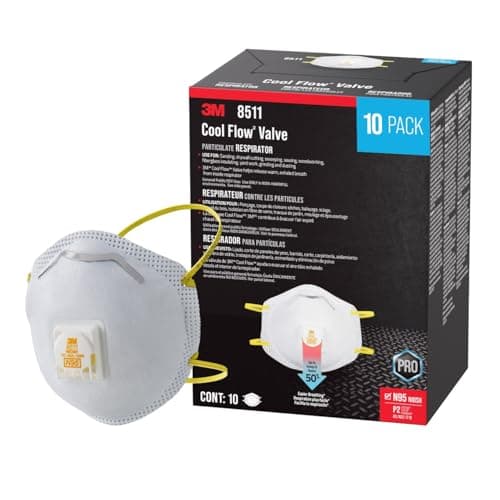
A NIOSH-approved N95 particulate respirator with Cool Flow exhalation valve for comfortable breathing during mold remediation. Filters at least 95% of airborne particles including mold spores. The adjustable M-noseclip and dual-strap design provide a secure seal. OSHA-recommended for mold work.
Pros
- NIOSH-approved N95 filtration
- Cool Flow valve reduces heat buildup
- Adjustable nose clip for secure fit
Cons
- Disposable, not reusable long-term
- Does not protect against chemical fumes or VOCs
- May not fit all face shapes comfortably
Step 1: Move It Outside
If you can get the mattress into direct sunlight, do it. UV light kills mold spores, and fresh air prevents spores from settling elsewhere in your home. If outdoors isn't an option, open all windows in the room and position a fan to blow air outward.
Step 2: Vacuum with a HEPA Filter
Vacuum the entire mattress surface — top, bottom, sides, and seams — with a HEPA-filtered vacuum. This removes loose spores before you start wet cleaning. A regular vacuum without HEPA just blows spores back into the air. Empty the vacuum canister outside when done.
Step 3: Apply Your Cleaning Solution
Choose one of these based on your mattress material:
- Rubbing alcohol (best for most mattresses)— Mix equal parts 70% isopropyl alcohol and warm water in a spray bottle. Spray the affected areas, let sit 15–20 minutes, then blot (don't rub) with a clean white cloth. Alcohol disinfects and evaporates quickly, which is important — you don't want to soak the mattress with more moisture.
- Hydrogen peroxide (best for stubborn spots) — Spray 3% H2O2 directly on moldy areas. Wait 10–15 minutes. Blot clean. Note: it can lighten some fabrics, so spot-test first on an inconspicuous area.
- White vinegar (budget option) — Spray undiluted white vinegar, wait 1 hour, blot clean. Effective but the smell takes longer to dissipate than alcohol.
Don't use bleach on a mattress.It damages fabrics, doesn't penetrate foam, and the residual moisture can actually make things worse. Our bleach vs. mold guide explains why bleach fails on porous materials.
Step 4: Scrub Gently
After the solution has sat, use a clean cloth or soft brush in circular motions to lift remaining mold. Don't soak the mattress — work with a damp cloth, not a dripping one.
Step 5: Deodorize with Baking Soda
Sprinkle a generous layer of baking soda over the entire cleaned area. Let it sit for at least 4 hours — overnight is better. Baking soda absorbs residual moisture and odor. Vacuum it up thoroughly.
Step 6: Dry Completely
This is the most critical step. The mattress must be bone drybefore you put sheets back on. In direct sunlight, this takes 4–6 hours. Indoors with fans, allow a full 24 hours. Use a dehumidifier to accelerate drying if available. If you put bedding on a still-damp mattress, you're creating the exact conditions that caused the mold in the first place.
Step 7: Apply Preventive Treatment
Once fully dry, spray Concrobium Mold Control lightly over the mattress surface. It leaves an invisible antimicrobial barrier as it dries that prevents mold regrowth. Let it dry completely (24 hours) before making the bed.
Concrobium Mold Control
Concrobium
$10–15
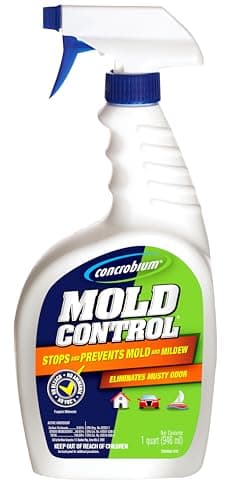
A patented, EPA-registered mold control solution that kills mold without bleach, ammonia, or VOCs. The tri-salt polymer formula crushes mold spores as it dries and leaves an invisible antimicrobial barrier to prevent regrowth. Safe for indoor use on virtually any surface.
Pros
- Non-toxic, no bleach or ammonia
- Kills mold and prevents regrowth
- Safe for use around children and pets
Cons
- Does not remove existing mold stains
- Takes longer to work than bleach-based products
- May require multiple applications for severe infestations
What Does Mattress Mold Look Like?
Mattress mold isn't always obvious. Here's what to look for:
- Black or dark green spots — The most recognizable sign. Usually Aspergillus or Cladosporium. Often starts along seams or on the underside.
- White or gray fuzzy patches— Early-stage mold that people often mistake for dust or lint. If it's slightly raised and doesn't wipe off easily, it's probably mold.
- Yellow or brown stains — Can be mold, but also could be sweat or urine stains. The key difference: mold stains often have a fuzzy texture and a musty smell.
- Musty odor — Sometimes the smell comes first. If your bedroom smells damp or earthy and the odor is strongest near the bed, check the mattress — especially the underside and inside the mattress cover. Not sure what type you're looking at? Our types of mold guide helps identify species by color.
How to Prevent Mattress Mold
Preventing mattress mold is dramatically easier and cheaper than dealing with it. These changes cost almost nothing but eliminate the conditions mold needs.
- Use a waterproof mattress protector— This is the single most effective prevention measure. A breathable, waterproof protector ($25–$40) blocks sweat, spills, and humidity from ever reaching the mattress interior. Look for one with a breathable top layer (bamboo or specialized polyester) so heat doesn't build up. It's a $30 solution to a $1,000+ problem.
- Never put a mattress directly on the floor— If you don't have a bed frame, use a slatted platform or even a few pallets to create at least 3–4 inches of airflow underneath. Floor sleeping without airflow is the fastest path to mattress mold.
- Keep bedroom humidity below 50% — Use a dehumidifier in humid climates or basement bedrooms. A hygrometer ($10–15) tells you exactly where you stand. The 30–50% range is ideal.
- Open windows when possible — Even 15–20 minutes of fresh air circulation helps moisture escape. Pull back the covers when you get up to let the mattress breathe.
- Flip or rotate quarterly— This distributes wear and moisture exposure. Follow your manufacturer's rotation schedule — most recommend every 3–6 months.
- Wash sheets weekly in hot water — Sheets absorb the bulk of your nightly sweat. Hot water (at least 130°F) kills any mold spores that have landed on the bedding.
- Check the underside periodically — Every time you change sheets, do a quick visual check. Catching mold at the first-spot stage is the difference between a 30-minute cleaning and a $1,500 mattress replacement.
Dealing With Mold Right Now?
Our step-by-step mold removal guide walks you through testing your home, choosing the right products, and knowing when a job is too big for DIY.
Read the Removal GuideFrequently Asked Questions
Can you clean mold off a mattress?
Surface mold on a spring or hybrid mattress can often be cleaned with rubbing alcohol, hydrogen peroxide, or white vinegar. Memory foam is harder because the foam absorbs moisture and mold deep into its structure. If the mold is only on the surface and you catch it early, cleaning has a decent chance of working. If it's inside the mattress or the smell persists after cleaning, replace it.
What does mattress mold look like?
Dark spots (black, green, or gray) along seams or on the underside. Sometimes white or yellowish fuzzy patches that people mistake for dust. The musty smell is often the first clue — if your bedroom smells damp and the odor is strongest near the bed, flip the mattress and check underneath.
Can a moldy mattress be saved?
It depends. Surface mold caught early on a spring mattress? Usually yes. Mold inside the core, on memory foam, or widespread across the surface? Probably not. If the musty smell persists after thorough cleaning and drying, the mold has penetrated too deeply to remove.
Does sunlight kill mold on a mattress?
UV light from direct sunlight kills mold spores and helps dry the mattress. It's a useful aid but not a complete solution on its own — you still need to clean with a disinfecting solution first, then use sunlight to help dry and kill remaining spores. Four to six hours of direct sun makes a real difference.
Should I throw away a mattress with mold?
If the mold is on the interior, the mattress is memory foam with deep penetration, the smell won't go away, or the mattress is already 7+ years old — yes, replace it. A queen mattress costs $800– $2,000 in 2026. Trying to salvage a deeply contaminated mattress risks continued health exposure and often fails anyway.
Frequently Asked Questions
Can you clean mold off a mattress?
What does mattress mold look like?
Can a moldy mattress be saved?
Does sunlight kill mold on a mattress?
Should I throw away a mattress with mold?
Related Articles
Concrobium Mold Control Review: What It Does (and What It Won't)
Hydrogen Peroxide for Mold: Does It Actually Work?
Mold in Carpet: How to Tell If You Should Save It or Replace It
How to Remove Mold from Leather (Without Ruining It)
Mold on Window Sill: Why It Grows and How to Stop It
Best Mold Removal Products: What Works for Every Surface & Situation
Dealing With Mold Right Now?
Our step-by-step mold removal guide walks you through testing your home, choosing the right products, and knowing when a job is too big for DIY.
Read the Removal Guide