Mold vs Mildew: How to Tell the Difference & What to Do About Each
Out of the Mold Editorial Team
Our guides are research-backed and cite EPA, CDC, and peer-reviewed sources. Product reviews are based on hands-on testing, not manufacturer claims. Read our editorial standards.
Affiliate Disclosure: Out of the Mold is reader-supported. As an Amazon Associate, we may earn a commission when you buy through links on this page — at no extra cost to you. Our picks are based on real testing and independent standards, not commissions.
Key Takeaways
- The key difference: mildew sits ON surfaces and wipes off; mold grows INTO materials (wood, drywall, carpet) via root structures called hyphae.
- Mold is fuzzy/slimy, appears in various colors, and causes serious health effects. Mildew is flat/powdery, stays white or gray, and is mostly a cosmetic nuisance.
- Use 4 tests to tell them apart: wipe test, texture check, bleach drop test, and location assessment. Material type is your biggest clue.
- Mildew: 15-minute DIY cleanup with vinegar. Mold: may require professional remediation ($1,500–$4,500) depending on size and location.
- Both indicate a moisture problem. Keep humidity below 50%, ventilate wet areas, fix leaks within 24 hours, and inspect monthly.
Mold penetrates into materials and requires aggressive removal; mildew sits on surfaces and wipes off with household cleaners. Mold is fuzzy or slimy, appears black/green/orange/white, and grows on porous materials like wood, drywall, and carpet. Mildew is flat and powdery, stays white or gray, and grows on surface moisture (shower walls, windowsills, fabric). Mold poses serious health risks and often needs professional removal. Mildew is a nuisance you can handle with vinegar and a scrub brush in 15 minutes.
Here's what most articles about mold vs. mildew get wrong: they treat the distinction as purely cosmetic. "Mold is fuzzy, mildew is flat" — true, but useless if you don't know what that means for how you respond.
The real difference is this: mildew sits on top. Mold goes in. That single fact determines whether you're looking at a 15-minute cleanup or a $3,000 remediation project.
Let me break down exactly how to tell which you have, why it matters, and what to do about each — including situations where even experienced homeowners get fooled.
Mold vs Mildew: Side-by-Side Comparison
| Feature | Mold | Mildew |
|---|---|---|
| Texture | Fuzzy, slimy, or velvety | Flat, powdery, or downy |
| Color | Black, green, orange, yellow, white | White or gray (may turn brown with age) |
| Growth pattern | Irregular patches, often spreading outward | Even, flat coating on the surface |
| Penetration | Hyphae burrow INTO materials (wood, drywall) | Stays ON the surface only |
| Smell | Strong musty or earthy odor | Mild damp odor |
| Common locations | Behind walls, under flooring, carpet, wood | Shower walls, windowsills, fabric, leaves |
| Health risk | Serious: allergies, asthma, toxic exposure | Mild: minor allergies, cosmetic issue |
| Removal difficulty | Often requires professional remediation | DIY with household cleaners |
| Structural damage | Yes — can compromise wood, drywall | No — surface cosmetic only |
| Cost to remove | $500–$4,500+ (professional) | $5–$15 (cleaning supplies) |
What Are Mold and Mildew, Exactly?
Biologically, mildew is a type of mold — they're both fungi. But in everyday usage (and the way home inspectors, the EPA, and remediation pros use the terms), they describe very different problems.
Mold: the deep invader
Mold refers to fungi that grow multicellular filaments called hyphae. These hyphae form complex networks (mycelia) that penetrate into the substrate — wood grain, drywall paper, carpet backing, insulation. The visible surface growth is just the reproductive structure producing spores. The real colony lives inside the material.
Common household mold genera include Aspergillus (ubiquitous — found in 90% of homes), Penicillium (blue-green, fast-growing), Cladosporium (olive-green to brown, likes cool surfaces), and Stachybotrys chartarum(the infamous "black mold" that produces mycotoxins). Most belong to the phylum Ascomycota — the largest fungal phylum with over 64,000 species.
For a full breakdown of each mold type by color, health risk, and removal method, see our mold identification guide.
Mildew: the surface nuisance
Mildew describes fungi that produce superficial, powdery or downy growth on surfaces without penetrating into the material. The spores land on a damp surface, colonize the moisture film, and reproduce — but they don't send hyphae deep into the substrate.
In homes, "mildew" usually refers to the white or gray powdery film on shower grout, windowsills, and damp fabric. In agriculture, mildew specifically means plant-parasitic fungi (powdery mildew on roses, downy mildew on grapes) — but homeowners aren't dealing with those species.
The practical difference: you can wipe mildew off a surface and it's gone. You can wipe mold off a surface and it grows back from the root system within days.
How to Tell the Difference (4 Tests)
You don't need a lab test to tell mold from mildew in most cases. Use these four methods:
Test 1: The wipe test
Dampen a paper towel and wipe the growth. If it comes off easily and the surface underneath is clean and undamaged — that's mildew. If the growth smears, leaves staining, or the material underneath is soft, discolored, or damaged — that's mold.
Test 2: The texture check
Touch it (wearing gloves). Mildew feels dry and powdery — it practically brushes off. Mold feels fuzzy, slimy, or slightly raised from the surface. Some mold appears smooth but has a velvety texture when touched.
Test 3: The bleach drop test
Put one drop of household bleach on the growth and wait 5 minutes. If the spot lightens and appears to clean up — mildew. If it lightens on the surface but the discoloration returns within a day or two — mold with roots deeper than the surface.
Test 4: The location assessment
Where is it growing? That's your biggest clue:
- On a shower wall, bathtub surround, or windowsill — likely mildew (surface moisture, non-porous material)
- On drywall, wood, carpet, or insulation — almost certainly mold (these are porous materials that get invaded)
- On grout lines— could be either. Mildew sits on the surface; mold penetrates unsealed grout pores. If the discoloration returns after cleaning, it's mold in the grout
- On fabric or clothing— mildew if powdery and surface-level; mold if it's left staining even after washing
Mold vs Mildew by Location
On walls
White or gray powdery film on painted walls near windows or in bathrooms — mildew. Spray with vinegar, wait 30 minutes, wipe. Done.
Dark spots that are fuzzy, expanding, or appear in irregular patches — mold. If the drywall behind is soft when you press it, the mold has penetrated and the section needs to be cut out and replaced. Don't just paint over it — that seals moisture in and the colony grows behind the new paint.
In the shower and bathroom
Most of what grows on shower walls and doors is mildew. It's the gray-white film that builds up between cleanings on tile and glass. Wipe it, it's gone.
Grout is the exception. Unsealed grout is porous, and mold can establish roots in the pores. If grout staining keeps returning after cleaning, that's mold — and you'll need to either use a penetrating cleaner like vinegar (full hour contact time) or regrout the affected areas. For persistent shower mold, see our shower mold removal guide.
On wood
Surface powdery white growth on wood stored in damp areas — likely mildew. Wipe and improve ventilation.
Fuzzy growth that's penetrated into the grain (you can see it following the wood fibers) — mold. This requires scrubbing with vinegar and potentially sandingto remove. Deep mold in structural wood can compromise the material's strength — a structural engineer should assess framing members with extensive mold damage.
On fabric and clothing
Powdery white spots that brush off or wash out — mildew. Regular laundry cycle handles it.
Staining that persists after washing, especially on natural fabrics stored in damp conditions — mold. The stain is melanin pigment embedded in the fiber. For valuable items like leather goods, professional cleaning is safer than aggressive DIY methods.
Health Risks: Why the Difference Matters
Both mold and mildew can trigger allergic reactions in sensitive people. But the severity is very different.
Mildew health effects
Generally mild: sneezing, runny nose, minor coughing when disturbed. Mildew produces far fewer airborne spores than mold and doesn't produce the mycotoxins associated with the most dangerous species. For most people, mildew is a cosmetic nuisance, not a health threat.
Mold health effects
Potentially serious. The CDC lists upper respiratory symptoms, wheezing, coughing, and worsening asthma as established effects of indoor mold exposure. Certain species produce mycotoxins — toxic compounds that can cause neurological symptoms, immune suppression, and chronic illness with prolonged exposure.
Stachybotrys chartarum (black mold) is the most infamous mycotoxin producer, but Aspergillus flavus (produces aflatoxin) and Fusarium species are also dangerous. For details on specific species, see our black mold removal guide.
The bottom line: if it's mildew, clean it when convenient. If it's mold — especially extensive mold — treat it urgently.
How to Remove Mildew (Quick DIY)
Mildew is a 15-minute job. Here's the process:
- Spray the affected area with undiluted white vinegar (or a bathroom cleaner containing bleach for non-porous surfaces)
- Wait 15–30 minutes
- Scrub with a stiff brush or sponge
- Rinse with clean water and dry thoroughly
- Improve ventilation to prevent return — run exhaust fans, open windows, reduce humidity
For mildew on fabric: machine wash on the hottest setting the fabric allows, add 1 cup white vinegar to the rinse cycle, and dry in direct sunlight (UV kills surface spores).
For recurring mildew in bathrooms, a weekly vinegar spray after showering prevents buildup. Or apply Concrobium after cleaning — its tri-salt polymer barrier resists mildew colonization for months.
Concrobium Mold Control
Concrobium
$10–15
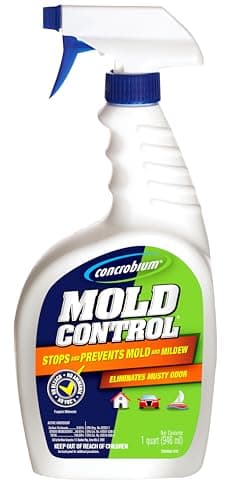
A patented, EPA-registered mold control solution that kills mold without bleach, ammonia, or VOCs. The tri-salt polymer formula crushes mold spores as it dries and leaves an invisible antimicrobial barrier to prevent regrowth. Safe for indoor use on virtually any surface.
Pros
- Non-toxic, no bleach or ammonia
- Kills mold and prevents regrowth
- Safe for use around children and pets
Cons
- Does not remove existing mold stains
- Takes longer to work than bleach-based products
- May require multiple applications for severe infestations
How to Remove Mold (The Real Process)
Mold removal is more involved because you're dealing with a root system, not just a surface film.
Small areas (under 10 sq ft)
- Gear up: N95 mask, rubber gloves, eye protection. Non-negotiable — disturbing mold releases concentrated spore bursts.
- Contain the area: Close doors, seal HVAC vents in the room with plastic. This prevents spores from spreading during cleanup.
- Apply treatment: White vinegar (60-min contact time) for porous surfaces, or hydrogen peroxide for fabric and carpet. For specific surface guides, see our complete removal guide.
- Scrub and remove: Dead mold still triggers allergic reactions — physically remove all residue. HEPA vacuum the area after scrubbing.
- Dry completely: The area must reach below 15% moisture content before closing up or returning furniture.
- Fix the moisture source. If you skip this step, the mold returns within weeks.
RMR-86 Instant Mold & Mildew Stain Remover Spray (1 Gallon)
RMR Brands
$25–35
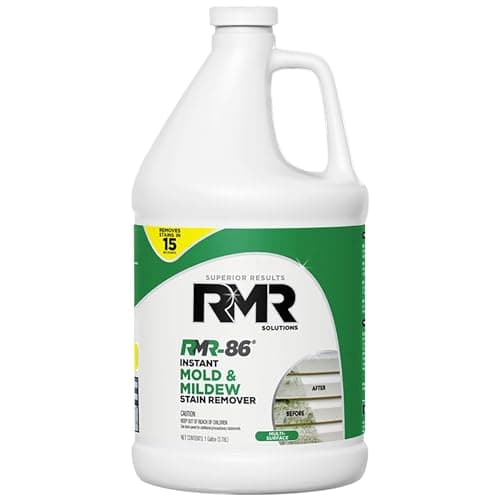
A fast-acting, commercial-strength mold stain remover that eliminates black mold stains on contact. The sodium hypochlorite formula penetrates porous surfaces to lift deep stains without scrubbing. Best used in well-ventilated areas with proper respiratory protection.
Pros
- Removes stains in as little as 15 seconds
- Works on wood, concrete, drywall, and tile
- No scrubbing required
Cons
- Strong bleach-based formula with harsh fumes
- Not safe for fabrics or colored surfaces
- Requires good ventilation and PPE
Large areas (over 10 sq ft) or hidden mold
Hire a certified mold remediation company. The EPA sets 10 square feet as the DIY limit. Beyond that, you need containment barriers, negative air pressure, HEPA filtration, and proper disposal protocols. Professional remediation costs $1,500–$4,500 in 2026.
If you're not sure how big the problem is — especially if you smell mold but can't see it — start with a professional inspection ($300–$600) before committing to remediation.
Need to Identify What's Growing?
If you can't tell whether it's mold or mildew, a test kit identifies the species and tells you exactly how serious the problem is.
Compare Mold Test Kits →Common Mistakes People Make
- Calling all bathroom growth "mildew." The powdery film on tile is mildew. The black spots in grout that keep returning after cleaning? That's mold. Different treatments are needed.
- Using bleach on mold. Bleach kills mildew on non-porous surfaces effectively. But bleach fails on mold in porous materials — the chlorine stays on the surface while the water component feeds the root system.
- Painting over mold.Paint doesn't kill mold. It traps moisture against the surface and the colony grows behind the paint film. Remove the mold first, then apply a mold-killing primer before repainting.
- Ignoring small patches. A quarter-sized mold spot on drywall may indicate a much larger colony behind the wall. Mold grows outward from moisture sources — the visible patch is the edge of the colony, not the center.
- Cleaning without protection.Even mildew releases spores when disturbed. Mold releases concentrated bursts. Wear an N95 mask for any mold cleanup. It's a $2 mask vs. a $200 doctor visit.
Preventing Both Mold and Mildew
Mold and mildew need the same things: moisture, organic material, and time. Control moisture and you prevent both.
- Keep humidity below 50%. A $10–$15 hygrometer measures this. Below 50% relative humidity, neither mold nor mildew can establish colonies.
- Ventilate wet areas. Run bathroom exhaust fans 20+ minutes after showers. Use kitchen exhaust when cooking. Crack a window in rooms with recurring condensation.
- Fix leaks immediately.Mold can start growing within 24–48 hours of a surface getting wet. A "small drip" under the kitchen sink becomes a mold colony in a week.
- Don't push furniture against exterior walls. Leave 2–3 inches for air circulation. Cold exterior walls cause condensation, and furniture blocks airflow.
- Inspect regularly. Monthly checks under sinks, behind toilets, around water heaters, and in the attic/crawl space catch problems before they become expensive.
- Apply preventive barriers. Concrobium on previously affected surfaces, mold-killing primer before repainting, and grout sealant in bathrooms all reduce recurrence.
Frequently Asked Questions
Can mildew turn into mold?
Not exactly — mildew doesn't "become" mold. But the conditions that allow mildew (surface moisture, poor ventilation) are the same conditions that invite mold. If mildew is growing on your shower wall, the humidity level is high enough for mold to colonize porous materials nearby. Mildew is an early warning that conditions are favorable for the more destructive problem.
Is all black growth mold?
No. Dark mildew, dirt, soot, mineral stains, and efflorescence (white salt deposits that turn gray) all get mistaken for black mold. The wipe test is your first check — if it wipes off cleanly and the surface is undamaged, it's probably not mold. For certainty, a surface swab test kit identifies the exact species in 3–7 days.
Is white mold dangerous?
It can be. White mold includes species like Aspergillus and early-stage Penicillium that are allergenic and potentially toxic. White mold is also commonly confused with efflorescence (mineral deposits) on concrete and masonry. The test: mist it with water. Efflorescence dissolves; mold absorbs the water. For the full identification guide, see our article on types of mold.
When should I test instead of just cleaning?
Test when: (1) you smell moldbut can't see it, (2) growth covers more than a few square feet and you're not sure if it's mold or mildew, (3) health symptoms are present (allergies, respiratory issues), (4) you're buying or selling a home and need documentation, or (5) you've cleaned repeatedly but the growth returns.
Do I need a professional for mildew?
Almost never. Mildew is a DIY job — spray, scrub, dry, improve ventilation. The only exception: if what you think is mildew keeps returning aggressively despite fixing moisture issues, it may actually be early-stage mold. Get a professional assessmentif you're spending more time cleaning mildew than feels reasonable.
Does mold always smell musty?
Usually, but the intensity varies. Small mildew patches often produce no noticeable odor. Large mold colonies behind walls can produce a strong musty or earthy smell that permeates an entire room. If your house smells musty but you don't see any growth, follow our hidden mold detection guide to track down the source.
Need Help Choosing a Treatment?
Our mold removal guide matches the right product and approach to every surface type and severity level.
See Removal Guide →Frequently Asked Questions
Can mildew turn into mold?
Is all black growth mold?
Is white mold dangerous?
When should I test instead of just cleaning?
Do I need a professional for mildew?
Does mold always smell musty?
Related Articles
Types of Mold in Your Home: Color Identification Guide
Does Bleach Kill Mold? The EPA Says No — Here's What Actually Works
How to Test for Mold at Home: DIY Methods That Actually Work
Mold on Walls: How to Remove It (and When to Replace the Wall)
How to Remove Mold from Your Shower (Step-by-Step)
What Does Mold Smell Like? How to Identify Mold by Smell
Need Professional Mold Removal?
Get free, no-obligation quotes from licensed mold remediation specialists in your area.
Get Free Quotes