Best Mold Fogger & Mold Bomb: Machines, Solutions & Safety Guide (2026)
Out of the Mold Editorial Team
Our guides are research-backed and cite EPA, CDC, and peer-reviewed sources. Product reviews are based on hands-on testing, not manufacturer claims. Read our editorial standards.
Affiliate Disclosure: Out of the Mold is reader-supported. As an Amazon Associate, we may earn a commission when you buy through links on this page — at no extra cost to you. Our picks are based on real testing and independent standards, not commissions.
Key Takeaways
- Concrobium fogger is non-toxic, reusable, and ideal for HVAC treatment.
- BioCide Mold Bomb is easier to use (no equipment) but requires evacuation and covers only 400 sq ft.
- Fogging kills spores but does not remove stains — use a spray for visible mold first.
- Always fix the moisture source before fogging to prevent mold from returning.
- Never use bleach in a fogger — use Concrobium, Benefect, or Vital Oxide solutions.
The Concrobium Mold Control Fogger is the best mold fogger for most homeowners — it uses ULV (ultra-low volume) technology to produce 10-15 micron droplets that penetrate hidden cavities where mold grows. For enclosed spaces under 400 sq ft, the BioCide Mold Bomb (about $55) is a simpler aerosol alternative. Critical limitation: foggers kill mold spores and prevent regrowth but do not remove existing stains — you still need a mold stain remover like RMR-86 for visible discoloration.
Mold foggers are specialized devices that disperse an ultra-fine mist of antimicrobial solution throughout an enclosed space, reaching surfaces and hidden areas that manual spraying simply cannot. They're a powerful tool in the mold remediation arsenal — but they're not a magic bullet, and knowing when (and when not) to use one is the difference between solving your mold problem and wasting money on a false sense of security.
This guide covers how mold foggers work, reviews the top products available, explains exactly how to use them safely, and helps you decide whether fogging is the right approach for your situation.
How Mold Foggers Work
Mold foggers use ULV (ultra-low volume) technology to atomize a liquid mold control solution into microscopic droplets, typically between 5 and 50 microns in diameter. The distinction between dry fog and wet fog matters: dry fog produces droplets under 15 microns that evaporate before settling, preventing surface moisture; wet fog (over 25 microns) leaves residue. To put that in perspective, a human hair is about 70 microns wide — these droplets are smaller than what your eye can resolve individually, which is why the output looks like fog or dense mist rather than a spray.
This ultra-fine particle size is what makes fogging effective. The droplets are small enough to remain suspended in the air for extended periods (30 minutes to several hours depending on the product), during which they drift into every crack, crevice, and hidden space in the room. Behind furniture, inside wall cavities accessible through outlets or gaps, under cabinets, inside HVAC returns, between stacked items — the fog penetrates everywhere air can reach.
There are two main types of mold foggers available to consumers:
- Aerosol foggers (mold bombs): Self-contained pressurized cans that you activate and leave. They release their entire contents in one burst and typically treat a single room or defined area. Simple to use but you get one application per can with no control over output rate.
- Electric ULV foggers: Powered machines with a reservoir that you fill with your chosen mold control solution. They provide adjustable output rates and can treat larger areas or multiple rooms. More upfront cost but reusable and more versatile.
The active ingredients vary by product. Some use chlorine dioxide gas (a powerful oxidizer that destroys mold cell walls through oxidation), others use proprietary antimicrobial compounds, and products like Concrobium use a patented tri-salt polymer that encapsulates mold spores as it dries, crushing them mechanically rather than chemically. The mechanism matters — some products kill mold on contact while others create a residual antimicrobial film that prevents future growth. Hydroxyl generators offer a chemical-free alternative, using UV light to create hydroxyl radicals that destroy mold, but cost $200+ per day to rent.
Top Mold Fogger Products Compared
The Concrobium Mold Control Fogger is our top pick for most homeowners, while the BioCide Mold Bomb is best for quick, single-room treatments under 400 sq ft. Here's how they compare side by side.
Concrobium Mold Control Fogger
Concrobium Mold Control Fogger
Concrobium
$40–100
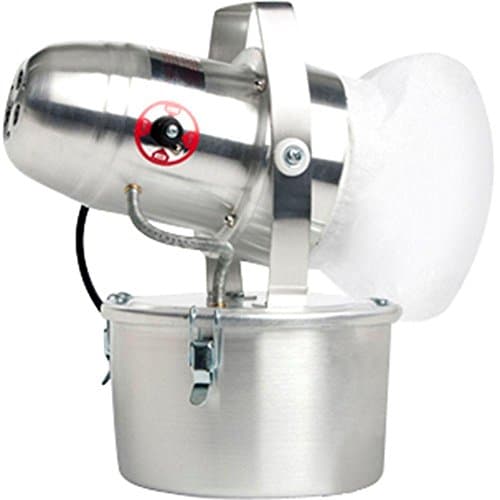
A complete fogging system that disperses Concrobium Mold Control as a fine mist to treat entire rooms. The cold-fog technology reaches into cracks, crevices, and HVAC ducts where mold hides. Kills existing mold and leaves a protective barrier to prevent regrowth.
Pros
- Treats entire rooms including hard-to-reach areas
- Non-toxic Concrobium formula, safe for occupied spaces
- Includes cold fogger machine and mold control solution
Cons
- Fogger machine is loud and requires setup
- Does not remove existing mold stains
- Solution needs time to dry and form protective barrier
The Concrobium Mold Control Fogger is an electric cold-fog machine designed to work with Concrobium's EPA-registered mold control solution. It's the professional-grade option and our top recommendation for most homeowners dealing with room-scale or whole-house mold issues. For the full protocol — machine pairing, coverage math, and the "don't wipe it off" rule — see our guide to fogging with Concrobium.
What sets the Concrobium system apart is its dual-action formula. The solution doesn't just kill existing mold — as it dries, it forms a thin antimicrobial film on surfaces that physically encapsulates and crushes mold spores at a microscopic level. This residual barrier continues to prevent new mold growth for months after application. It contains no bleach, ammonia, or volatile organic compounds, making it safe for use on virtually all surfaces including fabric, wood, drywall, concrete, and metal.
The fogger itself has a 1.5-gallon reservoir and adjustable nozzle that lets you control the droplet size and output volume. On the maximum setting, it can treat a 400-square-foot room in about 10 minutes. It's reusable indefinitely — you just refill the reservoir with more Concrobium solution as needed.
BioCide Mold Bomb Fogger
BioCide Mold Bomb Fogger
BioCide Labs
$50–65
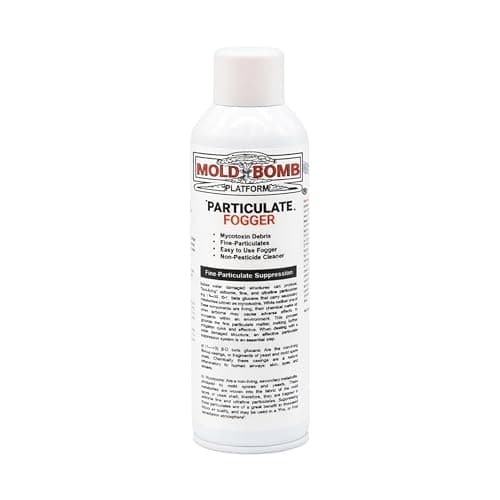
A single-use aerosol fogger that releases an EPA-registered antimicrobial mist to kill mold, mildew, and odor-causing bacteria. Simply place the canister in the center of the room, press the button, and leave the area for 2-4 hours. Treats up to 400 sq ft per can.
Pros
- One-button aerosol fogger, no equipment needed
- Treats up to 400 sq ft per can
- EPA-registered antimicrobial
Cons
- Must vacate area during and after treatment
- Chemical odor lingers for several hours
- Single-use canister is not refillable
The BioCide Mold Bomb is an aerosol-based fogger — essentially a pressurized can that you set, activate, and leave. It's the simplest possible fogging solution and a good choice for single rooms, bathrooms, vehicles, or RVs where you want a quick, thorough treatment without the investment in a reusable fogger machine.
Each can treats up to 400 square feet. The active ingredient is a broad-spectrum antimicrobial that kills mold, mildew, and bacteria on contact. Unlike the Concrobium system, the BioCide Mold Bomb is a one-time-use product — once it's deployed, the can is empty. For ongoing maintenance or large spaces, this per-treatment cost adds up quickly compared to the refillable Concrobium system. Thinking about the aerosol bomb specifically? Our mold bomb fogger review covers where it works, where it fails, and how it stacks up against a ULV machine.
The main advantage of the BioCide Mold Bomb is simplicity. There's no equipment to set up, no electrical connection needed, and no cleanup of the fogging machine afterward. Place it in the center of the room, activate the trigger, close the door, and leave for the recommended period. It's also effective in cars, boats, and other enclosed spaces where an electric fogger would be impractical.
Room Size and Coverage Guide
One BioCide Mold Bomb covers up to 400 sq ft; for larger spaces, the Concrobium electric fogger is the only practical option. Getting the right coverage is critical — too little fogging and you'll miss areas; too much is wasteful without providing additional benefit. Here's a general guide to sizing your fogging treatment.
- Small bathroom (40-60 sq ft): One BioCide Mold Bomb will over-cover this space, which is fine. With a Concrobium fogger, run the machine for 3 to 5 minutes.
- Standard bedroom (120-200 sq ft): One BioCide Mold Bomb provides adequate coverage. Concrobium fogger: 5 to 8 minutes.
- Large room (200-400 sq ft): One BioCide Mold Bomb at the upper end of its rating. Concrobium fogger: 8 to 12 minutes.
- Basement (400-800 sq ft): Two to three BioCide Mold Bombs placed at intervals, or one extended Concrobium fogging session of 15 to 20 minutes while slowly moving through the space.
- Whole house: Electric ULV fogger is the only practical option. Run the fogger in each room systematically, starting from the farthest point from the exit and working your way out.
For rooms with standard 8-foot ceilings, multiply the floor area by 8 to get the cubic footage. For vaulted ceilings or open two-story spaces, increase fogging time proportionally. The fog needs enough dwell time in the air to reach all surfaces, including upper walls and ceiling areas.
How to Use a Mold Fogger Safely
The process is seven steps: prepare, seal, set up, activate, wait, ventilate, and wipe down — the entire cycle takes 3 to 6 hours including dwell time. Seal the room and run an exhaust fan to create negative pressure, preventing spores from migrating to clean areas during treatment. An air scrubber with HEPA filtration should run during and 24 hours after fogging to capture dead spores. Proper preparation and ventilation are essential.
- Prepare the room. Remove or cover any food, pet bowls, fish tanks, and drinking water sources. Cover or remove electronics if using a moisture-based fogger (the ultra-fine mist can settle on sensitive circuits). Remove people and pets from the space. Close all windows and exterior doors to contain the fog. Close interior doors to isolate the treatment area.
- Seal the room. For maximum effectiveness, seal the gap under interior doors with a towel or tape. If you're fogging an individual room and don't want fog migrating into the rest of the house, also tape over any HVAC supply and return vents in the room. If you're treating the HVAC system itself, leave vents open and run the fan.
- Set up the fogger. For aerosol mold bombs, place the can on a stable surface in the center of the room, elevated if possible (on a table or chair). For electric foggers, fill the reservoir, position the machine so the output nozzle aims toward the center of the room, and plug in the power cord (make sure it reaches without extension cords if possible, as moisture and extension cords are a poor combination).
- Activate and exit. For mold bombs, press the trigger lock and immediately leave the room, closing the door behind you. For electric foggers, turn it on, verify it's producing visible fog, and exit. The machine will run until the reservoir is empty or you return to shut it off.
- Wait the recommended time. Most products require the room to remain sealed for 1 to 4 hours. During this time, the fog settles onto surfaces and the active ingredients do their work. Resist the urge to check on it — every time you open the door, you let fog escape and reduce coverage.
- Ventilate thoroughly. After the dwell time, open all windows and the room door. Place fans to create cross-ventilation and let the room air out for at least 30 to 60 minutes before re-entering without respiratory protection. Some products require longer ventilation periods — check the label.
- Wipe down food-contact surfaces. Even though most mold fogger solutions are low-toxicity, wipe down kitchen counters, tables, and any surfaces where food is prepared or consumed.
Fogger vs. Spray: Which Should You Use?
Use a fogger for hidden or widespread mold you can smell but can't see; use a spray for visible, accessible growth that needs physical scrubbing. The best mold remediation approach often uses both — spray first to remove visible mold, then fog to treat the entire space. Understanding when each is appropriate saves you time and money.
Use a fogger when:
- You can smell mold but can't see it (confirm with a mold test kit first) — the fog reaches hidden areas
- Mold growth is widespread across multiple surfaces in a room
- You want to treat an entire room or area as a preventive measure
- You're treating an HVAC system (see our black mold in AC guide), attic, crawl space, or other space that's difficult to spray thoroughly by hand
- You've completed a remediation project and want to ensure any remaining spores are addressed
- You're treating a car, RV, boat, or other enclosed vehicle
Use a spray when:
- Mold is visible on specific, accessible surfaces
- You need to remove mold stains (foggers don't remove staining)
- The affected area is small — one wall, one section of ceiling, bathroom grout
- You need direct contact with a specific product concentration — see our mold killer spray guide, or our mold removal guide for every product option broken down by the job it does
- You prefer a natural approach — hydrogen peroxide or white vinegar are effective DIY options for surface mold
- You need to scrub the mold off physically, not just kill it
The ideal sequence for a significant mold problem is: spray and physically remove visible mold first, then follow up with a fogger to treat the entire space and any areas you couldn't directly reach. This combination addresses both the mold you can see and the microscopic spores you can't. Our complete mold removal products guide covers the full decision framework for every stage. After treatment, seal surfaces with a mold-resistant primer and paint to prevent regrowth.
Safety Warnings and Precautions
Remove all people, pets (especially birds), and fish tanks before activating any mold fogger — the mist is lethal to birds and toxic to aquatic life. Mold foggers are generally safe when used as directed, but carelessness can lead to problems. Follow these precautions seriously.
- Remove all people and pets. This includes birds and fish — airborne mist can be deadly to birds, and water-soluble chemicals settling into an open fish tank can kill aquatic life. Cover or remove aquariums entirely.
- Extinguish all open flames and pilot lights. While most modern mold fogger solutions are not flammable, some older or industrial products may contain propellants or solvents that are. Read the label and err on the side of caution.
- Cover or remove food and food-contact surfaces. Even non-toxic solutions should not be ingested. Cover countertops with plastic sheeting if you can't wipe them down afterward.
- Don't re-enter without proper ventilation. The recommended re-entry time exists for a reason. If you must enter before the ventilation period is complete, wear an N95 respirator.
- Never use in an occupied space. The room must be vacated during fogging and for the entire dwell and initial ventilation period.
- Use smoke detectors as a guide. If your fogger triggers the smoke detector, the particle concentration is high enough that you should definitely not be breathing it. Disable the detector in the treatment room before fogging (and remember to re-enable it after ventilation).
Mold Bomb Foggers: Aerosol Options Explained
A mold bomb fogger is an aerosol-based, single-use canister that releases a fog of antimicrobial solution when you press the trigger. Unlike electric ULV fogger machines, mold bombs require no setup — you activate them and leave the room. They're the simplest way to fog a space but come with trade-offs.
The BioCide Mold Bomb is the most popular mold bomb fogger on the market. Each can covers up to 400 square feet and uses a broad-spectrum antimicrobial that kills mold, mildew, and bacteria. Other options include the Concrobium Mold Control Aerosol (smaller coverage area but non-toxic formula) and the EverClear Mold Bomb (chlorine dioxide-based, stronger but requires full evacuation).
When to choose a mold bomb over a machine: Mold bombs are best for single-room treatments, vehicles, RVs, boats, storage units, and any space where you want a quick, one-time treatment without investing in reusable equipment. They're also practical as an immediate response to discovering mold — you can buy one at a hardware store and use it the same day. For ongoing treatment, whole-house fogging, or HVAC treatment, an electric fogger machine is the better long-term investment.
Mold Fogger Machines: Electric ULV Models
Electric mold fogger machines (also called cold foggers or ULV foggers) are reusable devices with a reservoir that you fill with your chosen mold control solution. They produce a consistent, adjustable fog that you can direct where needed — and you can refill and reuse them indefinitely.
The Concrobium Mold Control Fogger is our recommended machine for homeowners. It's a purpose-built ULV fogger with a 1.5-gallon reservoir, adjustable nozzle (controls droplet size from 10-50 microns), and enough output to treat a 400 sq ft room in about 10 minutes. At around $70-$90 for the machine (solution sold separately), it pays for itself after 2-3 uses compared to buying individual mold bombs.
For larger spaces or professional use, commercial ULV fogger machines from brands like Vectorfog, Longray, and B&G offer higher output rates (up to 16 liters per hour vs. 4-6 for consumer models), larger reservoirs (2-4 gallons), and more precise droplet size control. These cost $150-$400 but are overkill for most residential applications.
Key features to look for: adjustable flow rate (critical for matching output to room size), corrosion-resistant tank (mold solutions can be harsh on plastics), and a nozzle that produces droplets in the 10-20 micron range for optimal suspension time and penetration into hidden spaces.
Mold Fogger Solutions: What to Put in Your Fogger
The solution you use in your fogger matters as much as the machine itself. Not all mold treatments are safe to atomize, and the wrong product can damage your fogger, create dangerous fumes, or simply not work. Here are the proven fogger-compatible solutions:
- Concrobium Mold Control: The most popular fogger solution. EPA-registered, non-toxic (safe around children and pets after drying), creates a residual antimicrobial film. Kills mold and prevents regrowth. Available at most hardware stores for around $40 per gallon. This is our default recommendation.
- Benefect Decon 30: A botanical antimicrobial made from thyme oil. EPA-registered hospital-grade disinfectant that kills mold on contact. More expensive ($25-$35/gallon) but leaves a pleasant herbal scent. Popular with professional remediators. Safe for use on all surfaces.
- Vital Oxide: A stabilized chlorine dioxide solution that kills mold, bacteria, and viruses. Low-toxicity and no harsh chemical smell. Effective on porous and non-porous surfaces. About $20-$30/gallon. Good for situations where bacterial contamination may accompany mold (e.g., after flooding or sewage backup).
Never put bleach in a fogger. Atomized bleach creates chlorine gas, which is dangerous to inhale even in small concentrations. It also corrodes metal components and degrades plastic reservoirs. Bleach is ineffective on porous surfaces anyway — see our guide on hydrogen peroxide for mold for why H2O2 is a better DIY alternative to bleach for surface treatment.
Using a Fogger for Mold and Mildew
While mold and mildew are technically different organisms (mildew is a surface-level fungus that stays flat, while mold penetrates materials), foggers treat both effectively. The key difference in treatment approach is where you'll typically encounter each:
- Mildew: Common in bathrooms, kitchens, and laundry rooms. Usually appears as flat, white or gray patches on surfaces. A fogger is effective but often overkill for localized mildew — shower spray treatment may be sufficient.
- Mold: Penetrates deeper into porous materials. Can grow behind walls, under flooring, and in HVAC systems. Fogging is ideal for treating widespread mold and hidden growth.
For musty-smelling basements, attics, or crawl spaces where both mold and mildew may be present, fogging with Concrobium treats everything at once. The residual film prevents both mold and mildew from regrowing on treated surfaces. Run a dehumidifier afterward to keep humidity below 50% — this addresses the root cause that allows both organisms to thrive.
Mold Remediation Fogging: Professional Protocols
Professional mold remediation companies use fogging as a standard step in their process — but it's never the first or only step. Understanding the professional protocol helps you decide whether DIY fogging is sufficient or whether you need professional remediation.
The professional remediation fogging protocol typically follows this sequence:
- Containment: The affected area is sealed with 6-mil polyethylene sheeting and negative air pressure machines to prevent spore migration during removal.
- Source removal: Contaminated materials (drywall, insulation, carpet) are physically removed and disposed of. This is the step that DIY fogging alone cannot replace.
- HEPA vacuuming: All surfaces are vacuumed with HEPA-filtered equipment to capture loose spores and debris.
- Surface treatment: Remaining structural surfaces are treated with antimicrobial spray — typically Benefect, Concrobium, or a quaternary ammonium compound.
- Fogging: The contained area (and sometimes adjacent rooms) is fogged to kill any remaining airborne spores and treat surfaces that couldn't be reached manually. Professional remediators typically use commercial ULV machines with Concrobium or Benefect solution.
- Air scrubbing: HEPA air scrubbers run for 24-48 hours after fogging to capture dead spores and particles.
- Post-remediation verification: Air sampling or ERMI testing confirms the space is safe for reoccupation.
When is DIY fogging enough? If the visible mold covers less than 10 square feet total, there's no structural damage, and you've identified and fixed the moisture source, DIY fogging combined with surface spray treatment is typically adequate. For anything larger, or if mold has penetrated drywall, subfloor, or structural framing, professional remediation is worth the investment. Use our mold removal cost calculator to estimate what professional remediation will cost for your situation.
Important Limitations of Mold Foggers
Foggers kill mold and prevent regrowth but do not remove stains, do not fix moisture problems, and cannot penetrate deep into porous materials — all three limitations must be addressed separately. Misplaced expectations lead to disappointment and, worse, unresolved mold problems.
Foggers only work on fungal mold. If your problem is pink mold (actually a bacterium called Serratia marcescens), fogging won't help — you need direct surface cleaning with baking soda, vinegar, or bleach.
Foggers don't remove mold stains. Killing mold and removing the discoloration it leaves behind are two separate processes. After fogging, dead mold colonies will still be visible on surfaces. You'll need to physically scrub or use a mold removal spray like RMR-86 to restore the appearance of affected surfaces. For a complete walkthrough of removing visible black mold, see our black mold removal guide.
Foggers don't fix moisture problems.This is the most critical point. Mold exists because there's a moisture source. Whether it's a leaky pipe, poor ventilation, high humidity, or condensation on cold surfaces, the moisture source must be identified and corrected. If you fog a room but leave the underlying moisture issue unresolved, mold will return within weeks. Fogging treats the symptom; fixing moisture treats the cause.
Foggers may not penetrate deeply enough. While fog reaches many hidden surfaces, it can't penetrate into porous materials the way mold roots (hyphae) can. Mold growing inside drywall, deep in wood grain, or in carpet padding needs to be physically removed. The fog will kill surface-level mold and airborne spores in those areas but won't reach growth that's centimeters deep in a material.
One treatment may not be enough. For established mold problems, a single fogging session is unlikely to resolve everything. Plan on at least two treatments, spaced a week apart, to catch any spores that survived or were released from drying mold colonies after the first treatment. After your final fogging session, consider running an ERMI test to verify the remediation was successful.
Foggers are not a substitute for professional remediation. For large-scale mold infestations (more than 10 square feet of visible growth), structural mold, or mold caused by flooding or sewage backup, professional remediation is necessary — use our mold removal cost calculator to estimate what you'll spend. Fogging can be part of a professional remediation protocol, but it's not a replacement for the containment, removal, and reconstruction work that serious mold problems require.
Need Professional Mold Removal?
Get free, no-obligation quotes from licensed mold remediation specialists in your area.
Get Free QuotesFrequently Asked Questions
Do mold foggers really work?
How long do you have to leave after a mold fogger?
Can I fog my HVAC system for mold?
What is the best mold bomb fogger for a house?
What solution do you use in a mold fogger machine?
Is a mold fogger or spray better for mold removal?
Related Articles
Mold Removal Products: A Complete Guide to What Works and Why
Black Mold in Your AC: How to Identify, Remove & Prevent It
How to Remove Mold from Your Car Interior
Concrobium Mold Control Review: What It Does (and What It Won't)
How to Get Rid of Black Mold: DIY Removal Guide
Best Mold Removal Products: What Works for Every Surface & Situation
Need Professional Mold Removal?
Get free, no-obligation quotes from licensed mold remediation specialists in your area.
Get Free Quotes