Out of the Mold
Product Review

Best Mold Removal Sprays for Every Room (2026)

By Out of the Mold9 min read

Key Takeaways

  • Wet & Forget is the best low-effort weekly prevention spray for showers.
  • RMR-86 is unmatched for removing existing black mold stains on tile.
  • Non-toxic sprays are safer but require more patience and reapplication.
  • Ventilation is more important than any spray for long-term bathroom mold prevention.

RMR-86 is the best mold removal spray for eliminating stains — it works as an oxidizing agent that breaks down melanin pigments in mold cell walls, removing discoloration in seconds. Concrobium Mold Control is the best non-toxic alternative with zero VOCs and EPA registration. The critical distinction: mold removal sprays address visible stains and surface growth, but they cannot fix mold inside porous materials like drywall — that requires physical removal per IICRC S520 standards.

"Mold removal spray" and "mold killer spray" sound like the same thing, but they target different problems. A mold killer spray destroys living mold organisms — it's a biocide. A mold removal spray eliminates the visible evidence: the black, green, or gray staining that mold leaves on surfaces even after the organism itself is dead. Most people searching for a "mold removal spray" actually want both — they want the mold gone AND the stains gone.

Here's why this distinction matters practically: dead mold is still allergenic. The spores and cell fragments that remain after mold is killed can trigger the same allergic reactions as living mold. And dead mold stains, while cosmetically unpleasant, aren't inherently harmful — the dark color comes from melanin in fungal cell walls, the same class of pigment found in human skin. So a truly effective mold removal process requires three steps: kill the mold, remove the stains, and prevent regrowth. The approach also depends on substrate type: non-porous surfaces (tile, glass, metal) can be cleaned and restored, while porous materials (drywall, carpet, ceiling tiles) with embedded mold must be physically removed and replaced per IICRC S520 standards. No single spray does all three perfectly, which is why the best remediation approach usually involves two products.

Best Mold Removal Sprays Compared

RMR-86 removes stains fastest on non-porous substrates, Concrobium offers the best kill-and-prevent combination on any surface, EcoClean is safest for occupied homes, and Wet & Forget prevents recurrence in bathrooms.

ProductRatingPriceBest ForLink

RMR-86 Instant Mold & Mildew Stain Remover

RMR Brands

4.4
$14.97Deep mold stains on hard surfaces like bathroom tile, grout, and basement wallsView

Concrobium Mold Control

Concrobium

4.3
$11.98Families who want a non-toxic solution for killing and preventing moldView

EcoClean Solutions Mold, Mildew & Algae Remover

EcoClean Solutions

4.2
$17.99Eco-conscious homeowners who prefer plant-based cleaning productsView

Wet & Forget Shower Cleaner

Wet & Forget

4.5
$16.98Preventing mold and mildew in showers with minimal ongoing effortView

RMR-86 — The Stain Eraser

Best Stain Removal

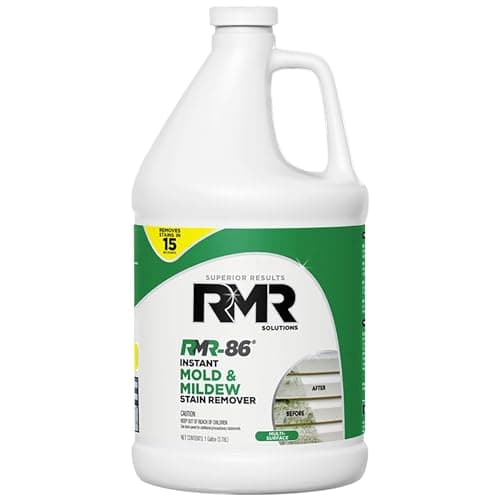
RMR-86 Instant Mold & Mildew Stain Remover

RMR Brands

$14.97

4.4
Product Image

A fast-acting, commercial-strength mold stain remover that eliminates black mold stains on contact. The sodium hypochlorite formula penetrates porous surfaces to lift deep stains without scrubbing. Best used in well-ventilated areas with proper respiratory protection.

Pros

  • Removes stains in as little as 15 seconds
  • Works on wood, concrete, drywall, and tile
  • No scrubbing required

Cons

  • Strong bleach-based formula with harsh fumes
  • Not safe for fabrics or colored surfaces
  • Requires good ventilation and PPE
Check Price on Amazon

If your primary goal is removing mold stains, RMR-86 is unmatched. Its professional-strength sodium hypochlorite formula works as an oxidizing agent that breaks down melanin pigments in mold cell walls, dissolving black and green stains in seconds on non-porous surfaces. We've used it on bathroom tile, shower grout, fiberglass tub surrounds, vinyl siding, and painted drywall — all with outstanding results.

The key to RMR-86 is understanding its limitations. It's a stain remover first and a mold killer second. Yes, it kills mold on contact through oxidation, but it provides zero residual protection. Once the solution evaporates (typically within 15–30 minutes), the surface is unprotected and mold can recolonize if moisture conditions haven't changed. For best results, apply RMR-141 (a quaternary ammonium disinfectant from the same manufacturer) first to kill mold, wait 10 minutes, then apply RMR-86 to remove remaining stains.

Surface restrictions matter with this product. Never use RMR-86 on marble, granite, travertine, or other natural stone — the sodium hypochlorite etches and permanently damages these surfaces. Avoid colored grout, painted surfaces where you care about color consistency (it can cause uneven lightening), and any fabric or upholstery. Always test in an inconspicuous spot on new surface types.

Concrobium Mold Control — The Complete Solution

Best Overall

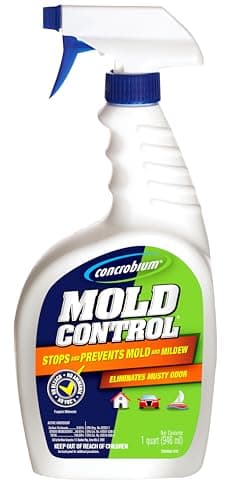
Concrobium Mold Control

Concrobium

$11.98

4.3
Product Image

A patented, EPA-registered mold control solution that kills mold without bleach, ammonia, or VOCs. The tri-salt polymer formula crushes mold spores as it dries and leaves an invisible antimicrobial barrier to prevent regrowth. Safe for indoor use on virtually any surface.

Pros

  • Non-toxic, no bleach or ammonia
  • Kills mold and prevents regrowth
  • Safe for use around children and pets

Cons

  • Does not remove existing mold stains
  • Takes longer to work than bleach-based products
  • May require multiple applications for severe infestations
Check Price on Amazon

Concrobium earns our top overall recommendation because it addresses two of the three remediation steps in one product: it kills mold and prevents regrowth. Its patented tri-salt formula (sodium carbonate, sodium bicarbonate, trisodium phosphate) forms microscopic crystals as it dries that physically crush mold structures. The crystal film that remains on the surface continues to suppress mold growth for months.

Unlike bleach, Concrobium works on porous surfaces. This is critically important for wood framing, unfinished drywall, concrete, and masonry — materials where mold hyphae penetrate below the surface. Bleach can't follow mold into porous substrates because sodium hypochlorite decomposes rapidly on contact with organic material. Hydrogen peroxide (3% for household use, 6–10% for professional applications) is another oxidizing alternative that penetrates slightly better than bleach, but Concrobium's salt solution penetrates deepest, dries inside the pores, and forms crystals throughout the material's surface layer.

The trade-off is stain removal. Concrobium kills mold but does not bleach away staining. On white surfaces, you'll likely want to follow up with RMR-86 or repaint. On wood, sand lightly after Concrobium treatment to remove surface staining, then seal with primer. On colored surfaces, the lack of bleaching action is actually an advantage — your grout, paint, and stone colors stay intact.

EcoClean Mold Killer — Safe Around the Family

Safest Formula

EcoClean Solutions Mold, Mildew & Algae Remover

EcoClean Solutions

$17.99

4.2
Product Image

A plant-based mold and mildew remover that uses naturally derived surfactants and essential oils to kill mold on contact. Biodegradable and free from harsh chemicals, making it a safer choice for homes with children, pets, or chemical sensitivities.

Pros

  • Plant-based, biodegradable formula
  • Safe for indoor and outdoor use
  • Pleasant scent compared to chemical alternatives

Cons

  • Less effective on deeply set black mold stains
  • Higher price per ounce than conventional sprays
  • May need to reapply in humid climates
Check Price on Amazon

EcoClean uses thymol (derived from thyme oil) as its primary antimicrobial agent. Thymol has been used as a disinfectant and preservative for centuries — it's what gives thyme its characteristic sharp taste and antimicrobial properties. Modern research confirms it's effective against the most common indoor mold species including Aspergillus niger, Penicillium chrysogenum, and Cladosporium herbarum.

In practice, EcoClean requires patience. Where RMR-86 removes stains in seconds, EcoClean needs 10–15 minutes of contact time and manual scrubbing with a stiff brush to achieve comparable results on hard surfaces. On heavy contamination, two applications may be necessary. The payoff is that you're working with a product that won't damage any surface, won't produce toxic fumes, and won't harm anyone who walks into the room during application.

EcoClean provides moderate stain removal — better than Concrobium but not as complete as RMR-86. Light surface stains on tile and grout fade significantly. Deep staining on porous surfaces persists. Enzyme-based stain removers are an emerging alternative category that break down organic mold residue without harsh chemicals, though none we've tested match the speed of sodium hypochlorite. For heavy mold staining in a chemical-sensitive household, your best approach is EcoClean for the killing and cleaning, followed by Zinsser mold-killing primer to cover any remaining discoloration.

Wet & Forget Shower — Prevention, Not Remediation

Best Maintenance

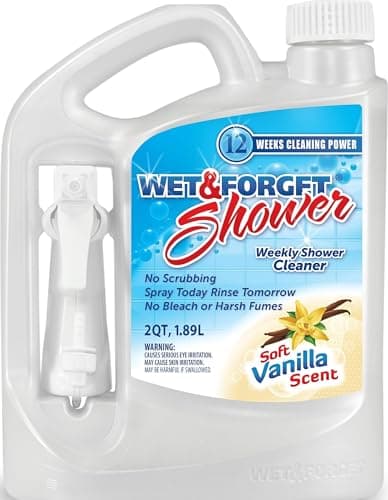
Wet & Forget Shower Cleaner

Wet & Forget

$16.98

4.5
Product Image

A weekly no-scrub shower cleaner that prevents mold, mildew, and soap scum buildup. Simply spray on shower surfaces before bed and let the formula work overnight. The bleach-free formula is safe for all shower surfaces including natural stone, tile, glass, and fixtures.

Pros

  • No scrubbing, wiping, or rinsing required
  • Weekly application prevents mold and soap scum buildup
  • Bleach-free and gentle on surfaces

Cons

  • Not designed for severe mold infestations
  • Takes overnight to work (apply before bed)
  • Only for bathroom/shower surfaces
Check Price on Amazon

Wet & Forget Shower isn't a mold removal product — it's a mold prevention product, and it's important to set that expectation. This weekly maintenance spray contains a dilute quaternary ammonium solution that you apply to shower surfaces after your last shower of the day. Over time, it prevents mold and mildew from gaining a foothold.

We include it here because the best mold removal strategy includes ongoing prevention. Once you've used RMR-86 or Concrobium to eliminate an existing mold problem, switching to Wet & Forget Shower for weekly maintenance is the most effective way to stop mold from returning. It's especially valuable in bathrooms without exhaust fans or windows, where humidity stays elevated after showers.

The application couldn't be simpler: spray all shower surfaces (walls, door, caulking, fixtures) once a week after showering. Don't rinse. The product works at such low concentration that there's no residue buildup, no discoloration, and no noticeable odor. In our 8-week test, weekly application eliminated the recurring pink mildew that typically appeared on shower caulking within 10–14 days of cleaning.

Step-by-Step Mold Removal Guide

Fix the moisture source first, then kill, scrub, remove stains, and seal — in that order. Effective mold removal follows a specific sequence adapted from IICRC S520 professional standards. Skipping steps or doing them out of order leads to incomplete remediation and rapid regrowth.

Step 1: Identify and Fix the Moisture Source

This is the most important step and the one most people skip. Mold requires moisture to grow. If you remove mold without fixing the water source, regrowth is guaranteed — usually within 2–4 weeks. Common moisture sources include:

  • Leaking pipes (check under sinks, behind toilets, around water heater)
  • Roof leaks (staining on ceiling or upper walls)
  • Condensation (cold surfaces meeting warm humid air — common on basement walls and windows)
  • Poor ventilation (bathrooms without exhaust fans, closed-off rooms)
  • Foundation water intrusion (damp lower walls, efflorescence on concrete)
  • Overflowing or leaking HVAC drain pans

Use a moisture meter ($20–$30 at any hardware store) to confirm the area is dry before proceeding with mold removal. Drywall should read below 1% moisture content. Wood should read below 15%. If readings are elevated, fix the moisture source and let the area dry completely before treating mold.

Step 2: Prepare the Work Area

Put on your PPE: N95 respirator (or half-face respirator for bleach products), safety goggles, nitrile gloves, and old clothes or disposable coveralls. Open windows and start exhaust fans.

3M 8511 N95 Particulate Respirator

3M

$24.99

4.6
Product Image

A NIOSH-approved N95 particulate respirator with Cool Flow exhalation valve for comfortable breathing during mold remediation. Filters at least 95% of airborne particles including mold spores. The adjustable M-noseclip and dual-strap design provide a secure seal. OSHA-recommended for mold work.

Pros

  • NIOSH-approved N95 filtration
  • Cool Flow valve reduces heat buildup
  • Adjustable nose clip for secure fit

Cons

  • Disposable, not reusable long-term
  • Does not protect against chemical fumes or VOCs
  • May not fit all face shapes comfortably
Check Price on Amazon

For areas larger than 3 feet by 3 feet, isolate the work area with plastic sheeting taped over doorways to prevent spores from spreading to the rest of your home. A box fan positioned in a window blowing outward creates negative pressure that pulls air (and airborne spores) out of the work area.

Remove and bag any loose items from the area: towels, bath mats, toiletries, curtains. Anything porous that has visible mold on it should be bagged in heavy-duty trash bags and either laundered in hot water (140°F+) or discarded.

Step 3: HEPA Vacuum the Surface

Before applying any liquid product, vacuum the moldy surface with a HEPA-filtered vacuum. This removes loose spores and mold fragments that would otherwise become airborne when you spray the surface. A regular vacuum without a HEPA filter makes things worse — it exhausts fine spores back into the room air. If you don't have a HEPA vacuum, skip this step rather than using a regular vacuum.

Step 4: Apply Mold Killer

Spray Concrobium Mold Control (or your chosen product) liberally over the entire affected area, extending 12 inches beyond visible growth in all directions. Mold hyphae extend beyond what's visible, and treating only the visible area leaves the edges untouched.

For Concrobium: spray a thin, even coat and allow to dry completely (1–2 hours depending on humidity). Do not wipe. The product works as it dries. For heavy contamination, apply two coats with drying time between each.

For RMR-86 or bleach-based products: spray, allow the specified contact time (usually 1–5 minutes), then wipe with clean disposable cloths or paper towels. Dispose of contaminated wipes in a sealed plastic bag.

Step 5: Scrub and Remove

After the kill step, scrub the surface with a stiff nylon brush and a cleaning solution (dish soap and water works fine). This physically removes dead mold biomass, which is important because dead spores are still allergenic. Wipe the surface with clean damp cloths, wringing them frequently. Use disposable cloths or designate rags for disposal — don't put mold-contaminated cloths back into your laundry rotation.

Step 6: Apply Stain Remover (If Needed)

If dark staining remains after cleaning, apply RMR-86 or a similar stain remover. Let it work until stains disappear, then wipe clean. On porous surfaces where stains can't be chemically removed, plan to prime and paint.

Step 7: Apply Preventive Treatment

Once the surface is clean and dry, apply a final coat of Concrobium as a preventive barrier. On surfaces you'll paint, apply Zinsser Mold Killing Primer instead — it kills any remaining mold, blocks stains, and provides a mold-resistant base for your topcoat.

Common Mold Removal Mistakes

The number one mistake is using household bleach (5.25% sodium hypochlorite) on porous surfaces — it doesn't work and adds moisture that worsens the problem. After reviewing thousands of forum posts and talking to professional remediators, these are the mistakes we see repeated most often.

1. Using Household Bleach on Porous Surfaces

This is the most widespread mold remediation myth. Household bleach (5.25% sodium hypochlorite) kills mold on non-porous surfaces like tile and glass, but it's ineffective on wood, drywall, grout, and concrete. The sodium hypochlorite molecule is too large and too reactive to penetrate porous materials — it decomposes on the surface while the water in the bleach solution soaks into the material, providing exactly the moisture mold needs to regrow. The result: the surface looks clean for a week, then mold comes back, often worse than before.

The EPA, CDC, and OSHA have all published guidance stating that bleach is not recommended for mold remediation on porous surfaces. Use Concrobium, Benefect Decon 30, or another product specifically formulated for porous substrates.

2. Painting Over Mold

Covering mold with regular paint doesn't kill it, seal it, or stop it. Mold grows through standard latex paint within weeks, often creating bubbling and peeling. The only primer rated to apply over mold-affected surfaces is Zinsser Mold Killing Primer, which contains a fungicide that kills mold on contact. Even then, the surface should be cleaned first — primer is a seal, not a cleaner.

3. Not Fixing the Water Problem

We mentioned this in the application guide, but it bears repeating because it's the single most common reason mold comes back. If relative humidity in the space stays above 60%, mold will return regardless of what product you used. Fix leaks. Improve ventilation. Run a dehumidifier in basements and crawl spaces. Aim for 30–50% relative humidity throughout your home.

4. Dry Scrubbing Without Containment

Scrubbing moldy surfaces while dry sends massive quantities of spores airborne. Always wet the surface or apply a spray product before scrubbing. Set up containment (plastic sheeting) for anything larger than a few square feet. Run an air purifier with a HEPA filter in adjacent rooms during and after the work.

5. Throwing Away Materials That Can Be Saved

Not everything with mold on it needs to be discarded. Hard, non-porous surfaces (tile, glass, metal, hard plastic) can always be cleaned. Semi-porous surfaces (finished wood, concrete) can usually be cleaned with proper products. Even drywall can often be saved if mold hasn't penetrated through the paper facing to the gypsum core. Press on the drywall — if it's firm and solid, it can likely be cleaned and primed. If it's soft, spongy, or crumbling, it needs replacement.

Items that should be discarded: wet insulation, carpet padding with mold on both sides, upholstered furniture with mold inside the cushions, and any paper products (books, cardboard, documents) with heavy mold growth.

Preventing Mold After Removal

Keep indoor humidity between 30–50%, fix all moisture sources, and apply Concrobium as a preventive treatment every 6–12 months. Successful mold removal is only half the battle — without addressing the conditions that allowed mold to grow, you'll be doing the same remediation again in a few months.

Control Humidity

Keep indoor relative humidity between 30% and 50%. Buy a digital hygrometer ($10–$15) and place it in your most humidity-prone room. If readings consistently exceed 50%, take action:

  • Run bathroom exhaust fans for 30 minutes after every shower (install a timer switch so you don't have to remember)
  • Run a dehumidifier in basements and crawl spaces — set it to 45% and let it run continuously during humid months
  • Don't hang wet laundry indoors to dry — a single load of laundry releases about 5 pints of water vapor into your home
  • Vent clothes dryers to the outside (not into the garage or basement)
  • Use kitchen exhaust fans when cooking, especially when boiling water

Improve Airflow

Stagnant air creates microclimates where humidity accumulates. Keep closet doors open or ajar. Move furniture at least 2 inches away from exterior walls. Keep HVAC supply and return vents unobstructed. Consider running ceiling fans on low speed to maintain air circulation, even in winter.

Maintain Your Home

  • Inspect caulking around tubs, showers, and sinks annually. Replace any caulk that's cracked, peeling, or discolored. Use a mold-resistant silicone caulk (not acrylic latex).
  • Check under sinks monthly for slow leaks. Even a tiny drip on a supply line fitting creates enough moisture for mold in the enclosed cabinet environment.
  • Clean gutters and downspouts twice per year. Clogged gutters cause water to pool against the foundation, leading to basement water intrusion and mold.
  • Inspect the attic in fall and spring. Look for discoloration on roof sheathing, which indicates either a roof leak or inadequate attic ventilation.

Use Maintenance Products

After initial remediation, apply Concrobium as a preventive treatment on vulnerable surfaces every 6–12 months. Use Wet & Forget Shower weekly in bathrooms. These products cost a few dollars per application and prevent problems that would cost hundreds or thousands to remediate again.

Need Professional Mold Removal?

Get free, no-obligation quotes from licensed mold remediation specialists in your area.

Get Free Quotes

Frequently Asked Questions

What is the best mold removal spray for bathrooms?
For ongoing prevention, Wet & Forget Shower Cleaner is the best option because it prevents mold with a weekly no-scrub application. For existing mold, RMR-86 removes stains quickly on tile and grout. Concrobium is the best choice if you want a non-toxic alternative.
Can mold removal spray damage surfaces?
Bleach-based sprays can discolor colored grout, natural stone, and painted surfaces. Always test in an inconspicuous area first. Non-toxic options like Concrobium and plant-based sprays are gentler on surfaces but may take longer to work.
How often should I spray for mold in my bathroom?
For prevention, apply Wet & Forget weekly or Concrobium monthly. If mold keeps returning despite treatment, you likely have a ventilation or moisture problem. Ensure your bathroom exhaust fan runs for at least 30 minutes after every shower.

Need Professional Mold Removal?

Get free, no-obligation quotes from licensed mold remediation specialists in your area.

Get Free Quotes