How to Test for Mold at Home: DIY Methods That Actually Work
Out of the Mold Editorial Team
Our guides are research-backed and cite EPA, CDC, and peer-reviewed sources. Product reviews are based on hands-on testing, not manufacturer claims. Read our editorial standards.
Affiliate Disclosure: Out of the Mold is reader-supported. As an Amazon Associate, we may earn a commission when you buy through links on this page — at no extra cost to you. Our picks are based on real testing and independent standards, not commissions.
Key Takeaways
- Consumer Reports rates all DIY kits 'Not Recommended' — not because they can't detect mold, but because interpretation without context leads to bad decisions.
- Air cassette kits with indoor + outdoor comparison are the most useful consumer test method.
- The ERMI DNA test ($200+) is the gold standard for home purchases, legal, and chronic health symptoms.
- Don't test if you can already see mold — just remove it. Testing is for hidden or unclear situations.
- A professional inspection ($300–$600) is worth it when you need legally defensible documentation.
There are four ways to test for mold at home: settle plate culture tests ($10–$15 + $40 lab fee), air cassette sampling ($30–$50), rapid immunoassay swabs ($20–$30), and DNA-based ERMI analysis ($200+). Consumer Reports rates all DIY mold test kits as "Not Recommended" — not because they don't detect mold, but because interpretation without professional context often leads to bad decisions. Here's what each method actually measures, when to use which, and when to skip DIY testing entirely.
Here's the uncomfortable truth about home mold testing: every house has mold. Spores are in every cubic foot of air you breathe. The question isn't whether mold exists in your home — it does — but whether spore counts are abnormally elevated compared to outdoor levels, and whether specific dangerous species are present. Our types of mold guide covers which species are actually dangerous and which are harmless.
That distinction matters because most DIY test kits will show "positive for mold" in any home, which tells you nothing useful. A test that says "mold detected" without comparing indoor vs. outdoor levels is like a thermometer that just says "temperature exists." What you need is context — and the right test for your situation. Our complete mold testing decision guide walks through the full framework for choosing a testing approach.
Four Ways to Test for Mold at Home
Each testing method measures something different. Choosing wrong means wasting money on information that doesn't help you.
1. Settle Plate Culture Tests ($10–$15 + $40 Lab Fee)
The cheapest option: you open a petri dish with nutrient agar, leave it in a room for 48 hours, and count the colonies that grow. Each colony represents one viable spore that landed on the plate.
What it tells you: Which viable mold species are present in the air of that room.
What it doesn't tell you:The concentration of spores in the air (it's gravity-dependent, not volumetric), whether dead but allergenic spores are present (culture only grows living mold), or how your levels compare to normal outdoor baselines.
Best used for: Confirming whether a suspicious spot is actually mold, or as a cheap first screening if you smell something musty. Not reliable for determining whether you have a serious mold problem.
Mold Armor FG500 Do It Yourself Mold Test Kit
Mold Armor
$9–15
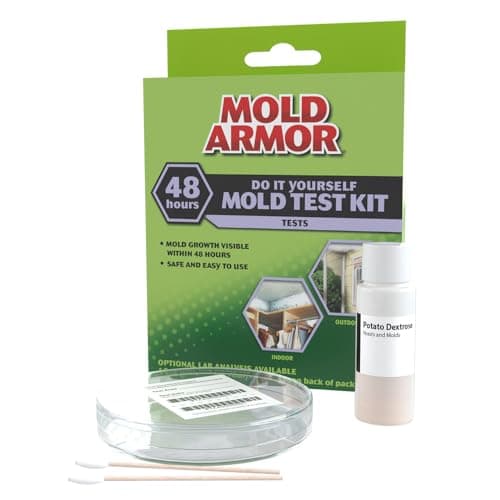
The most popular DIY mold test kit on Amazon. Includes a settling plate, swab, and pre-paid postage for AIHA-accredited lab analysis. The kit detects airborne mold spores and surface mold, identifying species like Aspergillus, Stachybotrys, and Penicillium.
Pros
- Very affordable entry-level test
- Includes petri dish, swab, and postage for lab analysis
- Results identify mold species
Cons
- Lab fee is separate (~$40)
- Takes 5-7 days for lab results
- Only tests one location per kit
2. Air Cassette Sampling ($30–$50)
A pump draws a measured volume of air through a collection cassette. The lab counts all captured spores — both alive and dead — and reports concentrations in spores per cubic meter. This is the same methodology professional inspectors use.
What it tells you: Actual spore concentrations per room. When you test multiple rooms plus an outdoor sample, you get room-by-room comparison against a real baseline.
What it doesn't tell you: Whether individual species produce mycotoxins (that requires DNA analysis). Also, spore counts fluctuate throughout the day, so a single sample is a snapshot, not a long-term picture.
Best used for: Systematically identifying which rooms have elevated mold levels. Essential for verifying a remediation was successful (test before and after).
My Mold Detective MMD103 Multi-Room Mold Test Kit
My Mold Detective
$40–50
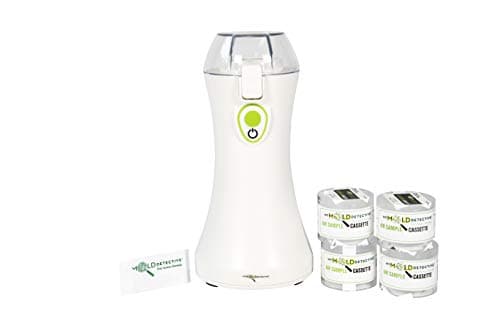
A multi-room air sampling kit that uses cassette-style collectors for more accurate spore counts than settling plates. Lab analysis is included in the purchase price, and results are delivered via email with a detailed breakdown of mold species and concentration levels.
Pros
- Tests up to 3 rooms in a single kit
- Lab analysis included in the price
- Uses cassette-style air sampling for professional-grade results
Cons
- Requires a box fan or pump for air sampling
- More complex setup than settling-plate kits
- Results take 3-5 business days
3. Rapid Immunoassay Swabs ($20–$30)
Works like a COVID rapid test — swab a surface, mix with a solution, wait 5 minutes for a line to appear. Uses antibodies that react to proteins from specific mold genera (typically Aspergillus, Penicillium, and Stachybotrys).
What it tells you: Whether mold proteins are present on a specific surface. Yes or no, nothing more.
What it doesn't tell you: Concentration, exact species, or whether airborne mold is present (it only tests surfaces). Can miss low-level contamination.
Best used for: Quickly screening a suspicious spot during a home walkthrough. Real estate buyers use these for quick peace of mind. Think of it as triage, not diagnosis.
4. ERMI DNA Analysis ($200+)
The gold standard. You vacuum dust from carpet or floors, send it to a lab, and they use DNA amplification (MSQPCR) to identify and quantify 36 specific mold species. The result is an ERMI score from roughly -10 to 20 that compares your home to a national EPA database.
What it tells you: Exactly which species are in your home and in what quantities. Catches species that culture tests miss. Provides a cumulative picture over weeks, not just a snapshot.
What it doesn't tell you:Current air quality (it measures accumulated dust, not what you're breathing right now). Not ideal for post-remediation verification — use air cassettes for that.
Best used for: Pre-purchase home inspections, legal or insurance documentation, chronic unexplained health symptoms, or when cheaper tests are inconclusive. Our full ERMI guidecovers scores, interpretation, and when it's worth the cost.
ImmunoLytics ERMI Mold Test Kit
ImmunoLytics
$190–220
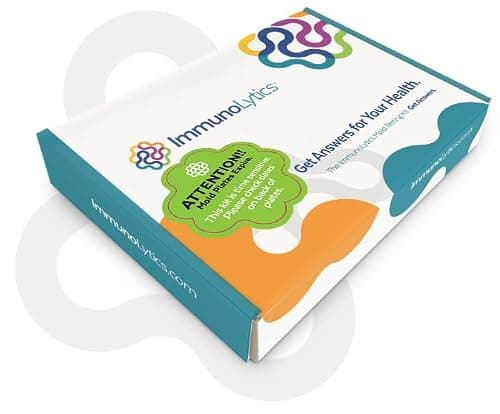
The most comprehensive home mold test available. Uses EPA-developed ERMI methodology with DNA-based MSQPCR analysis to quantify 36 mold species. Generates a standardized Relative Moldiness Index score that compares your home to a national database. Preferred by environmental consultants and real estate inspectors.
Pros
- ERMI (EPA Relative Moldiness Index) is the gold standard
- DNA-based analysis identifies 36 mold species
- Lab analysis included in price
Cons
- Most expensive home test kit
- Results take 7-10 business days
- Requires careful dust collection with included vacuum cassette
Test Methods Compared
| Method | Cost | Time to Results | Accuracy | Best For |
|---|---|---|---|---|
| Settle plate | $10–$55 | 48 hrs + 5–7 days lab | Low–moderate | Cheap first screening |
| Air cassette | $30–$50 | 5 min sampling + 5–7 days lab | High | Room-by-room comparison |
| Rapid swab | $20–$30 | 5 minutes | Low | Quick surface check |
| ERMI DNA | $200–$250 | 7–14 days | Very high | Home purchase, legal, chronic symptoms |
The Consumer Reports Problem
Consumer Reports rates all DIY mold test kits as "Not Recommended." That sounds damning, but the reasoning is more nuanced than the headline suggests. Their main criticisms:
- Settle plate tests overcount— An open petri dish in any home will grow mold. A positive result doesn't mean you have a mold problem; it means mold exists (which it always does).
- No baseline comparison— Without an outdoor control sample, you can't tell if indoor levels are abnormal. Air cassette kits solve this, but settle plates don't.
- Interpretation confusion— Most homeowners don't know what to do with the results. "Penicillium detected" sounds scary but is completely normal at low levels.
This doesn't mean testing is useless — it means you need the right test and the right expectations. Air cassette kits with indoor + outdoor comparison are genuinely useful. ERMI tests provide defensible data. Settle plate tests are useful for one thing: confirming whether a suspicious spot is actually mold growth.
When You Should (and Shouldn't) Test
Test When:
- You smell must but see nothing — A musty smellwithout visible mold means it's hidden. Testing confirms whether elevated spores are present before you start cutting into walls.
- After water damage— Even if you don't see mold, test 2–4 weeks after any water event to catch developing colonies before they spread.
- Buying a home — An ERMI test ($200) reveals the mold history of a house. Cheap insurance on a $300,000+ purchase.
- Persistent health symptoms — If allergies or respiratory issues improve when you leave the house and worsen when you return, mold may be the cause. Refer to the CDC's mold health resources.
- Verifying remediation — Test before and after professional remediation to confirm spore counts actually dropped. Air cassette kits are ideal for this.
Don't Bother Testing When:
- You can already see the mold— If it's visible, you don't need a test to tell you it's there. Just remove it.
- You already know the type doesn't matter— The CDC says treat all mold the same: remove it and fix the moisture. If you're going to clean regardless of species, testing is unnecessary.
- The area is under 10 sq ft— Below the EPA's DIY threshold, just clean it yourself with hydrogen peroxide or Concrobium.
DIY Testing vs. Professional Inspection
A professional mold inspection ($300–$600) includes thermal cameras, commercial-grade moisture meters, and air sampling with immediate expert interpretation. Consumer kits are cheaper but you're on your own for interpretation.
Hire a professional when:
- Mold covers more than 10 square feet
- You need documentation for legal action, insurance, or real estate transactions (consumer kit results aren't legally defensible)
- You suspect mold in HVAC ductwork or inside wall cavities
- DIY test results are confusing or contradictory
- Family members have serious respiratory symptoms
A smart middle path: use a consumer kit as an initial screening. If results show elevated levels, hire a professional for the full assessment. You avoid spending $500+ on a professional visit only to learn your home is completely normal.
Getting Accurate Results
Whichever method you choose, these steps improve accuracy:
- Always test at least two locations— The suspicious room plus a "clean" room for comparison. Air cassette kits should include an outdoor sample.
- Close windows 12 hours before testing — Open windows introduce outdoor spores that skew indoor readings.
- Don't vacuum or dust beforehand — Cleaning disturbs settled spores and artificially elevates airborne counts.
- Place settle plates at breathing height — 3–4 feet off the ground, not on the floor. Floor-level placement overcounts heavy spores.
- Test during normal activity— Running the HVAC system during testing gives a more realistic picture of what you're breathing daily.
Need Professional Mold Removal?
Get free, no-obligation quotes from licensed mold remediation specialists in your area.
Get Free QuotesFrequently Asked Questions
Are DIY mold test kits accurate?
It depends on the type. Air cassette kits that compare indoor vs. outdoor levels are reasonably accurate — they use the same methodology as professional inspectors. Settle plate kits detect the presence of mold species but can't measure concentrations. ERMI DNA analysis is the most accurate consumer option. Consumer Reports' "Not Recommended" rating applies mainly to settle plates used without proper baseline comparison.
How much does mold testing cost?
DIY: settle plate kits $10–$15 (+ $40 lab fee), air cassette kits $30–$50 (lab included), rapid swabs $20–$30, ERMI $200–$250. Professional: $300–$600 for a standard inspection, $800+ for a comprehensive CIH assessment with ERMI.
What is an ERMI test and is it worth the cost?
ERMI (Environmental Relative Moldiness Index) uses DNA analysis to detect 36 mold species. At $200+, it's the most expensive consumer option but also the most comprehensive and legally defensible. Worth it for home purchases, insurance claims, and chronic health symptoms. For visible mold you plan to clean anyway, it's overkill. See our detailed ERMI guide.
When should I test my home for mold?
After water damage, when you smell musty odors without visible mold, before buying a home, when health symptoms improve outside the house, or to verify a remediation was successful. Don't bother testing if you can already see the mold — just remove it.
Frequently Asked Questions
Are DIY mold test kits accurate?
How much does mold testing cost?
When should I test my home for mold?
What is an ERMI test and is it worth the cost?
Related Articles
ERMI Mold Test: Cost, Accuracy & When You Actually Need One
What Does Mold Smell Like? How to Identify Mold by Smell
How to Get Rid of Black Mold: DIY Removal Guide
Mold Testing Guide: Do You Need a Test & Which Type Is Best?
Mold in Your Refrigerator: How to Clean It and Stop It for Good
Best Mold Test Kits for Home Use: What Works & What's a Waste of Money (2026)
Need Professional Mold Removal?
Get free, no-obligation quotes from licensed mold remediation specialists in your area.
Get Free Quotes