Mold in Carpet: How to Tell If You Should Save It or Replace It
Out of the Mold Editorial Team
Our guides are research-backed and cite EPA, CDC, and peer-reviewed sources. Product reviews are based on hands-on testing, not manufacturer claims. Read our editorial standards.
Affiliate Disclosure: Out of the Mold is reader-supported. As an Amazon Associate, we may earn a commission when you buy through links on this page — at no extra cost to you. Our picks are based on independent standards, manufacturer specifications, and published research, not commissions.
Key Takeaways
- The padding — not the carpet — is usually the real mold problem. It's cheap to replace ($0.25–$3/sq ft) and nearly impossible to fully decontaminate.
- You have a 48-hour window after water exposure to dry everything before mold colonizes. A $50 fan rental beats a $3,500 remediation bill.
- After flooding or sewage backup, replace carpet and padding — contaminated water makes salvage unsafe per IICRC standards.
- Dirty carpets mold faster than clean ones. Regular vacuuming is genuine mold prevention, not just cosmetic.
- Professional carpet mold removal runs $1,500–$9,000 depending on area and severity.
If you can see or smell mold in your carpet, the real question isn't how to clean it — it's whether the carpet can be saved at all. Surface mold on a small area (under 10 sq ft) caught within 48 hours is salvageable with vinegar, hydrogen peroxide, or Concrobium. But if mold has reached the padding, the padding needs to go — it's cheap to replace ($0.25–$3/sq ft) and nearly impossible to fully decontaminate. After flooding or sewage backup, replace everything. Professional carpet mold removal runs $1,500–$9,000 depending on the area.
Here's the hard truth about carpet mold: most of the advice online tells you to grab some vinegar and scrub. That works for a surface stain on tile. Carpet is a completely different problem because you're dealing with three layers — carpet fibers, padding, and subfloor — and mold loves to hide in the two you can't see.
I've seen homeowners spend hours cleaning the carpet surface only to have the musty smell return two weeks later. The mold wasn't gone — it was thriving in the padding underneath. Before you start cleaning, you need to figure out whether your carpet is worth saving. That decision saves you either $50 in cleaning supplies or $3,500 in remediation costs.
Signs of Mold in Your Carpet
Carpet mold doesn't always look like the fuzzy green stuff you picture. The signs are often subtle, especially early on:
- Musty or earthy smell — This is the #1 indicator and often appears before any visible growth. If your room smells like a damp basement even after cleaning, suspect mold under the carpet.
- Visible discoloration — Green, black, white, orange, or yellow spots on the carpet surface. Black mold spots are often mistaken for dirt but won't vacuum out.
- Carpet feels damp or spongy — If the carpet feels wet underfoot with no obvious spill, moisture is trapped underneath.
- Allergy symptoms that worsen indoors — Sneezing, itchy eyes, or respiratory irritation that improves when you leave the house. Children in moldy homes are 30–50% more likely to develop asthma, according to CDC research.
- Recent water event — Any flooding, pipe leak, or appliance overflow within the past few weeks. Mold begins colonizing within 24–48 hours of moisture exposure.
What Causes Carpet Mold?
Carpet mold always comes back to one thing: moisture that wasn't removed fast enough. The specific scenarios:
- Flooding or water damage — The obvious one. Standing water saturates carpet and padding in minutes. See our post-flood mold prevention guide for the critical 48-hour response timeline.
- Chronic high humidity (>60%) — Common in basements without dehumidifiers. Carpet absorbs ambient moisture from the air over time.
- Carpet on concrete slab — Concrete wicks moisture upward through capillary action. Without a moisture barrier, this constantly feeds the carpet padding from below.
- Spills not dried within 24–48 hours — That coffee spill you covered with a towel? If the padding underneath stayed damp for two days, mold is already starting.
- Hidden plumbing leaks — Slow leaks under flooring can saturate carpet from below for weeks before anyone notices.
- Poor ventilation — Rooms with minimal air circulation, especially basement bedrooms and interior rooms without windows. Check your mattress too — floor-level moisture affects bedding and mattresses in the same room.
There's an underappreciated factor here too: dirty carpets mold faster than clean ones.Research shows that soil and organic debris in carpet fibers provide additional food sources for mold. Regular vacuuming isn't just about appearance — it's a genuine mold prevention strategy.
Can You Save a Moldy Carpet? (Decision Framework)
This is the most important section of this guide. The difference between a $50 DIY fix and a $3,500 remediation bill often comes down to these factors:
| Scenario | Verdict | Why |
|---|---|---|
| Small area (<10 sq ft), surface only, clean water source | Save it | DIY treatment works. Dry fast, treat with H2O2 or Concrobium. |
| Mold on carpet but padding is dry | Save it | Treat surface, ensure full drying. Check backing to confirm. |
| Mold in padding but carpet is OK | Replace padding | Padding costs $0.25–$3/sq ft. Carpet may survive; padding won't. |
| Area exceeds 10 sq ft | Call a pro | EPA threshold. Requires containment to prevent spore spread. |
| Mold has reached the subfloor | Replace all | Subfloor damage = prolonged exposure. Carpet and padding are compromised. |
| After flooding or sewage backup | Replace all | Contaminated water (Category 2/3) means automatic replacement per IICRC standards. |
| Water sat for 72+ hours | Replace all | Mold is fully established by 72 hours. Remediation rarely succeeds. |
The 48-Hour Rule
The EPA uses 48 hours as the benchmark for mold colonization after moisture exposure. Per the IICRC S500 standard (the industry bible for water damage restoration), after 48 hours, even clean water damage can escalate from Category 1 to Category 2, fundamentally changing the remediation requirements.
Translation:You have roughly a 48-hour window to dry everything before the "save" option starts closing. A $50 fan rental and same-day response can prevent a $3,500 remediation bill. Speed is the cheapest mold prevention there is.
How to Remove Mold from Carpet (DIY)
If your situation passes the "save it" criteria above — small area, surface mold only, no padding contamination — here's the step-by-step process.
Safety first:Wear an N95 respirator, safety goggles, and gloves. Mold remediation sends spores airborne, and carpet fibers trap them at breathing height. Don't skip the respirator.
3M 8511 N95 Particulate Respirator
3M
$20–30
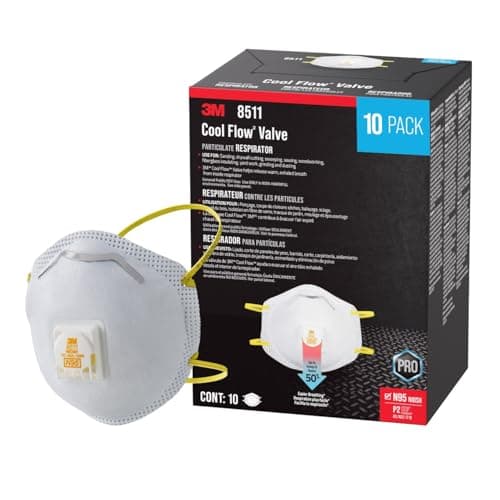
A NIOSH-approved N95 particulate respirator with Cool Flow exhalation valve for comfortable breathing during mold remediation. Filters at least 95% of airborne particles including mold spores. The adjustable M-noseclip and dual-strap design provide a secure seal. OSHA-recommended for mold work.
Pros
- NIOSH-approved N95 filtration
- Cool Flow valve reduces heat buildup
- Adjustable nose clip for secure fit
Cons
- Disposable, not reusable long-term
- Does not protect against chemical fumes or VOCs
- May not fit all face shapes comfortably
- Ventilate the area.Open windows and run fans to create airflow. If it's a basement, run a dehumidifier. You're about to disturb mold spores — you want them moving out, not settling deeper into the carpet.
- Dry the carpet completely first. If the carpet is still damp, no treatment will work. Use fans, dehumidifiers, or even a wet/dry shop vac. Pull the carpet back from the tack strip if needed to expose the padding and subfloor to air.
- Apply treatment to the affected area. Choose one:
- White vinegar (undiluted) — Best for porous carpet fibers because it penetrates to roots. Spray generously, let sit 30 minutes.
- 3% hydrogen peroxide — Good on light-colored carpet. Test a hidden spot first — it can bleach colors. Spray, wait 15 minutes.
- Concrobium Mold Control— Best option overall for carpet. Non-toxic, won't bleach, and leaves a preventive barrier. Spray and let dry completely.
- Scrub with a stiff brush. Work the treatment into the carpet fibers in all directions, not just one. This mechanically breaks up mold colonies that spray alone misses.
- HEPA vacuum thoroughly. A standard vacuum blows spores back into the air. Use a HEPA-filtered vacuum to capture mold spores and debris. Vacuum the area at least twice, going in different directions.
- Apply anti-mold treatment to prevent regrowth. After the carpet is clean and dry, spray Concrobium lightly over the treated area. It dries to form an invisible antimicrobial barrier that prevents recolonization. See our complete mold removal guide for more product options and larger infestations.
Concrobium Mold Control
Concrobium
$10–15
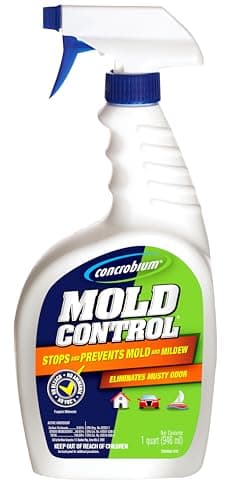
A patented, EPA-registered mold control solution that kills mold without bleach, ammonia, or VOCs. The tri-salt polymer formula crushes mold spores as it dries and leaves an invisible antimicrobial barrier to prevent regrowth. Safe for indoor use on virtually any surface.
Pros
- Non-toxic, no bleach or ammonia
- Kills mold and prevents regrowth
- Safe for use around children and pets
Cons
- Does not remove existing mold stains
- Takes longer to work than bleach-based products
- May require multiple applications for severe infestations
Don't use bleach on carpet.It bleaches the color, doesn't penetrate carpet fibers effectively, and the water content can make the moisture problem worse. This is the single most common mistake homeowners make with carpet mold.
Mold Under Carpet Padding: The Hidden Problem
The padding is almost always the real villain in carpet mold situations. Here's why it matters so much:
- Padding absorbs and holds moisture far longer than carpet fibers — acting as a moisture reservoir even after the surface feels dry.
- Mold often starts on the carpet backing (the underside), where it goes undetected for days or weeks.
- Standard rebond foam padding (the cheapest and most common type at $0.25–$0.80/sq ft) is made from recycled foam scraps and absorbs water readily. It's the most susceptible material to mold.
- Once padding is saturated, it's nearly impossible to fully dry — especially in place, sandwiched between carpet and subfloor with no airflow.
How to Check
Pull up a corner of the carpet near the affected area. You're looking at both the carpet backing (underside) and the padding surface. Signs of padding contamination:
- Black or grayish powdery substance on the subfloor when padding is lifted
- Padding feels damp, compressed, or crumbles when handled
- Musty odor intensifies when carpet is pulled back
- Visible mold on the carpet backing (underside)
If the padding shows mold: replace it.Don't try to clean it. Padding is cheap — $0.25 to $3.00 per square foot for materials, plus about $0.50–$1.00/sq ft for labor. That's $75–$400 for a standard bedroom. The carpet itself may be salvageable even when the padding isn't.
Treating the Subfloor
After removing contaminated padding, treat the subfloor before installing new padding. For wood subfloors, sand any visible mold, then treat with Concrobium or a borate-based solution. For concrete subfloors, scrub with hydrogen peroxide and let dry completely — check moisture levels with a moisture meter before reinstalling carpet. If you suspect the mold may be toxic, an ERMI test can identify the exact species present.
Large Area or Whole-Room Treatment
When mold has spread beyond a small patch, spraying and scrubbing isn't practical. A mold foggerdisperses antimicrobial solution as a fine mist that penetrates carpet fibers, reaches under furniture, and treats areas spray bottles can't.
Concrobium Mold Control Fogger
Concrobium
$40–100
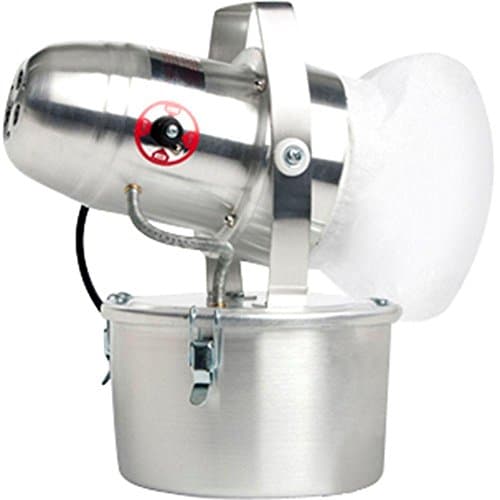
A complete fogging system that disperses Concrobium Mold Control as a fine mist to treat entire rooms. The cold-fog technology reaches into cracks, crevices, and HVAC ducts where mold hides. Kills existing mold and leaves a protective barrier to prevent regrowth.
Pros
- Treats entire rooms including hard-to-reach areas
- Non-toxic Concrobium formula, safe for occupied spaces
- Includes cold fogger machine and mold control solution
Cons
- Fogger machine is loud and requires setup
- Does not remove existing mold stains
- Solution needs time to dry and form protective barrier
The Concrobium fogger works well as a supplementary treatment after professional remediation, or for borderline situations where the carpet might be saveable but you want thorough coverage. It's not a substitute for professional remediation when the area exceeds the EPA's 10 sq ft DIY threshold.
When to Call a Professional
Call a professional mold remediator if any of these apply:
- Affected area exceeds 10 square feet— The EPA's threshold. Above this, containment is needed to prevent spore spread to the rest of the house.
- Mold has reached the subfloor — Subfloor contamination often means the moisture problem has been ongoing for weeks or months.
- Post-flood or sewage contamination — Contaminated water (Category 2/3 per IICRC standards) introduces bacteria and pathogens beyond just mold.
- Recurring mold despite treatment— Persistent regrowth means there's a hidden moisture source you haven't found.
- Household members have respiratory symptoms— Don't DIY if someone in the home has asthma, is immunocompromised, or is experiencing mold-related health effects. For health guidance, see the EPA's mold guide.
What Professional Remediation Costs
Professional carpet mold removal typically costs:
- Small spots (<10 sq ft): $150–$300
- Medium areas (10–100 sq ft): $500–$3,000
- Large areas (full room/basement): $3,500–$9,000+
- Standard per-sq-ft rate: $10–$25/sq ft
Subfloor replacement can add up to $5,000 on top of remediation costs. Get at least three quotes — pricing varies significantly by region. For a deeper breakdown of what to expect, see our mold remediation cost guide.
Does Insurance Cover Carpet Mold?
Typically only if the mold resulted from a sudden, accidental covered event — a burst pipe, broken appliance hose, or sudden water intrusion. Insurance generally does not cover mold from gradual leaks, neglected maintenance, flooding (requires separate flood insurance), or pre-existing conditions. Most policies have specific mold coverage limits. Check your policy and document the water event immediately — your response time can affect whether the claim is approved.
Preventing Carpet Mold
Prevention is dramatically cheaper than remediation. These habits stop most carpet mold before it starts:
- Keep humidity below 50% — Use a dehumidifier in basements and any room with carpet on concrete slab. A hygrometer ($10–$15) tells you your exact levels. Below 50% is safe; above 60% is the danger zone.
- Clean spills within 24 hours— Every hour counts. Blot (don't rub), use a wet/dry vac on large spills, and aim a fan at the area. If the padding got wet, pull up the carpet corner to let it dry.
- Vacuum regularly — This removes the dirt and organic debris that accelerate mold growth. HEPA-filtered vacuums are ideal since they capture mold spores instead of recirculating them.
- Choose mold-resistant padding in high-risk areas — Flat rubber padding ($0.75–$3.00/sq ft) is naturally water-resistant and lasts 10–20 years. If you're replacing padding anyway, upgrade from rebond foam. Look for pads with built-in moisture barriers — the Healthier Choice brand has GreenGuard Gold certification and 360-degree spill protection.
- Avoid carpet in high-moisture areas — Bathrooms, below-grade basements, and laundry rooms are better served by tile, vinyl, or sealed concrete. If you must use carpet in a basement, use a vapor barrier underneath. The same principle applies to vehicle carpet — car interiors trap moisture with poor ventilation.
- Maintain your HVAC — A well-maintained system controls humidity and filters airborne spores. Dirty filters and clogged drains create the moisture conditions mold needs.
Frequently Asked Questions
Can moldy carpet make you sick?
Yes. Mold in carpet releases spores at breathing height — lower than wall mold — making exposure more direct, especially for children and pets who spend time on the floor. Symptoms range from sneezing, coughing, and itchy eyes to asthma attacks in sensitive individuals. The CDC notes that children in moldy homes face 30–50% higher asthma risk. If anyone in your household has unexplained respiratory symptoms that improve when they leave the house, check under the carpet.
Does baking soda kill mold in carpet?
Baking soda absorbs moisture and can inhibit mold growth, but it doesn't reliably kill established mold colonies. It's useful as a deodorizer — sprinkle on dry carpet, let sit overnight, vacuum up — but pair it with an actual antifungal treatment (vinegar, hydrogen peroxide, or Concrobium) for killing mold.
Should I replace carpet after water damage?
It depends on three factors: the water source, how long it sat, and how deep it penetrated. Clean water (broken supply line) dried within 48 hours with no padding contamination? Probably salvageable. Contaminated water (sewage, flooding), water that sat 72+ hours, or mold on the carpet backing? Replace the carpet and padding. See the decision framework above for the full breakdown.
How much does professional carpet mold removal cost?
Expect $500–$3,000 for moderate areas (10–100 sq ft) and $3,500–$9,000+ for full rooms or basements. The per-square-foot rate runs $10–$25 for standard remediation. Subfloor replacement adds significantly to the cost. Always get at least three quotes.
Can I use a steam cleaner on moldy carpet?
Not recommended. While high-temperature steam kills mold on contact, it also adds moisture to the carpet and padding — which can worsen the underlying problem. Steam cleaning is better suited for hard surfaces. For carpet, stick with spray treatments that you can follow with thorough drying.
Dealing With Mold Right Now?
Our step-by-step mold removal guide walks you through testing your home, choosing the right products, and knowing when a job is too big for DIY.
Read the Removal GuideFrequently Asked Questions
Can moldy carpet make you sick?
Does baking soda kill mold in carpet?
Should I replace carpet after water damage?
How much does professional carpet mold removal cost?
Can I use a steam cleaner on moldy carpet?
Related Articles
Concrobium Mold Control Review: What It Does (and What It Won't)
Best Mold Fogger & Mold Bomb: Machines, Solutions & Safety Guide (2026)
How to Remove Mold from Your Car Interior
How to Get Rid of Black Mold: DIY Removal Guide
Mold on Wood Floors: Remove It, Refinish, or Replace?
Orange Mold: Identification, Risks, and Removal by Surface
Dealing With Mold Right Now?
Our step-by-step mold removal guide walks you through testing your home, choosing the right products, and knowing when a job is too big for DIY.
Read the Removal Guide