Mold on Walls: How to Remove It (and When to Replace the Wall)
Out of the Mold Editorial Team
Our guides are research-backed and cite EPA, CDC, and peer-reviewed sources. Product reviews are based on hands-on testing, not manufacturer claims. Read our editorial standards.
Affiliate Disclosure: Out of the Mold is reader-supported. As an Amazon Associate, we may earn a commission when you buy through links on this page — at no extra cost to you. Our picks are based on real testing and independent standards, not commissions.
Key Takeaways
- Wall material determines your removal method: painted drywall, plaster, concrete, and wood paneling each need different approaches.
- Use the press test to determine surface vs penetrating mold — solid wall means surface cleaning works, soft/spongy means replacement.
- The EPA's DIY threshold is 10 square feet. Beyond that, hire a professional with containment ($1,500–$4,500 in 2026).
- Never paint over active mold — it will grow through the new paint within weeks.
- Concrete/block basement walls are the one surface where bleach actually works well. Use 1 cup per gallon + seal afterward.
To remove mold from walls, first identify your wall type — the removal method for painted drywall is completely different from plaster, concrete, or wood paneling. For painted walls with surface mold, spray undiluted white vinegar, wait 1 hour, scrub and wipe clean. For unpainted drywall where mold has penetrated, cut out and replace the affected section — no product can save saturated drywall. The EPA says anything over 10 square feet needs professional remediation ($1,500–$4,500 average in 2026).
Wall mold is one of those problems where your first instinct — grab a spray bottle and start scrubbing — is sometimes exactly right and sometimes exactly wrong. The difference depends on two things: what your wall is made of, and whether the mold is on the surface or growing through the material itself.
I've seen people spend weekends scrubbing mold off painted drywall that kept coming back because the colony was growing behind the paint film. I've also seen people rip out perfectly good plaster walls that only needed a surface cleaning. The wall material determines everything about your approach, your cost, and your likelihood of success.
Is Mold on Walls Dangerous?
The health risk depends on the mold species, the area covered, and your personal sensitivity. Most wall mold in homes is one of four genera:
- Cladosporium — Dark green to black. The most common indoor mold. Causes allergic reactions but rarely serious illness in healthy adults.
- Aspergillus — Green, yellow, or white. Produces mycotoxins at high concentrations. A concern for immunocompromised individuals.
- Penicillium — Blue-green, fuzzy. Spreads fast. Common on water-damaged drywall and wallpaper.
- Stachybotrys chartarum— "Black mold." Slimy, dark greenish-black. Requires sustained moisture (water damage, leaks). Produces satratoxins. The one that makes headlines.
For help identifying which type you're looking at, our mold identification guide has photos and descriptions of each. If you're seeing black slimy growth on walls that have been wet for weeks, treat it as potentially Stachybotrys and take extra precautions — full black mold removal protocol here.
The short answer on danger: any visible mold on walls should be removed promptly. Small patches (under a few square feet) in otherwise healthy adults are unlikely to cause serious harm — but they indicate a moisture problem that will get worse over time.
What Type of Wall Do You Have? (This Determines Everything)
The removal method depends entirely on your wall material. Most guides skip this, which is why people end up making problems worse. Here's how to identify what you're working with:
| Wall Type | How to Identify | Porosity | Can Mold Penetrate? |
|---|---|---|---|
| Painted drywall | Knock test: hollow sound. Most homes built after 1950. | Paint = non-porous; drywall core = very porous | Through paint film into paper face |
| Unpainted drywall | Garage, unfinished basement. Paper face exposed. | Highly porous | Yes — deeply and quickly |
| Plaster | Knock test: solid sound. Homes pre-1960. Thicker than drywall. | Moderate (less porous than drywall) | Slowly — plaster resists mold better |
| Concrete/cinder block | Basements. Visible block pattern or parged surface. | Low to moderate | Surface only (unless cracked) |
| Wood paneling | Visible wood grain. Common in 1960s–1980s homes. | Moderate to high | Yes — into the grain |
| Tile walls | Bathrooms, kitchens. Tile itself is non-porous but grout is porous. | Tile: none. Grout: high. | Into grout lines only |
How to Remove Mold from Painted Walls
Painted drywall is the most common wall type in modern homes, and it's also the trickiest because you're dealing with two materials — the paint film and the drywall underneath. You need to determine whether mold is only on the paint surface or has penetrated through it.
The Press Test (Surface vs Penetrating Mold)
Press your thumb firmly against the moldy area. Two outcomes:
- Wall feels solid and hard — Mold is likely on the paint surface only. Proceed with surface cleaning below.
- Wall feels soft, spongy, or gives under pressure— Mold has penetrated through the paint into the drywall substrate. Skip to the "When to Replace" section.
Surface Mold Removal (Solid Wall)
- Protect yourself. N95 respirator, rubber gloves, eye protection. Open windows for ventilation.
- Spray undiluted white vinegardirectly on the moldy area. Cover it completely. Let it sit for 60 minutes — don't scrub yet.
- Scrub with a stiff brush. Work in small sections. Wipe debris into a trash bag, not onto the floor.
- Wipe clean with damp cloth.Follow immediately with a dry cloth. You don't want residual moisture sitting on the wall.
- Apply Concrobium as a preventive barrier.Spray a thin coat on the cleaned area. Let it dry completely (don't wipe off). The tri-salt polymer creates a lasting antimicrobial shield.
- Repaint if needed. If you're repainting, use mold-killing primer first, then mold-resistant topcoat paint.
Concrobium Mold Control
Concrobium
$10–15
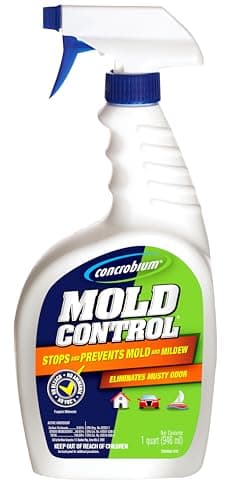
A patented, EPA-registered mold control solution that kills mold without bleach, ammonia, or VOCs. The tri-salt polymer formula crushes mold spores as it dries and leaves an invisible antimicrobial barrier to prevent regrowth. Safe for indoor use on virtually any surface.
Pros
- Non-toxic, no bleach or ammonia
- Kills mold and prevents regrowth
- Safe for use around children and pets
Cons
- Does not remove existing mold stains
- Takes longer to work than bleach-based products
- May require multiple applications for severe infestations
Why Not Bleach on Painted Walls?
Bleach works on the paint surface itself (non-porous), but if any mold has started penetrating through pinhole defects in the paint film, the water in bleach will feed it deeper. Vinegar is a better first choice because it can penetrate slightly without adding the volume of water that bleach does. For the full science, see our does bleach kill mold breakdown.
How to Remove Mold from Drywall
Unpainted or exposed drywall with mold is almost always a replacement situation. Here's why: drywall is made of gypsum sandwiched between paper faces. Paper is organic material that mold feeds on. Once mold penetrates the paper face, it's growing inside the material — no spray or scrub can reach it.
Surface Mold on Drywall (Small Spots)
If mold is only on a small section of painted drywall and the wall passes the press test (still hard), you can clean it with the painted wall method above. But monitor it weekly — if it returns within 2–3 weeks, the colony is established behind the paint.
Penetrating Mold on Drywall (Must Replace)
If the wall is soft, crumbling, or mold keeps returning after cleaning:
- Contain the area.Hang 6-mil poly sheeting around the work area. Seal edges with painter's tape. This prevents spore dispersal to the rest of the house.
- Cut out affected drywall.Score with a utility knife, then cut 12–24 inches beyond visible mold in all directions. Mold growth typically extends further than what's visible.
- Bag and dispose. Double-bag the removed material in heavy-duty trash bags. Seal immediately.
- Inspect the cavity. Check studs, insulation, and adjacent framing for mold. Treat any affected wood framing with Concrobium.
- Fix the moisture source before installing new drywall. If you skip this step, the new drywall will grow mold too.
- Install new drywall. Use mold-resistant drywall (fiberglass-faced, like DensArmor Plus) in high-humidity areas. Costs about $0.20–$0.40/sq ft more than standard drywall but prevents recurrence.
How to Remove Mold from Plaster Walls
Good news if you have an older home with plaster walls: plaster is significantly more mold-resistant than drywall. It's denser, less porous, and doesn't have the paper face that mold loves. Surface mold on plaster is usually just that — surface.
- Spray with white vinegar or 3% hydrogen peroxide. Wait 30 minutes.
- Scrub with a medium-stiff brush. Plaster can handle more aggressive scrubbing than drywall without damage.
- Wipe clean and let the wall dry completely.
- If plaster is cracked or crumbling, that's a structural repair issue — call a plaster contractor, not a mold company.
Professional plaster repair runs $200–$600 per area. It's more expensive than drywall patching but the resulting wall is far more durable and mold-resistant.
How to Remove Mold from Concrete/Block Walls (Basements)
Basement concrete and cinder block walls are where bleach actually earns its keep. These are non-porous (or semi-porous) surfaces where the chlorine can kill surface mold effectively. The real approach for basement walls:
- Mix 1 cup bleach per gallon of water, OR use TSP (trisodium phosphate) at ½ cup per 2 gallons for stubborn buildup.
- Scrub with a stiff bristle brush. Unlike drywall, concrete can take aggressive scrubbing without damage.
- Rinse thoroughly with clean water. Let dry completely.
- Seal with a masonry waterproofing product (Drylok or similar) to prevent moisture from wicking through the concrete.
The critical step most people skip: sealing after cleaning. Concrete basement walls pull moisture from the soil through capillary action. Unless you seal the interior face, moisture will return and so will the mold. For more detail, see our mold removal guide for specific surfaces.
RMR-86 Instant Mold & Mildew Stain Remover Spray (1 Gallon)
RMR Brands
$25–35
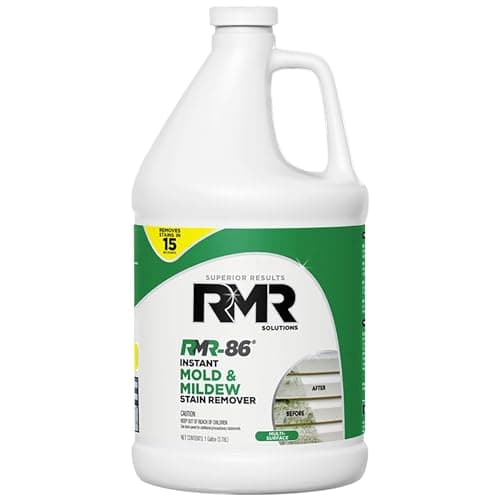
A fast-acting, commercial-strength mold stain remover that eliminates black mold stains on contact. The sodium hypochlorite formula penetrates porous surfaces to lift deep stains without scrubbing. Best used in well-ventilated areas with proper respiratory protection.
Pros
- Removes stains in as little as 15 seconds
- Works on wood, concrete, drywall, and tile
- No scrubbing required
Cons
- Strong bleach-based formula with harsh fumes
- Not safe for fabrics or colored surfaces
- Requires good ventilation and PPE
When to Replace the Wall vs Clean It (2026 Cost Guide)
This is the decision most homeowners agonize over. Here's the framework professionals use:
| Situation | Action | DIY Cost | Pro Cost |
|---|---|---|---|
| Surface mold, under 3 sq ft | Clean it yourself | $15–$40 (supplies) | $150–$300 |
| Surface mold, 3–10 sq ft | DIY clean with containment | $40–$100 | $500–$1,500 |
| Penetrating mold, under 10 sq ft | Cut out and replace drywall | $75–$250 | $1,000–$3,000 |
| Any mold, over 10 sq ft | Professional remediation | Not recommended | $1,500–$4,500 |
| Mold + structural damage | Professional + contractor | Not recommended | $3,000–$12,000+ |
Drywall replacement materials cost $1.50–$3.50 per square foot including tape, mud, and paint. Labor adds $40–$80 per hour. For a typical 4×8 sheet replacement (32 sq ft), expect $100–$200 in materials and $200–$400 in labor if you hire it out.
Need to Test Before Deciding?
Not sure if mold is surface-only or penetrating? A mold test kit can tell you what species you're dealing with and how concentrated it is.
Compare Test Kit Options →How to Prevent Mold from Coming Back on Walls
Removing mold without fixing the cause is temporary at best. Mold needs three things to grow: moisture, food (any organic material — including drywall paper, paint additives, and dust), and stagnant air. Remove any one of these and mold can't establish.
1. Fix the Moisture Source First
This is non-negotiable. Wall mold is always a moisture symptom:
- Bathroom walls: Insufficient exhaust ventilation. Fan should run 20+ minutes after showers.
- Exterior walls: Condensation from temperature differential. Check insulation.
- Below windows: Condensation dripping from cold glass. Often caused by single-pane windows or failed seals.
- Basement walls: Hydrostatic pressure pushing moisture through concrete. Needs interior sealing or exterior waterproofing.
- Around pipes: Slow leak. Check connections, look for mineral deposits that indicate long-term dripping.
2. Control Humidity
Keep indoor relative humidity below 50%. A $10–$15 hygrometer tells you exactly where you stand. If your home regularly exceeds 60% RH, consider a dehumidifier — they run $150–$300 for a room-sized unit and make a massive difference in mold-prone areas.
3. Repaint with Mold-Resistant Products
After cleaning or replacing moldy wall sections, the primer and paint choices matter. Two products that actually work:
Zinsser Mold Killing Primer
Zinsser
$18–25
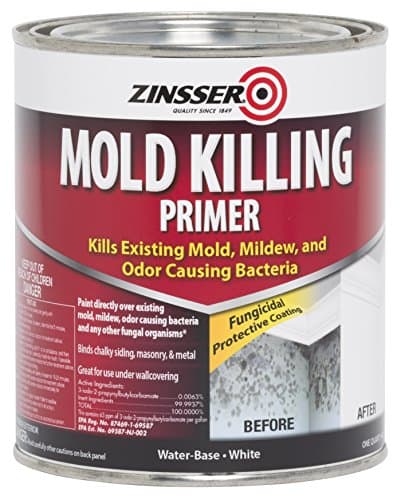
An EPA-registered fungicidal primer that kills existing mold, mildew, and odor-causing bacteria on contact. Creates a mold-resistant barrier on interior and exterior surfaces including drywall, wood, concrete, and masonry. Essential for mold remediation projects before applying topcoat paint.
Pros
- Kills existing mold on contact while priming
- EPA-registered fungicidal protective coating
- Bonds to all interior and exterior surfaces
Cons
- Strong odor during application, requires ventilation
- Water-based formula can raise grain on bare wood
- Must be topcoated with paint for lasting protection
Rust-Oleum Perma-White Mold & Mildew-Proof Interior Paint
Rust-Oleum
$25–35
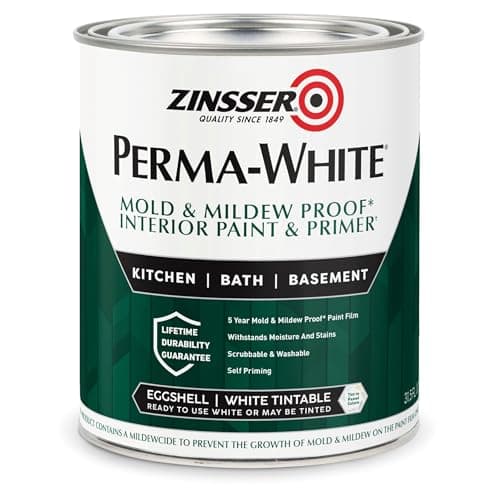
A self-priming, moisture-resistant interior paint with a 5-year mold and mildew-proof guarantee. The advanced acrylic formula resists moisture, dirt, and staining while providing a smooth satin finish. Ideal for high-humidity areas like bathrooms, basements, and kitchens.
Pros
- Self-priming formula saves time
- Guaranteed mold and mildew proof for 5 years
- Moisture-resistant, ideal for bathrooms and basements
Cons
- Limited to interior use only
- Available only in satin white finish
- Cannot be tinted to custom colors
Always prime before topcoating. Zinsser Mold Killing Primer kills any remaining spores on contact while creating a sealed barrier. Then use a mold-resistant topcoat like Rust-Oleum Perma-White (5-year mold-proof guarantee) or add mold-resistant paint additive to your preferred color. For more on this approach, see our mold-resistant paint guide.
4. Improve Airflow
Mold loves still air. Furniture pushed flat against exterior walls creates dead air pockets where condensation accumulates. Pull furniture 2–3 inches from walls, especially on exterior-facing walls in winter. In bathrooms, leave the door cracked after showers to allow cross-ventilation.
Is Mold on Walls Covered by Insurance?
Short answer: usually not, unless it was caused by a "covered peril" (like a sudden pipe burst). Most homeowner's policies specifically exclude mold from gradual causes — which is exactly what most wall mold is.
Key points:
- Covered: Mold from a sudden, accidental water event (burst pipe, appliance malfunction, storm damage).
- Not covered: Mold from ongoing humidity, condensation, slow leaks, or deferred maintenance.
- Mold sub-limits: Even when mold IS covered, most policies cap it at $1,000–$10,000 — well below what full remediation costs.
- Documentation matters: If you think your claim is covered, get professional documentation (photos, moisture readings, ERMI testing) BEFORE starting any cleanup.
Frequently Asked Questions
What kills mold on walls permanently?
No product kills mold permanently — spores are always in the air. What prevents it from returning is fixing the moisture source, applying a preventive barrier (Concrobium or mold-killing primer), and keeping humidity below 50%. Products kill existing colonies; environment changes prevent new ones.
Can I just paint over mold on walls?
No. Paint does not kill mold. Active mold will grow through new paint within weeks, often causing it to bubble, peel, and look worse than before. You must remove the mold first, let the wall dry completely, then prime with a fungicidal primer before repainting. Never skip the primer step.
Does mold on walls mean it's in the wall?
Not always. Surface mold on paint doesn't automatically mean penetration into the substrate. Use the press test: if the wall is still solid and hard, mold is likely surface-only. If it's soft or spongy, mold has penetrated. Also check the backside if accessible (remove an outlet plate or access panel) — mold growing on the back of drywall confirms penetration.
How fast does mold spread on walls?
Under ideal conditions (70–90°F, humidity above 60%, organic material present), mold can colonize a new surface within 24–48 hours and become visible within 1–2 weeks. Once established, a colony can expand at roughly 1–3 inches per week on drywall. This is why early action matters — a small patch today becomes a major remediation project in a month.
Is mold on walls covered by insurance?
Only if caused by a sudden, accidental "covered peril" like a burst pipe or storm damage. Mold from ongoing humidity, condensation, or gradual leaks is excluded by virtually all standard homeowner's policies. Even covered claims typically hit mold sub-limits of $1,000– $10,000.
What does mold on walls look like?
Early-stage wall mold appears as clusters of small dark spots — gray-green, black, or sometimes white — often starting in corners, near windows, or along baseboards where moisture accumulates. It may look like dirt at first. Advanced mold shows as fuzzy growth, discolored patches, or bubbling/peeling paint. If you're not sure whether it's mold or dirt, check our guide to identifying mold by smell — musty odor confirms it. For visual identification by color, see our mold type guide.
Mold Keeps Coming Back?
Recurring wall mold usually means hidden moisture you haven't found. A professional inspection can pinpoint the source.
Learn About Mold Testing →Frequently Asked Questions
What kills mold on walls permanently?
Can I just paint over mold on walls?
Does mold on walls mean it's in the wall?
How fast does mold spread on walls?
Is mold on walls covered by insurance?
What does mold on walls look like?
Related Articles
Does Bleach Kill Mold? The EPA Says No — Here's What Actually Works
How to Remove Mold from Your Bathroom Ceiling (And Keep It Gone)
Mold on Window Sill: Why It Grows and How to Stop It
Types of Mold in Your Home: Color Identification Guide
Best Mold Removal Products: What Works for Every Surface & Situation
Mold-Resistant Paint: How It Works, When to Use It, and What It Can't Do
Need Professional Mold Removal?
Get free, no-obligation quotes from licensed mold remediation specialists in your area.
Get Free Quotes