Mold on Window Sill: Why It Grows and How to Stop It
Out of the Mold Editorial Team
Our guides are research-backed and cite EPA, CDC, and peer-reviewed sources. Product reviews are based on hands-on testing, not manufacturer claims. Read our editorial standards.
Affiliate Disclosure: Out of the Mold is reader-supported. As an Amazon Associate, we may earn a commission when you buy through links on this page — at no extra cost to you. Our picks are based on independent standards, manufacturer specifications, and published research, not commissions.
Key Takeaways
- Window sill mold is a condensation problem — fix the moisture, not just the mold.
- Single-pane windows can drop to 20–25°F inside in winter; double-pane stays 30–40°F, reducing condensation 70–80%.
- 'Black mold' on window sills is almost always Cladosporium, not the toxic Stachybotrys chartarum.
- Remove mold by material: vinegar for wood, bleach or H2O2 for vinyl, vinegar for aluminum. Replace moldy caulk entirely.
- If mold spreads to surrounding drywall or returns within days of cleaning, suspect a bigger moisture problem.
Window sill mold is almost always a condensation problem, not a mold problem. When warm indoor air hits cold window glass, moisture collects on the sill and feeds mold — typically Cladosporium or Aspergillus. Single-pane windows are worst (interior glass can drop to 20–25°F in winter vs. 30–40°F for double-pane). Remove mold with white vinegar or hydrogen peroxide, then fix the root cause: reduce indoor humidity below 50%, improve ventilation, and wipe condensation daily in winter. If mold has spread to surrounding drywall, the problem is bigger than the sill.
Mold on window sills is one of the most common mold problems homeowners face — and one of the most misunderstood. People scrub it off, it comes back two weeks later, they scrub again. Repeat until frustrated.
The reason it keeps coming back is that most people are treating the symptom (the mold) without fixing the cause (the condensation). Once you understand why moisture is collecting on your window sills, the solution becomes obvious — and permanent.
Why Mold Grows on Window Sills
Window sills are the coldest surfaces in most rooms. When warm, humid indoor air contacts a cold surface, the air can't hold its moisture anymore and water condenses out — exactly like droplets forming on a cold glass of water in summer. That moisture sits on your sill, the wood or vinyl soaks it up, and mold colonizes within days.
This is basic dew point physics: when the surface temperature drops below the air's dew point, you get condensation. Windows are the weakest thermal link in your home's envelope, which is why they condense first.
Single-Pane vs. Double-Pane: The Condensation Gap
This is the biggest factor most articles skip. The difference between single-pane and double-pane windows is massive when it comes to mold risk:
- Single-pane windows— One layer of glass with no insulation. In a home heated to 70°F with outdoor temps at -10°F, the interior glass surface can drop to 20–25°F. That's a 45–50°F temperature difference between the room air and the glass. Heavy condensation is guaranteed at normal indoor humidity levels.
- Double-pane windows — Two layers of glass with an insulating air or gas gap. Same conditions, the interior glass stays around 30–40°F. Still cold, but the condensation is reduced by 70–80%. Triple-pane pushes it even higher.
If you have single-pane windows and recurring sill mold, upgrading to double-pane is the permanent fix. Everything else is management. The cost per window runs $300–$800 installed, but it eliminates the condensation problem at its source.
Other Condensation Triggers
- High indoor humidity — Anything above 50% relative humidity dramatically increases condensation on windows. Cooking, showering, drying clothes indoors, and even breathing all add moisture to the air.
- Poor ventilation — Rooms without exhaust fans or adequate air exchange trap moisture. Bathrooms and kitchens are the worst offenders.
- Window leaks and failed seals— On double-pane windows, a broken seal lets moisture between the panes (you'll see foggy glass). On any window, gaps around the frame let cold air in and create additional condensation points.
- Blocked window tracks — Dirt and debris in the track prevent water from draining, creating standing moisture. This is especially common in sliding windows.
Is Window Sill Mold Dangerous?
Window sill mold is usually on the lower end of the danger scale, but "usually" isn't "always."
The most common species on window sills is Cladosporium — an olive-green to black mold that prefers cooler temperatures (which is why it loves cold window surfaces). Cladosporium is primarily allergenic: it triggers sneezing, congestion, and asthma in sensitive people but rarely causes infections.
Aspergillusalso shows up on window sills, especially in humid rooms. It's more medically significant — some species produce mycotoxins, and it's the second most common cause of fungal hospitalization in the U.S. At typical household levels, the risk is low for healthy adults. For more on green mold species and their risks, see our dedicated guide.
"Black Mold" on Window Sills — Usually Not Stachybotrys
If the mold on your window sill is dark or black, don't immediately panic about "toxic black mold." Stachybotrys chartarum— the infamous "black mold" — needs chronically wet cellulose (soaked drywall or wood) to grow. Window sill condensation is intermittent, not chronic, and sills aren't usually cellulose-heavy. Dark mold on window sills is almost always Cladosporium or Aspergillus niger, not Stachybotrys.
That said, if the mold has spread from the sill onto surrounding drywall and the drywall is soft or discolored, get it tested. Drywall does provide the cellulose Stachybotrys needs.
How to Remove Mold from Window Sills
Removal is straightforward — the method depends on the sill material. Wear gloves and an N95 mask. Open the window for ventilation.
Wood Window Sills
- Spray undiluted white vinegar on the mold. Let it sit for 1 hour.
- Scrub with a stiff brush along the wood grain. For deep stains in unpainted wood, lightly sand with 120-grit sandpaper after cleaning to remove stained surface fibers.
- Wipe clean with a damp cloth, then dry thoroughly.
- If the wood is bare, seal with a mold-resistant primer like Zinsser Mold Killing Primer, then topcoat with paint. Sealed wood resists mold far better than bare wood.
Zinsser Mold Killing Primer
Zinsser
$18–25
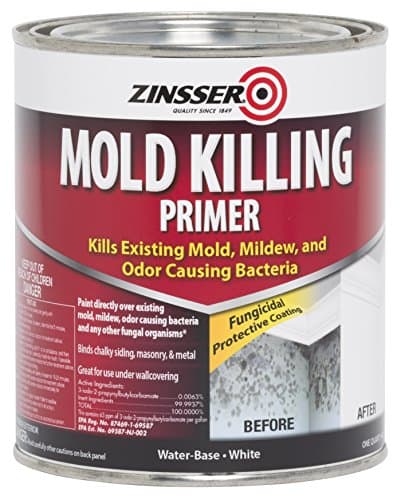
An EPA-registered fungicidal primer that kills existing mold, mildew, and odor-causing bacteria on contact. Creates a mold-resistant barrier on interior and exterior surfaces including drywall, wood, concrete, and masonry. Essential for mold remediation projects before applying topcoat paint.
Pros
- Kills existing mold on contact while priming
- EPA-registered fungicidal protective coating
- Bonds to all interior and exterior surfaces
Cons
- Strong odor during application, requires ventilation
- Water-based formula can raise grain on bare wood
- Must be topcoated with paint for lasting protection
Vinyl/PVC Window Sills
- Mix 1/2 cup bleach per gallon of water (bleach is safe on non-porous vinyl — unlike wood).
- Apply with a cloth or spray bottle. Let sit 10–15 minutes.
- Scrub, rinse with clean water, and dry completely.
Alternatively, use 3% hydrogen peroxide — no harsh fumes, same effectiveness on non-porous surfaces.
Aluminum Window Frames
- Spray white vinegar directly on the mold.
- Wait 30 minutes, then scrub with a non-abrasive pad (avoid steel wool — it scratches aluminum).
- Rinse and dry immediately. Aluminum doesn't rust, but standing moisture just restarts the cycle.
Caulk and Window Seals
If mold has penetrated the caulk around your window frame, cleaning the surface won't help — the mold is growing inside the silicone. The fix is removal and replacement:
- Score along both edges of the old caulk with a utility knife.
- Peel out the old caulk strip.
- Clean the channel with vinegar and let dry.
- Re-caulk with a mold-resistant silicone caulk (look for products labeled "with Microban" or "mold-free").
Removing Mold from Window Tracks and Frames
Window tracks (the bottom channel that the window slides in) are mold magnets that most people forget about. Water pools there, dirt accumulates, and mold grows in the groove where you can't easily see it.
- Window tracks— Sprinkle baking soda in the track, spray with vinegar (it'll fizz), let sit 10 minutes, then scrub with an old toothbrush. Wipe clean with a cloth. For really caked-on buildup, use a butter knife wrapped in a damp cloth to get into the groove.
- Between glass panes— If you see mold or condensation between the panes of a double-pane window, the seal has failed. You can't clean it from outside — the window unit needs to be replaced. Not the entire window frame, just the insulated glass unit (IGU). This typically costs $100–$300.
- Window gaskets and rubber seals — Spray with vinegar, scrub, dry. If the rubber is cracked or deformed, replace the weatherstripping. Damaged seals let cold air leak in and increase condensation.
- Curtains and blinds — Fabric curtains touching moldy sills can pick up spores. Wash in hot water with detergent. If the fabric smells musty after washing, replace it. See our mold removal guide for more detail.
Concrobium Mold Control
Concrobium
$10–15
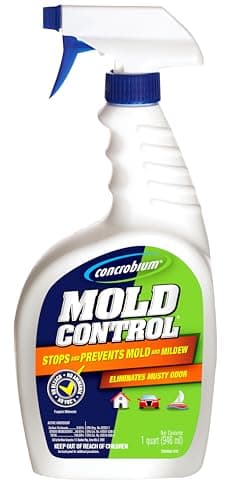
A patented, EPA-registered mold control solution that kills mold without bleach, ammonia, or VOCs. The tri-salt polymer formula crushes mold spores as it dries and leaves an invisible antimicrobial barrier to prevent regrowth. Safe for indoor use on virtually any surface.
Pros
- Non-toxic, no bleach or ammonia
- Kills mold and prevents regrowth
- Safe for use around children and pets
Cons
- Does not remove existing mold stains
- Takes longer to work than bleach-based products
- May require multiple applications for severe infestations
Prevention: Stop Window Condensation Mold for Good
Cleaning window sill mold without fixing the condensation is a waste of time — it'll be back within weeks. These changes address the root cause:
- Reduce indoor humidity to 30–50% — This is the single most impactful change. Use a hygrometer ($10–15) to monitor. Run a dehumidifier in humid rooms. The EPA recommends keeping indoor relative humidity below 50% at all times.
- Improve ventilation— Run exhaust fans in bathrooms and kitchens during and for 30 minutes after use. If a room has no exhaust fan and no openable window, you're fighting an uphill battle.
- Wipe condensation daily in winter— Yes, it's a hassle. But 30 seconds with a towel each morning removes the moisture before mold can use it. Focus on the bottom edge of the glass and the sill.
- Don't dry clothes near windows — Hanging laundry indoors near windows dumps moisture directly onto the coldest surface in the room. Use a dryer, or dry clothes in a well-ventilated room away from windows.
- Upgrade to double-pane windows (long-term fix)— Double-pane reduces condensation by 70–80% compared to single-pane. Cost per window: $300–$800 installed. If you're replacing windows anyway, this solves the mold problem permanently.
- Apply Concrobium as a preventive coating — After cleaning, spray Concrobium on the sill and let it dry. It forms an invisible antimicrobial barrier that prevents mold regrowth. Reapply every few months in high-condensation seasons.
- Move furniture away from windows — Bookcases, curtains, or furniture blocking airflow around windows traps moisture against the sill. Even 2–3 inches of clearance helps.
When Window Mold Signals a Bigger Problem
Window sill mold by itself is usually a manageable annoyance. But sometimes it's the visible tip of something larger:
- Mold spreading onto the wall around the window — If the mold extends from the sill onto surrounding drywall, moisture is penetrating beyond the window area. Check if the drywall is soft, bubbling, or discolored. This may require cutting out and replacing the affected section. See our ceiling mold guide for drywall repair guidance.
- Window is leaking, not just condensing — If water is actively coming in around the window frame during rain, you have a flashing or installation problem. This needs a contractor, not a spray bottle.
- Mold on multiple windows throughout the house — This points to a whole-house humidity issue, not a single-window problem. Your HVAC system may need a whole-house dehumidifier, or there may be inadequate bathroom/kitchen ventilation.
- Mold returning within days of cleaning— If you've addressed humidity and ventilation and the mold still returns rapidly, there may be hidden moisture in the wall cavity behind the window. A moisture meter ($30–$50) can detect wet spots in the wall without cutting into it. If readings are high, consider getting a professional mold inspection.
Dealing With Mold Right Now?
Our step-by-step mold removal guide walks you through testing your home, choosing the right products, and knowing when a job is too big for DIY.
Read the Removal GuideFrequently Asked Questions
Why does mold keep growing on my window sills?
Because the condensation keeps happening. You're treating the mold but not the moisture. The fix: reduce indoor humidity below 50%, improve room ventilation, and wipe condensation from sills daily during cold months. If you have single-pane windows, upgrading to double-pane eliminates most condensation.
Is black mold on window sills toxic?
Dark mold on window sills is almost never the feared Stachybotrys chartarum("toxic black mold"). It's usually Cladosporium or Aspergillus niger, which are allergenic but not acutely toxic. Stachybotrysrequires chronically saturated cellulose (soaked drywall) — window sill condensation doesn't provide those conditions. If you're concerned, a mold test kit with lab analysis identifies the species definitively.
Should I replace windows with mold?
Not necessarily. Mold on the sill or frame can usually be cleaned. Replace the window if: the seal between double-pane glass has failed (foggy glass), the frame is rotted or structurally compromised, or you have single-pane windows in a cold climate and want a permanent condensation fix. An insulated glass unit replacement ($100–$300) is much cheaper than a full window replacement.
Does opening windows help prevent mold?
Yes — when outdoor humidity is lower than indoor humidity. Opening windows improves air circulation and lets moisture escape. In winter, even 10–15 minutes of cracked windows helps exchange stale humid air for dry cold air. In summer humidity, opening windows can make things worse. Use a hygrometer to check before deciding.
How do I stop condensation on windows?
Three approaches, in order of effectiveness: (1) Reduce indoor humidity to 30–50% with exhaust fans and dehumidifiers. (2) Increase glass surface temperature with double-pane windows or interior storm windows. (3) Improve air circulation around windows by opening curtains, moving furniture back, and using ceiling fans to push warm air toward windows. Most people only need options 1 and 3.
Frequently Asked Questions
Why does mold keep growing on my window sills?
Is black mold on window sills toxic?
Should I replace windows with mold?
Does opening windows help prevent mold?
How do I stop condensation on windows?
Related Articles
How to Remove Mold from Your Bathroom Ceiling (And Keep It Gone)
Concrobium Mold Control Review: What It Does (and What It Won't)
Green Mold: Types, Dangers, and How to Remove It
Orange Mold: Identification, Risks, and Removal by Surface
Yellow Mold: Why It's More Dangerous Than You Think
Types of Mold in Your Home: Color Identification Guide
Dealing With Mold Right Now?
Our step-by-step mold removal guide walks you through testing your home, choosing the right products, and knowing when a job is too big for DIY.
Read the Removal Guide