Best Mold Test Kits for Home Use: What Works & What's a Waste of Money (2026)
Out of the Mold Editorial Team
Our guides are research-backed and cite EPA, CDC, and peer-reviewed sources. Product reviews are based on hands-on testing, not manufacturer claims. Read our editorial standards.
Affiliate Disclosure: Out of the Mold is reader-supported. As an Amazon Associate, we may earn a commission when you buy through links on this page — at no extra cost to you. Our picks are based on real testing and independent standards, not commissions.
Key Takeaways
- Consumer Reports rated all tested DIY mold kits 'Not Recommended' — mainly because settle plate results are misleading without indoor-vs-outdoor comparison.
- Air cassette kits with lab analysis ($40–$150) are the only DIY method that provides genuinely useful data — they measure concentration, not just presence.
- ERMI DNA testing ($150–$300) is the gold standard for home purchases, insurance claims, and chronic health symptoms.
- Don't bother testing visible mold — just remove it. Testing is for hidden or uncertain situations.
- The key metric is indoor vs outdoor spore concentration. Indoor levels 3x+ higher than outdoor = active indoor mold source.
Most DIY mold test kits use petri dishes that detect mold present in every home — making them nearly useless for decision-making. Consumer Reports rated all tested kits "Not Recommended." The only DIY method worth your money is an air cassette kit with lab analysis ($40–$50, like My Mold Detective) that compares indoor vs outdoor spore concentrations — the same methodology professionals use. For legal evidence or home purchases, an ERMI DNA test ($200+) is the gold standard. Skip settle plates entirely unless you need confirmation of a negative (no mold present).
Let me save you a bad purchase: if you're about to buy a $10 mold test kit from Home Depot, you're about to waste your money and potentially scare yourself with results that mean nothing.
Here's why. Those cheap kits use a petri dish that sits open in your home for 48 hours and "grows" any mold spores that land on it. The problem? Mold spores exist in everyhome. Every building. Every room. They float in outdoor air by the thousands. A petri dish left open in the cleanest house on Earth will grow mold — because it's testing for something that's always there.
That doesn't mean all home mold testing is useless. It means you need to understand what each test type actually measures, and which one gives you information you can make decisions with.
Types of Mold Test Kits (And Which Actually Work)
There are four categories of home mold tests. They measure fundamentally different things, cost different amounts, and provide wildly different levels of useful information.
1. Settle Plate / Petri Dish Kits — $10–$30 (LOW Reliability)
These are the most common kits on Amazon and in hardware stores. You open a petri dish, leave it in a room for 24–48 hours, close it, and either read it yourself or mail it to a lab ($40 additional).
The problem:
- They cannot measure spore concentrations — only presence, which is guaranteed in 100% of homes.
- Results depend on air currents, humidity, temperature, and placement — variables that make results inconsistent.
- A "positive" result provides no context. Is this normal background levels or elevated? The kit can't tell you.
- Consumer Reports specifically tested these and rated them all "Not Recommended" because they produce misleading results that cause unnecessary anxiety or false confidence.
Only legitimate use: Confirming a negative. If a settle plate in a specific enclosed area grows nothingafter 48 hours, that's actually meaningful — it suggests the space has very low spore counts. But a positive result tells you almost nothing.
2. Surface Swab / Tape Lift Kits — $20–$50 (MODERATE Reliability)
You press tape against visible mold or swab a surface, seal it, and send to a lab. The lab identifies the species.
Good for:
- Identifying what species of mold is growing on a visible patch
- Distinguishing between mold and dirt/staining
- Confirming whether black growth is actually Stachybotrys (dangerous) or Cladosporium (common, less concerning)
Limitations:
- Only works on visible mold — can't detect hidden mold in walls or HVAC
- Doesn't tell you about air quality or exposure levels
- If you can already see the mold, you could just remove it instead of paying $50 to identify it
3. Air Cassette Kits with Lab Analysis — $40–$150 (HIGH Reliability)
This is the one worth buying. Air cassette kits use the same basic methodology as professional mold inspectors: they draw a measured volume of air through a collection cartridge, capturing spores for lab counting.
Why this method works:
- Measures concentration (spores per cubic meter), not just presence/absence.
- Best kits include outdoor control sample — the comparison between indoor and outdoor levels is what actually tells you if you have a problem.
- Lab identifies species AND counts. You get "Aspergillus: 500 spores/m³ indoor vs 200 spores/m³ outdoor" — actionable data.
- Closest you can get to professional air testing without hiring someone.
The key insight: mold is only a "problem" when indoor levels significantly exceed outdoor levels. If your home has 300 spores/m³ and the outdoor air has 400, you don't have a mold problem — you have normal background levels. Settle plates can't make this distinction. Air cassettes can.
4. ERMI DNA Test Kits — $150–$300 (HIGHEST Reliability)
The Environmental Relative Moldiness Index was developed by the EPA and uses quantitative PCR (DNA analysis) to detect and quantify 36 specific mold species from a dust sample. It's the most comprehensive consumer mold test available.
Why ERMI is the gold standard:
- Tests for 36 species simultaneously, including rare and dangerous ones
- Generates a standardized ERMI score comparing your home to a national database of 1,096 homes
- Results are legally defensible — accepted in court, by insurance companies, and in real estate transactions
- Detects mold that air sampling can miss (some species don't become airborne easily)
When to choose ERMI:
- Buying or renting a home — the ERMI score is the most objective mold assessment available
- Insurance or legal disputes — DIY settle plates won't hold up as evidence
- Chronic health symptoms — when you need comprehensive data for a doctor or environmental consultant
- Post-remediation verification — confirming a professional cleanup worked
For a deep dive on ERMI testing including cost breakdown, how to interpret scores, and when it's overkill, see our complete ERMI mold test guide.
Mold Test Kit Comparison: Quick Decision Guide
| Test Type | Total Cost | Accuracy | Best For | Verdict |
|---|---|---|---|---|
| Settle plate (petri dish) | $10–$50 (w/ lab) | Low | Confirming absence of mold | ❌ Not recommended |
| Surface swab/tape | $20–$50 | Moderate | Identifying visible mold species | ⚠️ Situational |
| Air cassette + lab | $40–$150 | High | Detecting hidden mold, measuring levels | ✅ Recommended |
| ERMI DNA | $150–$300 | Highest | Legal, real estate, chronic health | ✅ Gold standard |
| Rapid immunoassay | $25–$35 | Low–Moderate | Quick yes/no screening | ⚠️ Limited value |
Best Mold Test Kits by Category (2026)
Best Air Sampling Kit: My Mold Detective MMD103
This is the kit I recommend for most homeowners. It uses cassette-style air sampling (the same tech professional inspectors use) with lab analysis included in the price — no surprise lab fees. Tests up to 3 rooms, so you can compare a suspect area to a control room and outdoor air.
The setup requires a box fan or small pump to draw air through the cassette, which is slightly more involved than opening a petri dish. But that mechanical air sampling is exactly why the results are meaningful — it captures a known volume of air rather than relying on random spore settling.
My Mold Detective MMD103 Multi-Room Mold Test Kit
My Mold Detective
$40–50
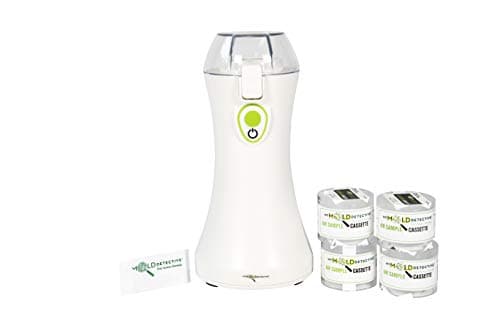
A multi-room air sampling kit that uses cassette-style collectors for more accurate spore counts than settling plates. Lab analysis is included in the purchase price, and results are delivered via email with a detailed breakdown of mold species and concentration levels.
Pros
- Tests up to 3 rooms in a single kit
- Lab analysis included in the price
- Uses cassette-style air sampling for professional-grade results
Cons
- Requires a box fan or pump for air sampling
- More complex setup than settling-plate kits
- Results take 3-5 business days
Best ERMI Kit: ImmunoLytics ERMI Test
If you're buying a home, fighting a landlord, filing an insurance claim, or dealing with unexplained health symptoms, this is the test. The EPA-developed ERMI methodology gives you a standardized score that compares your home's mold burden to a national database. Lab analysis is included. Results identify all 36 target species with DNA precision.
At $199, it's expensive for casual screening. But for decisions with financial or health consequences, no other consumer test comes close. A professional would charge $400–$800 for the same analysis.
ImmunoLytics ERMI Mold Test Kit
ImmunoLytics
$190–220
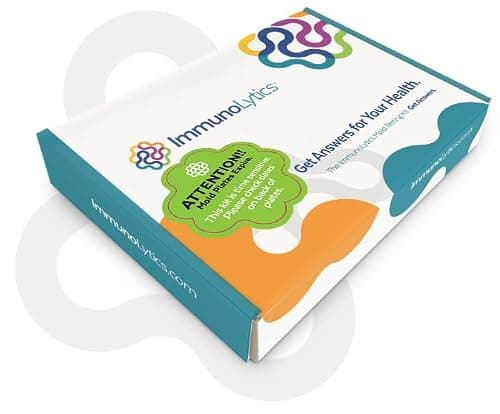
The most comprehensive home mold test available. Uses EPA-developed ERMI methodology with DNA-based MSQPCR analysis to quantify 36 mold species. Generates a standardized Relative Moldiness Index score that compares your home to a national database. Preferred by environmental consultants and real estate inspectors.
Pros
- ERMI (EPA Relative Moldiness Index) is the gold standard
- DNA-based analysis identifies 36 mold species
- Lab analysis included in price
Cons
- Most expensive home test kit
- Results take 7-10 business days
- Requires careful dust collection with included vacuum cassette
Best Budget Option: Mold Armor FG500
If you're on a tight budget and just need to identify a visible mold species (not measure air quality), the Mold Armor kit at $11 plus $40 lab fee gets the job done. It uses the settle plate method, so I wouldn't rely on it for "is there hidden mold?" questions — but for "what is this specific stuff growing on my wall?" it works fine when you place the plate directly next to the growth.
Mold Armor FG500 Do It Yourself Mold Test Kit
Mold Armor
$9–15
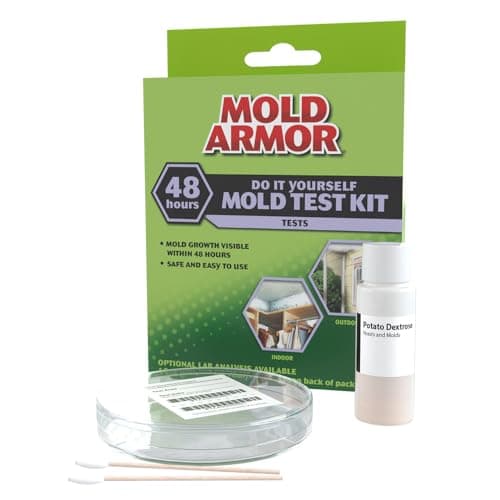
The most popular DIY mold test kit on Amazon. Includes a settling plate, swab, and pre-paid postage for AIHA-accredited lab analysis. The kit detects airborne mold spores and surface mold, identifying species like Aspergillus, Stachybotrys, and Penicillium.
Pros
- Very affordable entry-level test
- Includes petri dish, swab, and postage for lab analysis
- Results identify mold species
Cons
- Lab fee is separate (~$40)
- Takes 5-7 days for lab results
- Only tests one location per kit
Best for Quick Answer: Healthful Home 5-Minute Test
Uses immunoassay technology (like a pregnancy test for mold) to give a positive/negative result in 5 minutes. No lab fees, no waiting. The catch: it can't identify species or measure concentration. You get "yes, mold is present" or "no, it's not." Given that mold is present in most homes at baseline levels, a positive doesn't necessarily mean you have a problem. Best used on specific surfaces where you're trying to confirm whether a stain is mold or not.
Healthful Home 5-Minute Mold Test
Healthful Home
$25–35
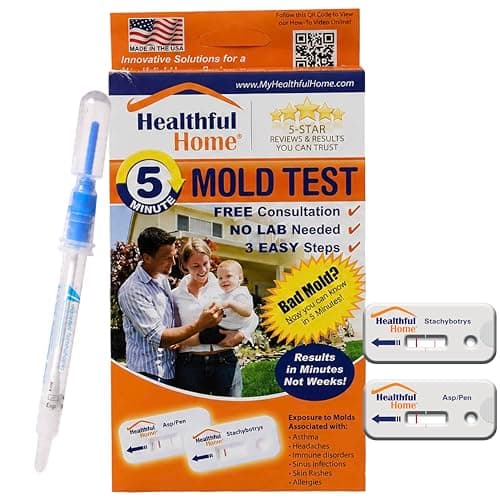
A rapid immunoassay-based mold test that delivers results in 5 minutes without lab fees. The kit detects common allergenic molds using antibody technology similar to a home pregnancy test. Ideal for quick screening, though it cannot identify specific mold species.
Pros
- Results in just 5 minutes
- No lab fees or waiting period
- Tests both surfaces and air
Cons
- Does not identify specific mold species
- Only indicates presence or absence of mold
- Higher cost than basic settling plates
Kits to Avoid
Any kit that relies solely on a petri dish (settle plate) without offering air cassette sampling or indoor-vs-outdoor comparison. Specifically:
- Pro-Lab MO109— Cheapest on the market at $10, but it's a single settle plate with no context for results. The $40 lab fee makes the total $50 for data that can't tell you if levels are elevated.
- Any kit that tells you "mold detected" without quantifying concentration or comparing to outdoor levels. That's like a thermometer that only says "temperature exists" — technically true, completely unhelpful.
Already Know You Have Mold?
If you can see visible mold, you don't need a test — you need a removal plan. Don't waste money testing what's already obvious.
Get the Removal Guide →How to Use a Mold Test Kit Correctly (Avoid Invalid Results)
Even good test kits produce bad data if used wrong. These mistakes invalidate your results:
Common Mistakes
- Testing only one location. You need minimum two samples: the suspect area AND a control (either outdoors or a room with no suspected issues). Without comparison, raw numbers are meaningless.
- Testing during low-humidity periods. Mold spore release peaks at high humidity. Testing on a dry winter day may undercount. Test during your highest-humidity period for worst-case data.
- Running HVAC during air sampling. For air cassette tests, turn off your heating/cooling system 1 hour before testing. HVAC disperses spores unevenly and can dilute concentrations near the source.
- Placing settle plates in drafty areas. A petri dish near an open window or air vent will capture outdoor spores and overestimate indoor levels.
- Not sealing samples properly.Contamination during transport to the lab ruins results. Follow the kit's sealing instructions exactly.
Where to Place Tests (Priority Order)
- Suspect area — wherever you smell mold, see water damage, or have symptoms
- Bathroom — highest humidity room in most homes
- Basement/crawl space — where moisture intrusion is most common
- Near HVAC intake — represents air quality circulated through the house
- Outdoor control — establishes your baseline for comparison
Understanding Your Mold Test Results
Lab reports can be confusing. Here's how to interpret the key numbers:
Air Sampling Results (Spore Counts)
- Indoor ≤ outdoor count: Normal. Your home has fewer mold spores than the surrounding air. No action needed.
- Indoor 1.5–3× outdoor: Slightly elevated. Indicates an indoor mold source but not necessarily dangerous. Investigate moisture issues.
- Indoor >3× outdoor: Significantly elevated. Active mold growth in the home. Locate and remediate the source.
- Species like Stachybotrys or Chaetomium detected: These are "water indicator" molds that only grow on chronically wet materials. Their presence at any concentration suggests ongoing water damage requiring investigation.
ERMI Score Interpretation
- Below 0: Low mold burden. Average or better than the national database.
- 0 to 5: Moderate. Within normal range but on the higher side.
- Above 5: High mold burden. Indicates significant mold exposure. Remediation recommended.
- Above 10: Very high. Professional assessment urgently recommended.
For detailed ERMI interpretation including species-by-species breakdown, see our ERMI mold test guide.
When to Skip the Test Kit and Call a Professional
Testing makes sense when you're uncertain. But in these situations, skip the kit and go straight to professional help:
- Visible mold larger than 10 sq ft— You already know you have mold. Don't waste $50 confirming what your eyes tell you. The EPA says this threshold requires professional remediation regardless of species.
- HVAC system contamination— DIY kits can't adequately test ductwork. You need a professional with a borescope and commercial air sampling equipment.
- Active health symptoms — If family members have respiratory issues, headaches, or unexplained allergic reactions that improve outside the home, you need professional-grade testing that will hold up with your doctor and insurance.
- Real estate transaction — While ERMI is the best consumer test, professional documentation from a certified inspector (CIH or CMI) carries more weight in negotiations and legal disputes.
- Insurance claims — DIY test results rarely satisfy insurance adjusters. You need a professional report with chain of custody documentation.
Professional mold inspection costs $300–$600 for a standard assessment, or $600–$1,200 for a comprehensive inspection with ERMI and air sampling at multiple locations. That sounds expensive until you realize a $50 DIY test that leads to the wrong conclusion (false negative OR unnecessary remediation) costs you far more in the long run.
Cost Breakdown: DIY Testing vs Professional Inspection
| Method | Cost | What You Get | Legally Defensible? |
|---|---|---|---|
| Settle plate + lab | $50 | Species list (no concentration) | No |
| Air cassette kit (3-room) | $45–$100 | Species + concentration + comparison | Limited |
| ERMI kit (DIY collection) | $200–$250 | 36 species + ERMI score + national comparison | Yes (lab-certified) |
| Professional inspection | $300–$600 | Visual + moisture + air sampling + report | Yes |
| CIH comprehensive assessment | $600–$1,200 | Everything above + ERMI + protocol + legal documentation | Yes (court-admissible) |
For detailed information on what professional testing involves and current pricing in your area, see our complete mold testing guide.
Frequently Asked Questions
Are home mold test kits accurate?
It depends entirely on the kit type. Air cassette kits with lab analysis produce reasonably accurate results — they use the same methodology as professional inspectors. Settle plate (petri dish) kits are unreliable because they detect mold that exists in every home without measuring whether levels are elevated. ERMI DNA tests are the most accurate consumer option available.
What is the most reliable mold test kit?
For accuracy, the ImmunoLytics ERMI kit ($199) using EPA-developed DNA analysis. For best value, My Mold Detective MMD103 ($45) with air cassette sampling and included lab analysis. Both measure actual concentrations rather than just detecting presence.
How much does a mold test kit cost?
Settle plates: $10–$15 kit + $40 lab fee = ~$50 total. Air cassettes: $40–$100 (lab often included). ERMI: $150–$300 (lab included). Rapid immunoassay: $25–$35 (no lab). Professional inspection: $300–$600.
Can you test for black mold at home?
Yes. Any kit with lab analysis can identify Stachybotrys chartarum(black mold) species. Air cassette kits and ERMI tests are best because Stachybotrys doesn't always become easily airborne — it's "sticky" and tends to stay on surfaces. If you suspect Stachybotrys specifically, a surface swab or ERMI dust sample may catch it when air testing doesn't.
Do mold test kits detect mold behind walls?
Air sampling kits can detect elevated spore counts that indicate hidden mold, but they can't pinpoint the location. ERMI tests are better at detecting hidden mold because they analyze settled dust (which accumulates mold evidence over time). For locating hidden mold specifically, see our guide to finding hidden mold by smell.
How long do mold test results take?
Rapid immunoassay: 5 minutes. Settle plates (self-read): 48 hours to grow, then visual identification. Lab analysis (air cassette or settle plate): 3–7 business days after the lab receives your sample. ERMI DNA analysis: 7–10 business days. Most labs email results with a PDF report.
Are mold test kits from Home Depot any good?
Most kits at Home Depot are settle plate style (Mold Armor, Pro-Lab) — the least reliable type. They work for identifying species on visible mold (place plate next to growth), but are not useful for detecting hidden mold or measuring whether levels are dangerous. The Mold Armor FG500 is acceptable for species identification only.
What should I do if my mold test is positive?
First, determine whether levels are actually elevated (compare indoor to outdoor). If indoor concentrations exceed outdoor by 3x or more, or if water-indicator species (Stachybotrys, Chaetomium) are detected at any level: locate the moisture source, remediate the mold following our removal guide, and fix the underlying water problem. For areas over 10 sq ft, hire a professional.
Is air testing or surface testing better?
Air testing is better for detecting hidden mold and measuring overall indoor air quality. Surface testing is better for identifying what specific species is growing on a visible patch. If you can't see mold but suspect it (musty smell, health symptoms), air testing is the right choice. If you can see it and want to know what it is, surface testing works.
How often should you test for mold?
Most homes don't need routine mold testing. Test when: (1) you smell musty odors without visible mold, (2) after water damage events, (3) when buying a home, (4) when health symptoms suggest mold exposure, or (5) to verify a professional remediation was successful. Annual testing only makes sense in high-risk environments (post-flood homes, chronic humidity issues, immunocompromised residents).
Smell Mold But Can't Find It?
If you smell a musty odor but can't see mold anywhere, it's likely growing behind walls, under floors, or in HVAC ducts.
Find Hidden Mold Sources →Frequently Asked Questions
Are home mold test kits accurate?
What is the most reliable mold test kit?
How much does a mold test kit cost?
Can you test for black mold at home?
Do mold test kits detect mold behind walls?
How long do mold test results take?
Are mold test kits from Home Depot any good?
What should I do if my mold test is positive?
Is air testing or surface testing better?
How often should you test for mold?
Related Articles
ERMI Mold Test: Cost, Accuracy & When You Actually Need One
Mold Testing Guide: Do You Need a Test & Which Type Is Best?
How to Test for Mold at Home: DIY Methods That Actually Work
What Does Mold Smell Like? How to Identify Mold by Smell
Best Mold Removal Products: What Works for Every Surface & Situation
How to Get Rid of Black Mold: DIY Removal Guide
Need Professional Mold Removal?
Get free, no-obligation quotes from licensed mold remediation specialists in your area.
Get Free Quotes