KILZ Mold & Mildew: Does It Actually Kill Mold, or Just Cover It?
Out of the Mold Editorial Team
Our guides are research-backed and cite EPA, CDC, and peer-reviewed sources. Product reviews are based on hands-on testing, not manufacturer claims. Read our editorial standards.
Affiliate Disclosure: Out of the Mold is reader-supported. As an Amazon Associate, we may earn a commission when you buy through links on this page — at no extra cost to you. Our picks are based on independent standards, manufacturer specifications, and published research, not commissions.
Key Takeaways
- KILZ Mold & Mildew is a mildew-resistant coating, not a mold killer — its claim protects the dried film, per KILZ's own product page.
- Painting over live mold seals in the problem; it bleeds back through because the moisture and food source are untouched.
- The order is fix moisture → remove/kill mold → dry → prime. KILZ earns its place only at the end.
- Zinsser Mold Killing Primer is EPA-registered to kill surface mold (IPBC); KILZ only resists new growth — different claims, cross-shopped constantly.
- Neither primer replaces removing soaked drywall, carpet, or insulation, which the EPA says often can't be cleaned.
KILZ Mold & Mildew is a primer that resists future mold and mildew growth on the coating — it does not kill the mold that's already on your wall, and painting over live mold seals the problem in instead of solving it. KILZ's own description is precise about this: the "EPA-registered active ingredient creates a mold and mildew-resistant film that protects the primer film from mold and mildew growth." That's protection for the paint, not remediation of the mold. Fix the moisture, remove or kill the existing mold, let it dry, then prime. In that order, KILZ is a genuinely useful last step. Skipped straight to, it's a cover-up that bleeds back through in a few weeks.
If you found this page you've probably already seen the mold, read that KILZ "handles mold & mildew," and had the very tempting thought: can I just prime over it and be done?It's the question sitting at the top of the search results, including a Reddit thread literally titled "What to do if mold was painted over with KILZ?" — which tells you how many people try the shortcut and then come looking for the fix. So let's answer it straight, because no paint manufacturer or hardware store will.
"Mold & mildew" on the can means resist, not kill
This is the whole misunderstanding, and it's baked into the product name. A mildewcide in a primer does one job: it stops mold and mildew from colonizing the dried paint film. It is not formulated, and not registered, to reach into existing growth on the drywall underneath and kill it. Read the KILZ Mold & Mildew product page and the claim is narrow and honest once you parse it: the coating "protects the primer film from mold and mildew growth." The film. Not the wall cavity, not the studs, not the colony you're trying to hide.
Here's what actually happens when you prime over live mold. The mold has two things it needs — moisture in the material and an organic food source (paper facing, wood, dust). A coat of primer removes neither. The colony keeps growing under the film, and because mold stains and mold itself are notorious bleed-through culprits, within weeks to a few months you get the tell-tale brown or black ghosting pushing back through your fresh paint. Now you have the original mold plus a painted surface you have to strip before you can remediate properly.
The sequence that actually works
The EPA is blunt about the part people skip. In its mold cleanup guidance, it warns that "if you clean up the mold, but don't fix the water problem, then, most likely, the mold problem will come back," and that "absorbent or porous materials, such as ceiling tiles and carpet, may have to be thrown away if they become moldy" because the mold "may be difficult or impossible to remove." A primer does not change any of that math. So the real order of operations is:
- Find and fix the moisture source.The leak, the condensation, the humidity over 60%. If you don't, nothing else holds. A dehumidifier keeping the room under 60% RH is the cheapest insurance here.
- Remove or kill the existing mold. Hard, non-porous surfaces can be cleaned and treated. Soaked drywall, insulation, and carpet usually come out and get replaced — see how to get rid of black mold for the step-by-step and the EPA's ~10-square-foot DIY cutoff.
- Let it dry completely. Primer applied over a damp surface traps moisture and fails. Give it days, not hours, and a meter reading if you have one.
- Now prime.This is where KILZ Mold & Mildew earns its place: a clean, remediated, dry surface, sealed with a stain-blocking, mildew-resistant coat so the repair stays clean.
Which KILZ (and where the spray fits)
Most of the search traffic is for the primer, but people also look for a "KILZ mold and mildew spray," so here's the honest split:
- KILZ Mold & Mildew Primer — the water-based interior/exterior primer-sealer the 6,600-a-month searches are after. KILZ rates it for high-humidity rooms specifically — kitchens, bathrooms, powder rooms, laundry rooms — with roughly 300–400 sq ft of coverage per gallon, dry-to-touch in about 30 minutes, and recoat or topcoat after an hour. Its job is the stain-blocking, mildew-resistant finish after remediation.
- A "mold spray"in this context is a different category — a cleaner/remover you use in the remove-the-mold step, not a coating. If that's what you actually need (and before priming, it usually is), skip the primer aisle for now and see mold killer sprays and mold removal sprays.
If you want the KILZ Mold & Mildew primer for the finishing step, the cleanest way to land on a fairly-priced listing (the direct buy-box on this one is frequently marked up by third-party sellers) is a search rather than a single listing:
Check current KILZ Mold & Mildew Primer listings on Amazon →
Applying it so the stain doesn't come back
Assuming the mold is gone and the surface is dry, priming is straightforward — but a few things separate a repair that stays clean from one that ghosts:
- Spot-prime the stain first, then the whole area. Old water stains and residual mold discoloration bleed hardest; an extra pass on those spots before your full coat stops them pushing through the topcoat later.
- Respect the recoat window.Dry-to-touch in ~30 minutes doesn't mean ready to topcoat; give it the full hour-plus before paint so the film cures and the mildewcide sets into it.
- Don't forget the edges people skip — the top of the baseboard, the corner behind the toilet, the strip above a shower surround. Those are exactly the damp micro-spots where mildew restarts on an unprotected gap.
- Topcoat with a mildew-resistant paint in wet rooms. The primer resists growth on itself; a matching mold-resistant paint over it gives you two layers doing the same job in a bathroom or basement.
KILZ vs Zinsser Mold Killing Primer — the claim difference that matters
These two get cross-shopped constantly, and the names make it worse, because their EPA claims are genuinely different:
- KILZ Mold & Mildew — the mildewcide protects the dried film from newgrowth. It's a resist claim.
- Zinsser Mold Killing Primer — this one is an EPA-registered fungicidal coating (active ingredient IPBC at 0.0063%, EPA Reg. No. 87469-1-69587) that the manufacturer says can "paint over and kill all existing mold, mildew, moss, fungi" on the surface it covers. It's a kill claim for surface growth, plus the dried film resists new growth.
Does that mean Zinsser lets you skip remediation? No — and this is the catch neither label shouts. A fungicidal primer handles light surface mold on a sound, non-porous surface. It does not dry out a wet wall, and it does not make moldy, crumbling drywall or insulation safe to leave in place (the EPA still says to remove those). For a buyer who wants the primer that does the most work on a lightly-affected hard surface, Zinsser's the more capable can:
Zinsser Mold Killing Primer (Quart, 3-Pack)
Zinsser
$55–65 (3 quarts)
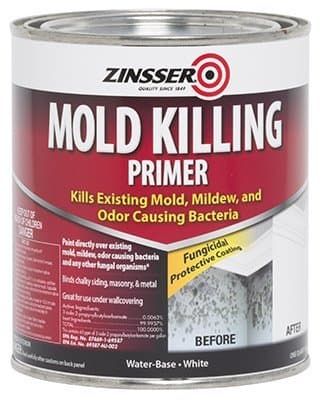
An EPA-registered fungicidal primer that kills existing mold, mildew, and odor-causing bacteria on contact. Creates a mold-resistant barrier on interior and exterior surfaces including drywall, wood, concrete, and masonry. Essential for mold remediation projects before applying topcoat paint.
Pros
- Kills existing mold on contact while priming
- EPA-registered fungicidal protective coating
- Bonds to all interior and exterior surfaces
Cons
- Strong odor during application, requires ventilation
- Water-based formula can raise grain on bare wood
- Must be topcoated with paint for lasting protection
But for anything past a light surface haze — the situations most people searching this are actually in — the honest answer is a dedicated kill step before any primer touches the wall. On hard surfaces, a stain remover like RMR-86 clears the discoloration and growth; for broader prevention, Concrobium crushes spores as it dries without bleach fumes. Read our RMR-86 breakdown for where that fits.
RMR-86 Instant Mold & Mildew Stain Remover Spray (1 Gallon)
RMR Brands
$25–35
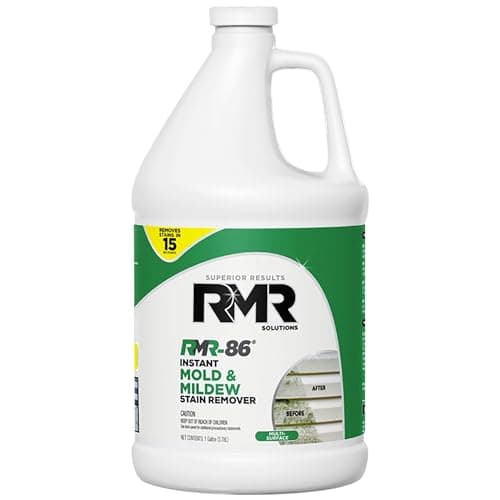
A fast-acting, commercial-strength mold stain remover that eliminates black mold stains on contact. The sodium hypochlorite formula penetrates porous surfaces to lift deep stains without scrubbing. Best used in well-ventilated areas with proper respiratory protection.
Pros
- Removes stains in as little as 15 seconds
- Works on wood, concrete, drywall, and tile
- No scrubbing required
Cons
- Strong bleach-based formula with harsh fumes
- Not safe for fabrics or colored surfaces
- Requires good ventilation and PPE
The trust move here is simple: KILZ Mold & Mildew is a good product doing exactly what it claims — protecting a finished surface. The mistake is asking it to do a job it was never built for. Remediate first, prime last, and it works. For the bigger picture on sequencing a whole job, the mold removal guide lays out every stage in order.
Frequently Asked Questions
Does KILZ Mold & Mildew kill black mold?
Can I just paint over mold with KILZ?
Is KILZ Mold & Mildew the same as Zinsser Mold Killing Primer?
KILZ Mold & Mildew primer or spray — which do I need?
Related Articles
Best Mold Removal Products: What Works for Every Surface & Situation
Mold-Resistant Paint: How It Works, When to Use It, and What It Can't Do
Mold Killer Spray: Which Type Works on Which Surface
How to Get Rid of Black Mold: DIY Removal Guide
RMR-86 Review: Does It Really Remove Mold Stains?
Concrobium Mold Control Review: What It Does (and What It Won't)
Dealing With Mold Right Now?
Our step-by-step mold removal guide walks you through testing your home, choosing the right products, and knowing when a job is too big for DIY.
Read the Removal Guide