Best Dehumidifiers for Mold Prevention & Removal (2026)
Out of the Mold Editorial Team
Our guides are research-backed and cite EPA, CDC, and peer-reviewed sources. Product reviews are based on hands-on testing, not manufacturer claims. Read our editorial standards.
Affiliate Disclosure: Out of the Mold is reader-supported. As an Amazon Associate, we may earn a commission when you buy through links on this page — at no extra cost to you. Our picks are based on independent standards, manufacturer specifications, and published research, not commissions.
Key Takeaways
- A dehumidifier prevents mold but does not kill it — mold grows above roughly 60% relative humidity, and holding the EPA-recommended 30-50% keeps spores dormant.
- The hOmeLabs 50-Pint (around $240) is the best overall pick for mold prevention; the Midea 50-Pint ($180-220) delivers the same core capability for less.
- Match the unit to the space: a pump model (Midea Cube) for basements without a floor drain, a low-temperature auto-defrost unit (AlorAir Sentinel HD55S) for crawl spaces, and mini thermoelectric units only for small rooms above about 59°F.
- Run the unit 24/7 during humid months with the humidistat at 45-50% and continuous drainage set up — bucket-emptying routines fail within weeks.
- Existing mold must be removed first with dedicated removal products; the dehumidifier's job is making sure it never comes back.
Yes, a dehumidifier helps with mold — but only as prevention, not removal. Mold needs sustained humidity above roughly 60% to grow, and a dehumidifier holding your home at the EPA-recommended 30–50% relative humidity takes that moisture away. It will not kill mold that's already growing — for that you need removal products and a fix for the underlying water source. For most homes, a 50-pint Energy Star unit like the hOmeLabs (around $240) is the right tool. Basements without a floor drain need a built-in pump (Midea Cube), and crawl spaces need a low-temperature commercial unit (AlorAir Sentinel HD55S).
Every mold problem is a moisture problem. You can scrub, spray, and fog all you want, but if the air in your basement sits at 70% relative humidity all summer, mold will come back — because you removed the symptom and left the cause.
That's where a dehumidifier earns its keep. It's the single most effective appliance for making your home inhospitable to mold, and it's the reason remediation professionals put moisture control — not chemicals — at the center of every job. But there's a lot of confusion about what a dehumidifier can and can't do, and picking the wrong unit for your space (a bathroom mini unit for a basement, or a portable compressor unit for a 45°F crawl space) means spending money without solving anything.
This guide covers the science of humidity and mold, how to choose the right capacity and type for your specific space, and our tested picks for every situation — basements, crawl spaces, bathrooms, and closets. If you're already dealing with active growth down there, start with our basement mold removal guide and add a dehumidifier once the surfaces are clean and dry.
Best Dehumidifiers for Mold at a Glance
These four powered units cover the vast majority of household mold situations. All four hold a target humidity automatically with a built-in humidistat — the feature that matters most for mold prevention.
| Product | Rating | Price | Best For | Link |
|---|---|---|---|---|
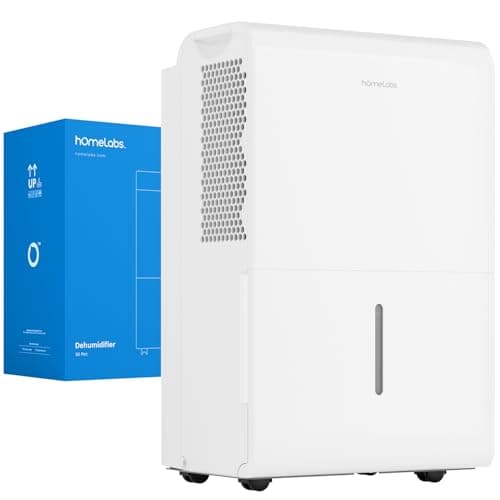 hOmeLabs 50-Pint Energy Star Dehumidifier hOmeLabs Best Overall | $220–260 | Whole-basement and large-room mold prevention at the best price-to-capacity ratio | View | |
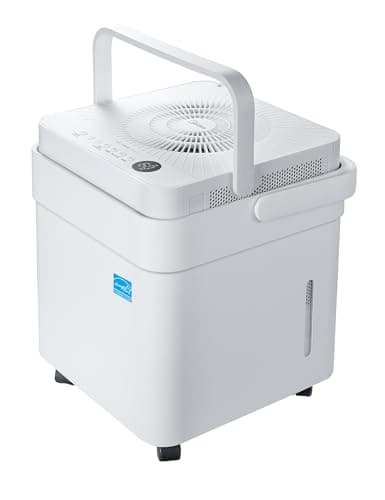 Midea Cube 50-Pint Smart Dehumidifier with Pump Midea Best for Basements Without a Drain | 4.4 | $270–320 | Basements without a floor drain, or anyone who wants remote humidity monitoring | View |
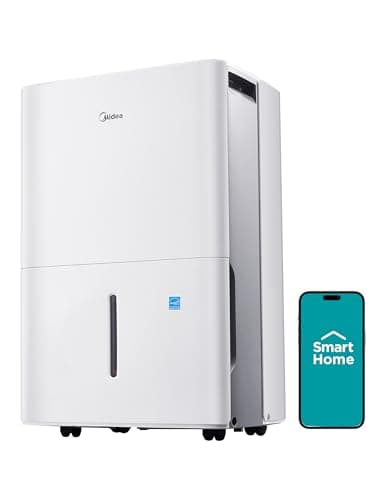 Midea 50-Pint Energy Star Dehumidifier Midea Best Value | 4.4 | $180–220 | Budget-conscious buyers who still need full 50-pint capacity | View |
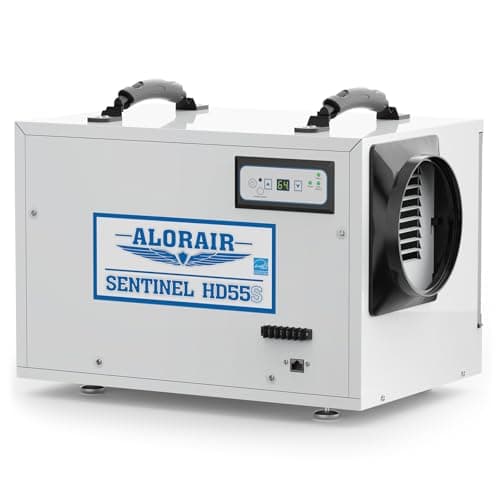 AlorAir Sentinel HD55S Crawl Space Dehumidifier AlorAir Best for Crawl Spaces | $450–550 | Crawl spaces and cold basements where consumer portables freeze up and fail | View |
For small spaces — bathrooms, closets, RVs — a full-size compressor unit is overkill. We cover the Pro Breeze mini dehumidifier and DampRid moisture absorbers in the full reviews below.
Does a Dehumidifier Actually Help With Mold?
Yes — a dehumidifier is one of the most effective tools for preventing mold growth. Here's the science in one paragraph: mold spores are present in virtually every home, floating in the air and settled in dust. They're harmless until they land on a surface with enough moisture to germinate. Sustained relative humidity above about 60% provides that moisture — even without a leak, condensation and damp air alone are enough. Drop the humidity below 50% and spores stay dormant. No moisture, no mold.
The EPA recommends keeping indoor relative humidity between 30% and 50% specifically to prevent mold growth. A dehumidifier with a built-in humidistat is the only practical way to hold that range in a damp basement or a humid climate — air conditioning helps, but it only dehumidifies as a side effect of cooling and can't hold a target humidity on a mild, muggy day.
This is also why a persistent musty smell in your house is worth taking seriously even when you can't see mold: that odor is produced by actively growing mold and mildew, and it almost always traces back to a humidity problem a dehumidifier could have prevented.
Will a Dehumidifier Kill Existing Mold?
No. This is the most important thing to understand before you buy. Lowering humidity stops mold from growing and spreading, but the existing colony doesn't die — it goes dormant. Dormant mold still releases spores and allergens, still stains the surface it's on, and reactivates the moment moisture returns.
If you already have visible mold, the sequence is: fix the water source, physically remove or treat the growth with a proper mold removal product, then run a dehumidifier to keep it from coming back. For black mold specifically, follow our step-by-step black mold removal guide — the removal process matters more than the product you choose.
Think of it this way: the dehumidifier is the reason mold doesn't come back. It's never the reason mold goes away.
What About a Dehumidifier for Black Mold?
Searchers often ask whether black mold needs a special dehumidifier. It doesn't — but the question reveals something useful. Stachybotrys chartarum(the species usually meant by "black mold") needs chronically saturated material to grow, not just humid air. If you have it, you have an active water problem — a leak, seepage, or flooding — that no dehumidifier will fix. Air humidity control still matters for preventing the more common household species (Aspergillus, Penicillium, Cladosporium) that colonize damp-but-not-wet surfaces. Our guide to mold types covers which species show up under which moisture conditions.
How to Choose a Dehumidifier for Mold
Four factors determine whether a dehumidifier will actually control humidity in your space or just hum in the corner: capacity, temperature range, drainage, and running cost. Get these right and almost any reputable brand will serve you well.
Capacity: What Pint Ratings Actually Mean
Dehumidifiers are rated by how many pints of water they remove per day. One thing to know when comparing: the U.S. Department of Energy changed the test standard in 2019 to cooler, more realistic conditions. A unit rated 50 pints under the current standard removes roughly as much water as one labeled 70 pints under the old test — so if a review or an older listing brags about "70 pints," it's probably the same class of machine as today's 50-pint units, not a bigger one.
Rough sizing guidance for mold prevention:
- 50-pint units — basements, whole floors, and large rooms. This is the default choice for mold control; the major brands rate their 50-pint units for spaces up to 4,500 sq ft.
- 20–35-pint units — single bedrooms or offices with mild dampness. The price savings over a 50-pint unit are small enough that most buyers should size up.
- Mini/thermoelectric units — enclosed spaces under roughly 200 sq ft: bathrooms, closets, boats, RVs.
- Commercial crawl space units — crawl spaces and unheated basements, where temperature (below) matters more than raw capacity.
When in doubt, buy bigger. An oversized dehumidifier reaches the target humidity faster and cycles off; an undersized one runs constantly and never gets there — which means mold keeps growing while you pay the electric bill.
Temperature Range: The Spec That Kills Basement Units
This is the most commonly ignored spec, and it's the reason so many crawl space dehumidifiers fail. Standard compressor dehumidifiers work by condensing moisture on cold coils — and that process degrades as the room gets colder. Below about 65°F, capacity drops noticeably. Below about 41°F, the coils can frost over and the unit stops removing water entirely, cycling into defrost mode over and over.
- Heated basements (65°F+): any standard compressor unit works fine.
- Cool basements (50–65°F): a compressor unit still works but removes less water than its rating — another reason to size up to 50 pints.
- Crawl spaces and unheated spaces (under 50°F): you need a purpose-built unit with hot-gas auto defrost and a low-profile housing that fits under the floor joists. The AlorAir Sentinel HD55S operates down to 36°F for exactly this reason.
- Thermoelectric minis: these lose effectiveness below about 59°F and only suit small spaces — never use one in a basement or crawl space.
Drainage: Bucket vs. Continuous Drain vs. Pump
A 50-pint unit in a damp basement fills its collection bucket in well under a day. If you don't deal with drainage, you'll either empty a bucket daily forever or — more likely — the unit will sit full and shut off while humidity climbs back up. Three options:
- Bucket only: fine for occasional use in living spaces. Wrong answer for 24/7 mold prevention.
- Continuous gravity drain: nearly every full-size unit has a hose port. Run a hose to a floor drain or sump pit and the unit never needs emptying. This is the setup to aim for — it costs nothing extra.
- Built-in pump:if your basement has no floor drain (or the drain sits higher than the unit), a pump model like the Midea Cube pushes water up and out to a utility sink or window. Worth the extra cost — it's the difference between a set-and-forget system and a daily chore you'll abandon.
Features That Matter (and Ones That Don't)
- Built-in humidistat — essential. Set 45–50% and the unit cycles automatically to hold it. Every unit we recommend has one.
- Energy Star certification — essential for 24/7 use. Mold prevention means running the unit around the clock through humid months. An efficient compressor meaningfully cuts what that costs you per year, and certified units are held to efficiency standards per pint removed.
- Auto-restart — important for unattended spaces. After a power outage, the unit resumes at its previous setting. In a crawl space or vacation home, a unit that stays off after a blip means weeks of unchecked humidity.
- Wi-Fi/app control — situational. Genuinely useful for rental properties and second homes where you want humidity alerts. Skippable for the basement you walk past daily.
- Ionizers and "air purifying" modes — skippable. Marketing features. A dehumidifier's job is water removal; buy a separate HEPA air purifier if you need to clear airborne spores too.
Best Dehumidifiers for Mold: Full Reviews (2026)
Best Overall: hOmeLabs 50-Pint Energy Star Dehumidifier
The hOmeLabs 50-pint is the default recommendation for a reason: it does everything mold prevention requires — accurate humidistat, continuous-drain port, Energy Star efficiency, coverage rated to 4,500 sq ft — at the best price-to-capacity ratio in its class, typically around $240. Set it to 45–50%, connect a garden hose to the rear drain port, and it holds a basement below the mold threshold indefinitely without attention.
Its turbo mode is genuinely useful after water events — a burst washing machine hose, storm seepage — when you need to pull moisture fast before mold gets its 24–48 hour head start. The main limitation is the lack of a pump: without a floor drain nearby, you're emptying the 1.6-gallon bucket every 6–8 hours in a very damp space, which nobody sustains. If that's your basement, spend up on the Midea Cube below.
hOmeLabs 50-Pint Energy Star Dehumidifier
hOmeLabs
$220–260
The best-selling 50-pint dehumidifier on Amazon and our top overall pick for mold prevention. Set your target humidity (aim for 45-50%) and the built-in humidistat cycles the compressor to hold it. A rear hose port allows continuous gravity draining into a floor drain, and turbo mode speeds up moisture removal after water events. Energy Star certified to keep 24/7 running costs reasonable.
Pros
- 50-pint capacity handles basements and large rooms up to 4,500 sq ft
- Built-in humidistat holds your target humidity automatically
- Continuous-drain hose port for set-and-forget operation
Cons
- No built-in pump — gravity drain or bucket emptying only
- 1.6-gallon bucket fills every 6-8 hours in very damp spaces
- Fan is audible on turbo mode
Best for Basements Without a Drain: Midea Cube 50-Pint with Pump
The Midea Cube solves the two problems that make people give up on dehumidifiers: emptying the bucket and forgetting to check the unit. Its built-in pump pushes condensate up and out — to a utility sink, out a window, wherever — so a below-grade basement with no floor drain can still run set-and-forget. And its odd-looking cube-in-a-cube design isn't a gimmick: the housing lifts open to more than double the water capacity of a conventional bucket, to 4.2 gallons, for times you do run it bucket-style.
The Wi-Fi app earns its keep in vacation homes and rentals. A humidity alert on your phone when the basement hits 65% is the difference between fixing a failed sump pump this week and discovering a moldy basement in three months. At $270–320 it costs more than pump-free units — worth it precisely when a gravity drain isn't an option.
Midea Cube 50-Pint Smart Dehumidifier with Pump
Midea
$270–320
A 50-pint smart dehumidifier whose cube-in-cube design lifts open to more than double the water capacity of conventional buckets. The built-in pump can push condensate up to a sink or window — essential for below-grade basements with no drain. App control lets you watch humidity levels remotely, useful for vacation homes and rental properties where unnoticed humidity spikes turn into mold problems.
Pros
- Built-in pump pushes water up and out — no floor drain needed
- Unique nesting design extends bucket capacity to 4.2 gallons
- Wi-Fi app control with humidity alerts when you're away
Cons
- Costs more than pump-free 50-pint units
- Taller than a standard dehumidifier when extended
- Pump hose length limits where water can be sent
Best Value: Midea 50-Pint Energy Star Dehumidifier
If your basement has a floor drain and you don't care about app control, Midea's standard 50-pint unit delivers the same core mold-prevention machinery as units costing $80 more: auto-humidistat, continuous-drain port, auto-restart after outages, Energy Star certification, and the same 4,500 sq ft coverage class. At $180–220 it's consistently the lowest price per pint of capacity you can buy from a major brand.
What you give up versus the Cube is the pump and the oversized bucket; what you give up versus the hOmeLabs is mostly brand reputation and a slightly larger bucket. For a straightforward "hose to the floor drain, set 45%, walk away" basement setup — which is the best dehumidifier setup for basement mold in most homes — this is the smart-money pick.
Midea 50-Pint Energy Star Dehumidifier
Midea
$180–220
Midea's standard 50-pint unit delivers the same core moisture removal as premium models — auto-humidistat, auto-restart after power outages, and a continuous-drain port — at one of the lowest prices in the 50-pint class. If your basement has a floor drain and you don't need smart features, this is the value pick for holding humidity below 50%.
Pros
- Lowest price per pint of capacity in its class
- Energy Star certified for around-the-clock operation
- Covers up to 4,500 sq ft with continuous-drain option
Cons
- No pump — needs a floor drain or regular bucket emptying
- Basic controls without app connectivity
- Bucket is smaller than the Cube design
Best for Bathrooms & Small Spaces: Pro Breeze Mini
A windowless bathroom, a damp closet, an RV in storage — these spaces breed mildew, but a 40-pound compressor unit is absurd overkill for them. The Pro Breeze mini uses thermoelectric (Peltier) cooling instead of a compressor: nearly silent, small enough for a countertop, and cheap to run. In an enclosed space up to roughly 215 sq ft, it removes enough moisture to keep surfaces below the humidity mold needs.
Know its limits. Thermoelectric units lose effectiveness below about 59°F, and this will do approximately nothing for a basement — the 17-ounce tank tells you the scale it's built for. But as a $40 fix for the persistent condensation that causes mold around bathroom ceilings and window frames, it does one small job well. (If mold is already established on the walls, deal with the growth first — see our guide to treating mold on walls — then use the dehumidifier to keep it gone.)
Pro Breeze Electric Mini Dehumidifier
Pro Breeze
$35–50
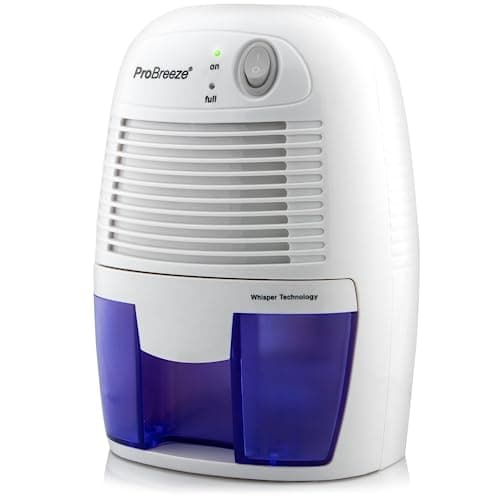
A compact thermoelectric (Peltier) dehumidifier for small enclosed spaces prone to condensation and musty smells. It won't dry out a basement, but for a windowless bathroom, closet, or boat cabin it quietly pulls enough moisture to keep surfaces below the humidity mold needs. No compressor means near-silent operation and low power draw.
Pros
- Whisper-quiet thermoelectric design with no compressor
- Small footprint fits bathrooms, closets, and RVs
- Auto shut-off with indicator when the tank is full
Cons
- Only effective in small spaces up to ~215 sq ft
- Thermoelectric units lose effectiveness below about 59°F
- 17-ounce tank needs frequent emptying in damp rooms
Best for Crawl Spaces: AlorAir Sentinel HD55S
Crawl spaces are where consumer dehumidifiers go to die: cold, cramped, and chronically damp. A portable unit down there frosts over in winter, and its plastic housing and standard coils corrode in the constant damp. The Sentinel HD55S is engineered for exactly these conditions — hot-gas auto defrost keeps it removing water down to 36°F, epoxy-coated coils resist corrosion, and the low-profile housing fits under floor joists where an upright unit can't go.
Capacity is a different class too: up to 120 pints per day at saturation, with Energy Star certification and a 5-year warranty (portables typically carry one year). It's ductable for sealed crawl space installs, and it drains by gravity on this model — plan the placement so the hose can run downhill to a drain or sump, or step up to the pump version. At $450–550 it's a real investment, but it's the standard choice after crawl space encapsulation, and far cheaper than the mold remediation an uncontrolled crawl space eventually requires. For the full breakdown — sizing by sealed-vs-vented status, the pump-vs-gravity-drain decision, and why a portable dies down there — see our crawl space dehumidifier guide and the crawl space vapor barrier that lets a smaller unit win.
AlorAir Sentinel HD55S Crawl Space Dehumidifier
AlorAir
$450–550
A commercial-grade crawl space dehumidifier engineered for the low temperatures and horizontal clearances portable units can't handle. Hot-gas auto defrost keeps it running down to 36°F, and its epoxy-coated coils resist the corrosion that kills consumer units in damp crawl spaces. The standard choice for crawl space moisture control after encapsulation.
Pros
- Purpose-built for crawl spaces — operates down to 36°F with auto defrost
- 120 pints per day saturation capacity, Energy Star certified
- 5-year warranty and ductable design for sealed installs
Cons
- Significant investment compared to portable units
- Gravity drain only on this model — pump version costs more
- Requires proper crawl space placement and clearance
Best for Closets: DampRid Hanging Moisture Absorbers
Not every damp space has an outlet. DampRid's hanging bags use calcium chloride crystals to passively pull moisture out of enclosed air — no power, no noise, no maintenance beyond replacing each bag when its crystals dissolve (roughly 45–60 days). Inside a closet, wardrobe, or stored car, that's enough to stop mildew on clothes, leather, and linens.
Be clear about what these are: a spot treatment for trapped air in small enclosed volumes. They cannot meaningfully lower the humidity of a room, let alone a basement — if you're hanging DampRid bags around an open room, you need a powered unit instead. As a $15 companion to a whole-home strategy, though, they cover the spaces a plug-in unit can't reach.
DampRid Hanging Moisture Absorber (3-Pack)
DampRid
$12–18
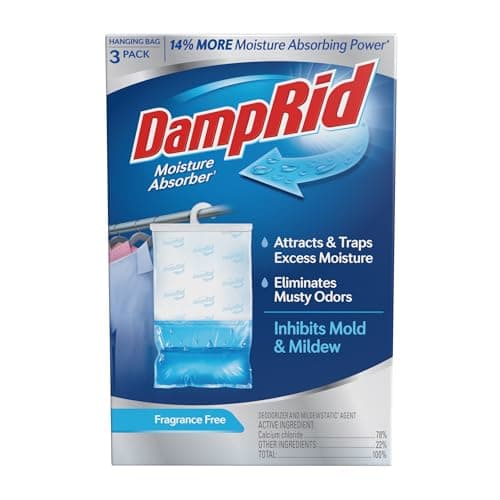
Passive calcium-chloride moisture absorbers that hang from a closet rod and pull humidity out of enclosed spaces without power. They won't fix a damp basement, but inside a closet, wardrobe, or stored vehicle they keep trapped air dry enough to stop mildew on clothes, leather, and linens. Each bag lasts roughly 45-60 days before the crystals fully dissolve.
Pros
- No electricity needed — works anywhere you can hang it
- Calcium chloride crystals absorb moisture for up to 60 days each
- Fragrance-free version won't add perfume to enclosed spaces
Cons
- Cannot meaningfully lower whole-room humidity
- Bags must be replaced once the crystals dissolve
- Collected brine must be handled carefully when disposing
Not Sure If You Already Have Mold?
If you smell mustiness or your humidity has been high for months, test before assuming prevention is enough. A dehumidifier won't fix mold that's already growing behind walls.
See Which Mold Tests Actually Work →How to Use a Dehumidifier for Mold Prevention
Buying the right unit is half the job. A dehumidifier prevents mold only if it's set up to actually hold your space below 50% relative humidity, around the clock, through your humid season. Here's the setup that works:
- Set the humidistat to 45–50%.This lands you safely inside the EPA's 30–50% recommendation with margin below the ~60% mold threshold. Going lower (30–40%) wastes electricity and can over-dry wood and skin in winter; going above 50% leaves no buffer for daily humidity swings.
- Place it centrally, away from walls.Leave at least a foot of clearance around the intake and exhaust so air circulates. In a basement, position it near the dampest zone (usually the exterior wall or slab area where you've seen condensation) but not jammed into a corner.
- Close the space.A dehumidifier can't dry a basement with open windows or a crawl space with open vents — it will run forever trying to dry the outdoors. Shut windows and doors in the treated area.
- Set up continuous drainage on day one. Hose to a floor drain, or a pump model if you have no drain. Bucket-emptying routines fail within weeks, and every hour the unit sits full and idle, humidity climbs.
- Run it 24/7 during humid months. The humidistat means it only actually runs when needed — holding a dry basement at 45% costs far less than the constant runtime you might fear, especially with an Energy Star unit.
- Verify with a cheap hygrometer.Put a $10–15 digital hygrometer at the far end of the space from the unit. If the far corner reads 60% while the unit's display says 48%, you have an airflow problem (or an undersized unit).
Maintenance: Don't Let the Dehumidifier Grow Mold
The irony of a neglected dehumidifier is that it becomes a mold source — a machine that concentrates water in a dark tank is prime real estate. Rinse the bucket with soap or diluted vinegar every couple of weeks if you use bucket mode, clean the air filter monthly (a clogged filter chokes airflow and capacity), and check drain hoses each season for slime buildup. If you see black or pink film in the tank, clean it before running the unit again — otherwise you're circulating air over a mold colony.
Seasonal Strategy
Humidity is seasonal, and your dehumidifier use should be too. Spring and summer are the critical window in most of the U.S. — warm, moist air infiltrates cool basements and condenses, which is why basements smell mustiest in July. Start the unit when outdoor dew points climb in late spring, not when you first notice a smell. In winter, most homes dry out naturally and the unit can rest — except crawl spaces and coastal climates, where monitoring should continue year-round.
Dehumidifier vs. Air Purifier for Mold
These two appliances get cross-shopped constantly, and they do completely different jobs:
- A dehumidifier attacks the cause. It removes the moisture mold needs to grow. It does nothing about spores already floating in your air.
- An air purifier attacks a symptom. A HEPA mold air purifier captures airborne mold spores, which genuinely helps allergy sufferers — but it does nothing about humidity, so mold keeps growing and releasing new spores faster than the purifier pulls them out.
If you can only buy one for a mold-prone home, buy the dehumidifier — controlling moisture prevents the problem rather than filtering its output. The strongest case for adding a HEPA purifier is during and after active remediation, when disturbed mold releases spore clouds, or for sensitive individuals in the bedrooms. Just don't let a purifier's "removes mold spores" marketing convince you it prevents mold. It doesn't.
When a Dehumidifier Isn't Enough
A dehumidifier solves humidity-driven mold. It does not solve water-driven mold. Call in stronger measures when:
- You have active water intrusion. Foundation seepage, roof leaks, plumbing drips — no amount of air drying out-runs liquid water feeding a wall cavity. Fix the water first.
- Visible mold covers more than about 10 sq ft. The EPA uses this threshold as the point to bring in professional remediation. Our mold removal cost guide breaks down what that typically runs and what drives the price.
- Mold keeps returning in the same spot at normal humidity. That pattern points to hidden moisture — a slow leak inside the wall, a cold spot condensing water — not ambient humidity.
- An entire room or basement has surface contamination. After you've fixed moisture and removed what you can reach, a mold fogger can treat the diffuse spore load on every surface at once — then the dehumidifier keeps the treated space dry.
The winning pattern in every one of these cases is the same: eliminate the water source, remove the existing growth, then run the dehumidifier permanently so it never happens again. Skip any of the three steps and the problem cycles back.
Already Dealing With Visible Mold?
A dehumidifier will stop the next outbreak — but the mold you can see now needs to be removed. Start with products proven to work.
See the Best Mold Removal Products →Frequently Asked Questions
Will a dehumidifier help with mold?
Will a dehumidifier kill existing mold?
What humidity level prevents mold growth?
How long should you run a dehumidifier to prevent mold?
What size dehumidifier do you need for basement mold?
Related Articles
Musty Smell in House? Here's How to Find & Fix the Source
Mold Removal Products: A Complete Guide to What Works and Why
Best Mold Fogger & Mold Bomb: Machines, Solutions & Safety Guide (2026)
How to Test for Mold at Home: DIY Methods That Actually Work
Mold on Walls: How to Remove It (and When to Replace the Wall)
How to Get Rid of Black Mold: DIY Removal Guide
Dealing With Mold Right Now?
Our step-by-step mold removal guide walks you through testing your home, choosing the right products, and knowing when a job is too big for DIY.
Read the Removal Guide