How to Get Rid of Mold in Your Basement (2026 Guide)
Out of the Mold Editorial Team
Our guides are research-backed and cite EPA, CDC, and peer-reviewed sources. Product reviews are based on hands-on testing, not manufacturer claims. Read our editorial standards.
Affiliate Disclosure: Out of the Mold is reader-supported. As an Amazon Associate, we may earn a commission when you buy through links on this page — at no extra cost to you. Our picks are based on independent standards, manufacturer specifications, and published research, not commissions.
Key Takeaways
- Fix the moisture first — cleaning mold before drying the basement is the number-one reason it returns. Remove the growth, remove the water, keep the air dry.
- DIY areas under ~10 sq ft; the EPA says larger jobs, HVAC mold, or growth from sewage/flood water need a professional.
- Porous materials the mold has penetrated (drywall, carpet, insulation, ceiling tile) get cut out and discarded, not cleaned — only non-porous surfaces like concrete and block clean up.
- 2026 costs: $500-$1,500 for a small area, $1,500-$9,000 for a whole basement (avg ~$3,500-$4,500), plus 30-50% for reconstruction.
- Prevent regrowth by holding humidity at 30-50% with a basement dehumidifier; add a HEPA air purifier if anyone has allergy or asthma symptoms.
To get rid of basement mold: put on an N95 and gloves, scrub non-porous surfaces (concrete, block, sealed wood) with a dedicated mold cleaner, and — this is the part people skip — fix the moisture that put it there. You can DIY an area under about 10 square feet safely; the EPA says larger jobs, mold in your HVAC, or growth from sewage/flood water need a professional. Porous materials the mold has penetrated — drywall, carpet, ceiling tile, insulation — get cut out and thrown away, not cleaned. Then run a basement dehumidifierat 45–50% humidity so it can't come back. Professional basement remediation runs $500–$1,500 for a small area and $1,500–$9,000 for a whole basement in 2026.
Basements grow mold more than any other part of a house, and it's not bad luck — it's physics. They're below grade, so moisture wicks through the foundation. They're the coldest space in the house, so warm household air condenses on the walls and floor. And they're poorly ventilated, so that damp air just sits. Give mold a damp surface and 24–48 hours and it grows. The good news: because basement surfaces are mostly hard and non-porous, a lot of basement mold is genuinely DIY-able — as long as you deal with the water, not just the stain.
First: Is Your Basement Mold Dangerous?
Before you scrub anything, size up the situation — it decides whether this is a Saturday project or a phone call. Three questions:
1. How big is it?Under ~10 sq ft (a patch smaller than a 3'×3' square): DIY is fine. Larger, or spread across several surfaces: get a pro. This is the EPA's dividing line.
2. What caused the water?Condensation or a small leak you can fix: DIY. Sewage backup, flood water, or a chronic groundwater problem: pro — that's Category 3 "black water" and it's a health hazard beyond the mold.
3. Who's in the house?Anyone with asthma, a mold allergy, or a compromised immune system shouldn't be the one doing the removal, and should stay out of the basement during the work.
On the danger question itself: most basement mold is common household species — Cladosporium, Penicillium, Aspergillus— that cause allergy-type symptoms (congestion, itchy eyes, coughing) rather than acute poisoning. The "toxic black mold" everyone worries about, Stachybotrys chartarum, needs chronically soakedmaterial to grow — so if you have it, you have a serious ongoing water problem, not just a humidity one. Not sure what you're looking at? Our guides on black mold and mold types by color help you identify it, and a home mold test kit confirms the species if it matters (a home sale, an insurance claim, unexplained symptoms).
What You'll Need
- An N95 respirator (not a cloth or surgical mask) — scrubbing mold sends spores airborne, and a basement is a confined space.
- Gloves and eye protection — long rubber gloves and goggles that seal, not open-sided safety glasses. (See our mold PPE guide for the full basement-grade kit.)
- A dedicated mold cleaner — a product built to kill mold and lift the stain. Skip bleach on porous surfaces (more below).
- Stiff scrub brushes, rags, a HEPA vacuum if you have one, and heavy-duty trash bags for anything porous you remove.
- A moisture meter — the tool that tells you whether the wall is actually drying out or just looks dry on the surface.
3M 8511 N95 Particulate Respirator
3M
$20–30
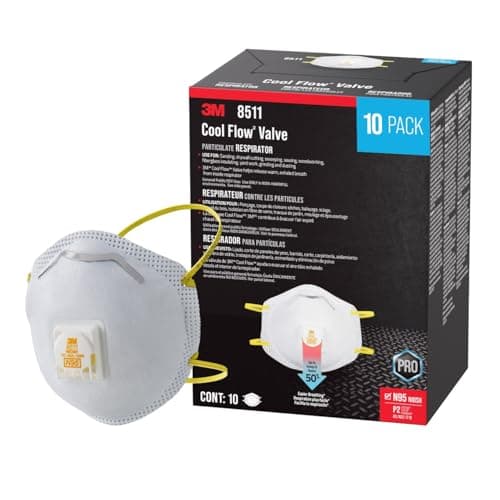
A NIOSH-approved N95 particulate respirator with Cool Flow exhalation valve for comfortable breathing during mold remediation. Filters at least 95% of airborne particles including mold spores. The adjustable M-noseclip and dual-strap design provide a secure seal. OSHA-recommended for mold work.
Pros
- NIOSH-approved N95 filtration
- Cool Flow valve reduces heat buildup
- Adjustable nose clip for secure fit
Cons
- Disposable, not reusable long-term
- Does not protect against chemical fumes or VOCs
- May not fit all face shapes comfortably
DIY Basement Mold Removal, Step by Step
Step 1: Stop the water first
I'm putting this first on purpose, because cleaning mold before fixing the moisture is the number-one reason it comes back in a month. Find the source: a foundation crack, a leaking pipe, condensation on cold walls, poor exterior grading dumping rain against the foundation, a failing sump pump. If it's condensation or high humidity, a dehumidifieris the fix. If it's liquid water intruding, that has to be sealed or drained before removal is worth doing. No exceptions — dry the space first.
Step 2: Contain and protect
Close the basement off from the rest of the house — shut doors, and if you can, crack a window for ventilation or set a fan blowing outa window (not toward the rest of the house). Gear up: N95, gloves, goggles. Lay down plastic sheeting under the work area to catch debris.
Step 3: Remove porous materials you can't save
This is the hard call. Mold sends root-like hyphae into porous materials, so you can't truly clean it out of them — you throw them away:
- Drywall & ceiling tile: if mold has penetrated, cut it out 12+ inches past the visible edge and replace.
- Carpet & padding: moldy basement carpet is almost never worth saving — bag it and remove it.
- Insulation: moldy fiberglass or foam gets removed, not cleaned.
- Cardboard boxes & soft stored items:assume they're lost. Switch to plastic bins going forward.
Double-bag everything porous, seal the bags, and carry them straight outside — don't haul open moldy material up through the house.
Step 4: Clean the hard surfaces
Concrete walls and floors, cinder block, sealed joists, and metal are non-porous (or close enough) and clean up well. Work in sections: apply a dedicated mold cleaner, let it dwell the time the label specifies, scrub, and wipe. A product like Concrobium Mold Control is well-suited to basements because it keeps working as a moisture-resistant film after it dries, and it's low-odor for a confined space. For stain removal on top of killing, a mold killer spray or the full mold removal product lineup covers the options by surface.
Concrobium Mold Control
Concrobium
$10–15
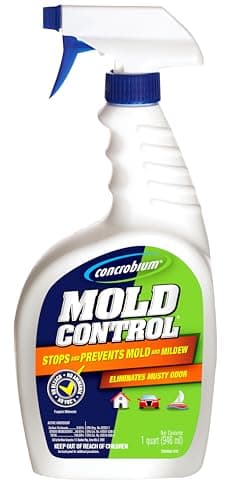
A patented, EPA-registered mold control solution that kills mold without bleach, ammonia, or VOCs. The tri-salt polymer formula crushes mold spores as it dries and leaves an invisible antimicrobial barrier to prevent regrowth. Safe for indoor use on virtually any surface.
Pros
- Non-toxic, no bleach or ammonia
- Kills mold and prevents regrowth
- Safe for use around children and pets
Cons
- Does not remove existing mold stains
- Takes longer to work than bleach-based products
- May require multiple applications for severe infestations
Why not bleach?Bleach is mostly water, and on porous masonry it soaks in, leaving the mold's roots behind while the chlorine evaporates off the surface. It can lighten a stain without killing the colony. On non-porous surfaces it works, but a purpose-made mold product with a surfactant does the job with less fumes in a closed basement. We break down the evidence in does bleach actually kill mold.
Step 5: Dry it, then verify it's dry
After cleaning, get the surfaces fully dry — fans, and a dehumidifier running. Then confirm it with a moisture meterrather than trusting your eyes: masonry can read dry on the surface while it's still wet a half-inch in, and that hidden moisture is exactly what restarts the mold.
Klein Tools ET140 Pinless Moisture Meter
Klein Tools
$45–60
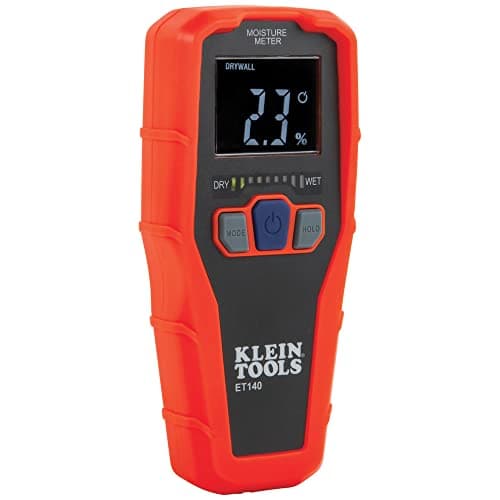
A professional-grade pinless moisture meter that detects hidden moisture in drywall, wood, and masonry without leaving holes. Uses electromagnetic sensor technology to measure moisture content up to 3/4 inch below the surface. Essential for identifying moisture problems before mold develops.
Pros
- Non-invasive pinless technology, no holes in walls
- Detects moisture up to 3/4 inch deep
- Visual and audible moisture alerts
Cons
- Less precise than pin-type meters on exact moisture percentage
- Battery not included
- Can give false readings on metallic or foil-backed surfaces
Basement Mold Remediation Cost: DIY vs. Professional (2026)
DIY, you're looking at $50–$200in supplies — cleaner, PPE, bags, maybe a moisture meter. The bigger number is professional remediation, and here's what it actually runs in 2026 based on current contractor pricing:
| Scope | Typical 2026 Cost | Notes |
|---|---|---|
| Small surface area (<10 sq ft) | $500–$1,500 | Most contractors have a $500–$1,500 minimum job charge |
| Whole basement (typical) | $1,500–$9,000 | National average lands around $3,500–$4,500 |
| Per square foot | $10–$25/sq ft | Small jobs run above this rate; large jobs below |
| Severe / multi-room / HVAC involved | $10,000–$30,000+ | Includes containment and partial demolition |
Two costs people forget to budget for: reconstruction (new drywall, flooring, paint, trim) can add 30–50% on top of the remediation bill, and the moisture fix itself — waterproofing, a sump pump, exterior drainage — is separate again. Get an itemized estimate for a specific breakdown, or run the numbers for your situation with our mold removal cost guide and inspection cost breakdown before you call anyone. On insurance: standard homeowners policies usually cover mold only when it results from a "sudden and accidental" covered event (a burst pipe), not from long-term seepage or neglected humidity — read your policy's mold sublimit before you assume you're covered.
How to Keep Basement Mold From Coming Back
Removal is the easy part. Keeping it gone is where you win or lose, and it comes down to one number: relative humidity. Hold your basement in the EPA's recommended 30–50% range and mold can't establish, no matter how many spores drift in.
- Run a dehumidifiersized for a basement, with the humidistat at 45–50% and a drain hose to the sump or floor drain so you're not emptying a bucket. This is the single most effective prevention step — see our basement dehumidifier picks.
- Add an air purifierif anyone in the house has allergy or asthma symptoms — it clears the airborne spores the dehumidifier doesn't touch. Our HEPA picks for mold explain how the two machines split the job.
- Fix the water from outside: extend downspouts 4+ feet from the foundation, grade soil to slope away from the house, and seal foundation cracks.
- Insulate cold surfaces (pipes, rim joists) so warm air stops condensing on them.
- Paint bare masonry with a mold-resistant paint for an extra moisture barrier, and store belongings in sealed plastic bins off the floor. White, fuzzy or crusty growth on the slab or block is its own call — see mold on concrete (and how to rule out harmless efflorescence first).
hOmeLabs 50-Pint Energy Star Dehumidifier
hOmeLabs
$220–260
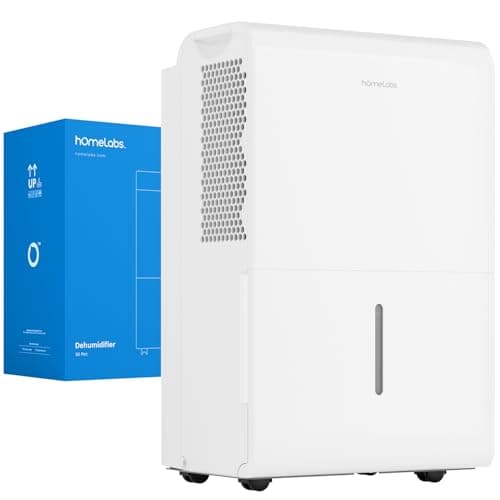
The best-selling 50-pint dehumidifier on Amazon and our top overall pick for mold prevention. Set your target humidity (aim for 45-50%) and the built-in humidistat cycles the compressor to hold it. A rear hose port allows continuous gravity draining into a floor drain, and turbo mode speeds up moisture removal after water events. Energy Star certified to keep 24/7 running costs reasonable.
Pros
- 50-pint capacity handles basements and large rooms up to 4,500 sq ft
- Built-in humidistat holds your target humidity automatically
- Continuous-drain hose port for set-and-forget operation
Cons
- No built-in pump — gravity drain or bucket emptying only
- 1.6-gallon bucket fills every 6-8 hours in very damp spaces
- Fan is audible on turbo mode
The pattern to remember: remove the mold, remove the water, keep the air dry.Do all three and the basement stays clear. Do only the first and you'll be back down there with a scrub brush by next season. A lingering musty smellafter cleanup is the early warning that the moisture problem isn't actually solved yet. Dealing with mold elsewhere too? Our room-by-room guide to mold in the home maps every other spot it hides.
Out of the Mold is reader-supported. When you buy through links on this page we may earn an affiliate commission at no extra cost to you. Cost figures reflect 2026 contractor pricing; safety guidance follows EPA mold cleanup recommendations.
Frequently Asked Questions
How do I get rid of mold in my basement myself?
When should I hire a professional for basement mold?
How much does basement mold removal cost in 2026?
What kills mold in a basement permanently?
Does homeowners insurance cover basement mold?
Related Articles
Best Dehumidifiers for Mold Prevention & Removal (2026)
Best Air Purifiers for Mold Spores & Musty Odors (2026)
Musty Smell in House? Here's How to Find & Fix the Source
Mold on Walls: How to Remove It (and When to Replace the Wall)
How to Get Rid of Black Mold: DIY Removal Guide
How to Test for Mold at Home: DIY Methods That Actually Work
Dealing With Mold Right Now?
Our step-by-step mold removal guide walks you through testing your home, choosing the right products, and knowing when a job is too big for DIY.
Read the Removal Guide