How Much Does a Mold Inspection Cost? (2026 Price Guide)
Out of the Mold Editorial Team
Our guides are research-backed and cite EPA, CDC, and peer-reviewed sources. Product reviews are based on hands-on testing, not manufacturer claims. Read our editorial standards.
Affiliate Disclosure: Out of the Mold is reader-supported. As an Amazon Associate, we may earn a commission when you buy through links on this page — at no extra cost to you. Our picks are based on independent standards, manufacturer specifications, and published research, not commissions.
Key Takeaways
- Mold inspections cost $150–$300 for visual-only, $250–$500 with air quality testing, and $400–$800 for a comprehensive inspection with lab analysis.
- Never hire the same company to inspect and remediate — pay an independent, ACAC- or IICRC-certified inspector for an unbiased assessment.
- "Free" inspections from remediation companies are sales calls — the findings pay for the visit.
- DIY test kits are fine for screening a suspect area; professional inspections are worth it for real estate deals, insurance claims, and unexplained symptoms.
- If mold is found, fix the moisture source first, get three remediation quotes, and insist on independent clearance testing after the work.
A professional mold inspection typically costs $150–$300 for a visual-only inspection, $250–$500 with air quality testing, and $400–$800 for a comprehensive inspection with lab analysis. Price depends on home size, number of samples, and location. Two rules protect your wallet: hire an inspector with ACAC or IICRC credentials, and never hire the same company to inspect and remediate — that's a built-in conflict of interest. If mold is found, estimate remediation with our mold removal cost calculator before accepting any quote.
If you're pricing a mold inspection, you're probably in one of two situations: you're mid-real-estate-transaction and a deadline is looming, or something in your house — a musty smell, a water stain, a family member's lingering cough — has you worried. Either way, the question is the same: what should this cost, and how do you avoid overpaying or getting upsold?
This guide covers typical national price ranges for 2026, what a legitimate inspection includes, when you genuinely need one (and when a $30 DIY kit is enough), and the hiring mistake that costs homeowners thousands: letting the company that profits from remediation decide whether you need remediation.
Average Mold Inspection Costs
Most homeowners pay between $250 and $600 for a professional mold inspection. The range comes down to what's included — a walk-through with a flashlight and moisture meter costs far less than a full assessment with air sampling and accredited lab analysis.
| Inspection Type | Typical Cost (2026) | What You Get |
|---|---|---|
| Visual inspection only | $150–$300 | Room-by-room visual assessment, moisture meter readings, written findings |
| Inspection + air quality testing | $250–$500 | Visual inspection plus 2–3 air samples with lab spore counts |
| Comprehensive inspection + lab testing | $400–$800 | Full assessment, thermal imaging, multiple air and surface samples, lab report with interpretation |
| Additional samples | $50–$150 each | Extra air, swab, or tape-lift samples beyond the base package |
These are typical national ranges — not quotes. Three factors move your price within (or beyond) them:
- Home size— Larger homes take longer to inspect and usually need more air samples to cover every zone. Expect the upper end of each range for homes over 3,000 sq ft, and a premium for homes with crawl spaces, finished basements, or multiple HVAC systems.
- Number of samples— Lab fees are the biggest variable. A proper air sampling protocol needs at least one outdoor control sample plus one sample per area of concern. Each sample adds $50–$150, so an inspection that starts at $300 can reach $600+ if several rooms need testing.
- Location— Pricing tracks local labor costs. Major metro areas and high-humidity regions with heavy demand (Gulf Coast, Southeast) tend toward the top of each range; rural areas often come in lower, though you may pay a trip fee.
For context: professional remediationtypically runs $10–$25 per square foot, with most projects landing in the low thousands. A $400 inspection is cheap insurance against a five-figure quote for a problem you may not have — run your own numbers with our mold removal cost calculator.
What's Included in a Professional Mold Inspection?
A legitimate mold inspection is a moisture investigation first and a mold hunt second — because mold always follows moisture. If an "inspector" walks through in 20 minutes without a moisture meter, you didn't get an inspection. Here's what the fee should cover:
- Visual assessment of every room— Including the areas homeowners skip: attic, crawl space, under sinks, behind the water heater, around HVAC air handlers, and window frames.
- Moisture meter readings— Scanning walls, floors, and ceilings for elevated moisture that signals hidden mold or conditions where it will grow. This is the single most valuable part of the visit.
- Thermal imaging— Infrared cameras reveal temperature differences that indicate wet insulation or leaks behind walls. Usually included at the comprehensive tier; some inspectors charge extra for it.
- Air sampling for spore counts— A calibrated pump draws a measured volume of air through a cassette. Indoor samples are compared against an outdoor control — indoor counts meaningfully higher than outdoor indicate an active source.
- Surface swab or tape sampling— If visible growth is found, a swab or tape lift confirms the species. Useful for documentation, though species ID rarely changes the cleanup plan.
- Lab analysis and written report— Samples go to an accredited lab. The report should list spore types and counts, moisture readings by location, photos, and prioritized recommendations — not just "mold detected, call us."
Timeline:On-site, expect 1–2 hours for an average home, longer for large houses or crawl-space access. Lab results typically take 3–7 business days, and most inspectors deliver the full written report within a day or two of receiving them. If you're on a real estate contingency deadline, ask about rush lab processing — most labs offer it for an added fee.
The moisture meter does the heaviest lifting here — and it's the one piece of pro equipment homeowners can affordably own. Scanning suspect walls yourself before booking can tell you whether you're dealing with an active leak or an old stain.
Klein Tools ET140 Pinless Moisture Meter
Klein Tools
$45–60
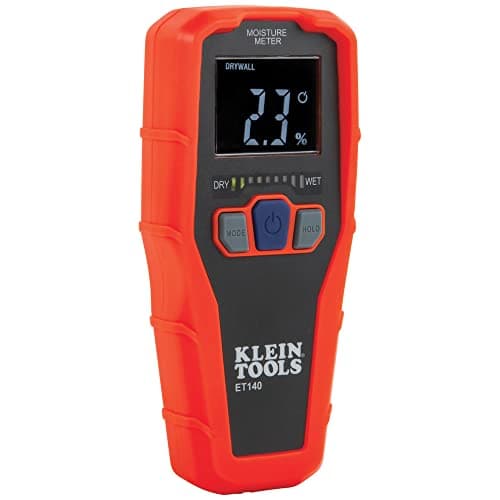
A professional-grade pinless moisture meter that detects hidden moisture in drywall, wood, and masonry without leaving holes. Uses electromagnetic sensor technology to measure moisture content up to 3/4 inch below the surface. Essential for identifying moisture problems before mold develops.
Pros
- Non-invasive pinless technology, no holes in walls
- Detects moisture up to 3/4 inch deep
- Visual and audible moisture alerts
Cons
- Less precise than pin-type meters on exact moisture percentage
- Battery not included
- Can give false readings on metallic or foil-backed surfaces
Mold Inspection vs. Mold Testing: What's the Difference?
The terms get used interchangeably, but they're different services — and knowing the difference keeps you from paying for the wrong one.
- Inspectionis the investigation: a trained person visually assesses your home, maps moisture, and identifies where mold is growing or likely to grow. It answers "do I have a problem, and where?"
- Testingis the lab work: air, surface, or dust samples analyzed to identify species and concentrations. It answers "what is it, and how much?"
You need testingwhen you need documentation — insurance claims, real estate negotiations, landlord disputes, post-remediation clearance — or when symptoms suggest a hidden problem no one can see. You need only an inspectionwhen the question is simply whether a problem exists and where the moisture is coming from. And if you can already see mold in a small area, you often need neither: the EPA's guidance is that visible mold under about 10 square feet can simply be cleaned up without identifying it.
If lab data is what you're after and there's no transaction or claim forcing a professional report, DIY testing can cover a surprising amount of ground for a fraction of the price. Our guide to testing for mold at home compares the four DIY methods, and the ERMI mold test guide covers the DNA-based dust test that comes closest to professional-grade data. For the full decision framework on when testing is worth paying for at all, see our mold testing guide.
When Do You Need a Mold Inspection?
Not every mold worry justifies a professional visit. These six situations do:
- Buying or selling a home— Standard home inspections are not mold inspections; most home inspectors note visible staining but don't sample or moisture-map. If the home has a basement, crawl space, prior water damage, or a humid climate, a dedicated mold inspection during due diligence protects you from inheriting a five-figure problem — and gives you negotiating leverage if something turns up.
- After water damage or flooding— Mold can begin growing on wet materials within 24–48 hours. After a burst pipe, roof leak, or flood, an inspection confirms whether drying efforts actually worked or whether moisture is still trapped in walls and flooring.
- A persistent musty smell you can't trace — That earthy, damp odor is the classic sign of hidden growth. If you've hunted the source and come up empty, an inspector's moisture meter and thermal camera can find what your nose can't pinpoint. Start with our guides to what mold smells like and tracking down a musty smell before you book — sometimes the source is findable yourself.
- Health symptoms that improve away from home— Congestion, coughing, headaches, or irritated eyes that ease when you travel and return when you're home point toward an indoor air problem worth investigating.
- Visible mold you want identified or documented — Large areas, recurring growth after cleaning, or anything you need on paper for a landlord, insurer, or buyer. For a visual reference before spending money, see our types of mold identification guide.
- Post-remediation verification— After paying for professional remediation, an independent clearance inspection confirms spore levels are back to normal before the contractor removes containment. Reputable remediators expect this.
How to Find a Qualified Mold Inspector
Mold inspection is lightly regulated — only a handful of states license mold professionals at all. That means credentials and independence are on you to verify. Here's the checklist.
Certifications to Look For
- ACAC(American Council for Accredited Certification) — The most rigorous independent credentialing body in the field. Look for CIEC (Council-certified Indoor Environmental Consultant) or CMI (Council-certified Microbial Investigator) designations, which require documented field experience and board-proctored exams.
- IICRC(Institute of Inspection, Cleaning and Restoration Certification) — The industry standard for remediation technicians (AMRT certification). An inspector with IICRC training understands how remediation is actually performed, which sharpens their recommendations.
- State license— If your state licenses mold assessors (Texas, Florida, New York, and Louisiana are among those that do), a current license is non-negotiable. Some states also legally separate assessment from remediation — more on why that matters below.
- CIH(Certified Industrial Hygienist) — The gold-standard credential for complex cases: litigation, serious health concerns, or commercial buildings. Expect to pay above the typical ranges for a CIH-led assessment.
The Conflict-of-Interest Rule
This is the most important paragraph in this article: never hire the same company to inspect for mold and remediate it. A company that earns thousands on remediation has an obvious incentive to find a problem worth thousands. The "free mold inspection" offered by remediation firms is a sales call, not an assessment — the inspection is free because the findings fund it. Several states formally prohibit the same firm from doing both jobs on the same project, which tells you how real the conflict is. Pay an independent inspector for an unbiased answer, then take their report to remediation companies for competing bids.
Questions to Ask Before Hiring
- What certifications do you hold, and can you provide the certificate numbers? (Verify ACAC credentials on their public registry.)
- Do you or your company perform remediation? (The right answer is no.)
- Which accredited lab analyzes your samples?
- Is an outdoor control sample included in your air testing protocol?
- Can I see a sample of your written report?
- How long until I get results, and is rush processing available?
Red Flags
- Free inspections from companies that also sell remediation
- Scare tactics — "toxic black mold" pronouncements before any lab results exist
- Quoting remediation on the spot, during the inspection visit
- No outdoor control sample — indoor spore counts are meaningless without a baseline
- Verbal-only findings, or refusal to share the raw lab data
Finally, get two or three quotes. Pricing varies enough between companies in the same city that a 15-minute round of phone calls routinely saves $100–$200 — and how a company handles the questions above tells you plenty before anyone shows up.
Does Insurance Cover Mold Inspection?
Usually not as a standalone service — but there are meaningful exceptions:
- Standard homeowners policies— A mold inspection you book because of a smell or general concern is an out-of-pocket expense. Routine mold problems from deferred maintenance or long-term humidity are typically excluded from coverage entirely.
- Covered perils— If mold results from a sudden, covered event (a burst pipe, storm damage, an appliance failure), the inspection and testing needed to document the claim are often reimbursable as part of the loss. Call your insurer before hiring the inspector so the cost is pre-approved and the report format meets their requirements.
- Real estate transactions— Buyers normally pay for pre-purchase inspections themselves, though inspection costs are sometimes negotiated into the deal, and a positive finding can shift remediation costs to the seller entirely. A few hundred dollars spent during your option period is leverage.
- Rental properties— For landlords, inspection fees on an income property are generally an ordinary business expense; ask your tax professional how to treat them.
DIY Mold Testing vs. Professional Inspection
A professional inspection isn't always the right first move. DIY test kits cost 90% less, and for some questions they're genuinely sufficient. The honest breakdown:
| Factor | DIY Testing | Professional Inspection |
|---|---|---|
| Cost | $10–$50 (basic kits); $200–$250 (ERMI) | $250–$800 |
| Finds hidden moisture | No (unless you buy a moisture meter) | Yes — moisture mapping and thermal imaging |
| Lab-confirmed species ID | Yes, with lab-based kits | Yes |
| Expert interpretation | No — you read the lab report yourself | Yes — results explained in context |
| Valid for insurance / legal / real estate | Generally no | Yes |
| Best for | Curiosity, screening, early warning | Transactions, claims, symptoms, hidden problems |
DIY is sufficient whenyou're screening a specific suspect area, want a baseline on a home with no symptoms or transactions in play, or are deciding whether a professional visit is even warranted. A basic lab-based kit answers "is this spot mold, and what kind?" for the cost of a pizza.
Mold Armor FG500 Do It Yourself Mold Test Kit
Mold Armor
$9–15
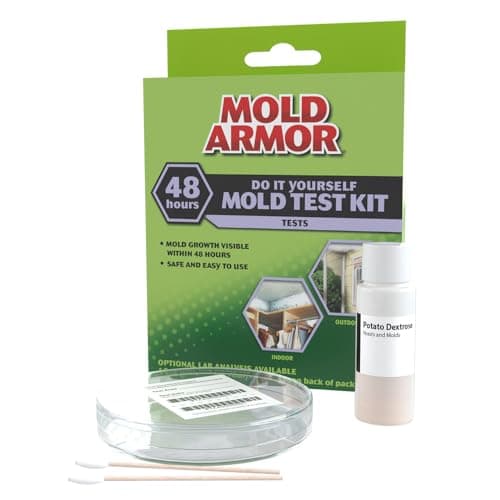
The most popular DIY mold test kit on Amazon. Includes a settling plate, swab, and pre-paid postage for AIHA-accredited lab analysis. The kit detects airborne mold spores and surface mold, identifying species like Aspergillus, Stachybotrys, and Penicillium.
Pros
- Very affordable entry-level test
- Includes petri dish, swab, and postage for lab analysis
- Results identify mold species
Cons
- Lab fee is separate (~$40)
- Takes 5-7 days for lab results
- Only tests one location per kit
The step up from there is an ERMI dust test — DNA analysis that quantifies 36 mold species from a single dust sample and scores your home against a national database. It's the most comprehensive consumer-available option and a legitimate middle ground between a cheap kit and a full professional visit, particularly for home purchases and health investigations. Full details in our ERMI test guide.
ImmunoLytics ERMI Mold Test Kit
ImmunoLytics
$190–220

The most comprehensive home mold test available. Uses EPA-developed ERMI methodology with DNA-based MSQPCR analysis to quantify 36 mold species. Generates a standardized Relative Moldiness Index score that compares your home to a national database. Preferred by environmental consultants and real estate inspectors.
Pros
- ERMI (EPA Relative Moldiness Index) is the gold standard
- DNA-based analysis identifies 36 mold species
- Lab analysis included in price
Cons
- Most expensive home test kit
- Results take 7-10 business days
- Requires careful dust collection with included vacuum cassette
Professional inspection is worth the cost when money or health is on the line: a real estate deadline, an insurance claim, unexplained symptoms, a smell with no visible source, or verification that remediation you paid for actually worked. In those situations the $250–$800 fee buys three things no kit can deliver: moisture mapping that finds the source, an expert reading of what the numbers mean for your specific house, and a report that holds up with insurers, buyers, and courts. For a deeper comparison of every DIY method, see our home mold testing guide.
What to Do After Your Mold Inspection
The report lands in your inbox. Now what? Read it for four things: where moisture was found (with meter readings), what the lab detected (species and counts, compared against the outdoor control), photos of problem areas, and prioritized recommendations. A good inspector separates "fix this now" from "monitor this" — if everything is marked urgent, be skeptical.
If Mold Is Found
- Fix the moisture first.Remediation without fixing the leak, drainage, or humidity problem is money burned — the mold returns. The moisture findings in your report are the repair list.
- Estimate before you negotiate. Know what the work should cost before the first contractor quotes you. Our mold removal cost calculator gives you a realistic range based on the affected area, so you can spot both lowball and inflated bids.
- Get three remediation quotesfrom IICRC-certified companies — none of them the company that inspected. Hand each the same inspection report so bids are comparable.
- Insist on clearance testing after the work, ideally by your original independent inspector. This closes the loop and is your proof the job was done right.
If No Mold Is Found
A clean report is a good outcome, not a wasted fee — it's documentation for a sale, peace of mind for symptoms, and a baseline for the future. If a musty smell or symptoms persist despite a clean report, ask about expanding the sample count or running an ERMI dust test, which captures months of accumulation that a single day's air sample can miss. Then shift to prevention: keep indoor humidity below 50%, fix small leaks fast, and re-check known damp spots seasonally with a moisture meter.
Bottom line: most homes land between $250 and $600, and against remediation bills that routinely reach thousands, an independent inspection is the cheapest decision-making tool in the process. If it finds a problem, start with the removal cost calculator, then get competing professional quotes before signing anything.
Frequently Asked Questions
Is a mold inspection worth it?
Yes, when real money or health is at stake. For a home purchase, a $250–$500 inspection protects a six-figure investment from a problem that costs thousands to fix. For unexplained symptoms or odors, it locates hidden problems no DIY kit can find. For a small patch of visible mold you already know about, skip it — clean the mold and fix the moisture instead.
How long does a mold inspection take?
Plan on 1–2 hours on-site for an average home — longer for large homes, crawl spaces, or attics that need access. Lab results for air and surface samples take 3–7 business days, and the full written report usually follows within a day or two of the lab results. Most labs offer rush processing for an added fee if you're on a real estate deadline.
Can a home inspector check for mold?
Only superficially. A standard home inspection notes visible staining and obvious water damage, but home inspectors generally don't moisture-map walls, collect air samples, or send anything to a lab — and many explicitly exclude mold in their contracts. If the general inspection flags water issues, that's your cue to bring in a dedicated, certified mold inspector before your option period ends.
What if the mold inspection finds nothing?
A clean report still has value: it documents the home's condition for a sale, rules mold out as a cause of symptoms, and gives you a baseline for future comparison. If symptoms or musty odors persist despite clean results, ask about additional samples or an ERMI dust test, which detects months of spore accumulation that a single short air sample can miss.
Should the same company inspect and remove the mold?
No. A company that profits from remediation has a financial incentive to find remediation-worthy problems, which is why several states legally separate the two roles on the same project. Pay an independent inspector for the assessment, then collect competing bids from separate remediation companies — and have the independent inspector perform clearance testing when the work is done.
Frequently Asked Questions
Is a mold inspection worth it?
How long does a mold inspection take?
Can a home inspector check for mold?
What if the mold inspection finds nothing?
Should the same company inspect and remove the mold?
Related Articles
Mold Testing Guide: Do You Need a Test & Which Type Is Best?
How to Test for Mold at Home: DIY Methods That Actually Work
ERMI Mold Test: Cost, Accuracy & When You Actually Need One
Musty Smell in House? Here's How to Find & Fix the Source
What Does Mold Smell Like? How to Identify Mold by Smell
Types of Mold in Your Home: Color Identification Guide
Dealing With Mold Right Now?
Our step-by-step mold removal guide walks you through testing your home, choosing the right products, and knowing when a job is too big for DIY.
Read the Removal Guide