Mold on Concrete: How to Remove It from Floors, Walls & Patios
Out of the Mold Editorial Team
Our guides are research-backed and cite EPA, CDC, and peer-reviewed sources. Product reviews are based on hands-on testing, not manufacturer claims. Read our editorial standards.
Affiliate Disclosure: Out of the Mold is reader-supported. As an Amazon Associate, we may earn a commission when you buy through links on this page — at no extra cost to you. Our picks are based on independent standards, manufacturer specifications, and published research, not commissions.
Key Takeaways
- Do the water test before anything else — efflorescence dissolves when sprayed; mold doesn't. Half of 'concrete mold' is harmless salt.
- Even if it's efflorescence, it proves water is wicking through the slab — the moisture fix is the real job.
- Skip straight bleach on porous concrete; scrub with detergent/TSP or a concrete-rated remover, then dry completely.
- Sealing is the step everyone skips — but never seal concrete that's still wet or still has a moisture source behind it.
- Over ~10 sq ft or spread to drywall/framing, it's a remediation job — price it before you clean.
Before you buy anything, make sure it's actually mold. Half of the "mold on concrete" people panic over is efflorescence — harmless mineral salt that looks like white fuzz. The field test takes ten seconds: spray the deposit with water. Efflorescence dissolves or goes translucent; mold doesn't budge. If it's mold, scrub it off the (porous) concrete with a detergent, TSP, or a dedicated mold remover, let it dry completely, and seal the surface so it can't wick moisture back up. And either way — mold or efflorescence — that white stuff is telling you water is moving through the slab, which is the real problem to fix.
Concrete feels like it should be mold-proof. It's stone, basically — nothing for mold to eat. But concrete is porous: it's laced with tiny capillaries that drink up water and hold it, and dust, pollen, and dead skin settle into the surface and give spores all the organic food they need. A damp basement floor, a shaded north-facing patio, or a foundation wall with groundwater behind it is a perfectly good home for mold. The question is almost never "how do I kill it" — bleach or a mold spray handles that in minutes. It's "why is this concrete wet, and is this even mold in the first place."
Step one: is it mold or efflorescence?
This is the single most useful thing on this page, and almost no other guide leads with it. Efflorescence is the white, chalky, crystalline powder you see on basement walls, block, and brick. The home-inspector trade group InterNACHI defines it as "dissolved salts deposited on the surface of a porous material (such as concrete or brick) that are visible after the evaporation of the water in which it was transported". It's a mineral, not a living thing — it won't hurt you. Real white mold on concrete is a fungus (commonly Aspergillus, Penicillium, or Cladosporium), and that one does release spores.
You don't need a lab to tell them apart. Run these four checks:
| Test | Efflorescence (harmless salt) | Mold (fungus) |
|---|---|---|
| Spray it with water | Dissolves / goes translucent | Doesn't dissolve, stays put |
| Pinch it between your fingers | Crumbles to a fine powder | Smears, feels slimy or filmy |
| Smell it | No odor at all | Musty, earthy smell |
| Color | White, sometimes yellow/brown | Any color — green, black, pink, gray |
The water test is the one to trust. Efflorescence is a water-soluble salt, so it visibly dissolves; mold is organic and shrugs off a misting. If the patch is any color other than white/tan, stop guessing — it's mold. And if you're staring at fuzzy white growth and want to be sure, our white mold identification guide walks through the same call for walls and wood.
Here's the catch most "it's just efflorescence, relax" articles miss: efflorescence is still bad news. InterNACHI notes it "generally occurs where there is excess moisture, a condition that also encourages the growth of mold." The salt is a receipt proving water is wicking through your slab. Wipe it away and ignore the leak, and you'll be looking at actual mold on that same wall within a season. So whichever one you have, the moisture fix at the bottom of this page is the part that matters.
Removing mold from indoor concrete (basements, block, garage)
Confirmed it's mold? Good — now it's genuinely easy to kill, as long as you deal with a few square feet at a time and gear up first. Mold on an enclosed basement floor or foundation wall concentrates spores in a space you breathe, so put on an N95 and open a window or run a fan before you disturb anything.
3M 8511 N95 Particulate Respirator
3M
$20–30
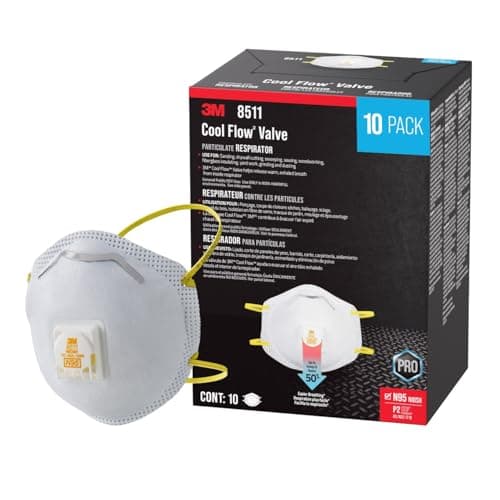
A NIOSH-approved N95 particulate respirator with Cool Flow exhalation valve for comfortable breathing during mold remediation. Filters at least 95% of airborne particles including mold spores. The adjustable M-noseclip and dual-strap design provide a secure seal. OSHA-recommended for mold work.
Pros
- NIOSH-approved N95 filtration
- Cool Flow valve reduces heat buildup
- Adjustable nose clip for secure fit
Cons
- Disposable, not reusable long-term
- Does not protect against chemical fumes or VOCs
- May not fit all face shapes comfortably
- Dry-vacuum or sweep loose growth first(with the N95 on) so you're not grinding wet mold deeper into the pores.
- Scrub with a detergent, TSP, or a dedicated mold remover. The EPA's own advice for hard surfaces is to "scrub mold off hard surfaces with detergent and water, and dry completely." Trisodium phosphate (TSP) is the old-school heavy-duty option for masonry; a ready-to-spray remover like RMR-86 is faster and works on concrete, which its label specifically lists. Use a stiff nylon brush, not wire (wire sheds rust that stains).
- Rinse and dry hard. This is where people lose. Porous concrete holds water deep, and any moisture left behind restarts the mold. Fans, open windows, and a dehumidifier running for a day or two are not optional in a basement.
- Treat the surface so it can't come back. A film like Concrobium dries to an antimicrobial layer that keeps regrowth down without bleach fumes in a closed basement — handy because you're working in an unventilated space.
RMR-86 Instant Mold & Mildew Stain Remover Spray (1 Gallon)
RMR Brands
$25–35
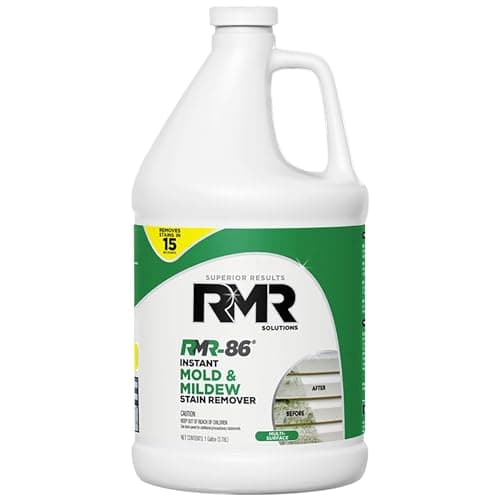
A fast-acting, commercial-strength mold stain remover that eliminates black mold stains on contact. The sodium hypochlorite formula penetrates porous surfaces to lift deep stains without scrubbing. Best used in well-ventilated areas with proper respiratory protection.
Pros
- Removes stains in as little as 15 seconds
- Works on wood, concrete, drywall, and tile
- No scrubbing required
Cons
- Strong bleach-based formula with harsh fumes
- Not safe for fabrics or colored surfaces
- Requires good ventilation and PPE
Two honest warnings. First, skip straight bleach on porous concrete: it dumps most of its punch on the surface while the water carries moisture intothe slab, and it doesn't seal anything. (The full argument is in our does bleach kill mold breakdown.) Second, the EPA's 10-square-foot rule still applies even to a hard surface: if the moldy area is bigger than "about 10 square feet (less than roughly a 3 ft. by 3 ft. patch)", or it's crept onto the drywall and framing nearby, that's a bigger job than a spray bottle. For a whole moldy basement, start with our basement mold removal guide.
Removing mold from outdoor concrete (patios, driveways, walkways)
Outdoor concrete mold is a much lower-stakes problem — you're outside, so spores disperse instead of concentrating, and the green-black slime on a shaded patio is often algae and mildew more than structural mold. The approach is also different: you don't need to baby a patio the way you baby a basement.
- Light growth:a stiff deck brush with a mix of water and either a concrete-safe mold cleaner or oxygen bleach (sodium percarbonate) — gentler on plants and your lungs than chlorine bleach, and it won't bleach a stained patio.
- Heavy or set-in growth:a pressure washer. For most flatwork a 2,500–3,000 PSI unit with a 25-degree tip lifts years of buildup; keep the nozzle moving so you don't etch the surface. Pre-treating with a cleaner and letting it dwell 10 minutes before you blast does most of the work.
- Driveways with oil stains feeding growth: degrease first, or the mold just comes back to eat the oil.
What you don't want to do outdoors is reach for the same enclosed- space tools (foggers, antimicrobial films) you'd use inside — rain washes them off within days. Outdoors, the lasting fix is drainage and a sealer, below.
Sealing concrete so mold can't wick back
This is the step that turns a one-time scrub into a permanent fix, and it's the gap in almost every competing article — they tell you to clean it and stop there. Mold on concrete is a moisture symptom, so the durable answer is to stop water from moving through the pores.
- Penetrating sealers (silane/siloxane) soak in and make the concrete hydrophobic without changing its look. Best for driveways, patios, and garage floors you want to stay matte.
- Film-forming sealers(acrylic, epoxy) sit on top and give a glossy, wipeable surface. Good for basement floors — but only over concrete you've confirmed is dry, because sealing moisture in causes the film to peel and traps a hidden damp layer.
- On basement walls and block that had actual mold, a mold-killing masonry primer like Zinsser does double duty: it kills any trace growth and lays down a mold-resistant base coat you can paint over. Its label covers concrete and masonry.
Zinsser Mold Killing Primer
Zinsser
$18–25
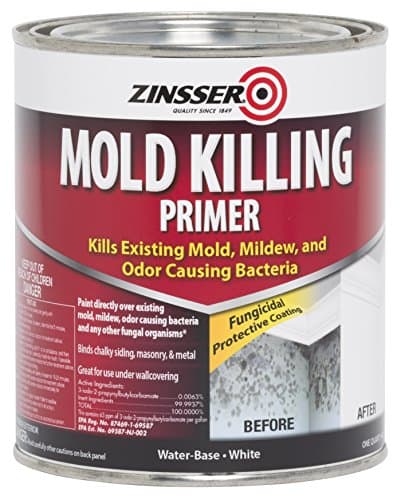
An EPA-registered fungicidal primer that kills existing mold, mildew, and odor-causing bacteria on contact. Creates a mold-resistant barrier on interior and exterior surfaces including drywall, wood, concrete, and masonry. Essential for mold remediation projects before applying topcoat paint.
Pros
- Kills existing mold on contact while priming
- EPA-registered fungicidal protective coating
- Bonds to all interior and exterior surfaces
Cons
- Strong odor during application, requires ventilation
- Water-based formula can raise grain on bare wood
- Must be topcoated with paint for lasting protection
One rule overrides all of this: never seal concrete that's still wet or still has a moisture source behind it. Do the moisture math first.
The real fix: where the water is coming from
Both efflorescence and mold are the slab telling you it's wet. The EPA puts the whole remediation strategy in one line: "Fix plumbing leaks and other water problems as soon as possible." For concrete, the water is almost always one of these:
- Capillary wicking from the ground up through a slab or foundation with no (or a failed) vapor barrier under it — the classic cause of efflorescence on basement floors and block.
- Poor exterior drainage: downspouts dumping at the foundation, grading that slopes toward the house, a patio that pitches back toward the slab.
- High basement humidity condensing on cool concrete — the fix here is airflow and a dehumidifier holding the room under 60% relative humidity.
A cheap pinless moisture meter settles the argument about whether a basement floor is actually drying or just looks dry. And in any below-grade space with recurring growth, a dehumidifier sized to the square footage is the highest-leverage thing you can buy — it's what keeps the slab from re-wetting after you've cleaned it.
hOmeLabs 50-Pint Energy Star Dehumidifier
hOmeLabs
$220–260
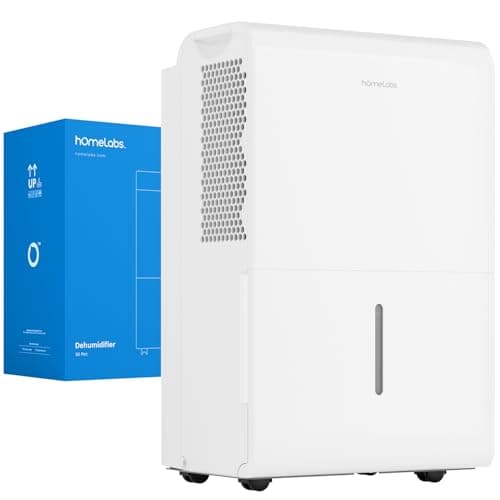
The best-selling 50-pint dehumidifier on Amazon and our top overall pick for mold prevention. Set your target humidity (aim for 45-50%) and the built-in humidistat cycles the compressor to hold it. A rear hose port allows continuous gravity draining into a floor drain, and turbo mode speeds up moisture removal after water events. Energy Star certified to keep 24/7 running costs reasonable.
Pros
- 50-pint capacity handles basements and large rooms up to 4,500 sq ft
- Built-in humidistat holds your target humidity automatically
- Continuous-drain hose port for set-and-forget operation
Cons
- No built-in pump — gravity drain or bucket emptying only
- 1.6-gallon bucket fills every 6-8 hours in very damp spaces
- Fan is audible on turbo mode
If the water's coming through the wall or up through the floor and no amount of scrubbing holds, that's a waterproofing or grading job, not a cleaning job. Before you call anyone, price the actual scope with our mold removal cost calculator so you walk into the conversation knowing whether you're looking at a $150 DIY afternoon or a four-figure drainage fix — and whether the mold has spread far enough that full basement remediation is the honest answer.
Frequently Asked Questions
Is the white stuff on my concrete mold or efflorescence?
Does bleach kill mold on concrete?
Can mold grow on sealed concrete?
How do I keep mold from coming back on concrete?
Is mold on concrete dangerous?
Related Articles
How to Get Rid of Mold in Your Basement (2026 Guide)
White Mold: What It Is, Is It Dangerous & How to Remove It
How to Get Rid of Black Mold: DIY Removal Guide
Does Bleach Kill Mold? The EPA Says No — Here's What Actually Works
Mold-Resistant Paint: How It Works, When to Use It, and What It Can't Do
How to Test for Mold at Home: DIY Methods That Actually Work
Dealing With Mold Right Now?
Our step-by-step mold removal guide walks you through testing your home, choosing the right products, and knowing when a job is too big for DIY.
Read the Removal Guide