White Mold: What It Is, Is It Dangerous & How to Remove It
Out of the Mold Editorial Team
Our guides are research-backed and cite EPA, CDC, and peer-reviewed sources. Product reviews are based on hands-on testing, not manufacturer claims. Read our editorial standards.
Affiliate Disclosure: Out of the Mold is reader-supported. As an Amazon Associate, we may earn a commission when you buy through links on this page — at no extra cost to you. Our picks are based on independent standards, manufacturer specifications, and published research, not commissions.
Key Takeaways
- White mold is usually early-stage or naturally light-colored growth of common genera like Penicillium, Aspergillus, and Cladosporium — the same molds behind most indoor allergy complaints.
- The 10-second spray test separates white mold from efflorescence: mineral salt dissolves in water, while mold absorbs it and smears when rubbed.
- White mold is allergenic and riskier for people with asthma or weakened immune systems — don't dismiss it as harmless just because it isn't black.
- For patches under 10 square feet, DIY removal is safe: N95 respirator on, kill with vinegar or Concrobium, then use RMR-86 only if stains remain.
- Prevention is moisture control — keep humidity at 30-50%, put a vapor barrier in the crawl space, and vent bath fans outside.
White mold is usually an early or naturally light-colored stage of common household molds — most often Penicillium, Aspergillus, or Cladosporium. It can trigger allergy symptoms and hits harder if you have asthma or a weakened immune system, so don't dismiss it as harmless. Before you treat anything, run the spray test: mist the growth with water. If it dissolves and disappears, it's efflorescence — crystallized mineral salt, not mold at all. If it absorbs the water and smears, it's mold. Remove white mold with undiluted white vinegar or a non-toxic spray like Concrobium, then fix the moisture problem or it comes back within weeks.
White fuzzy growth in the basement. A powdery film on crawl space joists. Cotton-like patches on furniture that sat against a cold wall all winter. White mold is one of the most searched — and most misidentified — types of household mold, because it looks like three completely different things: mildew, dust, and mineral deposits.
This guide covers how to tell what you're actually looking at, whether it's dangerous, and how to remove it surface by surface. The single most useful thing in this article is a 10-second water test that tells you whether that white stuff on your basement wall is even mold in the first place — because roughly half the time, on concrete, it isn't.
What Is White Mold?
"White mold" isn't a species. Like green mold or yellow mold, it's a description of how a colony looks at the moment you found it. Three genera account for most white mold in homes:
- Penicillium— Often starts as a white, velvety colony before developing its familiar blue-green center. Needs less moisture than most molds, which is why it shows up in rooms that don't feel "that damp." Common on drywall, wallpaper, fabrics, and food.
- Aspergillus — The most common indoor mold genus. Young colonies frequently appear white and fuzzy before the spores mature and take on color — green, yellow, brown, or black depending on the species. Grows on walls, insulation, wood, and stored food.
- Cladosporium — Usually olive-green to dark, but early growth can look pale gray-white, especially on wood and painted surfaces in cool areas like basements and attics.
Here's the key insight: much white mold is simply young mold. Many species grow white, thread-like mycelium first and only develop their characteristic color once they mature and produce spores. That white fuzz on your crawl space joist could be the same species that looks green on your bathroom ceiling — you just caught it earlier. Which is actually good news: early-stage colonies are shallower and easier to remove.
One more name worth knowing: Sclerotinia sclerotiorum, the organism farmers and gardeners call "white mold." It's a plant pathogen that attacks beans, soybeans, lettuce, and hundreds of other crops with dense, cottony white growth on stems and leaves. If you found white mold on a houseplant or in the garden, that's the likely culprit — it's a plant disease problem, not a building contamination problem.
And if the white growth is flat, powdery, and sitting on a damp shower wall or windowsill, you may be looking at plain mildew — the surface-level, easier-to-clean cousin. Our mold vs. mildew guide covers how to tell them apart.
White Mold vs. Efflorescence: The 10-Second Spray Test
This is the most common white mold misidentification, and it happens on basement walls, foundations, brick, and concrete floors. That white, powdery, sometimes crystalline deposit on masonry is very often efflorescence — not mold, not alive, and not a health hazard.
Efflorescence forms when water moves through concrete, brick, or mortar, dissolves the mineral salts inside, and then evaporates at the surface — leaving the salt behind as a white crust. It's crystallized mineral, not organic growth. You can't kill it with mold spray because there's nothing to kill.
The Spray Test
Fill a spray bottle with plain water and mist the white patch:
- If it dissolves and disappears— it's efflorescence. Salt dissolves in water. The patch will fade or vanish while wet, then reappear as the wall dries and more moisture wicks minerals to the surface.
- If it absorbs the water and stays put— it's mold. Organic growth soaks up the mist, darkens slightly, and smears when you rub it with a gloved finger instead of crumbling away.
A few backup checks if the spray test feels ambiguous:
| Check | White Mold | Efflorescence |
|---|---|---|
| Water spray | Absorbs water, smears when rubbed | Dissolves and disappears |
| Surface | Organic materials — wood, drywall, fabric, paper (and the dirt/paint film on concrete) | Masonry only — concrete, brick, mortar, stone, stucco |
| Texture | Fuzzy, cottony, or slimy | Powdery or crystalline; crumbles to dust between fingers |
| Smell | Often musty or earthy (see what musty smells mean) | Odorless |
| Growth pattern | Spreads and thickens over time in circular or irregular patches | Follows water paths — cracks, mortar joints, the line where the wall meets the floor |
One important caveat: efflorescence and mold are both symptoms of the same underlying problem — water moving where it shouldn't. Efflorescence on a basement wall means moisture is migrating through the masonry, and that same moisture can feed genuine mold on nearby wood framing, drywall, or stored cardboard boxes. So even if the spray test clears your wall, it's a prompt to check the organic materials around it.
Is White Mold Dangerous?
White mold gets dismissed more than any other color — "it's just a little mildew" — precisely because it doesn't look as alarming as black growth. But the color of a colony tells you almost nothing about its risk. White-stage Penicillium and Aspergillus are the same genera behind most indoor mold allergy complaints.
For most healthy people, exposure to white mold at normal household levels causes allergy-type symptoms: sneezing, nasal congestion, itchy or watery eyes, and throat irritation. The risk profile changes for two groups:
- People with asthma or mold allergies — Mold spores are a well-established asthma trigger, and ongoing exposure in a contaminated home can aggravate symptoms and increase flare-ups.
- Immunocompromised individuals — For people undergoing chemotherapy, transplant recipients, and others with weakened immune systems, some Aspergillus species can cause serious lung infections. Anyone in this category should not be doing mold cleanup themselves, regardless of how small the patch is.
The practical guidance from the EPA's mold resources applies here just as it does to every other color: if you can see mold indoors, remove it and fix the moisture source. No agency recommends identifying the species before cleaning up a small area — color and species change the urgency, not the playbook.
A note on white mold on food: fuzzy white growth on bread, soft fruit, leftovers, or jam means the item goes in the trash. Porous foods let mold penetrate well below the visible surface. The deliberate white molds on Brie rinds and dry-cured salami are intentional, food-safe cultures — the fuzz that appeared on its own in your fridge is not.
Where White Mold Grows in Homes
White mold favors cool, damp, dark spaces with still air — which maps almost perfectly onto the parts of your house you visit least:
- Basements — The classic location. Foundation moisture, cool temperatures, and stored cardboard, fabric, and furniture. This is also where the efflorescence confusion happens most, so run the spray test before treating anything on bare concrete.
- Crawl spaces — White, fuzzy growth on floor joists and subfloor is one of the most common findings in home inspections. Ground moisture evaporating into an unventilated, unencapsulated crawl space keeps wood damp year-round.
- Attic sheathing and rafters — Usually driven by bathroom exhaust fans venting into the attic instead of outside, or by blocked soffit vents trapping humid air against cold roof decking in winter.
- Furniture and closets — Wood and upholstered furniture pushed against exterior walls sits in a pocket of cool, stagnant air where condensation forms. White fuzz on the back of a dresser or on leather goods in a closet is a circulation problem as much as a moisture problem.
- Food — Bread, berries, soft cheese, leftovers. Usually Penicillium or Aspergillus in their pale early stage.
- Plants and gardens — Cottony white growth on stems and lower leaves is typically Sclerotinia sclerotiorum, and overwatered houseplant soil often grows a harmless white saprophytic fuzz on the surface. Repot with fresh soil and water less.
How to Remove White Mold
The EPA's threshold for DIY remediation is about 10 square feet — roughly a 3×3-foot patch. Under that, and assuming you're not immunocompromised, white mold is a handle-it-yourself job. Over that, or if mold is inside walls or HVAC ducts, bring in a certified remediation pro.
Step 0: Protect Yourself
Scrubbing a colony launches spores into the air — the worst exposure you'll get is during cleanup itself. Wear an N95 respirator, gloves, and eye protection, and ventilate the room while you work. This matters double in crawl spaces and attics where you're working close to the growth in unventilated air.
3M 8511 N95 Particulate Respirator
3M
$20–30
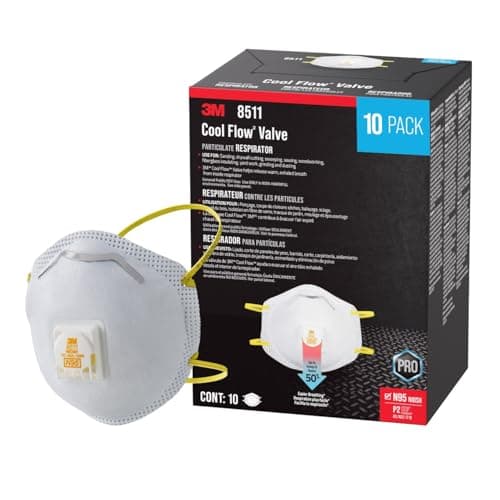
A NIOSH-approved N95 particulate respirator with Cool Flow exhalation valve for comfortable breathing during mold remediation. Filters at least 95% of airborne particles including mold spores. The adjustable M-noseclip and dual-strap design provide a secure seal. OSHA-recommended for mold work.
Pros
- NIOSH-approved N95 filtration
- Cool Flow valve reduces heat buildup
- Adjustable nose clip for secure fit
Cons
- Disposable, not reusable long-term
- Does not protect against chemical fumes or VOCs
- May not fit all face shapes comfortably
On Wood (Joists, Framing, Furniture)
Vacuum loose surface growth first if you have a HEPA-filter vacuum — this removes the bulk of spores before you wet anything. Then spray the area with undiluted white vinegar, which penetrates the wood grain and kills most mold species (our vinegar mold guide covers the full technique), or use a non-toxic commercial spray like Concrobium. Let it sit for at least an hour, scrub with a stiff brush, and wipe clean. Let the wood dry completely — a fan pointed at it for a day helps — before deciding whether stains remain.
On Drywall and Painted Walls
If the mold is only on the paint surface, spray with vinegar or Concrobium, wait, and wipe gently — aggressive scrubbing tears the paper face of drywall. If the drywall itself is soft, crumbly, or stained through, the mold has colonized the material and that section needs to be cut out and replaced. No spray fixes colonized drywall.
On Concrete and Masonry
First, spray test — confirm it's actually mold and not efflorescence. Genuine mold on concrete (usually feeding on the film of dirt, paint, or organic residue on the surface) can be scrubbed with vinegar or a commercial mold remover. Efflorescence, by contrast, just gets brushed off dry with a stiff brush — and keeps returning until the moisture migration through the wall is fixed.
The Two-Product Approach: Kill, Then De-Stain
Killing mold and removing its stain are separate jobs, and no single product does both well. Concrobium kills growth and leaves an antimicrobial barrier that resists regrowth, but it won't lift stains. RMR-86 blasts stains off wood, concrete, and grout in seconds, but it's a strong bleach-based formula with serious fumes. My approach for white mold: Concrobium first, always. Then RMR-86 only if a visible stain survives — which, with early-stage white mold, it often doesn't.
Concrobium Mold Control
Concrobium
$10–15
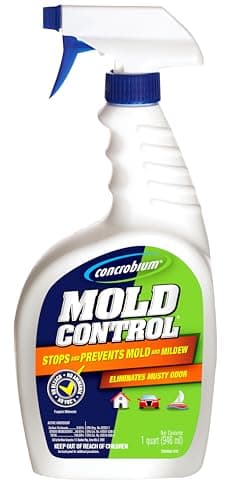
A patented, EPA-registered mold control solution that kills mold without bleach, ammonia, or VOCs. The tri-salt polymer formula crushes mold spores as it dries and leaves an invisible antimicrobial barrier to prevent regrowth. Safe for indoor use on virtually any surface.
Pros
- Non-toxic, no bleach or ammonia
- Kills mold and prevents regrowth
- Safe for use around children and pets
Cons
- Does not remove existing mold stains
- Takes longer to work than bleach-based products
- May require multiple applications for severe infestations
RMR-86 Instant Mold & Mildew Stain Remover Spray (1 Gallon)
RMR Brands
$25–35
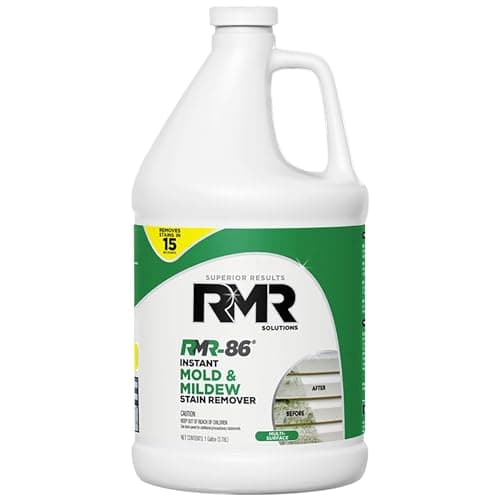
A fast-acting, commercial-strength mold stain remover that eliminates black mold stains on contact. The sodium hypochlorite formula penetrates porous surfaces to lift deep stains without scrubbing. Best used in well-ventilated areas with proper respiratory protection.
Pros
- Removes stains in as little as 15 seconds
- Works on wood, concrete, drywall, and tile
- No scrubbing required
Cons
- Strong bleach-based formula with harsh fumes
- Not safe for fabrics or colored surfaces
- Requires good ventilation and PPE
For a full comparison of sprays, foggers, and stain removers — and which surfaces each is safe on — see our roundup of the best mold removal products.
Found a Different Color?
Mold color reflects spore pigment and colony age far more than danger level, and many species shift color as they mature. If your growth isn't white — or your white patch is developing color — we have dedicated identification and removal guides for green mold, yellow mold (including dry rot, the one color-adjacent problem that genuinely threatens your framing), orange mold, and pink mold (which is usually bacteria, not mold at all). For the full color-by-color picture in one place, start with our complete mold identification guide.
When to Test White Mold
Most of the time, you don't need to know the species — the cleanup is the same. But testing earns its cost in a few situations:
- The spray test was inconclusive — A viable-spore test kit settles the mold-or-not question definitively for the price of a pizza.
- Someone in the house has unexplained symptoms— Persistent congestion, headaches, or asthma flare-ups that improve when you leave the house are a reason to identify and quantify what's in your air.
- Real estate transactions or insurance claims — Documentation requires lab results, not your best guess.
- You cleaned it and it keeps coming back — Repeat growth means hidden moisture, and possibly hidden colonies. A whole-home DNA-based ERMI dust test catches contamination that surface swabs miss.
Mold Armor FG500 Do It Yourself Mold Test Kit
Mold Armor
$9–15
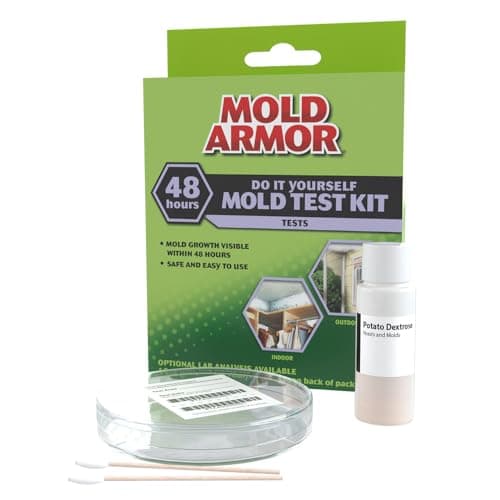
The most popular DIY mold test kit on Amazon. Includes a settling plate, swab, and pre-paid postage for AIHA-accredited lab analysis. The kit detects airborne mold spores and surface mold, identifying species like Aspergillus, Stachybotrys, and Penicillium.
Pros
- Very affordable entry-level test
- Includes petri dish, swab, and postage for lab analysis
- Results identify mold species
Cons
- Lab fee is separate (~$40)
- Takes 5-7 days for lab results
- Only tests one location per kit
The Mold Armor kit is the budget starting point — a settling plate plus swab, with optional lab analysis (the lab fee is separate) that identifies the species. For a comparison of settle plates, air cassettes, and DNA testing — and what each can and can't tell you — see our mold test kit guide.
Preventing White Mold
Every location on the "where it grows" list shares one cause: persistent moisture in still, cool air. Prevention is moisture control, full stop.
- Keep indoor humidity between 30–50% — The EPA-recommended range. A cheap hygrometer tells you where you stand; a dehumidifier in the basement handles the most common problem zone.
- Fix the crawl space — A ground vapor barrier (6-mil plastic over exposed soil) stops the single biggest moisture source under most homes. Full encapsulation with a dehumidifier is the permanent fix.
- Vent bath fans outside— If your bathroom exhaust dumps into the attic, you're irrigating your roof sheathing every shower. Redirect it through the roof or soffit.
- Pull furniture off exterior walls — A few inches of gap lets air circulate and keeps condensation from forming behind dressers, couches, and headboards.
- Repaint problem areas with mold-resistant paint — After cleaning and drying a recurring trouble spot, a coat of mold-resistant paint adds an antimicrobial layer that makes the surface itself inhospitable.
- Trust your nose — White mold in hidden spaces usually announces itself as a musty odor before you ever see it. Our guide to tracking down musty smells walks through finding the source.
Dealing With Mold Right Now?
Our step-by-step mold removal guide walks you through testing your home, choosing the right products, and knowing when a job is too big for DIY.
Read the Removal GuideFrequently Asked Questions
Is white mold dangerous?
It can be. White mold is usually an early or naturally pale stage of common genera like Penicillium and Aspergillus, which are among the most frequent indoor allergy triggers. Most healthy people experience congestion, sneezing, or eye irritation at household exposure levels; risks are higher for people with asthma, mold allergies, or weakened immune systems. The EPA's advice is the same for every color: remove it and fix the moisture.
How do I tell white mold from efflorescence?
Spray it with water. Efflorescence is crystallized mineral salt — it dissolves and disappears when wet, appears only on masonry, crumbles to powder between your fingers, and has no smell. Mold absorbs the water, smears when rubbed, grows on organic materials, and usually carries a musty odor. Full details in the spray test section above.
Does white mold turn into black mold?
Not in the way people fear. Many species start out white and darken as their spores mature — so a white colony can become a green, gray, or black-looking one. But that's the same species changing appearance, not your white mold transforming into toxic Stachybotrys. Color can't identify a species in either direction; only lab analysis from a test kit can.
What causes white mold in a house?
Persistent moisture meeting organic material in cool, still air. The usual drivers: ground moisture rising into crawl spaces, foundation seepage in basements, bathroom fans venting into attics, condensation behind furniture on exterior walls, and indoor humidity sitting above 50%. Mold can establish on a damp surface within 24–48 hours, so slow leaks count as much as floods.
Can I just paint over white mold?
No. Paint doesn't kill mold — the colony keeps growing under the film and bleeds back through, usually within months. Kill the mold first, let the surface dry completely, then repaint. If the spot has a history of regrowth, use a mold-resistant paint as the topcoat and fix whatever was keeping the surface damp.
Frequently Asked Questions
Is white mold dangerous?
How do I tell white mold from efflorescence?
Does white mold turn into black mold?
What causes white mold in a house?
Can I paint over white mold?
Related Articles
Types of Mold in Your Home: Color Identification Guide
Green Mold: Types, Dangers, and How to Remove It
Yellow Mold: Why It's More Dangerous Than You Think
Orange Mold: Identification, Risks, and Removal by Surface
Pink Mold: What It Really Is, How to Remove It, and How to Prevent It
Mold vs Mildew: How to Tell the Difference & What to Do About Each
Dealing With Mold Right Now?
Our step-by-step mold removal guide walks you through testing your home, choosing the right products, and knowing when a job is too big for DIY.
Read the Removal Guide