Best Air Purifiers for Mold Spores & Musty Odors (2026)
Out of the Mold Editorial Team
Our guides are research-backed and cite EPA, CDC, and peer-reviewed sources. Product reviews are based on hands-on testing, not manufacturer claims. Read our editorial standards.
Affiliate Disclosure: Out of the Mold is reader-supported. As an Amazon Associate, we may earn a commission when you buy through links on this page — at no extra cost to you. Our picks are based on independent standards, manufacturer specifications, and published research, not commissions.
Key Takeaways
- A True HEPA purifier removes airborne mold spores (2-10 microns) but never kills mold on a surface or fixes the moisture — it's a complement to removal and humidity control, not a replacement.
- The Coway Airmega AP-1512HH (around $230) is the best all-around pick; the Levoit Core 400S suits basements and large rooms, the Blueair 211i Max handles stubborn musty odor, and the Levoit Core 300 covers a bedroom for under $100.
- Insist on 'True HEPA' or 'H13' — 'HEPA-type' and '99% at 1 micron' let spores through. Add real activated carbon if the musty smell is the issue.
- Size for 4-6 air changes per hour: pick a smoke CADR of at least two-thirds the room's square footage, then size up. Underpowering is the most common mistake.
- Skip ozone generators and ionizer-only units entirely, and don't buy UV-C for mold — the HEPA filter does the real work.
A True HEPA air purifier does remove mold spores from the air — but it can't kill mold growing on a surface, and running one without fixing the moisture is treating smoke instead of the fire. Mold spores are 2–10 microns across (some species larger), and a True HEPA filter is rated to trap 99.97% of particles down to 0.3 microns — so spores are 7–30× bigger than what the filter is built to catch. Buy one for the airborne spores, the allergy symptoms, and the musty smell. For most homes the Coway Airmega AP-1512HH (around $230) is the right pick; basements and large rooms want the Levoit Core 400S, stubborn musty odor wants the Blueair 211i Max, and a bedroom wants the Levoit Core 300. Skip ozone generators and "ionizer-only" units entirely.
Here's the thing nobody selling air purifiers wants to say plainly: a purifier is downstream of your real problem. Mold in a house means a surface is staying wet — a leak, condensation, a humidity problem — and the purifier does nothing about that surface. What it doesdo, genuinely well, is pull the spores that colony throws into the air down to near zero, which is why your eyes stop itching and the room stops smelling like a damp cellar. Disturbing mold during cleanup sends a burst of spores into the air — which is exactly when a running HEPA purifier earns its keep, pulling that airborne load back down as the room clears. That's the job. Understand that, and you'll buy the right machine and skip the three-quarters of the market that's marketing.
Do Air Purifiers Actually Help With Mold?
Yes — for airborne spores, allergens, and odor. No — for killing mold at the source. Both halves of that sentence matter, so let's take them one at a time.
What a purifier does: mold reproduces by releasing spores into the air, and those spores are what trigger allergy and asthma symptoms and settle onto new damp surfaces to start fresh colonies. A True HEPA filter captures them on contact. Per the EPA's mold guidance, HEPA filtration is the same technology professional remediators use inside containment — an air scrubber is just a very large HEPA purifier. Running one during and after cleanup keeps the spores you disturb from spreading to the rest of the house.
What a purifier can't do:it never touches the mold growing on your bathroom ceiling or behind the drywall. That colony keeps growing, keeps staining, and keeps producing new spores as fast as the filter removes the old ones. If you only run a purifier and never address the moisture, you'll be replacing filters forever while the problem gets worse behind the wall. The purifier is a complement to removal and humidity control — never a replacement.
When you need a purifier vs. when you need remediation
- Buy a purifierif you have allergy or asthma symptoms you suspect are mold-related, a lingering musty smell, or you're cleaning up a small amount of visible mold and want to control spores during the work.
- Skip the purifier and remediate first if you have visible mold spreading over more than about 10 square feet, mold in your HVAC ducts, or a known water intrusion. The EPA's 10-square-foot rule is the line where a job usually moves from DIY to professional. A purifier at that point is a band-aid on a broken pipe. See our black mold removal guide for the actual fix.
What to Look For in a Mold Air Purifier
Four specs decide whether a purifier does anything for mold. Everything else on the box is noise.
1. True HEPA — non-negotiable
"True HEPA" (or the tighter medical grade, H13) means the filter is certified to capture 99.97% of particles at 0.3 microns. Airborne mold spores run 2–10 microns — Aspergillus and Penicilliumspores are roughly 2–5 microns — so they're 7 to 30 times larger than the filter's worst-case particle size. A True HEPA filter removes essentially all of them. Watch the weasel words: "HEPA-type," "HEPA-like," and "99% at 1 micron" are notTrue HEPA and let a meaningful fraction of spores through. If the listing won't say "True HEPA" or "H13," assume it isn't.
2. Activated carbon — for the musty smell
HEPA traps particles, but the musty odor itself is gas — microbial volatile organic compounds (mVOCs) that mold releases as it grows. A HEPA filter walks straight past them. Only a real bed of activated carbon adsorbs those molecules. If killing the musty smellis why you're buying, weigh carbon capacity as heavily as HEPA — a thin carbon-dusted pre-filter won't cut it, which is why the carbon-heavy Blueair below is our odor pick.
3. CADR and room size — get this right or waste your money
Clean Air Delivery Rate (CADR) is the honest measure of how much clean air a unit actually produces. For mold you want roughly 4–6 air changes per hourin the affected room — higher than the 2 ACH a general-allergy setup targets, because you're fighting a continuous spore source. A simple field rule: pick a unit whose smoke CADR is at least two-thirds of the room's square footage, and for mold, size up from there. An underpowered purifier in a big room is the single most common mistake — it runs all day and never clears the air.
4. Noise — because it only works while it's on
Mold control means running the purifier continuously, including overnight in a bedroom. If it's too loud to sleep next to, you'll turn it down to a setting that barely moves air, or off — and a purifier that's off has a CADR of zero. Check the decibel rating at the speed you'll actually run, not the whisper-quiet lowest setting.
Do not buy an ozone generator or ionizer-only unit. Ozone generators are marketed for mold and are actively harmful — the EPA warns they produce lung-irritating ozone at levels that don't effectively remove mold and can worsen the very respiratory symptoms you're trying to fix. Ionizers add trace ozone for little proven benefit; on the units below that have an ion mode, leave it off. For mold, mechanical HEPA + carbon is the whole answer.
Best Air Purifiers for Mold at a Glance
These four cover almost every household mold situation. All four are True (or medical-grade H13) HEPA with real carbon, and all four move enough air to hit 4+ changes per hour in their rated space.
| Product | Rating | Price | Best For | Link |
|---|---|---|---|---|
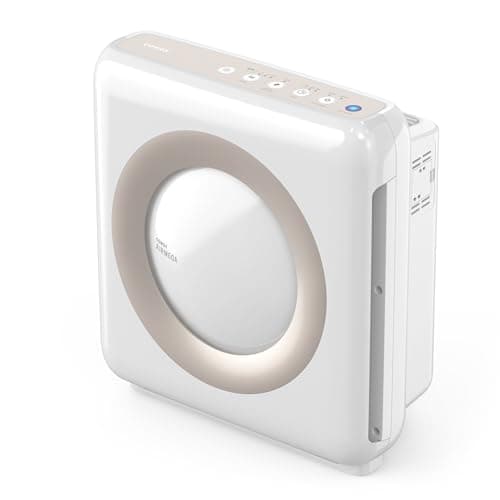 Coway Airmega AP-1512HH True HEPA Air Purifier Coway Best Overall | $200–260 | Most homes — the all-around best HEPA + carbon purifier for mold spores and odor | View | |
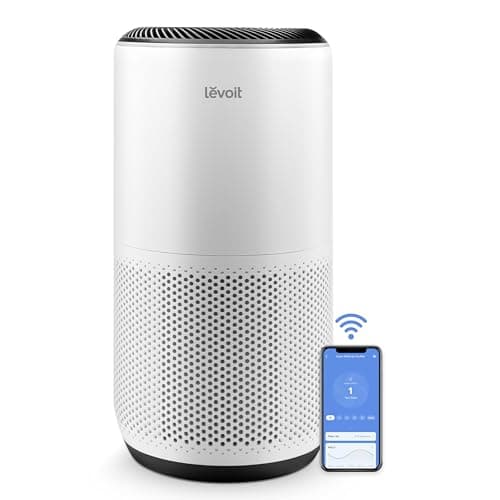 LEVOIT Core 400S Smart True HEPA Air Purifier Levoit Best for Basements & Large Rooms | $190–240 | Basements and large rooms where you want a live spore/PM2.5 reading and set-and-forget scheduling | View | |
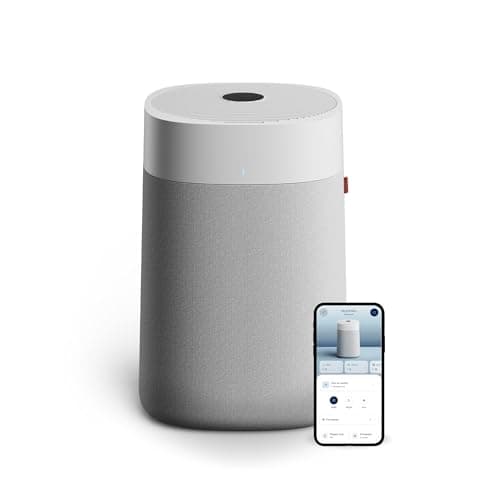 BLUEAIR Blue Pure 211i Max Smart Air Purifier Blueair Best for Musty Odor | $250–300 | Large open floor plans and stubborn musty smells where coverage and odor control matter most | View | |
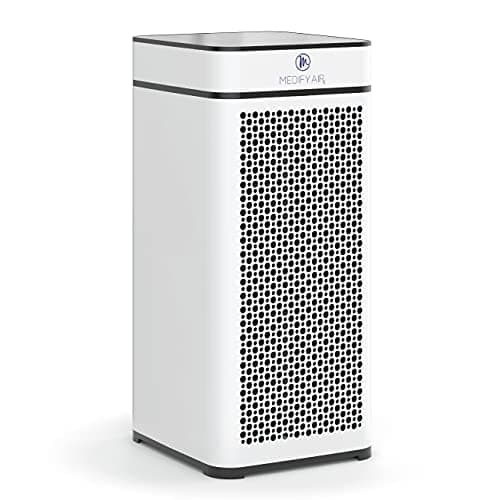 Medify MA-40 Medical-Grade H13 HEPA Air Purifier Medify Best for Remediation | $200–260 | Running alongside or right after active mold remediation, when you want maximum spore capture | View |
For a single bedroom on a budget, the Levoit Core 300 is plenty, and if you specifically want a UV-C option we cover the GermGuardian below — with an honest take on whether UV-C does anything for mold.
Best Air Purifiers for Mold: Full Reviews (2026)
Best Overall: Coway Airmega AP-1512HH
If you want one recommendation and no homework, this is it. The Coway has been the default "best air purifier" pick on independent testing sites for the better part of a decade, and for mold it checks every box: a real four-stage path (pre-filter → activated carbon → True HEPA → optional ion), coverage to 1,748 sq ft, and a pollution sensor that ramps the fan when airborne particles spike. That last feature is genuinely useful during cleanup — disturb a moldy surface and the unit goes to high on its own.
Two honest caveats. First, the ionizer is on by default; open the app or panel and turn it off — you want the HEPA and carbon, not trace ozone. Second, filter sets run about $40–60 a year, which for 24/7 mold-season running is a real cost to plan for. Neither is a dealbreaker. For a living room, a bedroom, or any room up to ~550 sq ft at proper mold-grade turnover, this is the smart-money pick.
Coway Airmega AP-1512HH True HEPA Air Purifier
Coway
$200–260
The long-standing benchmark for HEPA air purifiers. A four-stage system — pre-filter, deodorizing activated-carbon filter, True HEPA, and an optional ionizer — pulls mold spores, pollen, and musty odor out of rooms up to 1,748 sq ft. The pollution sensor ramps the fan when spore counts spike (say, right after you disturb growth during cleanup), then idles down in Eco mode. Independent testing sites have ranked it a top performer for years.
Pros
- True HEPA captures 99.97% of particles down to 0.3 microns — well below mold spore size
- Dedicated activated-carbon layer handles the musty VOCs HEPA can't
- Covers up to 1,748 sq ft; air-quality sensor auto-adjusts fan speed
Cons
- Ionizer mode is on by default — turn it off (produces trace ozone, no mold benefit)
- Replacement filter sets run ~$40–60 a year
- No app control on the base model
Best for Basements & Large Rooms: Levoit Core 400S
Basements are where mold air-quality problems live, and they're big, open, and often damp — exactly where the Coway runs out of room. The Core 400S is rated to 1,733 sq ft, uses an H13 True HEPA with a proper carbon layer, and — the reason I recommend it for basements specifically — the VeSync app shows a live PM2.5 number. You can actually watch the spore- laden dust drop after you clean, which turns "I hope this is working" into a reading you can check.
Pair it with a basement dehumidifierand you've built the two-machine setup that actually keeps a lower level habitable: the dehumidifier removes the moisture so mold can't grow, the purifier removes the spores that are already airborne. The filter is one combined unit, so in a damp basement budget ~$50 every 6–8 months to replace it — carbon saturates faster in musty air.
LEVOIT Core 400S Smart True HEPA Air Purifier
Levoit
$190–240
Levoit's large-room workhorse. The 360-degree intake and H13 HEPA move a lot of air — enough to cycle a 1,733 sq ft basement several times an hour on high — and the VeSync app surfaces a real PM2.5 number so you can watch spore-laden dust drop after you clean. Pair it with a dehumidifier and it's the closest thing to a permanent air-quality fix for a chronically damp lower level.
Pros
- Rated for large open spaces up to 1,733 sq ft — good for basements and finished lower levels
- H13 True HEPA plus a high-capacity activated-carbon layer for musty basements
- App shows a live PM2.5 reading and lets you schedule/auto-run 24/7
Cons
- Filter is a single combined unit — the whole thing gets replaced (~$50 every 6–8 months in a damp space)
- Physically large; not a discreet bedroom unit
- Wi-Fi setup can be finicky on 5 GHz-only networks
Best for Musty Odor: Blueair Blue Pure 211i Max
When the complaint is the smellmore than the symptoms, carbon capacity is what matters, and the 211i Max carries one of the largest carbon loads in its class alongside coverage to a genuinely huge 3,235 sq ft. Blueair's HEPASilent design pairs mechanical HEPA with an electrostatic charge to hit high clean-air delivery at lower noise than a pure-mechanical unit of the same size — useful when you want it moving serious air in a big open space without sounding like a box fan.
The trade-offs are cost and size: it's the priciest to run here because those big combination filters aren't cheap, and it's physically bulky. But for an open-plan main floor or a finished basement where the lingering musty smell is the thing driving you crazy, nothing else on this list clears odor as convincingly.
BLUEAIR Blue Pure 211i Max Smart Air Purifier
Blueair
$250–300
Blueair's HEPASilent approach combines mechanical and electrostatic filtration to hit high clean-air delivery at lower noise than a pure-mechanical unit of the same coverage. What earns it a spot here is odor: the carbon load is large enough to noticeably knock down the musty mVOC smell that lingers after mold cleanup. If your problem is a big, open, musty space rather than a single moldy closet, this is the one.
Pros
- HEPASilent filtration rated for very large rooms — up to 3,235 sq ft
- Big activated-carbon load makes it the best pick for persistent musty odor
- Genuinely quiet at low speed for the amount of air it moves
Cons
- Most expensive to run — large combination filters aren't cheap
- Bulky footprint
- Electrostatic step means slightly more frequent filter care in dusty spaces
Best for Active Remediation: Medify MA-40 (H13)
The MA-40's pitch is medical-grade H13 HEPA — a tighter filter grade than standard True HEPA — plus a properly gasketed housing. That gasket is the underrated detail: a lot of cheap purifiers let some air sneakaround the filter instead of through it, so the sealed design matters more than another spec bump. It moves enough air to turn over a 1,793 sq ft room roughly hourly, which is what you want during and right after a cleanup when spore counts are highest.
There's no air-quality sensor on the base model — you set the fan yourself — and I'd actively steer you away from the UV-equipped version, which costs far more for a UV stage that does little for mold (see the UV-C note below). Get the standard MA-40, run it on high while you work through our removal process, and drop it to medium afterward.
Medify MA-40 Medical-Grade H13 HEPA Air Purifier
Medify
$200–260
The MA-40 leans on a medical-grade H13 filter and a genuinely sealed housing — the detail that separates a purifier that filters air from one that leaks dusty air around a loose filter. It moves enough air to turn over a large room hourly, which is what you want during and just after remediation when spore counts are elevated. Skip the pricier UV-C version: for mold, a properly sealed HEPA does the work.
Pros
- H13 medical-grade HEPA (a tighter grade than standard True HEPA)
- High turnover — rated to clean 1,793 sq ft in about an hour
- Simple sealed design with a real gasket, so unfiltered air doesn't leak around the filter
Cons
- No air-quality sensor on the base model — you set the speed manually
- Filters are proprietary and mid-priced
- UV-equipped versions cost much more for little proven mold benefit
Best Budget / Bedroom: Levoit Core 300
Not everyone has a basement problem — sometimes it's one damp bedroom, a nursery, or a small office, and spending $250 there is overkill. The Core 300 puts H13 True HEPA and a carbon pre-filter in a compact body for well under $100, cleans a ~219 sq ft room about five times an hour, and runs at 24 dB on low, which is quiet enough to sleep beside. Replacement filters are cheap and everywhere.
Its only real limit is coverage: don't ask it to handle a basement or an open floor plan — it'll run flat out and never clear the air. For one closed room, though, it's the honest budget answer and the one I hand to friends who don't want to think about it.
LEVOIT Core 300 True HEPA Air Purifier
Levoit
$80–100
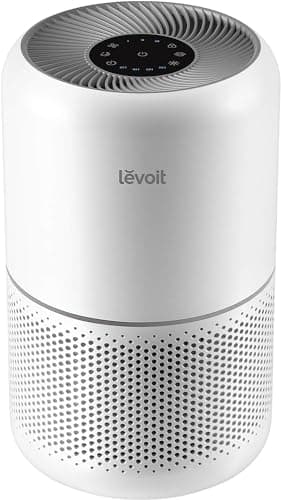
The default single-room budget purifier. For a bedroom where mold spores or a faint musty smell are the concern, the Core 300's H13 HEPA and carbon pre-filter clean the air about five times an hour and it's quiet enough to sleep next to. Don't ask it to cover more than one closed room — size up to the Core 400S or Coway for anything larger.
Pros
- H13 True HEPA in an affordable, compact body
- Whisper-quiet on low (24 dB) — genuinely bedroom-friendly
- Cheap, widely stocked replacement filters
Cons
- Small coverage — roughly 219 sq ft at proper turnover
- No sensor or app on the standard Core 300
- Not enough for a basement or open floor plan
Best UV-C Option (With a Caveat): GermGuardian AC4825E
People search for "UV-C air purifier for mold" constantly, so here's the straight answer: UV-C does very little for mold in a consumer air purifier.The air passes the little UV lamp far too fast for the dose to reliably kill a spore — effective UV germicidal treatment needs sustained exposure the airflow doesn't allow. In every UV-C purifier, the HEPA filter is doing nearly all of the real work.
That said, if you specifically want a UV-C unit, the GermGuardian AC4825E is the sensible one to buy: it's a genuine True HEPA plus charcoal tower for $70–90, and the UV-C is a harmless bonus rather than the point. Just buy it for the cheap HEPA — not for the UV — and don't expect the lamp to do anything a filter isn't already doing.
GermGuardian AC4825E 3-in-1 HEPA Air Purifier with UV-C
GermGuardian
$70–90
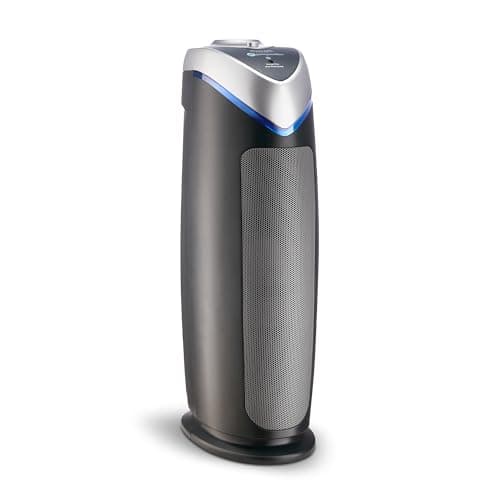
The best-known budget purifier with a UV-C stage. Here's the honest read on UV-C for mold: the air passes the lamp too fast for the UV dose to reliably kill spores, so the HEPA filter is doing nearly all of the real work. That's fine — the AC4825's True HEPA and charcoal filter clean a small room capably for the price. Buy it for the cheap HEPA, and consider the UV-C a minor extra rather than a mold solution.
Pros
- True HEPA plus a charcoal filter at a low price
- Slim tower footprint fits tight spaces
- Optional UV-C stage if you want it (see caveat)
Cons
- UV-C contact time is too short to meaningfully kill spores — treat it as a bonus, not the reason to buy
- Modest coverage (~150 sq ft at real turnover)
- Louder on high than the Levoit units
Air Purifier vs. Dehumidifier for Mold: Which Do You Need?
This is the decision most people are actually trying to make, and the answer is usually "both, for different jobs." They solve opposite halves of the same problem:
- A dehumidifier removes moistureso mold can't grow in the first place. It attacks the cause. It does nothing about spores already floating in the air.
- An air purifier removes airborne spores and odor. It manages the symptom. It does nothing to stop mold from growing on a wet surface.
If you can only buy one, buy the dehumidifier— preventing growth beats filtering the fallout. But in a chronically damp basement or a home with active allergy symptoms, the pair is the real fix: the dehumidifier holds humidity in the EPA's recommended 30–50% range so nothing new grows, and the purifier clears the spores that are already in the air. Not sure whether you even have a mold problem yet? A home mold test kit or an ERMI test settles it before you spend on either machine.
How to Get the Most Out of Your Purifier
- Run it continuously. Mold is a continuous spore source, so intermittent running just lets counts rebuild between sessions. Use the auto/eco mode to keep it on cheaply.
- Place it right. Put it in the room with the problem, a few feet off the wall with clear space around the intake, not tucked in a corner or behind furniture that starves the airflow.
- Close the room.A purifier sized for 250 sq ft can't clean your whole open floor plan — shut the door to the affected room so it's actually working the space it's rated for.
- Replace filters on schedule.A saturated carbon filter stops adsorbing odor and a clogged HEPA chokes airflow. In a musty space, expect to replace sooner than the "typical" interval on the box.
- Fix the moisture.Say it with me: the purifier is not the fix. Find the leak, dry the space, and control the humidity, or you'll filter spores forever. (If you're still weighing whether a purifier is even worth it, our breakdown of what a mold air purifier can and can't do is the honest version.)
Out of the Mold is reader-supported. When you buy through links on this page we may earn an affiliate commission at no extra cost to you. We only recommend products we'd use ourselves, and our picks are based on filtration standards and independent testing, not commissions.
Frequently Asked Questions
Do air purifiers actually help with mold?
What size air purifier do I need for mold?
Does UV-C light in an air purifier kill mold?
Should I use an air purifier or a dehumidifier for mold?
Are ozone generators or ionizers good for mold?
Related Articles
Best Dehumidifiers for Mold Prevention & Removal (2026)
What Does Mold Smell Like? How to Identify Mold by Smell
Musty Smell in House? Here's How to Find & Fix the Source
Black Mold in Your AC: How to Identify, Remove & Prevent It
How to Test for Mold at Home: DIY Methods That Actually Work
Mold Removal Products: A Complete Guide to What Works and Why
Dealing With Mold Right Now?
Our step-by-step mold removal guide walks you through testing your home, choosing the right products, and knowing when a job is too big for DIY.
Read the Removal Guide