Mold in Air Ducts: How to Detect, Remove & Prevent HVAC Mold
Out of the Mold Editorial Team
Our guides are research-backed and cite EPA, CDC, and peer-reviewed sources. Product reviews are based on hands-on testing, not manufacturer claims. Read our editorial standards.
Affiliate Disclosure: Out of the Mold is reader-supported. As an Amazon Associate, we may earn a commission when you buy through links on this page — at no extra cost to you. Our picks are based on real testing and independent standards, not commissions.
Key Takeaways
- Verify before you pay: the flashlight-at-the-register and startup-smell tests catch most upsells.
- DIY-safe = visible mold on removable register covers. Pro-only = inside the ducts or on the coil; insulated ducts get replaced, not cleaned (EPA).
- EPA recommends duct cleaning only for substantial visible mold, and warns it recurs unless you fix the moisture.
- The real spend is prevention: MERV 11–13 filters, humidity under 50%, and a HEPA air purifier.
- HVAC mold usually starts at the AC coil and drain pan — check there first, not deep in the sheet-metal runs.
Before you pay a duct cleaner $500–$1,000, verify you actually have a problem. Surface mold you can see and reach at the registers and vent covers is a do-it-yourself wipe-down with an EPA-registered cleaner. Mold inside the ductwork itself is genuinely a pro job — but the EPA only recommends duct cleaning when there's "substantial visible mold growth" inside the ducts, and warns that if you don't fix the moisture, it comes right back. The money that actually protects you isn't the one-time cleaning — it's the prevention system a duct cleaner has no reason to sell you: better filters, humidity under 50%, and a HEPA air purifier catching the spores that circulate.
The number-one search behind "mold in air ducts" isn't "how do I remove it" — it's "the HVAC guy says I have mold, is he telling the truth?" That's the actual question, and almost nothing ranking for this topic answers it, because most of it is published by companies that want to sell you a cleaning. So let's start there: how to verify it yourself, what you can safely handle, when you genuinely need a pro, and how to keep it from coming back.
Verify It Yourself Before You Pay Anyone
A duct-cleaning upsell often rides on a phone photo of "mold" that turns out to be dust, lint, or harmless dark buildup. You can do a first- pass check in ten minutes:
- Flashlight + mirror at the registers. Pop off a couple of vent covers and shine a light in. Look at the register itself and as far into the boot as you can see. Fuzzy, spotty, or slimy growth is a concern; a flat film of gray dust is not.
- The startup-smell test. With the system off for a while, stand at a vent and have someone switch the HVAC to fan/cool. A distinct musty, earthy smellthat hits in the first few seconds of airflow — then fades — is a classic sign of mold somewhere in the system. A smell that's constant regardless of the fan is more likely coming from the room.
- Check the easy suspects. Mold in an HVAC system usually starts where water sits: the evaporator coil and drain pan at the air handler, and any spot where warm and cold surfaces meet. Our black mold in AC guidecovers the coil and drain-pan check in detail — that's where a real problem most often lives, not deep in the sheet-metal runs.
- Pull the filter.A soaked, collapsed, or long-overdue filter is both a cause and a clue. If it's filthy, that alone can explain musty air.
If all you find is surface growth at the registers and a slightly musty startup smell, you probably don't need a four-figure duct cleaning yet. If the coil is furred, the smell is strong, or symptoms clearly worsen when the system runs, keep reading.
What You Can Safely Do Yourself (and What You Can't)
The EPA's position is the honest dividing line, and it's worth quoting: you should consider professional cleaning "if there is substantial visible mold growth inside hard surface (e.g., sheet metal) ducts." And critically — "if you have insulated air ducts and the insulation gets wet or moldy it cannot be effectively cleaned and should be removed and replaced." So:
- DIY-safe:visible mold on the removable metal or plastic register covers and the reachable surface just inside the boot. Take the cover off, clean it with an EPA-registered mold remover, dry it, and reinstall. Wear gloves and an N95-or-better respirator, and don't run the system while you work.
- Pro-only: substantial mold inside the sheet-metal ducts; any mold on insulated(fiberglass-lined) ductwork — per EPA, NADCA, and NAIMA that insulation gets removed and replaced, not cleaned; mold on the evaporator coil beyond a light surface film; or a system you've confirmed is spreading a musty smell through the whole house.
For the register-cover cleaning, a fast-acting stain remover like RMR-86 lifts visible growth quickly, or a bleach-free Concrobium Mold Control if you want a residual antimicrobial film without fumes near the airflow.
RMR-86 Instant Mold & Mildew Stain Remover Spray (1 Gallon)
RMR Brands
$25–35
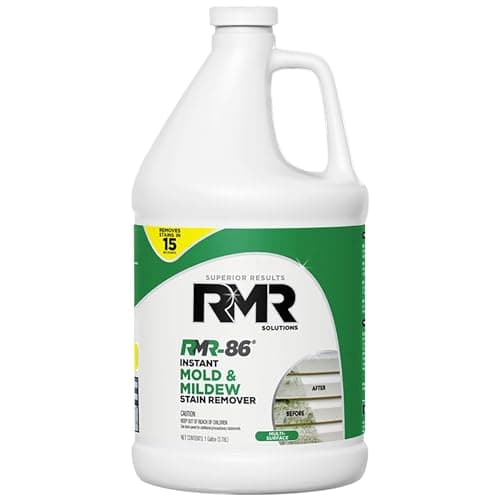
A fast-acting, commercial-strength mold stain remover that eliminates black mold stains on contact. The sodium hypochlorite formula penetrates porous surfaces to lift deep stains without scrubbing. Best used in well-ventilated areas with proper respiratory protection.
Pros
- Removes stains in as little as 15 seconds
- Works on wood, concrete, drywall, and tile
- No scrubbing required
Cons
- Strong bleach-based formula with harsh fumes
- Not safe for fabrics or colored surfaces
- Requires good ventilation and PPE
Concrobium Mold Control
Concrobium
$10–15
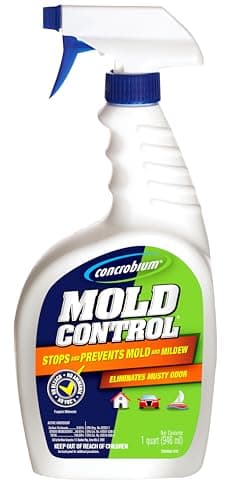
A patented, EPA-registered mold control solution that kills mold without bleach, ammonia, or VOCs. The tri-salt polymer formula crushes mold spores as it dries and leaves an invisible antimicrobial barrier to prevent regrowth. Safe for indoor use on virtually any surface.
Pros
- Non-toxic, no bleach or ammonia
- Kills mold and prevents regrowth
- Safe for use around children and pets
Cons
- Does not remove existing mold stains
- Takes longer to work than bleach-based products
- May require multiple applications for severe infestations
Can Mold in Your Air Ducts Make You Sick?
The reason duct mold gets attention is distribution: a forced-air system moves that air into every room, so a localized colony becomes a whole-home exposure. That's a real mechanism, and it's why the startup-smell test matters. For what mold exposure actually does to health — and who's most at risk — we point you to the CDC and EPA rather than offer medical advice. If someone in the home has asthma or allergies and symptoms track with the HVAC running, a DIY air-quality mold test gives you data instead of a guess — run it with the system on.
What Professional Duct Mold Removal Costs (and the Scam Tells)
A legitimate duct mold job follows the NADCA process — source-removal cleaning under negative pressure with HEPA collection, plus replacing any wet or moldy insulated duct sections. Watch for these red flags, which map exactly to the "is he upselling me" worry that sends people searching in the first place:
- A "$79 whole-house duct cleaning" coupon that becomes a $1,500 mold quote on-site — classic bait pricing.
- Fogging a "sanitizer" through the ducts instead of physically removing growth. Fogging masks; it doesn't remove a substantial colony.
- No mention of the moisture source. If nobody asks why the ducts got wet, the mold returns — the EPA is explicit that controlling moisture is the only thing that prevents recurrence.
Ballpark: professional HVAC/duct mold work commonly runs several hundred to a couple thousand dollars depending on system size and how much insulated duct needs replacing. Price your specific situation against our sourced mold removal cost benchmarks before you accept a number.
The Prevention System That Actually Keeps It Gone
This is where the money is best spent and where a duct cleaner has no incentive to steer you, because none of it is a service they bill for. Mold in an HVAC system is a moisture-plus-food problem; starve it of both:
- Change filters on schedule and step up the MERV.A higher-MERV pleated filter (MERV 11–13, if your system's airflow supports it) captures the dust and spores that feed and seed duct mold. Swap it every 1–3 months. This is the cheapest prevention there is.
- Hold indoor humidity under 50%. Condensation is what lets mold colonize duct surfaces. In a humid climate or a damp season, a properly sized dehumidifier is the fix; verify with a cheap hygrometer.
- Run a HEPA air purifier in the rooms you use most.It won't clean the ducts, but it pulls circulating spores out of the air the system distributes — a genuine backstop, and the one upgrade that pays off across every mold source in the house. Our best air purifiers for mold breaks down sizing by room.
- Service the HVAC annually.A tech should check the coil, clear the condensate drain, and confirm the drain pan isn't holding water — the most common origin point for HVAC mold.
Coway Airmega AP-1512HH True HEPA Air Purifier
Coway
$200–260
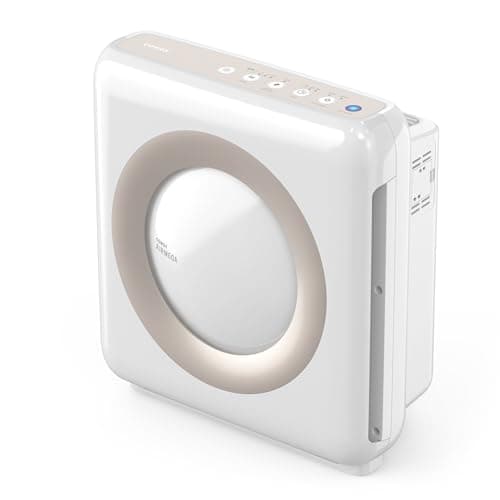
The long-standing benchmark for HEPA air purifiers. A four-stage system — pre-filter, deodorizing activated-carbon filter, True HEPA, and an optional ionizer — pulls mold spores, pollen, and musty odor out of rooms up to 1,748 sq ft. The pollution sensor ramps the fan when spore counts spike (say, right after you disturb growth during cleanup), then idles down in Eco mode. Independent testing sites have ranked it a top performer for years.
Pros
- True HEPA captures 99.97% of particles down to 0.3 microns — well below mold spore size
- Dedicated activated-carbon layer handles the musty VOCs HEPA can't
- Covers up to 1,748 sq ft; air-quality sensor auto-adjusts fan speed
Cons
- Ionizer mode is on by default — turn it off (produces trace ozone, no mold benefit)
- Replacement filter sets run ~$40–60 a year
- No app control on the base model
Midea 50-Pint Energy Star Dehumidifier
Midea
$180–220
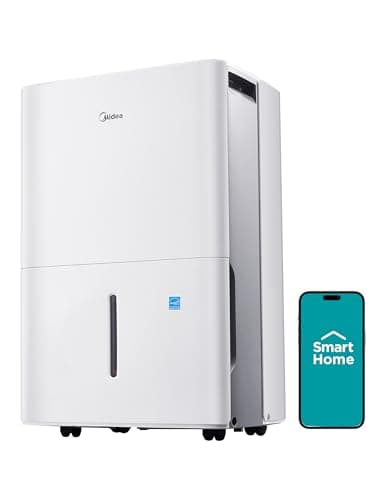
Midea's standard 50-pint unit delivers the same core moisture removal as premium models — auto-humidistat, auto-restart after power outages, and a continuous-drain port — at one of the lowest prices in the 50-pint class. If your basement has a floor drain and you don't need smart features, this is the value pick for holding humidity below 50%.
Pros
- Lowest price per pint of capacity in its class
- Energy Star certified for around-the-clock operation
- Covers up to 4,500 sq ft with continuous-drain option
Cons
- No pump — needs a floor drain or regular bucket emptying
- Basic controls without app connectivity
- Bucket is smaller than the Cube design
Klein Tools ET140 Pinless Moisture Meter
Klein Tools
$45–60
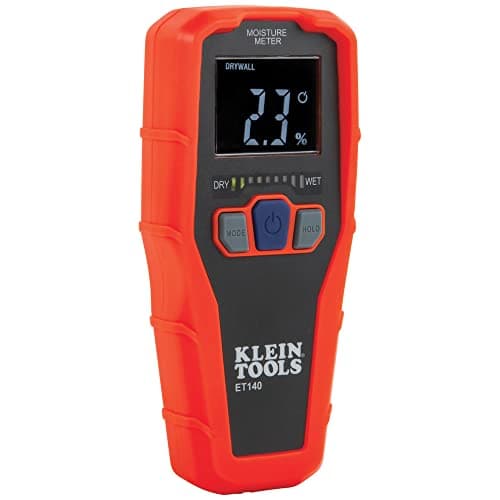
A professional-grade pinless moisture meter that detects hidden moisture in drywall, wood, and masonry without leaving holes. Uses electromagnetic sensor technology to measure moisture content up to 3/4 inch below the surface. Essential for identifying moisture problems before mold develops.
Pros
- Non-invasive pinless technology, no holes in walls
- Detects moisture up to 3/4 inch deep
- Visual and audible moisture alerts
Cons
- Less precise than pin-type meters on exact moisture percentage
- Battery not included
- Can give false readings on metallic or foil-backed surfaces
Want a second air-purifier option for a larger room? The Levoit Core 400S is our value pick for bigger spaces.
LEVOIT Core 400S Smart True HEPA Air Purifier
Levoit
$190–240
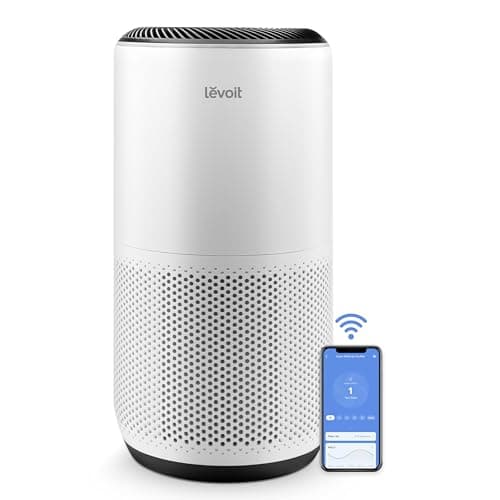
Levoit's large-room workhorse. The 360-degree intake and H13 HEPA move a lot of air — enough to cycle a 1,733 sq ft basement several times an hour on high — and the VeSync app surfaces a real PM2.5 number so you can watch spore-laden dust drop after you clean. Pair it with a dehumidifier and it's the closest thing to a permanent air-quality fix for a chronically damp lower level.
Pros
- Rated for large open spaces up to 1,733 sq ft — good for basements and finished lower levels
- H13 True HEPA plus a high-capacity activated-carbon layer for musty basements
- App shows a live PM2.5 reading and lets you schedule/auto-run 24/7
Cons
- Filter is a single combined unit — the whole thing gets replaced (~$50 every 6–8 months in a damp space)
- Physically large; not a discreet bedroom unit
- Wi-Fi setup can be finicky on 5 GHz-only networks
Mold at the Vents vs. Mold in the Ducts
The distinction decides whether you grab a spray bottle or a phone. Mold on the vent covers and registers — the parts you can unscrew and see — is usually condensation on cold metal and is DIY-safe to clean. Mold in the ductwork or on the coil— the parts you can't see or reach — is a system problem: pro cleaning for hard ducts, replacement for insulated ones. If you cleaned the covers and the musty startup smell is still there, the problem is deeper in the system, and that's your signal to call someone.
The honest summary: verify before you pay, DIY the surfaces you can reach, let a pro handle what's inside the system — and put your real money into the prevention that stops it from ever coming back.
Frequently Asked Questions
How do I know if I really have mold in my air ducts?
Can I clean mold out of my air ducts myself?
Does the EPA recommend duct cleaning for mold?
How much does professional duct mold removal cost?
How do I prevent mold from coming back in my ducts?
Related Articles
Best Air Purifiers for Mold Spores & Musty Odors (2026)
Black Mold in Your AC: How to Identify, Remove & Prevent It
Best Dehumidifiers for Mold Prevention & Removal (2026)
Best Mold Test Kits for Home Use: What Works & What's a Waste of Money (2026)
Attic Mold Removal: What Causes It, What It Costs & How to Fix It
Musty Smell in House? Here's How to Find & Fix the Source
Need Professional Mold Removal?
Get free, no-obligation quotes from licensed mold remediation specialists in your area.
Get Free Quotes