Attic Mold Removal: What Causes It, What It Costs & How to Fix It
Out of the Mold Editorial Team
Our guides are research-backed and cite EPA, CDC, and peer-reviewed sources. Product reviews are based on hands-on testing, not manufacturer claims. Read our editorial standards.
Affiliate Disclosure: Out of the Mold is reader-supported. As an Amazon Associate, we may earn a commission when you buy through links on this page — at no extra cost to you. Our picks are based on real testing and independent standards, not commissions.
Key Takeaways
- Attic mold is a ventilation problem first — treat only the mold and it grows back on the next humid season.
- The most common single cause is a bath or dryer fan venting into the attic, which is an IRC M1507.2 code violation.
- DIY line: under ~10 sq ft on firm wood, reachable, no HVAC in the attic, no household health risk — $150–$350.
- Professional attic remediation runs $1,000–$9,000 (Bob Vila & Fixr, 2026); homeowners insurance usually excludes it.
- The four steps: gear up (P100), remove and treat, encapsulate with a stain-killing primer, then fix the airflow.
Attic mold is a ventilation problem wearing a mold costume. Clean the sheathing all you want — if the attic can't breathe, it grows back. A small patch under about 10 square feet on firm wood is a $150–$350 DIY job: sand or scrub, treat with a fungicide, encapsulate with a stain- killing primer, and — the part everyone skips — fix the airflow that caused it. Bigger jobs, soft or rotted sheathing, or mold near the HVAC run professional, and attic remediation runs $1,000–$9,000(Bob Vila & Fixr, 2026). The single most common cause we see contractors treat and ignore: a bathroom exhaust fan dumping warm, wet air straight into the attic — which is a code violation, not just bad luck.
Almost nobody goes looking for attic mold. You find it because a home inspector flagged it during a sale, or you stuck your head through the hatch chasing a leak and saw the underside of the roof deck stained black or furred with white. Then the quotes arrive — $2,500, $6,000 — and the pitch is always the same: we'll kill the mold. Here's what a remediation salesperson usually won't lead with: attic mold is a symptom. Kill it without fixing why the attic is wet and you'll be paying for it again in a year or two. This guide is the independent version — what actually causes it, when you can handle it yourself, and what a legitimate pro job includes.
Start With the Cause, Not the Mold
An attic grows mold when moist air meets a cold surface and can't escape. Everything below is a version of that. Diagnose which one is yours before you touch a spray bottle:
- Blocked or missing ventilation. Attics are designed to breathe — cool air in at the soffit vents, warm moist air out at the ridge. Insulation stuffed over the soffits, painted-shut vents, or a roof with no ridge/gable exhaust traps humidity against the cold roof deck, and it condenses. This is the number-one cause.
- A bathroom or dryer fan venting into the attic. This one is specific, extremely common, and a genuine building-code violation: IRC section M1507.2 requires bathroom exhaust to discharge to the outdoors — not into an attic, soffit, or concealed space. A fan blowing shower steam into the attic will grow mold on the sheathing directly above it every single winter. If you find mold in one concentrated patch near a bathroom, look up: there's probably a flex duct blowing at it.
- A roof leak. Water intrusion around flashing, a nail pop, or an ice dam wets a defined area. Attic mold in a spreading stain that follows a rafter bay down toward the eave usually points here.
- Under-insulation and air leaks from below. Warm indoor air leaking up through recessed lights, the attic hatch, or top plates carries household moisture into a cold attic where it condenses. Common in older homes and in cold climates.
The tell that separates mold from a false alarm: in winter, attics often show frost or condensation droplets on the nail tips and sheathing that look alarming but wipe away clean and leave no stain. Actual mold is textured — fuzzy, powdery, or set into the grain — and comes with a musty smell at the hatch. That musty, earthy odor is often the first thing people notice before they ever see growth.
Can You Remove Attic Mold Yourself?
Use the EPA's line as your starting point: "If the moldy area is less than about 10 square feet... in most cases, you can handle the job yourself." That's a roughly 3 ft × 3 ft patch. Then layer on the attic-specific disqualifiers, because an attic is a nastier work environment than a bathroom wall:
- DIY-able:a defined patch under ~10 sq ft on plywood or OSB sheathing / rafters that are still firm when you press them; you can physically reach it; there's no HVAC air handler or ductwork in the attic; nobody in the home has asthma, a mold allergy, or a compromised immune system.
- Call a pro:growth across multiple rafter bays or most of the deck; sheathing that's soft, delaminating, or crumbling (that's rot — a structural question, not a cleaning one); mold on or near attic ductwork or an air handler (the system will pull spores into your living space); any sign of an active roof leak that isn't fixed yet; or a household health risk.
The HVAC rule matters more than people expect. Warm air rising through the house pulls attic air behind it — the "stack effect" — so a moldy attic isn't sealed off from the bedrooms below it. Ductwork running through that attic actively distributes spores. If your air handler lives up there, treat attic mold as a containment job and get a pro.
The DIY Attic Protocol
Cleared the triage? Here's the sequence. An attic in summer is 120°F+ and an attic in winter is a headlamp-and-kneeboard job on top of joists — pick a mild day, and never step between the joists onto the drywall ceiling.
1. Gear up — this is a confined, spore-heavy space
You'll be inches from the growth in poorly ventilated air, disturbing spores as you work. A P100 respirator (not a paper dust mask), sealed goggles, and gloves are the floor. The full breakdown of tiers is in our protective gear for mold removal guide.
3M 6391 Half Facepiece Reusable Respirator with P100 Filters
3M
$30–40
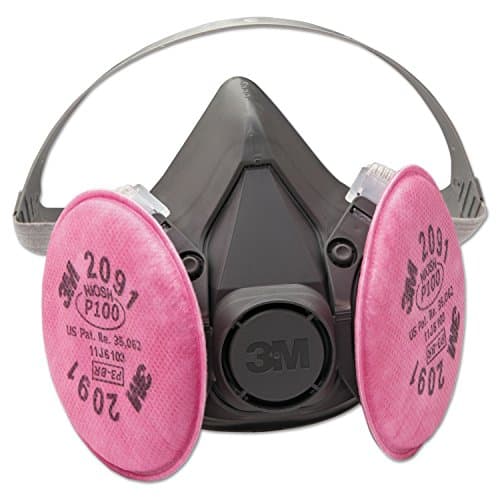
The step up from an N95 for serious mold work. The reusable half-facepiece takes P100 filters (99.97% particulate) and can pair with organic-vapor cartridges, so it handles both spores and the fumes from bleach, RMR-86, or paint strippers. This is what remediation pros wear for anything longer than a quick wipe-down.
Pros
- P100 filters block 99.97% of particles plus the bleach and ammonia fumes an N95 can't
- Reusable silicone facepiece seals better than a disposable mask
- Swappable cartridges — buy organic-vapor filters for chemical work
Cons
- Costs more upfront than a box of N95s
- Needs a clean-shaven face for a real seal, like any tight-fitting respirator
- Cartridges are a recurring cost once they clog
Sellstrom Non-Vented Anti-Fog Chemical Splash Goggles
Sellstrom
$5–12
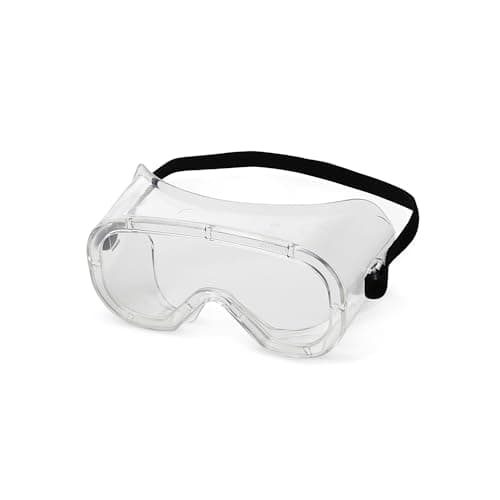
Cheap insurance for your eyes. Non-vented is the detail that matters: vented safety glasses let spores and chemical mist reach your eyes from below, which is exactly the angle you're exposed to when scrubbing a ceiling or spraying joists overhead. The anti-fog coating is what makes them usable in a damp crawl space.
Pros
- Non-vented design blocks splashes and fine spores that slip past vented safety glasses
- Anti-fog coating survives humid basements and crawl spaces
- Fits over most prescription glasses
Cons
- Non-vented lenses fog faster than vented ones without the coating
- Basic strap, not the most comfortable for all-day wear
- Clear lens scratches if tossed in a toolbox loose
SHOWA 732 15-Mil Chemical-Resistant Nitrile Gloves (12-Pack)
SHOWA
$18–28
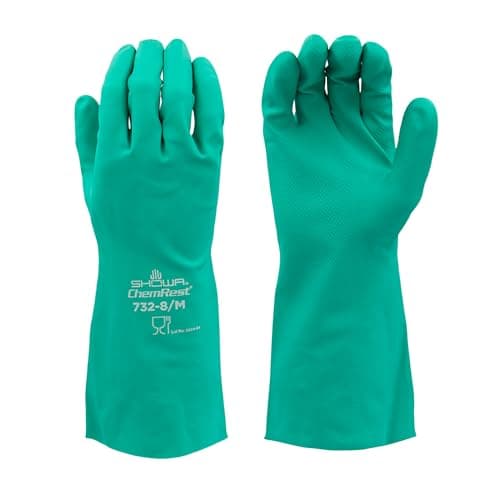
The disposable nitrile gloves from a box of 100 are fine for a quick spray, but they thin out and tear against bleach-based products and hours of scrubbing. SHOWA's 15-mil chemical-resistant nitrile with an extended cuff is what holds up to RMR-86, Concrobium, and repeated mold jobs — a real barrier, not a splash guard.
Pros
- 15-mil nitrile shrugs off bleach, RMR-86, and Concrobium without dissolving
- Extended cuff protects the forearm when reaching into cavities
- Reusable — flock lining makes them comfortable for repeat jobs
Cons
- Thicker than exam gloves, so less finger dexterity
- Reusable gloves need rinsing and drying between uses
- Sized for hands — measure before ordering
2. Remove and treat the growth
On bare wood sheathing, the goal is to physically remove the surface colony and then kill what's left in the grain. HEPA-vacuum or gently sand the worst of it (don't dry-brush spores into the air), then treat with an EPA-registered fungicide. On porous attic wood we favor a bleach-free product — Concrobium Mold Control because bleach mostly bleaches the stain and drives water into the wood rather than penetrating it. For the black staining itself, RMR-86lifts the discoloration fast, but remember it's a stain remover, not a moisture fix.
Concrobium Mold Control
Concrobium
$10–15
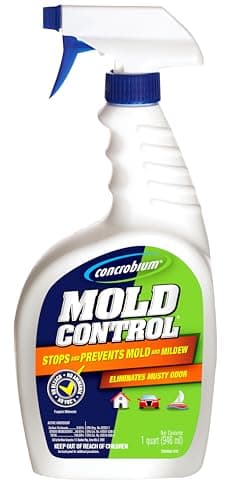
A patented, EPA-registered mold control solution that kills mold without bleach, ammonia, or VOCs. The tri-salt polymer formula crushes mold spores as it dries and leaves an invisible antimicrobial barrier to prevent regrowth. Safe for indoor use on virtually any surface.
Pros
- Non-toxic, no bleach or ammonia
- Kills mold and prevents regrowth
- Safe for use around children and pets
Cons
- Does not remove existing mold stains
- Takes longer to work than bleach-based products
- May require multiple applications for severe infestations
RMR-86 Instant Mold & Mildew Stain Remover Spray (1 Gallon)
RMR Brands
$25–35
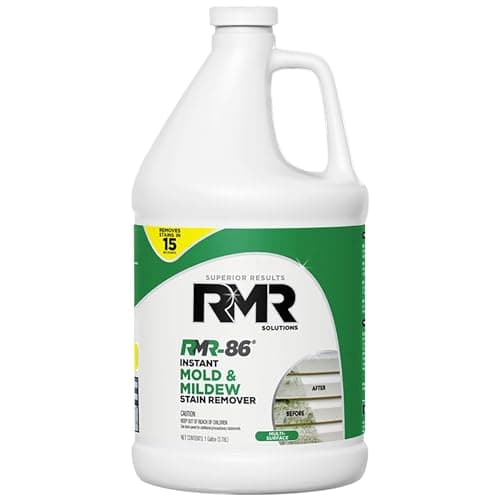
A fast-acting, commercial-strength mold stain remover that eliminates black mold stains on contact. The sodium hypochlorite formula penetrates porous surfaces to lift deep stains without scrubbing. Best used in well-ventilated areas with proper respiratory protection.
Pros
- Removes stains in as little as 15 seconds
- Works on wood, concrete, drywall, and tile
- No scrubbing required
Cons
- Strong bleach-based formula with harsh fumes
- Not safe for fabrics or colored surfaces
- Requires good ventilation and PPE
For coverage across the tops of rafters and the underside of the deck that a rag can't reach, fogging the space with a fungicide is legitimately useful — the same approach we cover for attic and whole-room fogging. Fogging treats surfaces; it does nothing for airflow, so it's a step, not the solution.
3. Encapsulate with a stain-killing primer
Once the wood is treated and bone dry, seal it. A mold-resistant primer and paint locks down any remaining spores and stops the stain from bleeding back. A pigmented shellac or mold-killing primer like Zinsser is the standard here; follow with a mildew-resistant topcoat if the area is visible or you want belt-and-suspenders protection. This is what pros mean by "encapsulation" on sheathing.
Zinsser Mold Killing Primer
Zinsser
$18–25
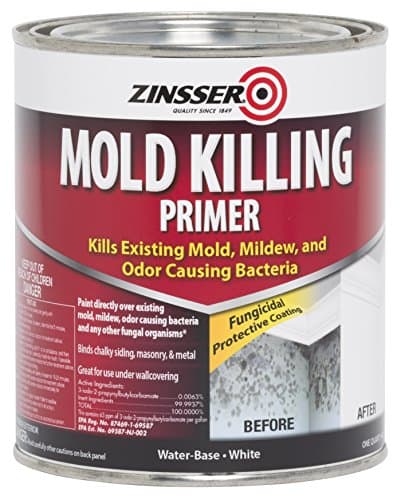
An EPA-registered fungicidal primer that kills existing mold, mildew, and odor-causing bacteria on contact. Creates a mold-resistant barrier on interior and exterior surfaces including drywall, wood, concrete, and masonry. Essential for mold remediation projects before applying topcoat paint.
Pros
- Kills existing mold on contact while priming
- EPA-registered fungicidal protective coating
- Bonds to all interior and exterior surfaces
Cons
- Strong odor during application, requires ventilation
- Water-based formula can raise grain on bare wood
- Must be topcoated with paint for lasting protection
Rust-Oleum Perma-White Mold & Mildew-Proof Interior Paint
Rust-Oleum
$25–35
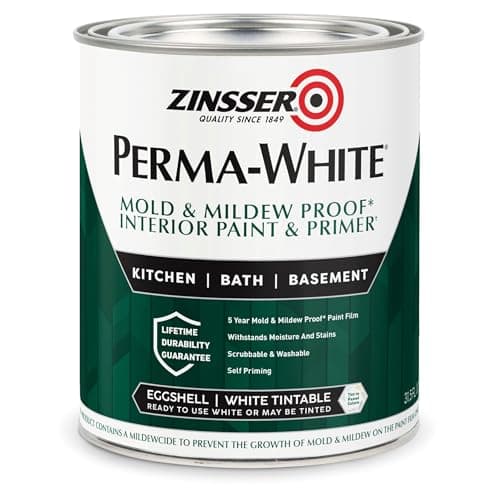
A self-priming, moisture-resistant interior paint with a 5-year mold and mildew-proof guarantee. The advanced acrylic formula resists moisture, dirt, and staining while providing a smooth satin finish. Ideal for high-humidity areas like bathrooms, basements, and kitchens.
Pros
- Self-priming formula saves time
- Guaranteed mold and mildew proof for 5 years
- Moisture-resistant, ideal for bathrooms and basements
Cons
- Limited to interior use only
- Available only in satin white finish
- Cannot be tinted to custom colors
4. Fix the airflow — or you just wasted a weekend
This is the step contractors skip and homeowners don't know to demand. Depending on your diagnosis: clear insulation off the soffit vents and add baffles (vent chutes) so air can travel from soffit to ridge; add ridge or gable exhaust if the roof has intake but no outlet; and — if a bath or dryer fan is venting into the attic — reroute that duct through the roof or wall to the outdoors, insulated where it crosses the cold attic. Confirm the fix with a humidity reading: attic relative humidity should track close to the outdoors, not sit 20 points higher.
Klein Tools ET140 Pinless Moisture Meter
Klein Tools
$45–60
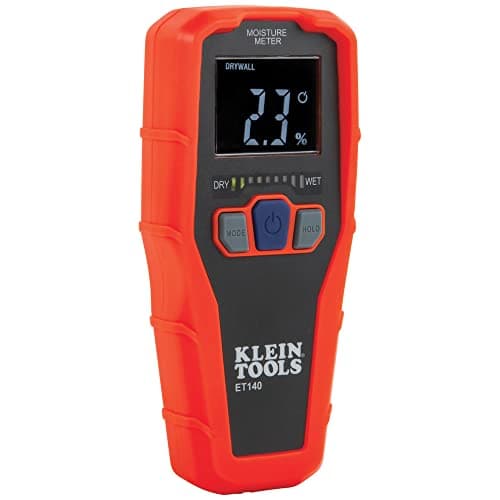
A professional-grade pinless moisture meter that detects hidden moisture in drywall, wood, and masonry without leaving holes. Uses electromagnetic sensor technology to measure moisture content up to 3/4 inch below the surface. Essential for identifying moisture problems before mold develops.
Pros
- Non-invasive pinless technology, no holes in walls
- Detects moisture up to 3/4 inch deep
- Visual and audible moisture alerts
Cons
- Less precise than pin-type meters on exact moisture percentage
- Battery not included
- Can give false readings on metallic or foil-backed surfaces
How Much Does Attic Mold Removal Cost?
Professional attic remediation runs $1,000–$9,000, with most jobs landing well below the top of that band. Attics cost more per square foot than an open room because of restricted access, working around insulation, and the ventilation or roof repairs that usually come with the job.
| Scope | Typical 2026 cost |
|---|---|
| DIY (PPE + fungicide + primer, small patch) | $150–$350 |
| Professional attic remediation | $1,000–$9,000 |
| Add: bath-fan reroute to exterior | $150–$500 |
| Add: ridge vent / gable or powered attic fan | $300–$800 |
Remediation range: Bob Vila and Fixr, 2026 (retrieved 2026-09-12); ventilation add-ons are typical trade pricing. Price your specific job with our mold removal cost calculator.
One cost note that catches people out: homeowners insurance usually excludesattic mold, because insurers class slow ventilation/ condensation problems as deferred maintenance rather than a "sudden and accidental" event. Mold from a covered event (a burst pipe, a storm- torn roof) may be partly covered; mold from a poorly vented attic almost never is. Read your policy's mold sub-limit before you assume.
Is Attic Mold Dangerous?
Two honest concerns, one overblown one. The real issues: spores from the attic reach your living space through the stack effect and around ceiling penetrations, and unaddressed attic moisture rots the roof sheathing and tanks your home's value — attic mold is one of the most common deal- killers in a home inspection. The overblown part is the "toxic black mold will poison you" framing; for the specifics of health effects we defer to the CDC and EPA rather than give medical advice. If you're selling, or anyone in the home is sensitive, a DIY mold test or an ERMI lab test gives you a documented baseline and a way to prove the remediation worked.
How to Prevent Attic Mold From Coming Back
- Keep the soffit-to-ridge path clear. Insulation baffles at every rafter bay; never let blown insulation bury the soffit vents.
- Never vent a bath or dryer fan into the attic.To the outdoors, always — it's code, and it's the fix that prevents the most attic mold per dollar.
- Seal air leaks from the living space.Air-tight the attic hatch, recessed lights, and top plates so household moisture isn't leaking up into the cold.
- Inspect after storms and each spring.Catch a flashing leak or ice-dam stain while it's a wipe-down, not a remediation.
Attic Mold and Selling Your Home
If attic mold turns up in a buyer's inspection, you have three moves: remediate before closing and hand over clearance documentation (cleanest, preserves the price), offer a credit, or negotiate the price down. Most buyers' agents treat visible attic mold as a red flag out of proportion to the actual cost to fix it, so remediating first — with a paper trail showing the ventilation cause was corrected — usually protects your sale price better than a credit. Disclosure rules vary by state; when in doubt, disclose.
The through-line for all of it: attic mold is airflow first, mold second. Fix why the attic can't breathe, treat and seal what grew, and it doesn't come back. Treat only the stain, and it always does.
Frequently Asked Questions
What causes mold in an attic?
Can I remove attic mold myself?
How much does attic mold removal cost?
Is a bathroom fan venting into the attic really a problem?
Does homeowners insurance cover attic mold?
Related Articles
Mold-Resistant Paint: How It Works, When to Use It, and What It Can't Do
Best Mold Fogger & Mold Bomb: Machines, Solutions & Safety Guide (2026)
Best Protective Gear for Mold Removal: What PPE You Actually Need
Mold in Air Ducts: How to Detect, Remove & Prevent HVAC Mold
How to Get Rid of Black Mold: DIY Removal Guide
White Mold: What It Is, Is It Dangerous & How to Remove It
Need Professional Mold Removal?
Get free, no-obligation quotes from licensed mold remediation specialists in your area.
Get Free Quotes