Best Protective Gear for Mold Removal: What PPE You Actually Need
Out of the Mold Editorial Team
Our guides are research-backed and cite EPA, CDC, and peer-reviewed sources. Product reviews are based on hands-on testing, not manufacturer claims. Read our editorial standards.
Affiliate Disclosure: Out of the Mold is reader-supported. As an Amazon Associate, we may earn a commission when you buy through links on this page — at no extra cost to you. Our picks are based on independent standards, manufacturer specifications, and published research, not commissions.
Key Takeaways
- EPA minimum PPE for a mold job under 10 sq ft: N95 respirator, non-vented goggles, and extended-cuff gloves.
- Over 10 sq ft, black mold, or crawl space work: upgrade to a reusable P100 respirator and add a disposable Tyvek suit.
- A P100 half-face respirator also takes organic-vapor cartridges — it protects against chemical fumes an N95 does not.
- Buy non-VENTED goggles: vented lenses let spores and splashing bleach reach your eyes from below, the exact angle you're exposed to overhead.
- Skip thin exam gloves — bleach-based products tear them; use 15-mil chemical-resistant nitrile with a forearm-length cuff.
For a mold cleanup under 10 square feet, the EPA-recommended minimum is three things: an N95 respirator, non-vented goggles, and gloves with an extended cuff. Go bigger than that patch — 10 to 30 square feet, black mold, or a crawl space — and you upgrade the respirator to a reusable P100 and add a disposable Tyvek suit. That's the whole decision. Below is the exact gear by project size, the specific products I'd buy, and the three mistakes (vented goggles, thin exam gloves, and skipping the fit seal) that make people think they wore protection when they didn't.
Every mold removal guide ends the same way: "wear proper PPE." Almost none of them tell you whichPPE, or why a $2 dust mask and a box of exam gloves is worse than nothing — because it makes you feel protected while you disturb a wall full of spores. I've pulled the actual EPA and OSHA guidance together with the gear that matches it, so you can buy the right kit once instead of guessing in a hardware-store aisle.
Why Mold PPE Actually Matters
The danger in mold work isn't the mold sitting on the wall — it's what you kick into the air when you disturb it. Scrubbing, cutting drywall, or pulling up carpet sends up a plume of spores and fungal fragments that are small enough to reach deep into your lungs. According to the EPA's Mold Remediation guidance, even small cleanups warrant respiratory protection because remediation increases your exposure before it lowers it.
There are three exposure routes to close off: your lungs (spores and mVOCs), your eyes (spores and splashing chemicals), and your skin (irritation from both mold and the bleach or Concrobium you're spraying). Miss any one and you've left a door open. The good news: the gear is cheap relative to what a professional remediation costs, and for most jobs you assemble it once.
Mold PPE by Project Size (The Only Chart You Need)
The single most useful thing the EPA gives homeowners is a size threshold. Under ~10 square feet of visible mold — think a patch of bathroom ceiling or a corner of drywall — you can DIY with minimum PPE. Between 10 and 30 square feet you step up your protection. Above 30 square feet, or with black mold from a chronic leak, the guidance is to bring in a professional with containment. Here's how that maps to gear:
| Project | Respirator | Body | Also |
|---|---|---|---|
| Small(<10 sq ft — bathroom spot, window sill) | N95 (minimum) | Old clothes you can wash hot | Non-vent goggles, gloves |
| Medium (10–30 sq ft — basement wall, room) | P100 half-face (recommended) | Disposable Tyvek suit | Non-vent goggles, extended-cuff gloves |
| Large / black mold / crawl space (30+ sq ft) | P100 or full-face; consider a pro | Tyvek with hood & boots | Goggles, gloves, containment |
One rule overrides the chart: if anyone living in the home has asthma, an immune condition, or a serious mold allergy, upgrade to the P100 tier even for a small job — and honestly, let someone else do the work while they're out of the house. If your mold came from a flooded basement or a hidden leak, treat it as a medium job at minimum.
Respirators: N95 vs P100 vs Full-Face
This is the piece people get wrong most often. A cloth or surgical mask does essentially nothing against mold spores — it isn't rated to seal or filter fine particulate. You need, at a minimum, a NIOSH-approved N95, which filters 95% of airborne particles. For anything bigger or anything involving chemicals, you want a reusable P100 (99.97% filtration) that can also take organic-vapor cartridges to handle bleach and stripper fumes an N95 lets straight through.
| Product | Rating | Price | Best For | Link |
|---|---|---|---|---|
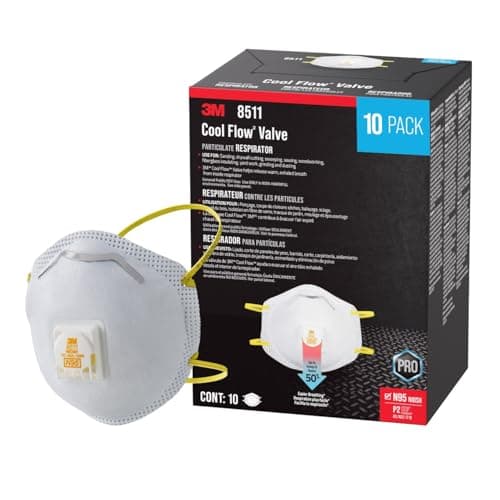 3M 8511 N95 Particulate Respirator 3M Minimum for small jobs | $20–30 | Essential respiratory protection during any mold remediation work | View | |
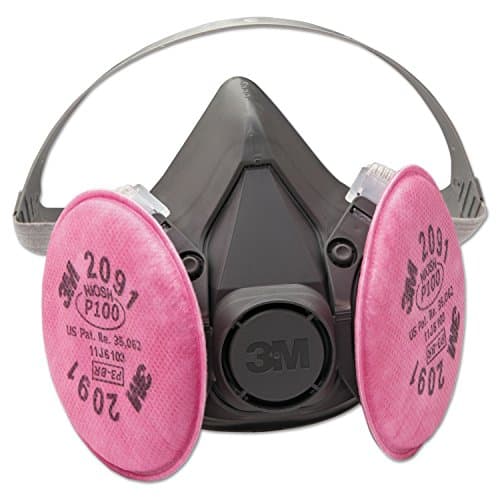 3M 6391 Half Facepiece Reusable Respirator with P100 Filters 3M Best for real remediation | $30–40 | Basement, crawl space, or black-mold jobs where you'll be around spores and chemical strippers for hours | View |
The N95 pickis the disposable workhorse — grab a box and start. It's genuinely fine for a small, quick cleanup with no harsh chemicals.
3M 8511 N95 Particulate Respirator
3M
$20–30
A NIOSH-approved N95 particulate respirator with Cool Flow exhalation valve for comfortable breathing during mold remediation. Filters at least 95% of airborne particles including mold spores. The adjustable M-noseclip and dual-strap design provide a secure seal. OSHA-recommended for mold work.
Pros
- NIOSH-approved N95 filtration
- Cool Flow valve reduces heat buildup
- Adjustable nose clip for secure fit
Cons
- Disposable, not reusable long-term
- Does not protect against chemical fumes or VOCs
- May not fit all face shapes comfortably
The P100 pickis what I'd actually buy if you have any real mold to deal with. The reusable half-face costs a little more up front but seals far better than a floppy disposable, and swappable cartridges mean it protects against the fumes from bleach, RMR-86, or paint strippers — which the N95 does not.
3M 6391 Half Facepiece Reusable Respirator with P100 Filters
3M
$30–40
The step up from an N95 for serious mold work. The reusable half-facepiece takes P100 filters (99.97% particulate) and can pair with organic-vapor cartridges, so it handles both spores and the fumes from bleach, RMR-86, or paint strippers. This is what remediation pros wear for anything longer than a quick wipe-down.
Pros
- P100 filters block 99.97% of particles plus the bleach and ammonia fumes an N95 can't
- Reusable silicone facepiece seals better than a disposable mask
- Swappable cartridges — buy organic-vapor filters for chemical work
Cons
- Costs more upfront than a box of N95s
- Needs a clean-shaven face for a real seal, like any tight-fitting respirator
- Cartridges are a recurring cost once they clog
The seal is everything.Any tight-fitting respirator — N95 or P100 — only works if it forms a seal against your skin. Facial hair breaks that seal; NIOSH is blunt that even a day's stubble ruins the fit. Pinch the nose clip, cup your hands over the filters, and inhale — the mask should collapse slightly and hold. If air leaks around the edges, you're breathing unfiltered. This one check separates "wore a respirator" from "was actually protected."
Goggles: Why "Non-Vented" Is the Whole Point
Regular safety glasses and vented goggles have gaps or slots that let spores and — worse — splashing bleach reach your eyes from below and the sides. That's exactly the angle you're exposed to scrubbing a ceiling or spraying stain remover upward. For mold work you want non-vented (indirect-vent) chemical splash goggles with an anti-fog coating, because a damp basement will fog a cheap lens in seconds.
Sellstrom Non-Vented Anti-Fog Chemical Splash Goggles
Sellstrom
$5–12
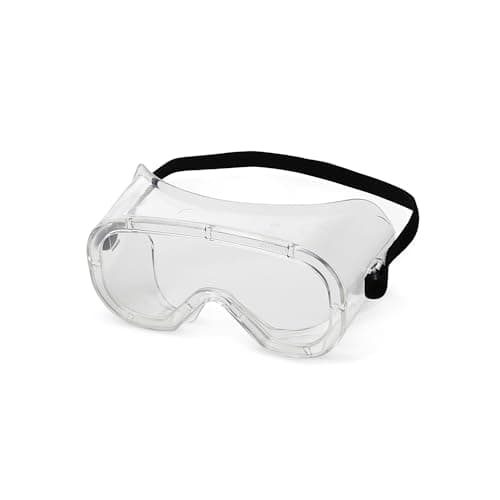
Cheap insurance for your eyes. Non-vented is the detail that matters: vented safety glasses let spores and chemical mist reach your eyes from below, which is exactly the angle you're exposed to when scrubbing a ceiling or spraying joists overhead. The anti-fog coating is what makes them usable in a damp crawl space.
Pros
- Non-vented design blocks splashes and fine spores that slip past vented safety glasses
- Anti-fog coating survives humid basements and crawl spaces
- Fits over most prescription glasses
Cons
- Non-vented lenses fog faster than vented ones without the coating
- Basic strap, not the most comfortable for all-day wear
- Clear lens scratches if tossed in a toolbox loose
Gloves: Skip the Exam Box
The thin nitrile gloves from a 100-count box are fine for a two-minute spray-and-wipe, but they thin out, tear, and let chemicals through against bleach-based products and an hour of scrubbing. For real mold work you want thicker chemical-resistant nitrile with an extended cuffthat runs up the forearm — the EPA specifically calls for gloves that extend to the mid-forearm so splashes don't run down into your sleeve when your arms are raised.
SHOWA 732 15-Mil Chemical-Resistant Nitrile Gloves (12-Pack)
SHOWA
$18–28
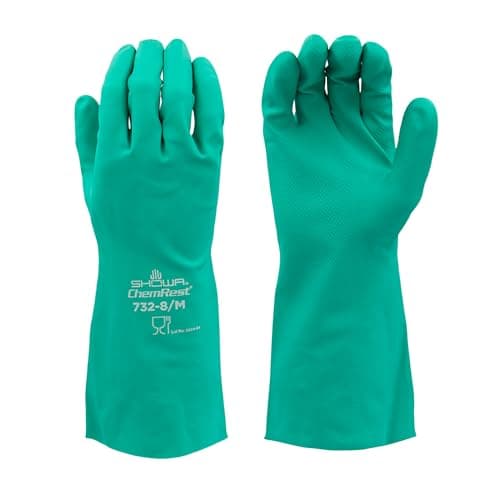
The disposable nitrile gloves from a box of 100 are fine for a quick spray, but they thin out and tear against bleach-based products and hours of scrubbing. SHOWA's 15-mil chemical-resistant nitrile with an extended cuff is what holds up to RMR-86, Concrobium, and repeated mold jobs — a real barrier, not a splash guard.
Pros
- 15-mil nitrile shrugs off bleach, RMR-86, and Concrobium without dissolving
- Extended cuff protects the forearm when reaching into cavities
- Reusable — flock lining makes them comfortable for repeat jobs
Cons
- Thicker than exam gloves, so less finger dexterity
- Reusable gloves need rinsing and drying between uses
- Sized for hands — measure before ordering
When You Need a Tyvek Suit
For a small bathroom spot, clothes you can wash on hot are enough. You cross into disposable-suit territory when the job is over ~10 square feet, when you suspect black mold (Stachybotrys), or any time you're working in a crawl spaceor attic where you're physically crawling through settled spores. A Tyvek coverall with an attached hood and boots closes the two gaps people always forget — your hair and your ankles.
DuPont Tyvek 400 Disposable Coverall with Hood & Boots
DuPont
$10–20
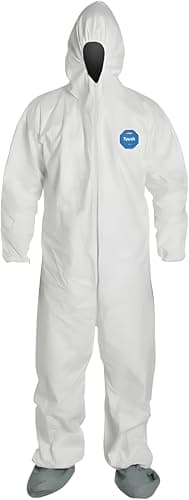
For a small bathroom spot, old clothes you can wash are enough. For anything over 10 square feet, suspected Stachybotrys, or a crawl space where you're crawling through spores, a disposable Tyvek coverall with attached hood and boots is the difference between bagging one contaminated suit and tracking spores through your house on your clothes and hair.
Pros
- Keeps spores off your skin, hair, and clothes during heavy remediation
- Attached hood and boots close the two gaps people forget
- Cheap enough to bag and toss after a contaminated job
Cons
- Not breathable — you'll sweat in a warm crawl space or attic
- Single-use for heavily contaminated work
- Sizing runs snug; order up if layering
The move afterward: peel the suit off inside-out, bag it, and toss it before you walk back into clean space. A reusable suit you launder just moves the spores to your washing machine — the disposable is the point. One more tool belongs in the same breath as the PPE: the settled-dust cleanup is only safe with a HEPA vacuum for mold — a regular vacuum blows the spores you just disturbed right back into the room.
All-in-One PPE Kits (Buy vs. Build)
If you'd rather not source five items, a pre-packaged mold remediation kit bundles a suit, respirator, goggles, and gloves in one box. It's the fastest option and usually the cheapest for a one-and-done job.
Mold Remediation PPE Safety Kit
Enviro Safety Products
$40–60
A complete personal protective equipment kit for DIY mold remediation. Includes a Tyvek protective coverall, NIOSH N95 respirator, splash-proof safety goggles, and chemical-resistant nitrile gloves. Meets OSHA and EPA guidelines for mold removal safety. Disposable for easy post-project cleanup.
Pros
- Complete kit: Tyvek suit, N95 respirator, goggles, and gloves
- Meets OSHA and EPA mold remediation safety guidelines
- Disposable for easy cleanup after remediation
Cons
- One-time use, need new kit for each project
- Tyvek suit can be hot in warm conditions
- One-size design may not fit all body types
My honest take on kit vs. build:the pre-made kit wins if you have exactly one job and want to be done. But if you're tackling mold in more than one room, or you expect to deal with moisture again (most people with one mold problem have a second), buy the reusable P100 and a box of good gloves separately. The disposable N95 and one-size Tyvek in a bundle kit are consumables; the elastomeric respirator you keep. Assembling your own also lets you size the suit and gloves properly — bundle kits are notoriously one-size-fits-nobody.
Pair PPE With the Right Cleanup Method
Gear is only half the job. Once you're protected, use it with a method that matches the surface: our complete mold removal guide walks the full process, and how to get rid of black mold covers the toughest case. If you're fogging a whole room or crawl space, a mold bomb or ULV fogger still requires the P100 and goggles above on re-entry. And if you're shopping cleaners to pair with your gear, start with our best mold removal products roundup.
Whatever you spray, remember the sequence: protect yourself first, remove the mold, then fix the moisture source — because PPE keeps you safe during the job, but only killing the water problem keeps the mold from coming back and making you do it all again.
Frequently Asked Questions
Can I use a cloth mask for mold removal?
Do I need a full Tyvek suit for small mold spots?
Is P100 better than N95 for mold?
How do I dispose of PPE after mold removal?
Related Articles
Best Mold Removal Products: What Works for Every Surface & Situation
How to Get Rid of Black Mold: DIY Removal Guide
How to Get Rid of Mold in Your Basement (2026 Guide)
Best Crawl Space Dehumidifiers That Actually Work (2026)
Mold Removal Products: A Complete Guide to What Works and Why
Mold Bomb Fogger Review: Does It Actually Work? (2026)
Dealing With Mold Right Now?
Our step-by-step mold removal guide walks you through testing your home, choosing the right products, and knowing when a job is too big for DIY.
Read the Removal Guide