HEPA Vacuum for Mold: Why a Regular Vacuum Makes It Worse
Out of the Mold Editorial Team
Our guides are research-backed and cite EPA, CDC, and peer-reviewed sources. Product reviews are based on hands-on testing, not manufacturer claims. Read our editorial standards.
Affiliate Disclosure: Out of the Mold is reader-supported. As an Amazon Associate, we may earn a commission when you buy through links on this page — at no extra cost to you. Our picks are based on independent standards, manufacturer specifications, and published research, not commissions.
Key Takeaways
- A regular vacuum doesn't remove mold — it aerosolizes spores through the filter and out the exhaust, spreading the problem room-wide.
- "HEPA" means 99.97% capture at 0.3 microns (the DOE standard); "HEPA-type" and "HEPA-style" labels don't meet it.
- HEPA vacuuming is the EPA's final cleanup step, not a mold-removal method — remove the source and dry surfaces first.
- Dispose of the filter and contents in sealed bags and wear a respirator when changing filters; bagged vacuums are safer for this.
- Match the machine to the job: wet/dry for small jobs, a sealed canister for ceilings and vents, a dust extractor for sanding.
A regular vacuum doesn't remove mold — it sprays it around the room. A standard filter and unsealed body let fine spores pass straight through and blow out the exhaust, so the "I vacuumed it and the smell got worse" stories on every forum thread are exactly what you'd expect. Use a vacuum with a true HEPA filter — one rated to capture 99.97% of particles at 0.3 microns — and only for the job it's actually for: the settled-dust cleanup afteryou've removed the mold source, not as a way to remove the mold itself. The EPA's remediation guidance treats HEPA vacuuming as the final cleanup step, not the whole job.
The Mistake: Vacuuming Mold With a Normal Vacuum
Here's the counter-intuitive part people learn the hard way. Dragging a household upright or a standard shop vac over mold feels productive — the surface looks cleaner afterward. But a normal vacuum wasn't built to trap particles the size of mold spores. Those spores are small — generally just a few microns across — small enough to slip through a standard bag or filter and ride the airflow straight out the exhaust. The machine isn't capturing the mold; it's aerosolizing it and redistributing it across the room at head height.
That's not a theory — it's the whole reason the EPA's remediation guidance repeatedly warns workers to avoid dispersing mold spores throughout the building during cleanup, and why the one vacuum it does recommend is a HEPA vacuum. If your "cleanup" tool fails the one spec that matters, you've turned a contained problem into an airborne one.
What "HEPA" Actually Means (and the Marketing That Isn't)
HEPA is a performance threshold, not a brand or a material. In the U.S., under the Department of Energy standard, a filter has to capture at least 99.97% of particles at 0.3 micronsto earn the name. That 0.3-micron figure is deliberate: it's the hardest particle size to catch, not the smallest. A filter that passes the test at 0.3 microns performs even better on particles larger and smaller than that — which covers the spore range above.
The catch is that no U.S. regulator polices the label, so you'll see "HEPA-type," "HEPA-style," and "99% HEPA" on boxes. Those are not HEPA. Look for the actual spec — "99.97% at 0.3 microns" or "true HEPA" backed by that number. And the filter is only half of it: the vacuum body has to be a sealed system so all the air is forced through the filter instead of leaking around it. The EPA makes the same point in plainer terms — "care must be taken to assure that the filter is properly seated in the vacuum so that all the air must pass through the filter."
When You Actually Need to HEPA-Vacuum
A HEPA vacuum is a finishing tool, and knowing that saves you from both buying the wrong thing and expecting the wrong result. You need one for:
- Post-remediation dust cleanup. After the moldy material is removed and surfaces are dry, the EPA recommends HEPA vacuuming the work area — and any area where dust may have settled — then wiping with a damp cloth and detergent.
- Fine dust after sanding or scraping. If you sanded moldy drywall or framing, the air and surfaces are now full of spore- laden dust that a HEPA vac is built to pull up.
- Settled spores on hard-to-reach surfaces. Ceiling lines, trim, and HVAC registers where fine particles land.
And the limits, stated honestly: a HEPA vacuum does notremove mold growing on a surface, it doesn't fix the moisture that caused the mold, and it isn't a substitute for physically removing contaminated material. It's step N of the process in our mold removal guide, not the process itself. Vacuum first to knock down loose dust, remove and clean the source, then HEPA-vacuum again as the finishing pass.
Choosing a HEPA Vacuum for a Home Mold Job
You don't need the $1,000 commercial backpack a remediation crew runs all day. For a home job the real decision is form factor and size, matched to what you're actually cleaning up. Three picks cover almost everyone — prices below are editorial ranges, not live Amazon prices.
WEN VC4710 5-Gallon Portable HEPA Wet/Dry Shop Vacuum
WEN
$60–80
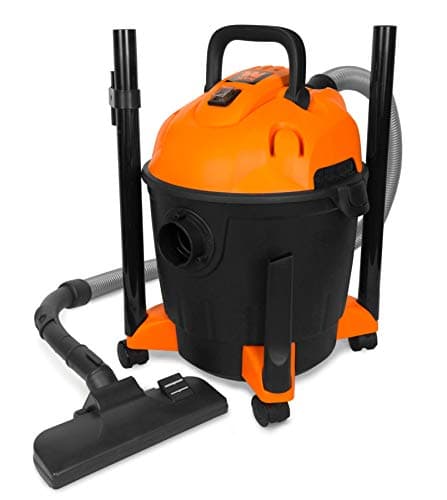
The lowest-cost way to get a genuine 0.3-micron HEPA filter on a home mold job. The wet/dry design means it doubles as a water vac after a leak, then switches to dry mode for the settled-dust pass remediation guidelines call for. The 5-gallon body keeps it portable, which is the trade-off against the bigger extractors.
Pros
- True HEPA filter (99.97% at 0.3 microns) — the vacuum spec remediation guidance calls for
- Handles both water pickup and dry debris on a post-leak job
- Cheapest honest entry point to real HEPA filtration
Cons
- 5-gallon tank is small for whole-house or repeat jobs
- Noisier than a sealed canister vacuum
- HEPA filter must be cleaned or replaced carefully to keep the rating
If your job is one room or a post-leak cleanup, a true-HEPA wet/dry vac is the most honest buy: it's the cheapest way to get a real 0.3-micron filter, and the wet mode means it also handles the standing water that often caused the mold in the first place.
Atrix Ergo Backpack HEPA Canister Vacuum
Atrix
$180–220
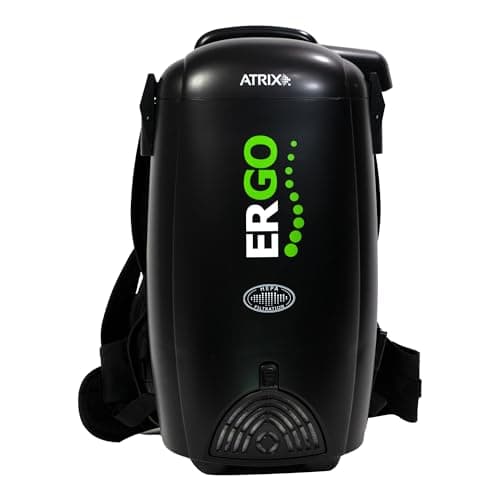
Atrix is a brand remediation crews actually carry, and the backpack form is why: you can run the wand along ceiling lines, door trim, and supply registers where settled spores hide and a floor canister never reaches. The sealed HEPA path is the point — the air that comes out the exhaust has been through the filter, not around it.
Pros
- Sealed multi-stage HEPA system built for abatement and remediation dust
- Backpack form reaches ceilings, trim, and HVAC registers a canister can't
- Captures fine settled spores rather than re-dispersing them
Cons
- Dry pickup only — no wet function
- Premium price for a one-time home job
- Replacement HEPA filters add to the running cost
For the fine settled-spore pass — ceiling lines, door trim, HVAC registers — a sealed HEPA canister (the backpack form crews actually carry) reaches where a floor vacuum never will. It's dry pickup only, so it pairs with, rather than replaces, the wet/dry vac above.
ECOMAX 8-Gallon HEPA Dust Extractor Wet/Dry Vacuum
ECOMAX
$140–180
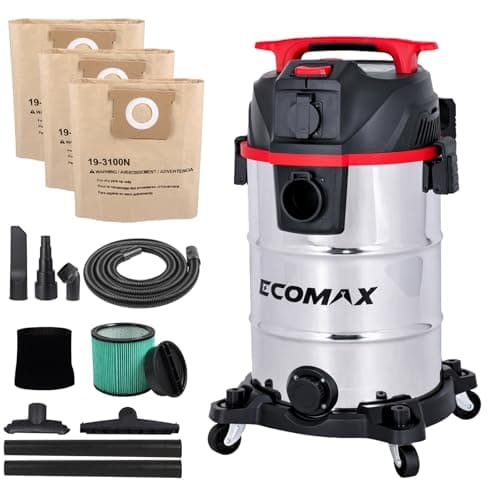
The middle ground between the budget WEN and the pro DEWALT: a HEPA-filtered wet/dry extractor with a stainless 8-gallon tank and semi-automatic filter cleaning, at a price that makes sense for a one-time basement or whole-room job you don't expect to repeat.
Pros
- HEPA filtration with semi-automatic filter cleaning
- Wet and dry pickup in one machine
- Stainless tank sized for a full remediation
Cons
- Lesser-known brand than DEWALT or Shop-Vac
- Replacement filters less widely stocked
- Heavier than a portable
DEWALT DWV010 HEPA Dust Extractor (8-Gallon)
DEWALT
$480–540
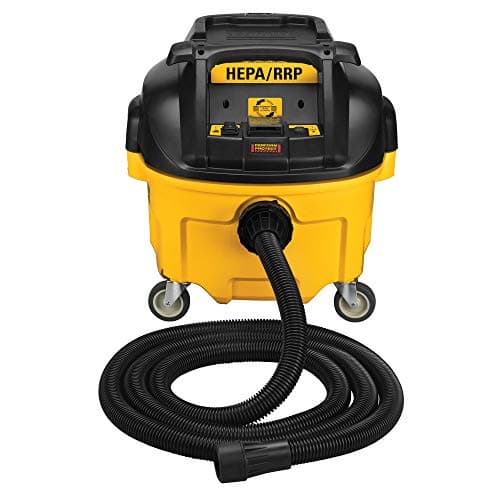
If you are sanding or scraping moldy drywall or framing, the dust is the problem — and this extractor captures it at the tool instead of letting it settle room-wide. The automatic filter-cleaning keeps suction from dropping off mid-job, and the 8-gallon body handles a real remediation. It is priced for pros, which is exactly who it's for.
Pros
- Certified HEPA filtration with automatic filter-cleaning to hold suction
- 8-gallon capacity for big or repeat remediation
- Ports to a sander to catch drywall and wood dust at the source
Cons
- Expensive — overkill for a one-time small cleanup
- Heavy and corded
- More machine than most DIY mold jobs need
If you're sanding or scraping a whole basement or doing this more than once, step up to a HEPA dust extractor. The pro-grade DEWALT ports directly to a sander so it captures drywall and wood dust at the tool before it ever becomes airborne; the ECOMAX is the value middle ground when you want wet/dry plus HEPA without the pro price. Both are overkill for a single bathroom — match the machine to the job.
The One Spec People Skip: Disposal
Everything you just captured is concentrated mold. The EPA is explicit here — "the filter and contents of the HEPA vacuum must be disposed of in well-sealed plastic bags," and you should wear PPE when you change the filter because that's the moment all that captured mold is right in front of your face. Practically, that makes a bagged vacuum the safer choice for a mold job: you lift out a sealed bag instead of tipping a bin of spores back into the air. If you use a bagless or wet/dry vac, empty and change the filter outside, into a sealed bag, wearing a respirator.
How to HEPA-Vacuum Mold Safely
- Gear up first. At minimum an N95 (ideally a P100 respirator), gloves, and eye protection — see our mold removal PPE guide. Disturbing settled spores is exactly when you breathe them.
- Remove and clean the source first. Vacuuming is the finishing step, not the fix. Get the moldy material out and surfaces dry before the final pass.
- Slow, overlapping passes. Fast strokes kick dust back into the air; slow passes let the airflow actually pull it in.
- HEPA-vacuum, then damp-wipe.The EPA calls for HEPA-vacuuming the area and wiping surfaces with a damp cloth and detergent until they're visibly clean and dry. A second vacuum pass once everything dries is good finishing practice.
- Bag the filter and contents. Seal them in plastic, change filters outside in your PPE, and wipe down the vacuum body before you store it.
The Vacuum Cleans Surfaces — Not the Air
A HEPA vacuum pulls spores off surfaces; it does nothing for the spores already floating in the room. Those are a different device's job. A HEPA air purifier runs continuously to capture airborne spores while and after you work — the air-side companion to the vacuum, not a substitute for it.
See the Best HEPA Air Purifiers for Mold →Where this fits in the bigger picture: HEPA vacuuming is one step inside the full process in our mold removal guide. For the rooms where it matters most, see basement mold removal and attic mold removal — both involve the kind of dusty teardown where skipping the HEPA pass just reseeds the space. And if mold keeps coming back in your ducts, the vacuum is only half the answer; read mold in air ducts for the airflow side.
Frequently Asked Questions
Does a HEPA filter remove mold?
Can I use a shop vac for mold?
Will a HEPA vacuum get rid of mold on its own?
Is a bagged or bagless HEPA vacuum better for mold?
Related Articles
Best Mold Removal Products: What Works for Every Surface & Situation
Best Air Purifiers for Mold Spores & Musty Odors (2026)
Best Protective Gear for Mold Removal: What PPE You Actually Need
How to Get Rid of Mold in Your Basement (2026 Guide)
Attic Mold Removal: What Causes It, What It Costs & How to Fix It
Mold in Air Ducts: How to Detect, Remove & Prevent HVAC Mold
Dealing With Mold Right Now?
Our step-by-step mold removal guide walks you through testing your home, choosing the right products, and knowing when a job is too big for DIY.
Read the Removal Guide