Mold Bomb Fogger Review: Does It Actually Work? (2026)
Out of the Mold Editorial Team
Our guides are research-backed and cite EPA, CDC, and peer-reviewed sources. Product reviews are based on hands-on testing, not manufacturer claims. Read our editorial standards.
Affiliate Disclosure: Out of the Mold is reader-supported. As an Amazon Associate, we may earn a commission when you buy through links on this page — at no extra cost to you. Our picks are based on independent standards, manufacturer specifications, and published research, not commissions.
Key Takeaways
- A mold bomb is a dry aerosol total-release fogger: it grounds airborne spores and surface-treats a sealed room, but it doesn't penetrate cracks, ducts, or wall cavities the way a wet ULV fog does.
- The BioCide Mold Bomb is EPA-registered and covers ~400 sq ft per can — genuinely useful for a car, a single room, or an attic with zero equipment.
- It treats the symptom, not the cause: a bomb without fixing the moisture means the mold is back in weeks, and dead spores still hold allergens, so HEPA-vacuum after.
- One or two spaces, buy the bomb; three or more (or anything recurring), buy a refillable ULV fogger — six cans for six rooms costs more and works worse.
- Safety: clear people/pets/aquariums, turn HVAC off, respect the label re-entry time, ventilate, and wear an N95 on re-entry.
A mold bomb fogger works for what it's built for — knocking down airborne spores and surface-treating a single enclosed room, car, or attic — but it does not fix the moisture that caused the mold, and it won't reach mold inside walls or clean a whole house. The BioCide Mold Bomb is the branded aerosol most people are searching for: a one-button can you set in the middle of a sealed room and walk away from, covering up to ~400 sq ft. It's EPA-registered and genuinely useful in the right spot. But understand the honest limit up front: a bomb without fixing the water source means the mold is back in weeks, and dead spores still hold allergens, so you HEPA-vacuum after. For anything bigger than a room, a refillable ULV fogger is the better tool.
"Mold bomb" is the aerosol total-release can — the mold version of a bug bomb. You've seen it searching for a set-it-and-leave fix for a musty car, a spare bedroom, an attic, or a crawl space, and the BioCide Mold Bombis the product that owns that search. I've dug into what it actually does, where it earns its money, and the three situations where it's the wrong call — the parts the product page won't tell you.
How a Mold Bomb Actually Works
This is the distinction that decides whether a bomb is right for you: a mold bomb is a dry aerosol total-release fogger. You press the valve, it empties the whole can as a fine mist that fills the sealed room, and the particles settle onto every exposed surface. What it does well, per the manufacturer and independent testing, is ground airborne spores — it pulls fine, floating mold particulate down out of the air and lays an antimicrobial film on the surfaces it reaches.
A ULV (ultra-low-volume) fogger is a different machine entirely: a pump-driven unit that atomizes a liquid solution into 5-micron wet droplets you aim into cracks, ducts, and cavities. The bomb is passive and covers a room; the ULV fogger is active and penetrates. Neither one removes mold — both kill and suppress — but the wet fogger reaches into places the settling aerosol can't.
BioCide Mold Bomb: The Review
The BioCide Mold Bomb is a single-use EPA-registered antimicrobial aerosol rated for up to about 400 sq ft per can. You clear the room (people, pets, aquariums out; HVAC off), set the can in the center, press the button, and leave for the label re-entry time — generally a couple of hours plus ventilation. It's about as foolproof as mold treatment gets: no machine, no mixing, no aiming.
BioCide Mold Bomb Fogger
BioCide Labs
$50–65
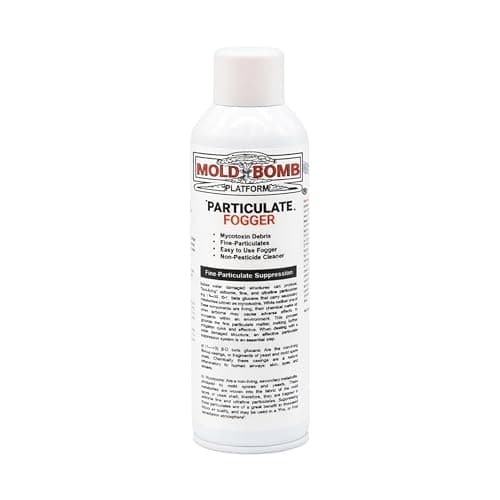
A single-use aerosol fogger that releases an EPA-registered antimicrobial mist to kill mold, mildew, and odor-causing bacteria. Simply place the canister in the center of the room, press the button, and leave the area for 2-4 hours. Treats up to 400 sq ft per can.
Pros
- One-button aerosol fogger, no equipment needed
- Treats up to 400 sq ft per can
- EPA-registered antimicrobial
Cons
- Must vacate area during and after treatment
- Chemical odor lingers for several hours
- Single-use canister is not refillable
What it's genuinely good at:knocking down the spore load and musty odor in an enclosed space fast, with zero equipment. For a car interior, a single closed room after a small event, or an attic you can't easily work in, that convenience is the whole value.
The honest cons:the chemical smell lingers for hours, the canister isn't refillable (so per-treatment cost adds up if you have several rooms), and — the big one — it treats the symptom.The EPA is explicit that the lasting fix is removing the mold and correcting the moisture that fed it; a fog on its own won't keep it from coming back. "EPA-registered" means the antimicrobial claim is registered, not that the EPA endorses fogging as a remediation method — worth knowing before you treat it as a cure.
Where a Mold Bomb Is the Right Tool
- Cars. An enclosed cabin is the perfect target — a single can grounds the spores in a musty interior. Pair it with our car mold removal steps (clean the visible growth first).
- A single closed room after a minor, already-dried event — a guest room, a closet, a small office.
- Attics.A space you don't want to work in by hand; a bomb treats the surfaces you can't easily reach.
- Crawl spaces — but only as the treatment step before you lay a vapor barrier. Never seal plastic over untreated mold.
Where a Mold Bomb Fails (Don't Waste the Can)
- Active moisture. Fog a damp space and the mold regrows on the same water within weeks. Fix the leak or humidity first — a dehumidifier or proper basement drying— or you're just buying cans on repeat.
- Mold inside walls.A settling aerosol can't get behind drywall. That's a job for a wet ULV fog injected into the cavity, or opening it up.
- Whole-house or multi-room jobs. Buying six cans for six rooms costs more than a refillable machine and treats them worse. Step up to a ULV fogger.
- Big or toxic growth. More than ~10 sq ft, or black mold from a chronic water problem, needs removal, not a fog.
Mold Bomb vs. ULV Fogger: Which to Buy
| Mold bomb (aerosol) | ULV fogger (machine) | |
|---|---|---|
| Coverage | ~400 sq ft per can | Room to whole house, refill as needed |
| Reaches cracks/ducts | Surface settling only | Yes — penetrating wet fog |
| Effort | Push button, leave | Mix solution, run machine |
| Reusable | No — single use | Yes |
| Best for | One room, car, attic, quick knockdown | Multi-room, ongoing, cavities |
The math is simple: one or two spaces, buy the bomb; three or more (or anything recurring), buy the machine. A non-toxic Concrobium fogging system is the middle-ground pick — a cold fogger plus solution that treats whole rooms and is safe for occupied spaces once dry.
Concrobium Mold Control Fogger
Concrobium
$40–100
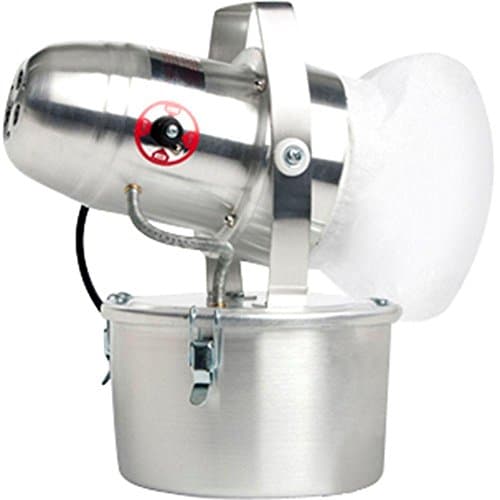
A complete fogging system that disperses Concrobium Mold Control as a fine mist to treat entire rooms. The cold-fog technology reaches into cracks, crevices, and HVAC ducts where mold hides. Kills existing mold and leaves a protective barrier to prevent regrowth.
Pros
- Treats entire rooms including hard-to-reach areas
- Non-toxic Concrobium formula, safe for occupied spaces
- Includes cold fogger machine and mold control solution
Cons
- Fogger machine is loud and requires setup
- Does not remove existing mold stains
- Solution needs time to dry and form protective barrier
Safety: Do This Right
- Clear the space: people, pets, and especially aquariums out before you set it off.
- HVAC offso you're not pulling the fog through the ductwork and spreading it through the house.
- Respect the re-entry time on the label, then ventilate before you go back in. Wear an N95 when you re-enter to clean.
- HEPA-vacuum after.Dead spores still carry allergens — fogging suppresses, it doesn't remove. Wipe and vacuum the settled residue.
3M 8511 N95 Particulate Respirator
3M
$20–30
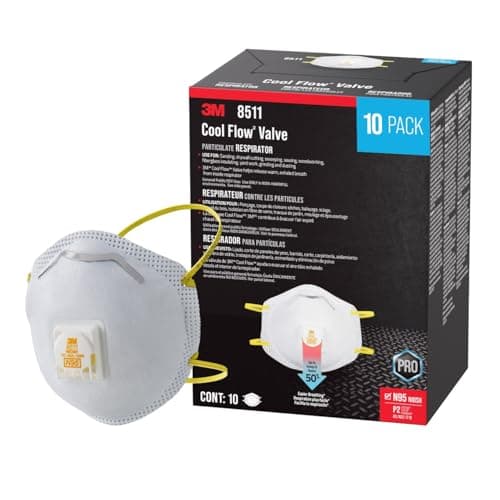
A NIOSH-approved N95 particulate respirator with Cool Flow exhalation valve for comfortable breathing during mold remediation. Filters at least 95% of airborne particles including mold spores. The adjustable M-noseclip and dual-strap design provide a secure seal. OSHA-recommended for mold work.
Pros
- NIOSH-approved N95 filtration
- Cool Flow valve reduces heat buildup
- Adjustable nose clip for secure fit
Cons
- Disposable, not reusable long-term
- Does not protect against chemical fumes or VOCs
- May not fit all face shapes comfortably
The verdict:the BioCide Mold Bomb is a legitimately good tool for a single enclosed space and a fast spore knockdown, and it's the right product for the search that brought you here. Just hold two truths together — it treats the surface and the air, not the water problem underneath, and it's the wrong tool the moment the job grows past one room. Fix the moisture (that lingering musty smellis the tell it isn't fixed yet), match the tool to the size of the job, and clean up after the fog. For bigger jobs, start with our full fogger guide.
Out of the Mold is reader-supported. When you buy through links on this page we may earn an affiliate commission at no extra cost to you. Efficacy and safety guidance follows EPA mold remediation recommendations and product labeling; verify label directions before use.
Frequently Asked Questions
Do mold bomb foggers actually work?
How long until I can re-enter a room after a mold bomb?
How many mold bomb cans do I need?
Do mold bombs kill black mold?
Mold bomb or ULV fogger for a crawl space?
Related Articles
Best Mold Fogger & Mold Bomb: Machines, Solutions & Safety Guide (2026)
How to Remove Mold from Your Car Interior
Concrobium Mold Control Review: What It Does (and What It Won't)
Crawl Space Vapor Barrier: Mil Thickness & DIY Install (2026)
Best Crawl Space Dehumidifiers That Actually Work (2026)
Musty Smell in House? Here's How to Find & Fix the Source
Dealing With Mold Right Now?
Our step-by-step mold removal guide walks you through testing your home, choosing the right products, and knowing when a job is too big for DIY.
Read the Removal Guide