RMR-86 Review: Does It Really Remove Mold Stains?
Out of the Mold Editorial Team
Our guides are research-backed and cite EPA, CDC, and peer-reviewed sources. Product reviews are based on hands-on testing, not manufacturer claims. Read our editorial standards.
Affiliate Disclosure: Out of the Mold is reader-supported. As an Amazon Associate, we may earn a commission when you buy through links on this page — at no extra cost to you. Our picks are based on independent standards, manufacturer specifications, and published research, not commissions.
Key Takeaways
- RMR-86 is a sodium hypochlorite (bleach) stain remover — it erases mold pigment fast, with no scrubbing.
- The maker itself says it can't claim to kill mold (no EPA registration). Kill the mold and fix moisture first, then de-stain.
- Best surfaces: grout, caulk, concrete, fiberglass, and bare wood. Corrosive on metal; discolors fabric; pre-test paint.
- For the kill step, pair it with an EPA-registered fungicide like Concrobium (or RMR's own RMR-141 disinfectant).
- Use a P100 respirator, gloves, and goggles; never mix with ammonia or acids.
RMR-86 does exactly one thing extremely well: it bleaches the black stain out of a moldy surface, fast, with no scrubbing. What it does not do is kill mold in any way the manufacturer will put in writing. RMR Solutions itself says it is "unable to state that this product actually kills mold due to not having an EPA registration number." So treat RMR-86 as the last step, not the first: kill the mold, fix the moisture, then use RMR-86 to erase the mark it left behind. Buy it for grout, concrete, fiberglass, and bare wood. Keep it off metal, fabric, and anything colored.
RMR-86 is probably the most-recommended product in the whole mold aisle — about 12,100 people a month search for it by name (DataForSEO, Sept 2026). It earned that reputation honestly: on the right surface it makes a black stain vanish in seconds, and the before/after clips look like magic. But the reputation also carries a dangerous assumption baked in — that a product this good at erasing mold must also be killingit. It isn't, and the company is refreshingly blunt about that. Here's the honest breakdown, surface by surface, and where I'd reach for something else.
What RMR-86 Actually Is
RMR-86 is a sodium hypochlorite (chlorine bleach) stain remover boosted with surfactants that help it spread and cling. That's the whole trick: it's essentially industrial-strength bleach tuned to oxidize the dark melanin pigment mold leaves in a surface. When you spray it on a stained grout line and the black disappears without scrubbing, you're watching a bleaching reaction, not a disinfection.
This is the distinction that trips people up, so let me be precise. Mold leaves two problems behind: the living colony and the pigment it deposited. A stain remover handles the pigment. A fungicide or disinfectanthandles the colony. RMR-86 is the first kind. On its own FAQ, RMR states plainly that it "takes away any discoloration that the mold left on the surface" and that it cannot claim to kill mold because it carries no EPA registration number (RMR Solutions FAQ). Compare that to a product like Concrobium, which is EPA-registered and built to kill and inhibit regrowth.
Why this matters for your wallet and your lungs: spraying a stain remover on active mold hides the evidence and leaves the problem. The colony keeps feeding on whatever moisture is still there, and in a few weeks the "stain" is back — because it was never a stain, it was regrowth. If you only take one thing from this review, take that.
Does RMR-86 Kill Mold?
No — and I want to give the company credit for not pretending otherwise. Plenty of remediation contractors report in the field that the chlorine knocks down surface spores on contact, which is believable. But "it probably kills what it touches on a hard surface" is a very different claim from "it remediates mold," and RMR won't make the second one because the EPA hasn't registered it as a fungicide. Bleach chemistry also has a well-known weakness on porous materials: the chlorine stays on the surface while the water carries into the pore and can feed the very roots you're trying to kill. The EPA's own cleanup guidance doesn't even recommend bleach — it says to scrub hard surfaces with detergent and water and, above all, to fix the moisture.
The correct sequence, then, is: (1) find and fix the water source, (2) kill/clean the colony with a fungicide like Concrobium or a proper mold killer spray, (3) let it dry, then (4) hit the leftover stain with RMR-86. RMR sells a companion for step 2 — RMR-141, an EPA-registered disinfectant and fungicide built on a quaternary-ammonium formula with kill claims on 140+ microorganisms. If you want the two-product system, 141 is the killer and 86 is the de-stainer.
How We Test It
Every product-page "15 seconds!" claim on the internet traces back to the same manufacturer video. We don't re-post those. Our test for RMR-86 is three taped 10×10 cm squares on real stained surface — spray-only, spray-plus-scrub, and an untreated control— photographed under one lamp with a ruler in frame at 0, 15, 60, and 300 seconds, with a stopwatch running for the first visible lift. On wood we also take a pinless moisture-meter reading before and 24 hours after, so you can see the surface wasn't left soaked. When the evidence block at the top of this page is filled in, that's our own photos and our own numbers — not the brand's reel. The manufacturer's claim is ~15 seconds to lift; our square-by-square photos are how you'll judge whether that holds on your surface.
RMR-86 Surface by Surface
RMR's own FAQ lists the surfaces it's formulated for and the ones that will damage — and this is the part most reviews skip entirely.
- Grout & caulk (best use): this is where RMR-86 shines. Silicone caulk and cement grout hold mold pigment stubbornly, and the no-scrub bleaching is genuinely satisfying here. See our shower mold guide for the full grout-and-caulk workflow.
- Concrete & block:works well on basement and garage walls. Porous, so expect to reapply on deep staining, and remember you're only bleaching — the moisture that grew it is still there.
- Bare/unfinished wood (framing, joists, decking): RMR lists wood and decks as safe, and it will brighten wood. The caveat: chlorine removers often leave a gray cast in raw grain. For weathered joists and decking where you want the wood tone back, oxalic-acid wood bleach does a cleaner job — see how to remove mold from wood.
- Painted drywall (caution — pre-test):RMR says to pre-test for colorfastness, and I'd take that seriously. There are documented cases of RMR-86 stripping or streaking wall paint. Test a hidden patch first; if the color moves, stop.
- Metal (avoid):RMR explicitly warns the formula " can be corrosive if applied to" copper, steel, and aluminum. Keep it off fixtures, fasteners, and HVAC components.
- Fabric, carpet, colored surfaces (avoid):it "will most likely discolor your fabrics." It's bleach — treat it like bleach. For boat vinyl and outdoor cushions, a marine stain remover is the safer pick.
Where to Buy It
RMR-86 Instant Mold & Mildew Stain Remover Spray (1 Gallon)
RMR Brands
$25–35
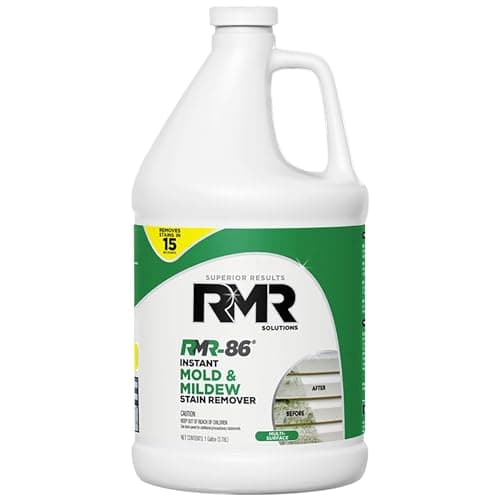
A fast-acting, commercial-strength mold stain remover that eliminates black mold stains on contact. The sodium hypochlorite formula penetrates porous surfaces to lift deep stains without scrubbing. Best used in well-ventilated areas with proper respiratory protection.
Pros
- Removes stains in as little as 15 seconds
- Works on wood, concrete, drywall, and tile
- No scrubbing required
Cons
- Strong bleach-based formula with harsh fumes
- Not safe for fabrics or colored surfaces
- Requires good ventilation and PPE
The gallon is the size to get if you have more than a shower corner to do — a trigger bottle empties fast on a wall. For joists or a whole basement run, decant it into a chemical-rated pump sprayer so you're not squeezing a trigger a thousand times.
Smith Performance 190285 1-Gallon Bleach & Chemical Sprayer
Smith Performance Sprayers
$20–30
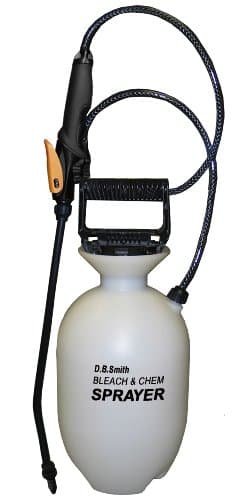
A trigger bottle is fine for a shower corner; a crawl space full of stained joists is not a trigger-bottle job. This Viton-sealed pump sprayer is built for bleach and acid chemistry that eats standard garden-sprayer seals in a season. Fill it with diluted RMR-86 or Concrobium and cover a whole joist bay in minutes instead of pumping a trigger a thousand times.
Pros
- Viton seals survive bleach and RMR-86 that destroy garden-sprayer O-rings
- 1-gallon tank covers joist bays and large surfaces without constant refills
- Adjustable nozzle from stream to fan for overhead work
Cons
- Overkill for a single small bathroom spot
- Needs rinsing after each use to protect the seals
- Pump-up pressure drops as the tank empties
RMR-86 vs Concrobium vs Mold Armor
The three products people cross-shop do three different jobs. This is the table to screenshot before you buy the wrong one:
| Product | Rating | Price | Best For | Link |
|---|---|---|---|---|
RMR-86 Instant Mold & Mildew Stain Remover Spray (1 Gallon) RMR Brands Removes the stain (bleach) — does NOT kill | 4.4 | $25–35 | Deep mold stains on hard surfaces like bathroom tile, grout, and basement walls | View |
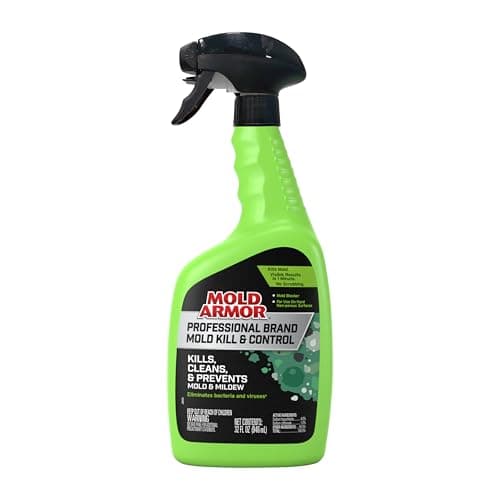 Mold Armor Professional Mold Kill & Control Spray (32 oz) Mold Armor Kills surface mold + lifts stain | 4.1 | $20–28 | A kill-plus-stain product for tile, grout, and painted surfaces where mold is still active | View |
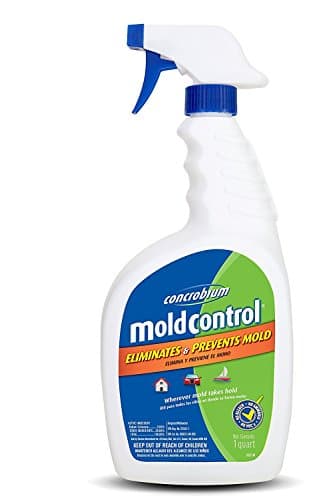 Concrobium Mold Control (32 oz Spray, 2-Pack) Concrobium Kills + prevents regrowth — no de-stain | 4.3 | $34–40 (2 bottles) | Families who want a non-toxic solution for killing and preventing mold | View |
- Want the black gone, mold already dead? RMR-86.
- Want to kill live surface mold and lift some staining in one bottle? Mold Armor is the better all-rounder — slower on deep stains, but it actually kills.
- Want to kill and stop it coming back? Concrobium — no bleach, no de-staining, but it inhibits regrowth. Pair it with RMR-86 for the two-step.
Using It Safely
RMR-86 has a strong chlorine smell and RMR recommends a respirator with a P100 organic-vapor / acid-gas cartridge for real work — not a dust mask. Ventilate the room, wear chemical gloves and non-vented goggles, and the cardinal rule for any hypochlorite product: never mix it with ammonia or acids (that makes toxic gas). Full gear breakdown is in our protective gear for mold removal guide.
3M 6391 Half Facepiece Reusable Respirator with P100 Filters
3M
$30–40
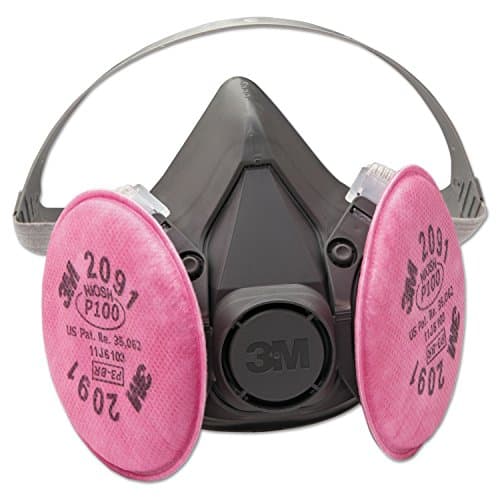
The step up from an N95 for serious mold work. The reusable half-facepiece takes P100 filters (99.97% particulate) and can pair with organic-vapor cartridges, so it handles both spores and the fumes from bleach, RMR-86, or paint strippers. This is what remediation pros wear for anything longer than a quick wipe-down.
Pros
- P100 filters block 99.97% of particles plus the bleach and ammonia fumes an N95 can't
- Reusable silicone facepiece seals better than a disposable mask
- Swappable cartridges — buy organic-vapor filters for chemical work
Cons
- Costs more upfront than a box of N95s
- Needs a clean-shaven face for a real seal, like any tight-fitting respirator
- Cartridges are a recurring cost once they clog
Sellstrom Non-Vented Anti-Fog Chemical Splash Goggles
Sellstrom
$5–12
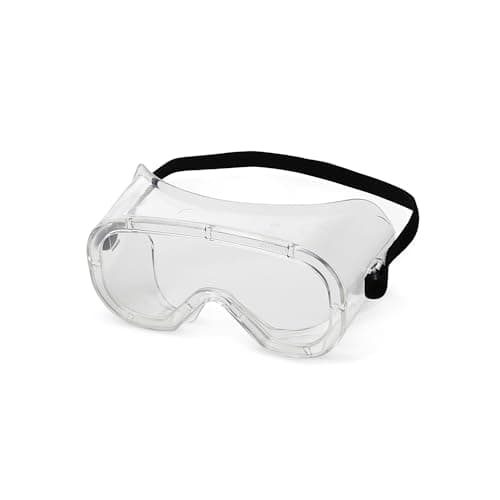
Cheap insurance for your eyes. Non-vented is the detail that matters: vented safety glasses let spores and chemical mist reach your eyes from below, which is exactly the angle you're exposed to when scrubbing a ceiling or spraying joists overhead. The anti-fog coating is what makes them usable in a damp crawl space.
Pros
- Non-vented design blocks splashes and fine spores that slip past vented safety glasses
- Anti-fog coating survives humid basements and crawl spaces
- Fits over most prescription glasses
Cons
- Non-vented lenses fog faster than vented ones without the coating
- Basic strap, not the most comfortable for all-day wear
- Clear lens scratches if tossed in a toolbox loose
SHOWA 732 15-Mil Chemical-Resistant Nitrile Gloves (12-Pack)
SHOWA
$18–28
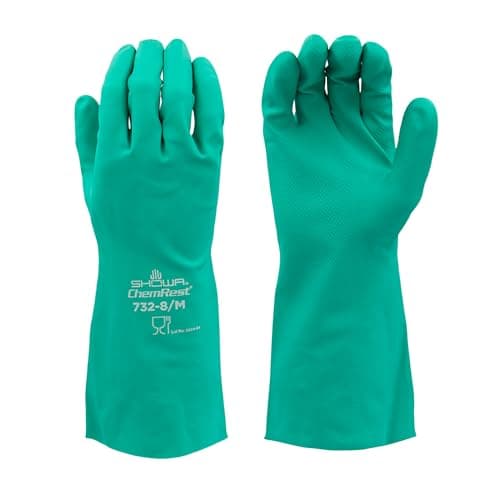
The disposable nitrile gloves from a box of 100 are fine for a quick spray, but they thin out and tear against bleach-based products and hours of scrubbing. SHOWA's 15-mil chemical-resistant nitrile with an extended cuff is what holds up to RMR-86, Concrobium, and repeated mold jobs — a real barrier, not a splash guard.
Pros
- 15-mil nitrile shrugs off bleach, RMR-86, and Concrobium without dissolving
- Extended cuff protects the forearm when reaching into cavities
- Reusable — flock lining makes them comfortable for repeat jobs
Cons
- Thicker than exam gloves, so less finger dexterity
- Reusable gloves need rinsing and drying between uses
- Sized for hands — measure before ordering
And repaint only after the surface is fully dry— RMR confirms painting is fine once the product has dried completely, but painting over a damp or still-active surface just traps the problem. Before you break out RMR-86 at all, it's worth confirming what you're dealing with — our does bleach kill moldguide covers the hypochlorite question in depth, and if you're not sure the mold is even dead yet, a mold test kitsettles it before you spend money erasing a stain that's about to grow back.
Sources: RMR Solutions product FAQ (surfaces, kill claim, PPE); US EPA, Mold Cleanup in Your Home (moisture-first, bleach guidance); RMR-141 EPA-registered disinfectant specs; DataForSEO search volume (Sept 2026). Editorial price range only — we don't display live Amazon pricing.
Frequently Asked Questions
Does RMR-86 kill mold or just remove the stain?
Can I use RMR-86 on wood?
What surfaces should you NOT use RMR-86 on?
RMR-86 vs Concrobium — which should I buy?
What PPE do I need for RMR-86?
Related Articles
Best Mold Stain Removers: RMR-86 vs the Rest
Concrobium Mold Control Review: What It Does (and What It Won't)
Mold Killer Spray: Which Type Works on Which Surface
How to Remove Mold from Your Shower (Step-by-Step)
Best Protective Gear for Mold Removal: What PPE You Actually Need
Does Bleach Kill Mold? The EPA Says No — Here's What Actually Works
Dealing With Mold Right Now?
Our step-by-step mold removal guide walks you through testing your home, choosing the right products, and knowing when a job is too big for DIY.
Read the Removal Guide