Mold in Your Home: A Room-by-Room Guide to Finding and Fixing It
Out of the Mold Editorial Team
Our guides are research-backed and cite EPA, CDC, and peer-reviewed sources. Product reviews are based on hands-on testing, not manufacturer claims. Read our editorial standards.
Affiliate Disclosure: Out of the Mold is reader-supported. As an Amazon Associate, we may earn a commission when you buy through links on this page — at no extra cost to you. Our picks are based on independent standards, manufacturer specifications, and published research, not commissions.
Key Takeaways
- Every mold problem is the same equation: a water source + a surface + time. Find the water and you've found the mold.
- Mold behaves differently on tile, drywall, wood, and concrete — the fix is specific to the spot, which is why this is a map, not one method.
- The EPA's DIY cutoff is ~10 sq ft on a hard surface; soaked porous materials usually have to be replaced, not cleaned.
- A dehumidifier holding a room under 60% RH is the cheapest insurance against half of these situations at once.
- If it keeps coming back, you cleaned the mold but not the moisture — fix the water source, not the cleaner.
Every mold problem in a house is the same equation: a water source + a surface mold can eat + time. Find the water, and you've found the mold. Spores are already in the air everywhere — they only become a problem where something stays damp. So the job is always the same three moves: locate the moisture, remove or clean the affected surface (porous stuff that's soaked usually has to go), and drop the humidity below 60% so it can't restart. This page maps where mold hides room by room and links you to the exact fix for each spot.
Mold isn't a cleanliness problem and it isn't random. A spotless house with a slow pipe leak will grow mold; a cluttered one that stays dry won't. The reason the same house gets mold in the bathroom, the basement, and behind the fridge but nowhere else is simply that those are the three places water lingers. Once you stop thinking "I have mold" and start thinking "I have water I can't see," the whole thing gets solvable. Below is the room-by-room map, plus how to judge whether yours is a Saturday job or a call-a-pro job.
The one rule behind every spot on this list
Mold needs moisture to grow — full stop. The EPA's entire remediation strategy reduces to one line: "Fix plumbing leaks and other water problems as soon as possible." Keep indoor relative humidity under about 60% and fix leaks fast, and most of the rooms below never develop a problem. That's why a dehumidifiershows up as the answer again and again on this site — it's the cheapest insurance against half of these situations at once. A cheap hygrometer on the wall of a problem room tells you, at a glance, whether you're living above that 60% line.
hOmeLabs 50-Pint Energy Star Dehumidifier
hOmeLabs
$220–260
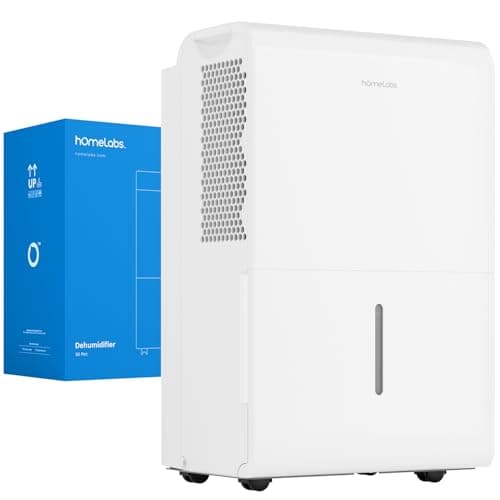
The best-selling 50-pint dehumidifier on Amazon and our top overall pick for mold prevention. Set your target humidity (aim for 45-50%) and the built-in humidistat cycles the compressor to hold it. A rear hose port allows continuous gravity draining into a floor drain, and turbo mode speeds up moisture removal after water events. Energy Star certified to keep 24/7 running costs reasonable.
Pros
- 50-pint capacity handles basements and large rooms up to 4,500 sq ft
- Built-in humidistat holds your target humidity automatically
- Continuous-drain hose port for set-and-forget operation
Cons
- No built-in pump — gravity drain or bucket emptying only
- 1.6-gallon bucket fills every 6-8 hours in very damp spaces
- Fan is audible on turbo mode
Where mold grows: a room-by-room map
Here's the honest truth about "mold in your home" — it behaves completely differently on a bathroom tile than on a particle- board cabinet or a damp basement slab, so the fix is specific to the spot. Find yours below.
Bathrooms & showers
The most common mold room in any house, because it's wet daily and often under-ventilated. Pink or black growth in grout and caulk is nearly universal — our guide to removing mold from a shower covers grout, caulk, and silicone separately because they each need a different approach. Overhead, a run-the-fan-or-else problem shows up as mold on the bathroom ceiling, and it spreads onto adjacent walls when steam has nowhere to go. The fix is almost always ventilation first, cleaning second.
Kitchen & under sinks
Kitchens hide mold in enclosed, plumbed, food-rich spots. The worst offender is the dark cabinet under the sink — see mold under the sink for the leak-hunting walkthrough and which cabinet materials you can actually save. Two appliances are secret mold factories: the washing machine (the rubber gasket on front-loaders especially) and the refrigerator, where cold-tolerant species grow on gaskets and in drip pans.
Bedrooms, closets & belongings
Still, poorly ventilated spaces where humidity settles. Mold grows up through a mattress from body moisture and a damp floor, colonizes stored clothes in a humid closet, and attacks leatherjackets, bags, and shoes (where it's often confused with harmless "bloom"). Closets on exterior walls are the usual trouble spot — airflow and a small desiccant absorber fix most of it.
Basements, crawl spaces & concrete
Below grade is where the serious, square-footage mold lives, because the ground pushes moisture through every surface. Start with the full basement mold removal guide, then the specifics: fuzzy white growth or black speckling on the slab and block is covered in mold on concrete (including how to tell real mold from harmless efflorescence), and the dirt-floor world under the house is in mold in the crawl space. The permanent fix down there is usually encapsulation plus a dehumidifier, not repeated cleaning.
Attic & roof
The spot homeowners discover last — usually during a roof job or a home sale. Attic mold is a ventilation and roof-leak story: blocked soffit vents, a bathroom fan dumping into the attic, or missing insulation let warm moist air condense on the cold underside of the roof deck. Clean the sheathing, then fix the airflow or it comes right back.
HVAC, ducts & the air itself
When a whole house smells musty with no obvious source, look at the system that moves air through every room. Mold in the air ducts and black mold in the AC (on the evaporator coil and in the drain pan) spreads spores everywhere the system blows. Filtering the air helps as a supplement — our honest take on what a mold air purifiercan and can't do explains why it's a backup, not a cure.
Structural surfaces: drywall, wood, floors, carpet
Mold on the building itself is where the clean-vs-replace decision gets real. Drywall can be wiped if only the painted face is affected but has to be cut out once the paper core is colonized. Wood and wood floors can often be sanded and saved if caught early. Carpet and padding that have been soaked usually can't be — the EPA treats porous materials as throw-away once they're moldy. And the humble window sillis the early-warning canary for a condensation problem you'll see elsewhere soon.
Cars & everything else
Mold doesn't stop at the house — a car interior left damp (a cracked window in the rain, a leaking sunroof seal) grows mold fast in the upholstery and carpet, and the enclosed cabin concentrates it.
How to tell how bad it is (and who should handle it)
Three questions sort almost every mold situation into DIY or call-a-pro:
- How big is it?The EPA's line in the sand: if the moldy area is "less than about 10 square feet (less than roughly a 3 ft. by 3 ft. patch), in most cases, you can handle the job yourself." Bigger than that, or spread across multiple surfaces, and you want a professional.
- What's it growing on? Hard, non-porous surfaces (tile, glass, sealed concrete, metal) clean up. Soaked porous materials (carpet, drywall paper, insulation, particle board) usually come out.
- Do you actually know the extent?If there's a musty smell but nothing visible, or symptoms without a source, a home mold test kittells you whether it's contained or spreading before you tear anything open. When it matters legally or medically, our ERMI test guide covers the lab option.
Before you call a remediation company for anything mid-sized, price the scope yourself with the mold removal cost calculatorso you know whether a quote is fair. And not sure what you're even looking at? Our guides to what mold smells like and mold by color — white, black — help you identify it before you treat it.
The universal method — and keeping it gone
Wherever the mold is, the removal sequence rhymes: gear up (N95, gloves, ventilation), fix the water source first, clean hard non-porous surfaces with detergent or a dedicated remover, cut out and replace soaked porous material, dry everything completely, then treat the surface so trace growth can't restart. The surface-by-surface product calls live in our mold removal product guide.
Prevention is the part that decides whether you're back here in six months. Hold indoor humidity under 60% (a dehumidifier in the problem zone, bathroom and kitchen fans actually used, airflow in closed cabinets and closets), fix leaks the day you find them, and check the canary spots — window sills, under sinks, the washing-machine gasket — on a schedule. Do that and the room-by-room map above stays theoretical.
Frequently Asked Questions
Where does mold most commonly grow in a house?
How do I know if the mold in my home is dangerous or just needs cleaning?
What humidity level prevents mold in a home?
Can I remove mold in my house myself?
Why does mold keep coming back after I clean it?
Related Articles
How to Get Rid of Mold in Your Basement (2026 Guide)
Best Mold Removal Products: What Works for Every Surface & Situation
Best Dehumidifiers for Mold Prevention & Removal (2026)
Best Mold Test Kits for Home Use: What Works & What's a Waste of Money (2026)
What Does Mold Smell Like? How to Identify Mold by Smell
How to Get Rid of Black Mold: DIY Removal Guide
Dealing With Mold Right Now?
Our step-by-step mold removal guide walks you through testing your home, choosing the right products, and knowing when a job is too big for DIY.
Read the Removal Guide