Mold in a Dishwasher: Where It Hides and How to Get It Out for Good
Out of the Mold Editorial Team
Our guides are research-backed and cite EPA, CDC, and peer-reviewed sources. Product reviews are based on hands-on testing, not manufacturer claims. Read our editorial standards.
Affiliate Disclosure: Out of the Mold is reader-supported. As an Amazon Associate, we may earn a commission when you buy through links on this page — at no extra cost to you. Our picks are based on independent standards, manufacturer specifications, and published research, not commissions.
Key Takeaways
- Mold lives in four spots the wash cycle never dries: the rubber door gasket, the bottom filter, the spray-arm holes, and the detergent dispenser.
- It's common and mostly a smell-and-hygiene problem for healthy people — a 2015 study found fungi on 62% of dishwasher door seals, 56% of them heat- and detergent-tolerant black yeasts (Exophiala).
- Not all discoloration is mold: pink/orange slime is usually Serratia bacteria; white crust is hard-water scale that needs a descaler, not a biocide.
- Remove it by hand first — pull and scrub the filter, detail the gasket with a brush, clear the spray-arm holes — then run a hot empty cycle with a dishwasher cleaner.
- Keep it gone with airflow and heat: scrape plates, leave the door ajar to dry, run hot cycles, and clean monthly. Skip the bleach — it harms stainless and rubber seals.
The black or pink gunk in a dishwasher is almost always mold or mildew — and sometimes Serratia bacteria — feeding on food soil and grease in the damp, dark spots the wash cycle never fully dries. It lives in four places: the rubber door gasket, the bottom filter, the spray-arm holes, and the detergent dispenser. For a healthy person it's rarely dangerous, but it causes the musty smell and the film on "clean" dishes — and it keeps coming back unless you scrub those specific spots by hand and then keep the machine dry between loads.
Most "how to clean a moldy dishwasher" advice tells you to run a cycle with vinegar and calls it done. That clears the smell for a week and misses the point: mold in a dishwasher isn't floating in the water, it's anchored as a biofilm in four specific hiding spots that a rinse never reaches. Clean those and it stays gone. Skip them and you're back here next month.
Where mold hides in a dishwasher
A dishwasher is a near-perfect mold incubator: warm, wet, dark, and constantly refreshed with food soil and grease. But the inside dries out unevenly, and mold sets up exactly where water pools and air doesn't move. Here's the map, in the order they're worth checking:
| Hiding spot | Why mold loves it |
|---|---|
| Rubber door gasket / seal | Folds trap water and food particles and never dry — the #1 spot, where black gunk shows first |
| Bottom filter basket | Catches food debris by design; if you never pull and rinse it, it's a buffet |
| Spray-arm holes | Tiny jets clog with grease and scale, then grow a ring of film around each hole |
| Detergent / rinse-aid dispenser | Residue cakes in the cup and under the flap and stays damp |
| Under the bottom lip & edges | Standing water collects in the sump and door channel between cycles |
That gasket is not a trivial spot to overlook. In a study of 189 homes across 101 cities on six continents, researchers found fungi on the rubber door seal of 62% of dishwashers, and 56% of those harbored black yeasts (Exophiala dermatitidisand its cousin) — fungi so heat-, salt- and detergent-tolerant that the hot, caustic dishwasher environment actively selects for them. Translation: the seal is where the hardy stuff lives, and it's the spot a cleaning cycle alone can't fix.
Is dishwasher mold dangerous?
For most healthy people, no — it's a hygiene-and-odor problem, not a poisoning risk. The real cost is the musty smell and the film it leaves on glasses and dishes. The black yeasts that colonize the seals can be opportunistic in people who are immunocompromised or have cystic fibrosis, which is a reason to keep the machine clean, not a reason to panic about a healthy household. If someone in your home has a weakened immune system or a respiratory condition and you're worried about exposure, the CDC and EPA are the right sources — we don't give medical advice here.
How to remove it — step by step
The order matters: scrub the anchored growth first, thenrun a cleaning cycle. Do it the other way and the cycle just loosens film it can't carry away.
- Pull and clean the filter. Twist out the bottom filter basket, dump the debris, and scrub it under hot water with a little dish soap. This alone fixes a lot of musty smells.
- Detail the door gasket. This is the one most people skip. Work a stiff brush into the folds of the rubber seal with white vinegar or a dish-safe cleaner, top to bottom, including the bottom corners where water pools.
- Clear the spray-arm holes. Wipe the arms and poke out any clogged jets with a toothpick or the fine brush, then spin them to confirm they turn freely.
- Wipe the dispenser and edges. Clean the detergent cup, the rinse-aid flap, and the door channel and sump at the bottom.
- Run a hot empty cleaning cycle. With everything scrubbed, run the machine empty and hot with a dishwasher cleaner to strip the grease and scale the mold was feeding on.
The brush is what separates a real clean from a smear. The gasket folds, spray-arm holes, and filter mesh are places a sponge physically can't reach — you need stiff and fine bristles:
OXO Good Grips Deep Clean Brush Set
OXO
$8–12
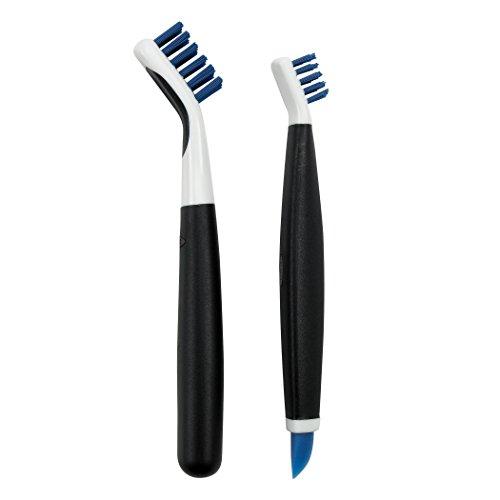
The black gunk in a dishwasher lives in places a sponge physically can't reach — the accordion folds of the door gasket, the pinholes in the spray arms, the mesh of the bottom filter. OXO's two-brush set pairs a stiff wide brush for the gasket and seals with a fine-point brush for holes and grooves, so you can actually dislodge the biofilm instead of smearing it. The bristles hold up to repeated hot-water-and-vinegar scrubbing better than a dollar-store crevice brush.
Pros
- A stiff wide brush plus a fine-point brush reach the gasket folds, spray-arm holes, and filter grooves a sponge can't
- Durable nylon bristles that don't splay after a few uses
- Doubles for grout, faucet bases, and other crevice cleaning
Cons
- Two brushes, not a bargain pack of a dozen tiny ones
- You supply the cleaner
And the cleaning cycle does the part scrubbing can't: dissolving the grease and limescale buildup throughout the machine that the mold lives on. A drop-in tablet, run monthly, is the maintenance habit that actually keeps it gone:
Affresh Dishwasher Cleaner Tablets
Affresh
$9–18
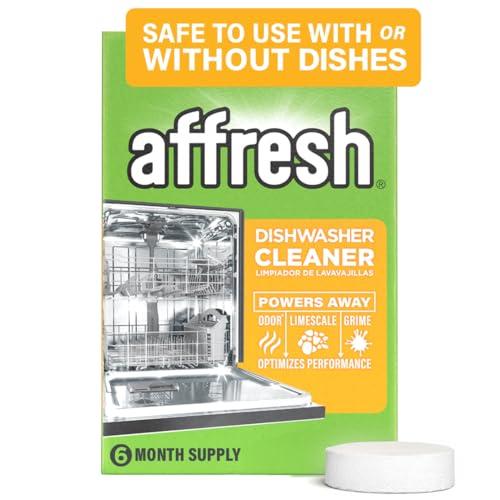
Affresh tablets are built to break down the hidden food-soil, grease, and hard-water film that collect in a dishwasher's inner workings — exactly the buffet mold and odor-causing bacteria live on. You drop a tablet in an empty machine and run a hot cycle. It won't kill the mold already colonizing the rubber door gasket (that's a scrub-brush job), but run monthly it removes the food source so the mold has far less to come back to.
Pros
- Dissolves the grease, limescale, and detergent film that feed dishwasher mold and the musty smell
- Drop-in tablet, run one empty hot cycle — no dismantling
- Safe for stainless and plastic interiors, unlike bleach
Cons
- Clears residue and odor; it is not a biocide, so you still hand-scrub the gasket and filter
- A monthly maintenance habit, not a one-and-done fix
Keep it from coming back
Mold in a dishwasher is an airflow-and-food problem, so prevention is boring and effective:
- Scrape plates before loading.Less food soil means less for mold to eat. You don't need to pre-wash, but get the chunks off.
- Crack the door after a cycle. Letting it air-dry instead of sealing in the steam is the single biggest prevention move.
- Run hot cycles. The sanitize or hot setting dries more completely and discourages biofilm.
- Clean monthly. Pull the filter and run a cleaner cycle on a schedule, not after it already smells.
- Don't let it sit full of dirty dishes for days. A loaded, closed, damp machine between runs is prime mold conditions.
Black mold vs pink film vs white scale
Not everything discolored in a dishwasher is mold, and the fix changes with the culprit:
| What you see | What it is | The fix |
|---|---|---|
| Black or dark green specks/film | Mold / mildew (incl. black yeasts) | Scrub + hot cleaner cycle |
| Pink or orange slime | Serratia bacteria, not mold | Scrub + dry; comes back in standing water |
| White crust / chalky film | Hard-water limescale | Descaler / citric acid, not a biocide |
Getting the ID right matters because people throw bleach at pink Serratia and descaler at mold and wonder why neither works. The same gasket-and-biofilm problem shows up in your washing machine, and the appliance-mold pattern repeats across the dehumidifier, humidifier, and refrigerator — all warm or wet appliances that mold treats as real estate.
Quick answers
Will running the dishwasher empty kill the mold?A hot empty cycle with a cleaner strips grease and knocks back loose growth, but it won't reach the mold in the gasket folds or filter mesh. Scrub those by hand first, then let the cycle do maintenance.
Can I use bleach in my dishwasher? Carefully, if at all. Bleach can damage a stainless interior and the rubber seals and reacts with detergent residue. For routine mold, white vinegar or a dish-safe cleaner and a brush are the safer call — and if you want the full bleach-vs-alternatives rundown, see does bleach kill mold.
Why does my dishwasher smell musty? Mold and odor-causing bacteria in the biofilm on the filter, gasket and spray arms, feeding on trapped food soil. Clean those four spots, run a hot cleaning cycle, and leave the door ajar to dry — the smell goes with the biofilm.
Scrubbed all four spots and the smell came back fast? Tell us where it returns first — usually it's the gasket bottom corner or a filter that isn't being pulled often enough, and both have a specific fix beyond "run more vinegar."
Frequently Asked Questions
Will running the dishwasher empty kill the mold?
Can I use bleach in my dishwasher?
Why does my dishwasher smell musty?
Related Articles
Mold in Washing Machine: How to Remove It & Keep It Gone
Black Mold in Your Dehumidifier? First Decide: Clean It or Replace It
Mold in Your Humidifier: Why It Grows, How to Clean It Out, and How to Stop It
Mold in Your Refrigerator: How to Clean It and Stop It for Good
Pink Mold: What It Really Is, How to Remove It, and How to Prevent It
Does Bleach Kill Mold? The EPA Says No — Here's What Actually Works
Dealing With Mold Right Now?
Our step-by-step mold removal guide walks you through testing your home, choosing the right products, and knowing when a job is too big for DIY.
Read the Removal Guide