Mold in Washing Machine: How to Remove It & Keep It Gone
Out of the Mold Editorial Team
Our guides are research-backed and cite EPA, CDC, and peer-reviewed sources. Product reviews are based on hands-on testing, not manufacturer claims. Read our editorial standards.
Affiliate Disclosure: Out of the Mold is reader-supported. As an Amazon Associate, we may earn a commission when you buy through links on this page — at no extra cost to you. Our picks are based on real testing and independent standards, not commissions.
Key Takeaways
- The mold hides in the front-load door gasket — peel back the rubber and scrub the bottom fold first; it's the step people skip.
- Deep clean = scrub the gasket, run a hot empty cycle with a tablet or bleach, soak the detergent drawer, wipe everything dry.
- Leaving the door or lid open between loads is the single most effective prevention habit.
- Front-loaders are worst by design — a class action covered Whirlpool/Kenmore/Maytag models made 2001–2010.
- Run a monthly (about every 30 cycles) cleaning cycle and use the correct amount of HE detergent.
To get rid of mold in a washing machine: peel back the rubber door gasket and scrub the folds with a diluted bleach solution, then run a hot, empty cycle with a washer-cleaner tablet or a cup of bleach. Pull out and soak the detergent drawer, wipe every surface dry, and leave the door open between loads. That last habit is what actually keeps it gone. Front-load washers are the worst offenders — the airtight seal that saves water also traps it, and mold grows in the gasket folds where you never look.
If your clean laundry smells like a damp basement, the washer is almost always the culprit — and the mold is usually hiding in the last place people check: the rubber gasket around a front-load door. Pull back the seal on a machine that looks spotless from the front, and there's often a black ring of mold and slime tucked into the fold. It's not dirt. It's a living biofilm feeding on detergent residue, fabric softener, and the warm water that never fully drains.
Why washing machines get moldy (and why front-loaders are worse)
Mold needs three things: moisture, food, and a surface it can cling to. A washing machine hands it all three. The moisture is obvious. The food is detergent and softener residue — especially if you use too much, which almost everyone does. And the surface is the rubber gasket and the biofilm that coats the drum, pump, and hoses.
Front-load washers get singled out for a reason. Their door seals are airtight to stop leaks during a horizontal spin, but that same seal traps a puddle of water in the bottom fold of the gasket after every wash. Indoor-air specialists describe front-loaders as prone to biofilm, mold, and bacteria buildup in the drum and rubber seal because of that airtight design and horizontal drum. HE detergent makes it worse when overdosed: the extra suds leave residue the biofilm eats.
This is a known design problem — not just your machine
Here's the part most "how to clean your washer" articles skip. The front-load mold problem got so bad it became a decade-long class action. Owners of Whirlpool, Kenmore, and Maytag front-loaders alleged a design defect: the machines didn't self-clean, so mold grew on the door seal and stank up the laundry. The suit was filed in 2006 and finally settled in 2016, covering Whirlpool-built front-loaders made from 2001 to 2010, with eligible owners entitled to up to $500 in cash or a voucher. If your washer is from that era and that brand family, the mold isn't a fluke — it was baked into the design. Newer machines are better, but the physics of an airtight horizontal seal haven't changed, so the maintenance habits below still matter.
Signs of mold in your washing machine
- Musty smell on "clean" clothes. The single most reliable sign. If laundry comes out smelling worse than it went in, mold is transferring onto the fabric. (More on that odor in our musty smell guide.)
- Black or pink slime in the gasket fold. Peel the rubber seal back on a front-loader and look at the bottom curve — this is ground zero. Pink there is usually Serratia bacteria, not mold, but you treat it the same way.
- Grime in the detergent drawer. A slimy black film in the dispenser tray or its housing.
- Discoloration inside the drum or on the door glass. Speckling that wipes back but keeps returning.
How to remove mold from a front-load washer
This is the deep clean. Do it once, then switch to the monthly maintenance routine further down so you never have to do it again. Wear gloves and open a window — you'll be working with bleach.
- Scrub the gasket first.Peel back the flexible part of the door seal and wipe the folds with a cloth dipped in a diluted bleach solution — Affresh's own guidance calls for roughly a 10% bleach solution on the gasket. Get into the bottom fold where water pools. This is the step people skip, and it's the step that matters most.
- Run a hot cleaning cycle.With the drum empty, add a washer-cleaner tablet (or about a cup of bleach) and run the longest, hottest cycle your machine offers. A tablet like Affresh dissolves slowly so it works through the whole cycle, reaching the pump and hoses a quick bleach dump can't.
- Soak the detergent drawer. Pull out the removable dispenser and soak it in hot water for 10 to 15 minutes, then scrub the tray and its housing.
- Wipe everything dry. Dry the gasket, glass, and drum opening with a microfiber cloth. Leave the door open for a few hours to air out.
Affresh Washing Machine Cleaner (6 Tablets)
Affresh
$12–18
A tablet-based washing machine cleaner designed to dissolve gradually across a full hot cycle so it reaches the pump, valve, and hoses where residue and biofilm collect. It's the most widely manufacturer-approved washer cleaner and the maintenance step that keeps a front-loader from turning musty between deep cleans of the gasket.
Pros
- Dissolves slowly to break down the biofilm mold clings to inside the drum, pump, and hoses
- EPA Safer Choice certified and septic-safe
- Approved for front-load and top-load HE washers by Whirlpool, Maytag, and others
Cons
- Cleans the drum and internals but doesn't scrub the visible gasket for you
- One tablet per month means an ongoing cost, not a one-time fix
- Won't remove mold once it's embedded in a cracked, aged door seal
If bleach fumes are a dealbreaker — a real concern in a small, unventilated laundry closet — Concrobium Mold Control is the non-bleach alternative. It's EPA-registered, has no fumes, and crushes mold as it dries, which is why it shows up so often on our Concrobium review. Mist it on the gasket and drum, let it dry, and it leaves an antimicrobial film that slows regrowth. It won't bleach out old staining the way chlorine does, so pair it with a hot maintenance cycle.
Concrobium Mold Control
Concrobium
$10–15
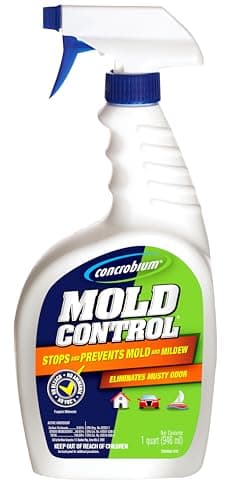
A patented, EPA-registered mold control solution that kills mold without bleach, ammonia, or VOCs. The tri-salt polymer formula crushes mold spores as it dries and leaves an invisible antimicrobial barrier to prevent regrowth. Safe for indoor use on virtually any surface.
Pros
- Non-toxic, no bleach or ammonia
- Kills mold and prevents regrowth
- Safe for use around children and pets
Cons
- Does not remove existing mold stains
- Takes longer to work than bleach-based products
- May require multiple applications for severe infestations
How to remove mold from a top-load washer
Top-loaders trap less water than front-loaders, but they're not immune — especially HE top-loaders with low water levels. The method is simpler because there's no gasket:
- Set the machine to its hottest, largest cycle and let it start to fill, then pause it and add a washer cleaner or about a cup of bleach. Let it soak an hour before finishing the cycle.
- While it soaks, scrub the underside of the lid, the rim, the bleach and softener dispensers, and the fabric-softener ring if your agitator has one — that ring is a classic hidden mold trap.
- Run a second rinse to clear residue, then wipe the drum and leave the lid up.
How to keep washing machine mold from coming back
Removal is the easy part. Staying mold-free is about a few small habits, and they cost nothing:
- Leave the door or lid open between loads. This is the whole ballgame. An open door lets the drum and gasket dry out instead of incubating. If you do one thing, do this.
- Run a cleaning cycle once a month. Both Consumer Reports and manufacturers recommend a monthly (roughly every 30 cycles) cleaning cycle — a tablet or bleach on the hottest setting.
- Use less detergent — and the right kind. HE machines need HE detergent, and most people use two to three times what they need. Excess suds leave the residue biofilm feeds on.
- Dry the gasket after heavy or warm-water loads. A quick wipe of the bottom fold on a front-loader takes ten seconds.
- Don't leave wet laundry sitting in the drum.Wet clothes left overnight re-seed the machine — and the clothes themselves. If that's already happened, here's how to get mold out of clothes.
Best washing machine mold cleaners
You don't need a shelf of products. A washer-cleaner tablet for monthly maintenance and one non-bleach spray for the gasket covers nearly every case:
- Washer-cleaner tablets (Affresh and similar). The slow-dissolve design is the reason to use a tablet over a bleach splash — it stays active through the whole cycle. Best for routine monthly upkeep.
- Concrobium Mold Control. The fume-free choice for scrubbing a moldy gasket, and it leaves a regrowth-slowing film. See the full Concrobium review.
- Plain chlorine bleach.Cheapest and effective for the deep clean, but harsh, fume-heavy, and it won't reach hoses the way a tablet does. Good for a one-time reset, not gentle upkeep.
For a broader comparison of what kills mold on hard surfaces around the laundry room, our best mold removal products roundup breaks products down by the job they do, and does bleach kill moldexplains where bleach helps and where it's the wrong tool.
When to stop cleaning and replace the machine
Cleaning fixes almost every case. But if you've deep-cleaned, kept the door open, and the musty smell comes back within days — or the gasket rubber is cracked and mold is embedded in the splits rather than sitting on the surface — the seal itself may be the problem. A replacement gasket is a modest repair on most front-loaders and far cheaper than a new washer. Replace the machine only when a cracked seal plus a persistent drum-and-hose biofilm together make it a losing battle, which is rare on anything less than a decade old.
Frequently Asked Questions
Is mold in a washing machine dangerous?
Can I use bleach in my washing machine?
How often should I clean my washing machine?
Why does my front-load washer get moldy but my old top-loader never did?
Should I replace my washing machine if it has mold?
Related Articles
How to Remove Mold from Clothes, Fabric & Leather (Without Ruining Them)
Concrobium Mold Control Review: What It Does (and What It Won't)
Musty Smell in House? Here's How to Find & Fix the Source
Does Bleach Kill Mold? The EPA Says No — Here's What Actually Works
Mold Removal Products: A Complete Guide to What Works and Why
Mold in Your Refrigerator: How to Clean It and Stop It for Good
Need Professional Mold Removal?
Get free, no-obligation quotes from licensed mold remediation specialists in your area.
Get Free Quotes