Mold in Your Closet: Causes, Removal & Prevention
Out of the Mold Editorial Team
Our guides are research-backed and cite EPA, CDC, and peer-reviewed sources. Product reviews are based on hands-on testing, not manufacturer claims. Read our editorial standards.
Affiliate Disclosure: Out of the Mold is reader-supported. As an Amazon Associate, we may earn a commission when you buy through links on this page — at no extra cost to you. Our picks are based on independent standards, manufacturer specifications, and published research, not commissions.
Key Takeaways
- Closets grow mold because they're the one space that's dark, still, and shut all day — the fix is air and humidity, not just a stronger cleaner.
- Clean the clothes and shoes too, or they reinfect the closet overnight; don't return anything until it's dry.
- Cracking the door or switching to a louvered door is the single biggest prevention win.
- A hanging moisture absorber fits a reach-in; a mini dehumidifier suits a walk-in or chronically damp closet.
- If the musty smell returns within a month, a hygrometer left in there for a week usually names the real cause.
Closets grow mold because they're the one room in the house that's dark, still, and closed all day — the exact conditions mold wants. Clean what's there (empty it, wipe the walls with an antimicrobial, treat affected clothes and shoes), then fix the air: crack the door, drop in a moisture absorber or a small dehumidifier, and stop stuffing it wall-to-wall. The musty smell goes away for good only when the closet stops sitting damp and sealed.
Almost every other room gets some air movement — a door that opens, a vent, a window. A closet gets none of that. It's shut for 23 hours a day, packed with fabric that holds moisture, often sharing a wall with a bathroom or sitting on a cold exterior corner of the house. That combination is why a closet can bloom mold while the bedroom three feet away stays clean. Understanding which of those factors is driving yours is what makes the fix stick instead of coming back next season.
What's actually making your closet moldy
Figure out your cause before you clean, because the cause decides the fix:
- Dead air. The default closet problem. No circulation means humidity that drifts in never leaves, and fabric slowly gives it back up into stagnant air.
- An exterior or shared wall. A closet against a cold outside wall gets condensation when warm indoor air meets that chilly surface — same reason a cold glass sweats. Closets backing onto bathrooms catch humidity migrating through the wall.
- Damp things put away. One not-quite-dry towel, gym clothes, or shoes worn in the rain will seed a whole closet.
- Overpacking. Jam it full and you kill what little airflow there was — pressed-together fabric traps moisture against itself.
- A leak above or behind.A roof or plumbing leak draining into a closet wall is the serious version, and it'll keep feeding mold no matter how often you wipe. If the wall is damp to the touch, rule this out first.
Clearing the mold out
- Empty it completely.Everything out — you can't clean a wall you can't reach, and you need to check whether the mold jumped to the contents.
- Wipe the walls and shelving. On painted drywall and wood shelving, an antimicrobial cleaner or hydrogen peroxide handles surface mold. A film like Concrobium is handy in a closet specifically because it has no bleach fumes to sit trapped in a small sealed box, and it leaves an antimicrobial layer that slows regrowth.
- Check the hidden spots. Look behind the baseboards, in the back corners, and on the ceiling — closet mold loves the top corner against an exterior wall. If growth is coming from inside the wall rather than sitting on it, see how to check for mold behind walls before you repaint over it.
- Deal with the clothes and shoes. This is the part people forget, and it reinfects a clean closet overnight. Mold on washable fabric comes out in the wash — full walkthrough in mold on clothes. Leather shoes, jackets, and bags need the gentler treatment in mold on leather. Don't put a single item back until it's clean and bone dry.
- Dry the closet fully before anything goes back. Leave the door open with a fan pointed in for a day.
Concrobium Mold Control
Concrobium
$10–15
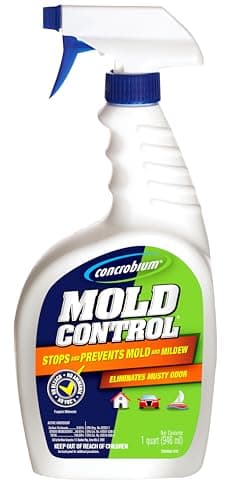
A patented, EPA-registered mold control solution that kills mold without bleach, ammonia, or VOCs. The tri-salt polymer formula crushes mold spores as it dries and leaves an invisible antimicrobial barrier to prevent regrowth. Safe for indoor use on virtually any surface.
Pros
- Non-toxic, no bleach or ammonia
- Kills mold and prevents regrowth
- Safe for use around children and pets
Cons
- Does not remove existing mold stains
- Takes longer to work than bleach-based products
- May require multiple applications for severe infestations
When it's on the closet walls
Surface mold on painted drywall cleans off and can be repainted — once it's dry, a coat of mold-resistant painton a closet's exterior-facing wall is cheap insurance against the condensation that caused it. But if the drywall is soft, stained from behind, or the mold keeps returning to the same patch, the moisture is coming from inside the wall or an exterior-wall insulation gap — paint over that and you're just hiding it. A closet on a cold outside wall that condenses repeatedly often needs an insulation or vapor-barrier look, not another cleaning.
Keeping it gone — the part that actually matters
A closet will regrow mold every few months unless you change the air and the humidity. This is the half of the job most guides skip, and it's the half that works. The EPA sums up the principle: "The key to mold control is moisture control."
- Stop closing it all the way. Leaving the door cracked, or swapping a solid door for a louvered one, is the single highest-leverage change — it lets the closet breathe with the rest of the room.
- Add a moisture absorber.A hanging DampRid-style absorber pulls humidity out of the air in a space too small to justify a full dehumidifier. It's the right-sized tool for a closet.
- Or run a mini dehumidifier in a walk-in or a persistently damp closet — a small plug-in unit holds a closet-sized space dry far more reliably than desiccant alone.
- Watch the number.A tiny hygrometer on the shelf tells you if you're actually under the EPA's "below 60 percent (ideally between 30 and 50 percent)" target or just hoping.
- Never put damp things away, and leave breathing room between hung items instead of packing the rod solid.
DampRid Hanging Moisture Absorber (3-Pack)
DampRid
$12–18
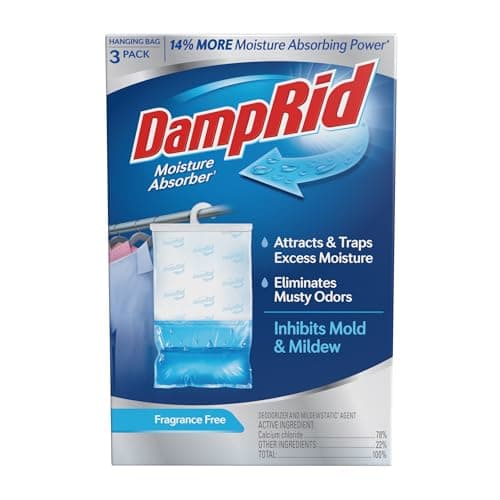
Passive calcium-chloride moisture absorbers that hang from a closet rod and pull humidity out of enclosed spaces without power. They won't fix a damp basement, but inside a closet, wardrobe, or stored vehicle they keep trapped air dry enough to stop mildew on clothes, leather, and linens. Each bag lasts roughly 45-60 days before the crystals fully dissolve.
Pros
- No electricity needed — works anywhere you can hang it
- Calcium chloride crystals absorb moisture for up to 60 days each
- Fragrance-free version won't add perfume to enclosed spaces
Cons
- Cannot meaningfully lower whole-room humidity
- Bags must be replaced once the crystals dissolve
- Collected brine must be handled carefully when disposing
Pro Breeze Electric Mini Dehumidifier
Pro Breeze
$35–50
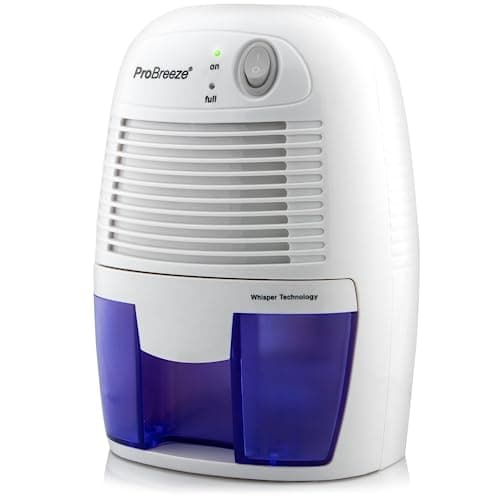
A compact thermoelectric (Peltier) dehumidifier for small enclosed spaces prone to condensation and musty smells. It won't dry out a basement, but for a windowless bathroom, closet, or boat cabin it quietly pulls enough moisture to keep surfaces below the humidity mold needs. No compressor means near-silent operation and low power draw.
Pros
- Whisper-quiet thermoelectric design with no compressor
- Small footprint fits bathrooms, closets, and RVs
- Auto shut-off with indicator when the tank is full
Cons
- Only effective in small spaces up to ~215 sq ft
- Thermoelectric units lose effectiveness below about 59°F
- 17-ounce tank needs frequent emptying in damp rooms
Govee H5075 Bluetooth Hygrometer Thermometer
Govee
$10–15
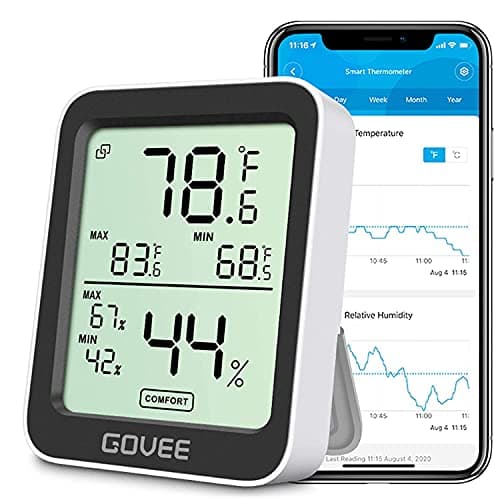
An inexpensive Bluetooth hygrometer that continuously tracks a room's relative humidity and temperature and graphs the history in an app. Mold needs sustained humidity above roughly 60%, so a logging hygrometer in the bathroom, basement, or a closet is the cheapest way to see a moisture problem building before mold appears. It monitors conditions — it does not detect or identify mold itself.
Pros
- Logs humidity history so you can spot rooms that creep past 60% RH
- Bluetooth app graphs the trend and alerts you when a room gets damp
- Cheap enough to put one in every mold-prone room
Cons
- Measures humidity, not mold — it flags the conditions, never confirms spores
- App/Bluetooth only; no Wi-Fi remote access without the hub
- Consumer-grade accuracy — fine for mold risk, not lab precision
If you've cleaned a closet and the musty smell is back within a month, don't just re-wipe it — that's the closet telling you the air or a hidden leak never changed. Put a hygrometer in there for a week and see what the humidity actually does overnight with the door shut. The number usually names the culprit for you.
Frequently Asked Questions
Why does my closet keep getting moldy?
Is mold in a closet dangerous?
Can mold in a closet spread to my clothes?
Should I keep my closet door open or closed?
How do I prevent mold in a walk-in closet?
Related Articles
How to Remove Mold from Clothes, Fabric & Leather (Without Ruining Them)
How to Remove Mold from Leather (Without Ruining It)
Mold-Resistant Paint: How It Works, When to Use It, and What It Can't Do
Mold on Furniture: Save It or Toss It? Removal Guide
How to Detect Mold Behind Walls (Without Tearing Them Down)
Best Dehumidifiers for Mold Prevention & Removal (2026)
Dealing With Mold Right Now?
Our step-by-step mold removal guide walks you through testing your home, choosing the right products, and knowing when a job is too big for DIY.
Read the Removal Guide