Mold on Furniture: Save It or Toss It? Removal Guide
Out of the Mold Editorial Team
Our guides are research-backed and cite EPA, CDC, and peer-reviewed sources. Product reviews are based on hands-on testing, not manufacturer claims. Read our editorial standards.
Affiliate Disclosure: Out of the Mold is reader-supported. As an Amazon Associate, we may earn a commission when you buy through links on this page — at no extra cost to you. Our picks are based on independent standards, manufacturer specifications, and published research, not commissions.
Key Takeaways
- The whole decision is on it vs. in it: hard surfaces clean up and keep; soaked foam and padding usually get replaced.
- The EPA groups absorbent materials with the stuff that 'may have to be thrown away if they become moldy' — believe it on cushion foam.
- Wood is the most saveable: scrub, dry, and lift leftover stain from raw grain with oxalic wood bleach; never use chlorine bleach on wood.
- Leather cleans off the surface with mild soap — just never soak it and never use bleach.
- Cleaning without dropping the room's humidity below 60% just resets the clock on the next bloom.
Whether you can save moldy furniture comes down to one thing: is it hard or soft? Non-porous surfaces — solid wood, finished wood, metal, plastic, leather — almost always clean up and keep. Soft, porous pieces that soaked the mold deep into padding or cushion foam often can't be saved, because the EPA's rule for absorbent materials is that they "may have to be thrown away if they become moldy." The decision is per-material, so start by figuring out what you're actually dealing with.
Furniture gets moldy for dull, fixable reasons: a basement or storage unit that sits above 60% humidity, a couch shoved flat against a cold exterior wall with no air moving behind it, a spill that never fully dried, a patio set left out through a wet season. Spores are always in the air; give them a damp organic surface and they set up shop. The good news is that most furniture is salvageable. The trap is treating a foam cushion the same way you'd treat a wood table — one wipes clean, the other is a sponge you'll never fully wring out.
One safety note before you touch anything: disturbing mold throws spores into the air, so work outdoors if you can, open windows if you can't, and put on an N95 first. This matters most with cushions and upholstery, which release a cloud when you brush or vacuum them.
3M 8511 N95 Particulate Respirator
3M
$20–30
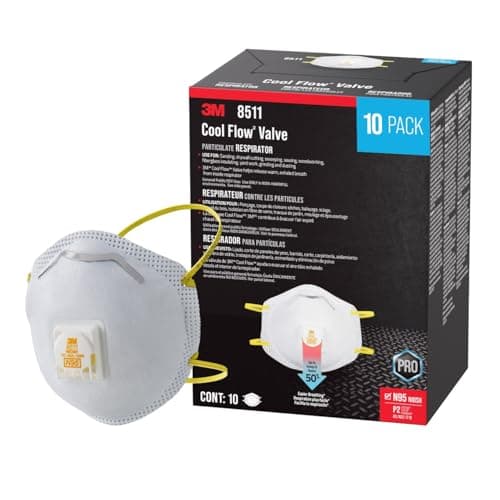
A NIOSH-approved N95 particulate respirator with Cool Flow exhalation valve for comfortable breathing during mold remediation. Filters at least 95% of airborne particles including mold spores. The adjustable M-noseclip and dual-strap design provide a secure seal. OSHA-recommended for mold work.
Pros
- NIOSH-approved N95 filtration
- Cool Flow valve reduces heat buildup
- Adjustable nose clip for secure fit
Cons
- Disposable, not reusable long-term
- Does not protect against chemical fumes or VOCs
- May not fit all face shapes comfortably
Wood furniture: the most saveable
Finished and solid wood is the easiest win on this page. The finish is a barrier, so mold usually sits on the surface rather than rooting into the grain.
- Take it outside and brush off the loose growthwith a dry brush (N95 on), so you're not grinding it into the finish.
- Wipe down with a mild cleaner.The EPA's advice for hard surfaces is simply to "scrub mold off hard surfaces with detergent and water, and dry completely." For a fungus that keeps coming back, a dedicated remover like RMR-86 or an antimicrobial like Concrobium goes further than dish soap. Skip bleach on wood — it bleaches the color and barely penetrates the finish.
- Dry it hard, then check the grain.If the surface is clean but a dark stain remains in bare or raw wood, that's pigment left in the fibers, not live mold.
- Tackle the stain if you care about looks.Oxalic acid ("wood bleach") lifts the gray/black discoloration out of raw wood without wrecking the grain — then you can refinish. For the full treatment on floors and larger pieces, see how to remove mold from wood.
Wood only crosses into toss-it territory when it's structural rot — soft, spongy, crumbling under a screwdriver tip. At that point the mold has been eating the wood itself, and no cleaner reverses that.
RMR-86 Instant Mold & Mildew Stain Remover Spray (1 Gallon)
RMR Brands
$25–35
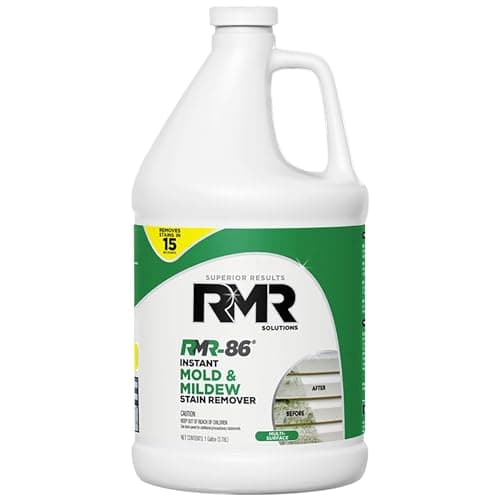
A fast-acting, commercial-strength mold stain remover that eliminates black mold stains on contact. The sodium hypochlorite formula penetrates porous surfaces to lift deep stains without scrubbing. Best used in well-ventilated areas with proper respiratory protection.
Pros
- Removes stains in as little as 15 seconds
- Works on wood, concrete, drywall, and tile
- No scrubbing required
Cons
- Strong bleach-based formula with harsh fumes
- Not safe for fabrics or colored surfaces
- Requires good ventilation and PPE
Oxalic Acid Wood Bleach (99.9%)
Eco Living Solutions
$9–18
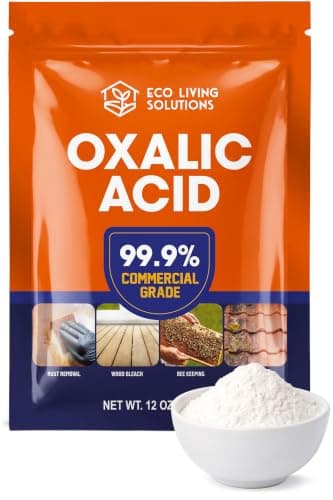
The one product that fixes what chlorine bleach can't: the gray, weathered cast left in raw wood after the mold is gone. Oxalic acid is the classic wood bleach for restoring joist, subfloor, and deck color. It's a mix-it-yourself powder, so treat it with respect — gloves, goggles, and a respirator — but for bare wood staining nothing off a spray shelf matches it.
Pros
- Removes the gray-black staining chlorine bleach leaves behind on raw wood
- Restores wood tone on joists, subfloor, and decking
- A little powder mixed with water covers a lot of area
Cons
- Powder you mix yourself — needs gloves, goggles, and care
- Toxic if inhaled or ingested; not for casual indoor spraying
- Slower, multi-step process versus a ready-to-use spray
Upholstered and fabric furniture: the hard call
This is where people lose money by being optimistic. A sofa, armchair, or padded headboard is fabric over foam and batting — and the foam is the problem. You can clean the fabricsurface, but you can't reliably reach mold that's colonized the padding underneath, which is exactly why the EPA groups absorbent materials with the stuff that "may have to be thrown away."
Here's the honest decision tree:
- Light surface mold on the fabric only, caught early— worth a rescue. Vacuum with a HEPA vacuum (a standard vacuum just sprays spores out the exhaust), wipe the fabric with an antimicrobial cleaner safe for textiles, and dry it fast and completely, ideally in direct sun. Sunlight's UV genuinely knocks back surface mold and the heat speeds drying — it won't sterilize the foam inside, but it helps the surface.
- Mold you can smell but barely see, or that's come back after cleaning — the padding is colonized. On a mid-range couch, the cost and effort of reupholstering past that rarely beats replacement.
- Anything that was soakedin a flood or sat wet for days — treat the foam as a loss. You will not dry the core of a cushion fast enough to stop what's already growing in it.
The exception worth paying for is a genuine antique or a high-value piece, where a professional upholstery cleaner with extraction equipment — or a full reupholster with new foam — can make sense. For an $800 big-box sectional with mold in the cushions, it almost never does.
Leather furniture: clean, don't soak
Leather sits closer to the wood end of the spectrum — it's a surface mold tends to grow on rather than in, so a leather couch or chair usually cleans up. Wipe it down with a cloth dampened in a mild soap or a diluted vinegar solution, dry it immediately, and condition the leather afterward so it doesn't crack. The two hard rules: never use bleach (it ruins the finish and dries the hide), and never leave leather wet. For the step-by-step on jackets, bags, and furniture, we've got a dedicated mold on leather guide.
Outdoor and patio furniture
Outdoor pieces are lower-stakes — you're working in open air, so spores disperse — and the materials are built to take rougher treatment.
- Hard frames (metal, resin, teak, wicker): scrub with a brush and a mold cleaner, or pressure-wash set-in growth. Rinse and let them bake dry in the sun.
- Removable cushions: most outdoor cushion covers unzip and go in the wash; the foam inside is the same gamble as indoor upholstery — if mold has soaked the core, replace the inserts (cheap and sold separately) rather than fighting it.
Why it happened — and stopping the next round
Cleaning the furniture without fixing the room just resets the clock. Mold on furniture almost always traces back to one of these, and each has a fix:
- Humidity over 60%. The EPA target is to "keep indoor humidity below 60 percent (ideally between 30 and 50 percent)." A dehumidifier is the fix for a damp basement, garage, or storage room.
- No air moving behind the piece.Pull furniture a couple of inches off exterior walls so air can circulate and the back doesn't sit against a cold, sweating surface.
- Storage without airflow.In a basement or unit, keep pieces off the concrete, leave gaps between them, and drop a hanging moisture absorber nearby — it won't replace a dehumidifier, but in a sealed storage space it buys real protection.
- Spills and leaks left wet. Dry anything that gets soaked within that 24–48 hour window, before mold gets a foothold.
hOmeLabs 50-Pint Energy Star Dehumidifier
hOmeLabs
$220–260
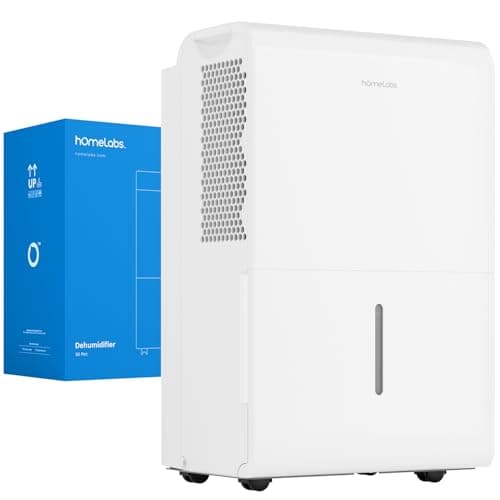
The best-selling 50-pint dehumidifier on Amazon and our top overall pick for mold prevention. Set your target humidity (aim for 45-50%) and the built-in humidistat cycles the compressor to hold it. A rear hose port allows continuous gravity draining into a floor drain, and turbo mode speeds up moisture removal after water events. Energy Star certified to keep 24/7 running costs reasonable.
Pros
- 50-pint capacity handles basements and large rooms up to 4,500 sq ft
- Built-in humidistat holds your target humidity automatically
- Continuous-drain hose port for set-and-forget operation
Cons
- No built-in pump — gravity drain or bucket emptying only
- 1.6-gallon bucket fills every 6-8 hours in very damp spaces
- Fan is audible on turbo mode
DampRid Hanging Moisture Absorber (3-Pack)
DampRid
$12–18
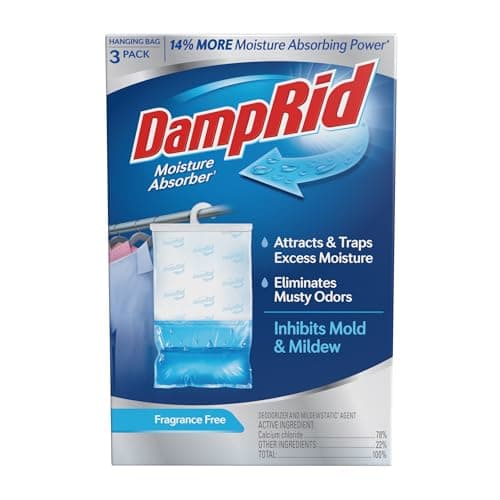
Passive calcium-chloride moisture absorbers that hang from a closet rod and pull humidity out of enclosed spaces without power. They won't fix a damp basement, but inside a closet, wardrobe, or stored vehicle they keep trapped air dry enough to stop mildew on clothes, leather, and linens. Each bag lasts roughly 45-60 days before the crystals fully dissolve.
Pros
- No electricity needed — works anywhere you can hang it
- Calcium chloride crystals absorb moisture for up to 60 days each
- Fragrance-free version won't add perfume to enclosed spaces
Cons
- Cannot meaningfully lower whole-room humidity
- Bags must be replaced once the crystals dissolve
- Collected brine must be handled carefully when disposing
Still weighing a specific piece? The question to answer honestly is whether the mold is on it or init. On it — wood, leather, metal, a lightly spotted fabric caught early — clean it and keep it. In it — foam, batting, anything soaked — replacing beats chasing a smell that keeps coming back. And whatever you save, don't put it back into the same damp room that grew the mold the first time.
Frequently Asked Questions
Can moldy furniture be saved?
Is moldy furniture dangerous to keep?
How do I remove mold from wood furniture?
Does sunlight kill mold on furniture?
How do I stop furniture from getting moldy again?
Related Articles
How to Remove Mold from Wood (Without Ruining It)
How to Remove Mold from Leather (Without Ruining It)
How to Remove Mold from Clothes, Fabric & Leather (Without Ruining Them)
Mold in Your Closet: Causes, Removal & Prevention
How to Get Rid of Black Mold: DIY Removal Guide
Hydrogen Peroxide for Mold: Does It Actually Work?
Dealing With Mold Right Now?
Our step-by-step mold removal guide walks you through testing your home, choosing the right products, and knowing when a job is too big for DIY.
Read the Removal Guide