How to Detect Mold Behind Walls (Without Tearing Them Down)
Out of the Mold Editorial Team
Our guides are research-backed and cite EPA, CDC, and peer-reviewed sources. Product reviews are based on hands-on testing, not manufacturer claims. Read our editorial standards.
Affiliate Disclosure: Out of the Mold is reader-supported. As an Amazon Associate, we may earn a commission when you buy through links on this page — at no extra cost to you. Our picks are based on independent standards, manufacturer specifications, and published research, not commissions.
Key Takeaways
- Work a cost ladder: ~$30 moisture meter, then a borescope or thermal camera, then an air/ERMI test, and open the wall last.
- A musty smell with nothing visible is microbial VOCs passing through the drywall — a real early signal, not nothing.
- Mold behind a wall is always a wet-wall problem; find and kill the water source or it returns in a season.
- The EPA's ~10 sq ft rule still applies: under it is usually DIY, over it is a remediation job.
- When you patch, use paper-free mold-resistant (purple) drywall — a few dollars more that pays off if the wall gets damp again.
You don't have to open a wall to find out if there's mold behind it — and you shouldn't, not first. Work up a cost ladder instead: a ~$30 pinless moisture meter to find the wet spot, a phone thermal attachment or borescope to look closer, then an air or ERMI testto confirm spores before anyone cuts drywall. Most guides skip straight to "call a pro" or "tear it open" because the restoration companies wrote them. Open the wall last, once you actually know where the water is.
A musty smell with nothing to see is the most common way people land here. You walk into a room — often a closet, a corner, behind a headboard — and it hits you: that damp, earthy, old-book smell. But the walls look fine. Paint's intact, no black spots, no obvious water stain. That gap between what your nose knows and what your eyes can confirm is exactly where hidden mold lives, and it's why this page exists as the next step after our guide to what mold actually smells like.
The signs that point to mold inside a wall
No single clue proves it. A stack of them together is what should move you to start testing. Look for:
- A musty smell that won't quit — strongest in one spot, worse in humid weather or after rain. That odor is literally the gas (microbial VOCs) that growing mold gives off; your nose is a real detector here.
- Surface tells on the paint:bubbling, blistering, cracking, or a faint brown/yellow tide line bleeding through from behind. Wallpaper that's peeling at a seam for no reason.
- The wall feels cool or damp to the back of your hand, or a baseboard has swelled or cupped.
- Visible growth at the edges — around an outlet, where the wall meets the floor, at a window frame. What shows at the seams is usually the overflow of something bigger inside.
- A history of waterin that wall: an old roof leak, a supply line, a shower backing onto it, a basement that flooded and wasn't dried fast. The EPA's line is blunt — "If wet or damp materials or areas are dried 24-48 hours after a leak or spill happens, in most cases mold will not grow." Miss that window inside a wall cavity and it starts.
- Symptoms that track with the room:stuffy nose, itchy eyes, or a cough that eases when you leave the house and returns when you're back. Treat that as a reason to investigate, not a diagnosis — for what mold does to health, the CDC and EPA are the sources, not us.
The detection ladder: cheapest, least destructive tool first
Here's the part the "call a professional" articles leave out. You can narrow this down yourself, in order, spending almost nothing before you spend real money. Each rung either confirms enough to act or tells you to climb to the next.
Rung 1 — Moisture meter (~$30)
Mold behind a wall is always a wet-wall problem, so find the water first. A pinless moisture meter reads the moisture content throughthe drywall surface without poking holes. You don't need to memorize a magic number — scan the suspect wall in a grid and compare it against a dry wall on the opposite side of the room. The spot that reads markedly higher than its dry neighbors is your target. That one $30 reading tells you whether to keep going or relax, and it's the single best first buy on this whole page.
Klein Tools ET140 Pinless Moisture Meter
Klein Tools
$45–60
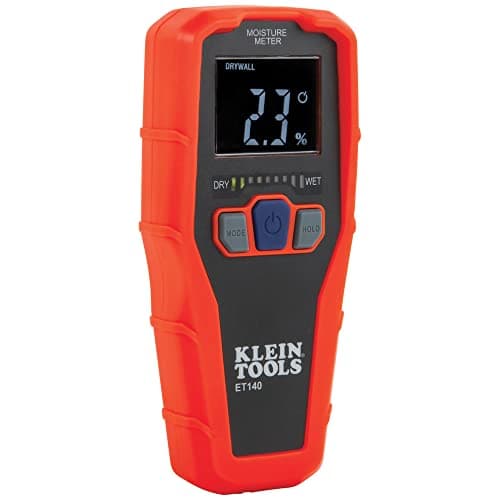
A professional-grade pinless moisture meter that detects hidden moisture in drywall, wood, and masonry without leaving holes. Uses electromagnetic sensor technology to measure moisture content up to 3/4 inch below the surface. Essential for identifying moisture problems before mold develops.
Pros
- Non-invasive pinless technology, no holes in walls
- Detects moisture up to 3/4 inch deep
- Visual and audible moisture alerts
Cons
- Less precise than pin-type meters on exact moisture percentage
- Battery not included
- Can give false readings on metallic or foil-backed surfaces
Rung 2 — Look without demolition ($30–$80)
Found a damp zone? Now get eyes or heat on it without a sledgehammer:
- Borescope camera through an existing hole.Pop off an outlet or switch cover on that wall (power off at the breaker first) and feed a cheap USB borescope into the cavity through the knockout in the electrical box. No drilling, no patching — you're looking into the wall through a hole that's already there. A cable or coax pass- through works the same way.
- Thermal camera or phone attachment.A clip-on thermal imager shows wet areas as cold spots because evaporating moisture cools the surface. It won't "see mold," but it maps the damp footprint behind the paint, which is the thing that feeds it.
Neither tool is in our product cart because the honest answer is that a decent borescope or phone thermal clip comes and goes on Amazon and the model names churn — search the current listings rather than trust a six-month-old link. The technique matters more than the brand.
Rung 3 — Test the air, not the wall ($30–$250)
If you can smell it and the meter agrees something's wet, but you still can't see growth, test the air instead of demolishing the wall. An air-sampling or ERMIkit measures what's actually airborne in the room. Elevated indoor spore counts versus an outdoor baseline — or a high ERMI score — tells you there's an active source nearby even when it's hidden. We break down which test answers which question in ERMI vs. air test.
ImmunoLytics ERMI Mold Test Kit
ImmunoLytics
$190–220

The most comprehensive home mold test available. Uses EPA-developed ERMI methodology with DNA-based MSQPCR analysis to quantify 36 mold species. Generates a standardized Relative Moldiness Index score that compares your home to a national database. Preferred by environmental consultants and real estate inspectors.
Pros
- ERMI (EPA Relative Moldiness Index) is the gold standard
- DNA-based analysis identifies 36 mold species
- Lab analysis included in price
Cons
- Most expensive home test kit
- Results take 7-10 business days
- Requires careful dust collection with included vacuum cassette
Rung 4 — Open the wall (last)
Only now, with a wet spot located and spores confirmed, is cutting into the drywall worth it. Open the smallest window you can over the wettest reading — an inspection hole the size of your hand first, not a whole sheet. Four rungs of cheap, reversible checks have told you exactly where to cut and whether to bother. That's the entire point: the wall is the last thing you touch, not the first.
How water gets inside a wall in the first place
Finding mold is only useful if you kill the water that's feeding it, or it's back in a season. The usual suspects, roughly in order of how often they're the culprit:
- Plumbing in the wall — a weeping supply line, a drain joint, or a shower/tub surround leaking behind the tile. Bathrooms and kitchen walls lead this list.
- Roof and window leaks that run down inside the cavity and surface far below where the water actually enters.
- Condensation on cold surfaces — uninsulated pipes or the back of a poorly insulated exterior wall sweating in winter.
- A flood or spill that soaked the bottom of the wall and wicked up into the drywall and framing before anyone dried it.
The EPA reduces the whole strategy to one sentence: "Fix plumbing leaks and other water problems as soon as possible. Dry all items completely." Kill the leak before you patch the wall, every time.
What to do once you've confirmed it
The size of the job decides whether this is a Saturday or a phone call. The EPA's DIY cutoff is the number to anchor on: "If the moldy area is less than about 10 square feet (less than roughly a 3 ft. by 3 ft. patch), in most cases, you can handle the job yourself."
- Under ~10 sq ft: cut the moldy drywall out a foot or so past the visible edge, let the cavity dry fully, and treat the exposed studs. A film like Concrobium dries to an antimicrobial layer on framing without the fumes of bleach in a closed space.
- Studs soft or crumbling:that's rot, not surface mold — it's a structural repair, not a cleaning job.
- Over ~10 sq ft, multiple cavities, or into the HVAC: bring in a remediation pro, and price the scope first with our mold removal cost calculatorso you know whether you're looking at a few hundred dollars or a few thousand before anyone quotes you.
- Renting?Hidden wall mold from a building leak is the landlord's problem. Document it — photos, the meter reading, the smell — and report it in writing rather than opening the wall yourself.
Concrobium Mold Control (32 oz Spray, 2-Pack)
Concrobium
$34–40 (2 bottles)
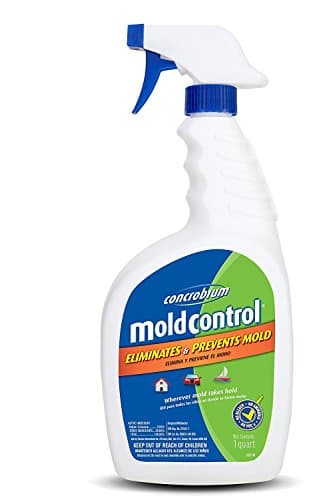
A patented, EPA-registered mold control solution that kills mold without bleach, ammonia, or VOCs. The tri-salt polymer formula crushes mold spores as it dries and leaves an invisible antimicrobial barrier to prevent regrowth. Safe for indoor use on virtually any surface.
Pros
- Non-toxic, no bleach or ammonia
- Kills mold and prevents regrowth
- Safe for use around children and pets
Cons
- Does not remove existing mold stains
- Takes longer to work than bleach-based products
- May require multiple applications for severe infestations
When you close the wall back up, use mold-resistant drywall (the paper- free "purple" board) on the patch. It costs a few dollars more per sheet and is the one upgrade that pays for itself if the wall ever gets damp again.
Keeping wall cavities dry
Every prevention step here is really a moisture step, because "the key to mold control is moisture control." Fix leaks the day you find them. Insulate cold-water pipes so they stop sweating inside the wall. Vent bathroom and kitchen fans to the outside, not into the attic. And hold the house in the EPA's target band — "below 60 percent (ideally between 30 and 50 percent) relative humidity" — which in a damp house means a dehumidifier and a cheap hygrometer you actually watch.
Govee H5075 Bluetooth Hygrometer Thermometer
Govee
$10–15
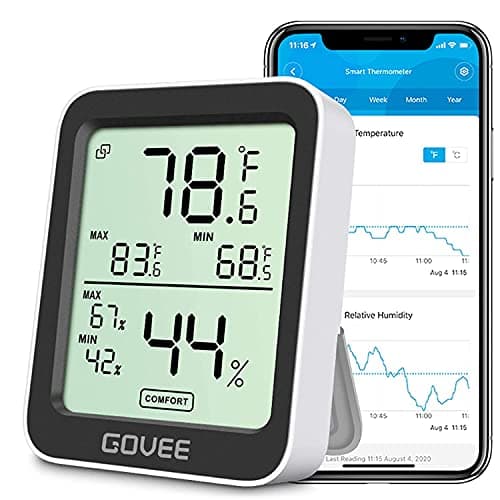
An inexpensive Bluetooth hygrometer that continuously tracks a room's relative humidity and temperature and graphs the history in an app. Mold needs sustained humidity above roughly 60%, so a logging hygrometer in the bathroom, basement, or a closet is the cheapest way to see a moisture problem building before mold appears. It monitors conditions — it does not detect or identify mold itself.
Pros
- Logs humidity history so you can spot rooms that creep past 60% RH
- Bluetooth app graphs the trend and alerts you when a room gets damp
- Cheap enough to put one in every mold-prone room
Cons
- Measures humidity, not mold — it flags the conditions, never confirms spores
- App/Bluetooth only; no Wi-Fi remote access without the hub
- Consumer-grade accuracy — fine for mold risk, not lab precision
hOmeLabs 50-Pint Energy Star Dehumidifier
hOmeLabs
$220–260
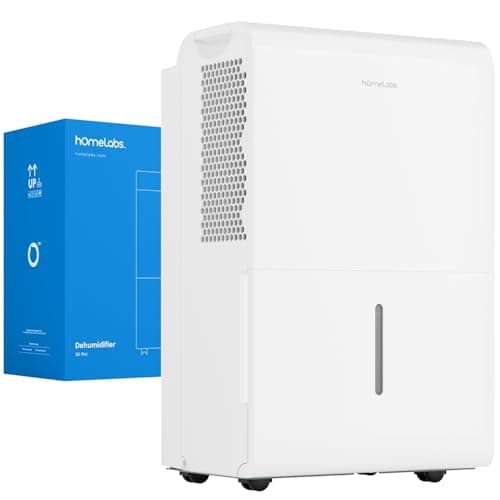
The best-selling 50-pint dehumidifier on Amazon and our top overall pick for mold prevention. Set your target humidity (aim for 45-50%) and the built-in humidistat cycles the compressor to hold it. A rear hose port allows continuous gravity draining into a floor drain, and turbo mode speeds up moisture removal after water events. Energy Star certified to keep 24/7 running costs reasonable.
Pros
- 50-pint capacity handles basements and large rooms up to 4,500 sq ft
- Built-in humidistat holds your target humidity automatically
- Continuous-drain hose port for set-and-forget operation
Cons
- No built-in pump — gravity drain or bucket emptying only
- 1.6-gallon bucket fills every 6-8 hours in very damp spaces
- Fan is audible on turbo mode
If you've run the ladder and you're still not sure whether the wall is drying or you're chasing a leak you can't find, that's the moment a professional inspection earns its fee — not before you've spent $30 to find out. Tell us what your meter read against the dry wall; that number decides almost everything that comes next.
Frequently Asked Questions
How do I know if there's mold behind my walls?
Can you detect mold behind a wall without cutting it open?
Can you smell mold through a wall?
How much does it cost to remove mold from inside a wall?
Should I test for mold before opening the wall?
Related Articles
Moisture Meter for Mold: Finding Hidden Mold Before You See It
What Does Mold Smell Like? How to Identify Mold by Smell
ERMI Mold Test: Cost, Accuracy & When You Actually Need One
ERMI vs Air Test vs HERTSMI-2: Which Mold Test Do You Need?
How to Get Rid of Black Mold: DIY Removal Guide
Mold on Drywall: Should You Clean It or Replace It?
Dealing With Mold Right Now?
Our step-by-step mold removal guide walks you through testing your home, choosing the right products, and knowing when a job is too big for DIY.
Read the Removal Guide