Mold in a Toilet: Tank, Bowl, and Why It Keeps Coming Back
Out of the Mold Editorial Team
Our guides are research-backed and cite EPA, CDC, and peer-reviewed sources. Product reviews are based on hands-on testing, not manufacturer claims. Read our editorial standards.
Affiliate Disclosure: Out of the Mold is reader-supported. As an Amazon Associate, we may earn a commission when you buy through links on this page — at no extra cost to you. Our picks are based on independent standards, manufacturer specifications, and published research, not commissions.
Key Takeaways
- Dark growth in a toilet is usually mold or mildew (black/brown); pink or orange film is Serratia bacteria, not mold — correct the ID so the fix matches.
- It's mostly a hygiene-and-odor issue for healthy people; higher concern for immunocompromised households — see EPA/CDC, and we don't give medical advice.
- It keeps coming back because the conditions do: stagnant water in an unused toilet, bathroom humidity, a slow or running tank, and minerals (or urine sugars) as food.
- Clean the bowl with a clinging gel and an under-rim brush below the water line; clean the tank with vinegar — never bleach, which degrades the flapper and seals.
- Persistent toilet mold plus unexplained thirst or frequent urination is worth mentioning to a doctor: glucose in the urine of undiagnosed diabetes can feed the growth — a flag to check, not a diagnosis.
Dark growth in a toilet is usually mold or mildew (black or brown), and the pink or orange stuff is Serratia bacteria — both feeding on the constant moisture, minerals, and sometimes sugars in the water. In the tank it thrives in the dark, still, humid air; in the bowl it clings below the water line where a quick brush never scrubs. It's mostly a hygiene-and-odor problem for healthy people — but it keeps coming back unless you remove the conditions feeding it, not just bleach it once.
Every result that ranks for this cleans the toilet once or asks whether it's dangerous. Almost none answers the two questions people actually type: why does it keep coming back, and the odd one that keeps appearing in autosuggest — the connection to diabetes. Both have real answers, so let's start with the triage and get to the recurrence, because that's the part that actually saves you scrubbing the same ring every month.
Is mold in a toilet dangerous?
For a healthy person, it's low-risk — an unpleasant, smelly nuisance rather than a health emergency. Surface mold and Serratia in a toilet aren't something you're eating or breathing in quantity, so the practical problems are the odor and the fact that it keeps returning. The concern rises for immunocompromised households, which is a reason to keep on top of it; for exposure questions the EPA and CDC are the right place, not a cleaning guide. We don't give medical advice.
What causes it — and why it keeps coming back
A toilet hands mold everything it needs: constant water, warmth, minerals to feed on, and low airflow. The reason it returns after you scrub is almost always one of these conditions, not a failure of the cleaner:
- An infrequently used toilet. A guest bath or basement toilet where water sits still for days is the most common recurring case — stagnant water is a breeding pool.
- A humid bathroom. The same damp air that fogs the mirror feeds growth in the tank and under the rim. A bath fan that actually runs makes a real difference.
- A slow or running tank. A flapper that leaks keeps the water moving just enough to spread growth and keeps the tank perpetually damp.
- Minerals as food. Hard water leaves mineral deposits that growth clings to and feeds on below the water line.
There's one more cause worth raising honestly, because it's the question people quietly search and no ranking page addresses straight: sugar in the urine of someone with undiagnosed diabetes. When blood sugar runs high, glucose spills into the urine (glycosuria), and that sugar is extra food for mold and yeast in the bowl. There is no study directly proving toilet mold means diabetes, and a mold ring on its own usually just means a damp, under-cleaned toilet. But if mold keeps returning in the bowl andyou've noticed unexplained thirst or you're urinating more than usual, that pairing is worth mentioning to a doctor. It's a flag to check, not a diagnosis.
How to clean mold from the bowl, below the water line
The bowl is where most people see it — a black or brown ring under the rim and below the water line that a quick swish skates right over. The trick is dwell time and reach:
- Lower the water level so you can scrub below the line — shut the supply valve and flush, or push the water down with the brush.
- Apply a clinging bowl cleaner under the rim and around the ring so it stays put and keeps working on the stain instead of running off.
- Scrub with a stiff under-rim brush, getting up into the rim jets where growth hides, then let it sit a few minutes and flush.
A clinging gel is the right tool here precisely because it dwells on the below-water-line ring instead of sliding off:
Clorox Toilet Bowl Cleaner Clinging Bleach Gel
Clorox
$5–9
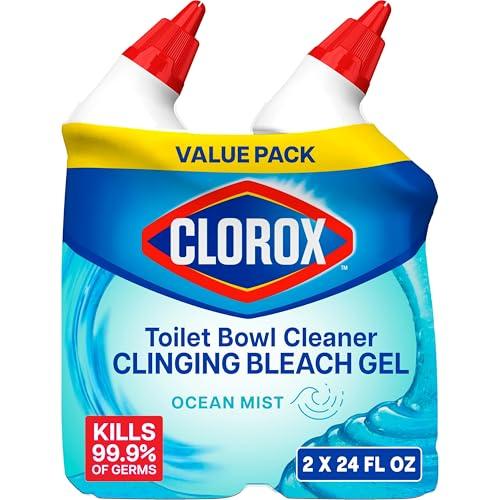
A clinging bleach gel is the right tool for the one spot a toilet brush and a quick swish always miss: the ring of mold and mineral staining that sets up below the water line and under the rim jets. The gel grips the porcelain so the bleach has time to work on the stain. Keep it in the bowl, though — the common mistake is dumping bleach into the tank, where it chews through the flapper and seals and leaves you with a running toilet.
Pros
- Clings under the rim and down the bowl so it dwells on below-water-line mold staining instead of running off
- Bleach lifts black and brown staining with minimal scrubbing
- Cheap and sold everywhere
Cons
- It's bleach — fine for the porcelain bowl, but do not pour it in the tank, where it degrades the rubber flapper and seals over time
- Ventilate and never mix with other cleaners
- Removes the stain, not the humidity conditions that let it return
And an ordinary brush misses the two spots that matter — up inside the rim and below the water line. An angled under-rim brush is shaped to reach both:
Clorox Corner Toilet Bowl Brush with Under-Rim Scrubber
Clorox
$8–15
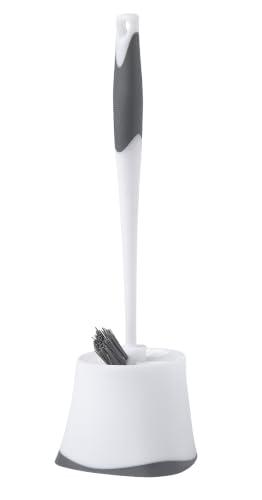
An ordinary toilet brush skates right over the two places mold hides in a toilet: up inside the rim jets and down below the water line. This one's angled head and pointed under-rim tip are shaped to get into both. Pair it with a clinging bowl cleaner, drop the water level to expose the ring, and scrub — then let the brush dry fully in its caddy so it doesn't become a mold source itself.
Pros
- Angled head and under-rim tip reach the jets and below-water-line ring where mold actually clings
- Stiff bristles that bite into set-in staining
- Comes with a storage caddy
Cons
- Replace it every few months — a brush that sits wet grows its own biofilm
- For the bowl only; it won't scrub the tank interior
How to clean mold from the tank — without wrecking it
The tank grows mold in the still, humid air above the water and along the walls. Clean it, but mind the parts:
- Turn off the supply valve and flush to empty the tank.
- Scrub the walls and under the lid with white vinegar or a tank-safe cleaner and a brush.
- Let it sit, scrub again, then refill and flush a couple of times.
Do not pour bleach or drop bleach tablets into the tank. It's the single most common toilet-tank mistake: chlorine degrades the rubber flapper and seals over time, and you trade a mold ring for a running toilet and a repair. Keep the clinging bleach gel for the porcelain bowl, where it won't sit against rubber, and clean the tank with vinegar. (The broader bleach-vs-everything-else question is covered in does bleach kill mold.)
How to stop it coming back
- Flush unused toilets weekly. Moving the water stops the stagnant-pool problem in a guest or basement bath.
- Run the bath fan. Pulling humidity out of the room starves tank and under-rim growth. Our guide to a musty-smelling house covers the humidity side.
- Fix a slow or running tank. A fresh flapper is a cheap fix that removes the constant-moisture problem.
- Clean on a schedule. A monthly bowl scrub below the water line keeps the ring from re-establishing.
Black vs pink vs orange in a toilet
| Color | What it is |
|---|---|
| Black or brown | Mold / mildew — the growth this page is about |
| Pink or orange | Serratia bacteria, not a true mold — wipes off easily, returns fast in standing water |
If it's pink, don't over-think it as "mold" — our pink mold guide explains the organism and why it loves a toilet. For black or brown growth that spreads beyond the toilet to the walls or ceiling of a damp bathroom, step up to the full mold removal guide and check the bathroom ceiling, which usually shares the same humidity cause.
Quick answers
Why does mold keep coming back in my toilet?Because it's a conditions problem. The toilet keeps giving it moisture, minerals and sometimes sugar to feed on — especially if it's used infrequently, the bathroom is humid, or the tank runs. Fix the conditions and scrubbing finally lasts.
Can I pour bleach in the toilet tank?Don't. Chlorine and in-tank bleach tablets degrade the flapper and seals and cause a running toilet. Clean the tank with vinegar; save the bleach gel for the bowl.
Scrubbed it clean and the ring was back in two weeks? That's the tell that it's conditions, not cleaning. Tell us whether the toilet sits unused, the bathroom stays humid, or the tank runs — each points to a different, lasting fix.
Frequently Asked Questions
Why does mold keep coming back in my toilet?
Can I pour bleach in the toilet tank to stop mold?
Is the pink stuff in my toilet mold?
Related Articles
Pink Mold: What It Really Is, How to Remove It, and How to Prevent It
Does Bleach Kill Mold? The EPA Says No — Here's What Actually Works
How to Remove Mold from Your Bathroom Ceiling (And Keep It Gone)
How to Remove Mold from Your Shower (Step-by-Step)
Best Mold Removal Products: What Works for Every Surface & Situation
Musty Smell in House? Here's How to Find & Fix the Source
Dealing With Mold Right Now?
Our step-by-step mold removal guide walks you through testing your home, choosing the right products, and knowing when a job is too big for DIY.
Read the Removal Guide