Does Borax Kill Mold? What It Does, What It Doesn't, and the Right Mix
Out of the Mold Editorial Team
Our guides are research-backed and cite EPA, CDC, and peer-reviewed sources. Product reviews are based on hands-on testing, not manufacturer claims. Read our editorial standards.
Affiliate Disclosure: Out of the Mold is reader-supported. As an Amazon Associate, we may earn a commission when you buy through links on this page — at no extra cost to you. Our picks are based on independent standards, manufacturer specifications, and published research, not commissions.
Key Takeaways
- Borax (sodium tetraborate) is a cleaner and regrowth inhibitor, not a biocide — it raises surface pH to ~9.5 so mold struggles to regrow, and it lifts the stain.
- It's legally a household cleaner, not an EPA-registered fungicide, so it can't kill roots embedded in porous drywall or bare wood.
- The mix is 1 cup borax per gallon of warm water; scrub, wipe, and don't rinse — the dried residue is what keeps mold from returning.
- Use it on tile, sealed grout, glass, and sealed concrete; skip it on soaked drywall, bare wood, and carpet (those need removal, not cleaning).
- If a borax scrub keeps failing, the roots are below the surface or the leak is unfixed — step up to a no-bleach product like Concrobium, or remediate past the EPA's ~10-sq-ft DIY line.
Borax doesn't "kill" mold the way a biocide does. It raises the surface pH to around 9.5 — alkaline enough that mold struggles to regrow — and it lifts the stain. That makes a box of 20 Mule Team Borax a genuinely useful cleaner and regrowth inhibitor on hard, nonporous surfaces, and a poor choice for mold that's rooted in porous drywall, bare wood, or grout that's lost its seal. Borax is legally a household cleaner, not a registered fungicide — so treat it as a surface tool, not a remediation one.
The borax question shows up the same way the vinegar and hydrogen peroxide ones do: someone has mold, there's a cheap box of borax in the laundry aisle, and the internet is split between "it kills toxic mold in 5 minutes" and a home-inspector forum shrugging. The truth is more useful than either. Here's what borax actually does, the mix that works, and the line where it stops working.
How borax actually works on mold
Borax is sodium tetraborate — a naturally occurring mineral salt. Dissolved in water it makes an alkaline solution, around pH 9.5. Mold likes a roughly neutral-to-slightly-acidic surface; push the pH up that high and you create an environment its enzymes and spores don't reproduce well in. On top of that, borax is a mild surfactant, so it helps lift the stain and the surface growth as you scrub.
Two things follow from that. First, borax is a regrowth inhibitor and cleaner, not a fast oxidizer that chemically burns mold the way bleach does — which is exactly why you're told to leave the residue on rather than rinse it off. The thin alkaline film that dries on the surface keeps working after you walk away. Second, because its job is surface chemistry, borax can't do anything about mold whose roots (hyphae) are threaded down into a porous material. It raises the pH of the face; the colony inside the drywall doesn't care.
The borax mold mix, step by step
This is the part the "borax mold cleaner" searches actually want. The ratio is simple and forgiving:
- Mix 1 cup of borax into 1 gallon of warm water.Warm water dissolves it faster. Stir until it's fully dissolved — no gritty settle at the bottom.
- Apply it to the moldy surface. For a floor or horizontal surface, pour or sponge it on. For walls and vertical tile, pour the solution into a spray bottle so it stays put.
- Scrub the mold away with a stiff brush while the surface is wet. The alkalinity plus the scrubbing does the work.
- Wipe up the loosened gunk — but don't rinse the surface clean. Leave the thin borax film behind to dry. That residue is what keeps mold from coming straight back.
- Dry the area fast with a fan or open window. Borax slows regrowth; dryness is what actually prevents it. If the surface keeps getting wet, the mold keeps winning.
Wear gloves and work with ventilation. Borax is a mild irritant — keep it off your skin and out of your eyes, and keep the box away from kids and pets. And because disturbing mold throws spores into the air, the EPA recommends an N95 when you're actively cleaning it. The box lasts for many batches at a cup a gallon:
20 Mule Team Borax Detergent Booster & Multi-Purpose Cleaner (65 oz)
20 Mule Team
$7–10 (65 oz)
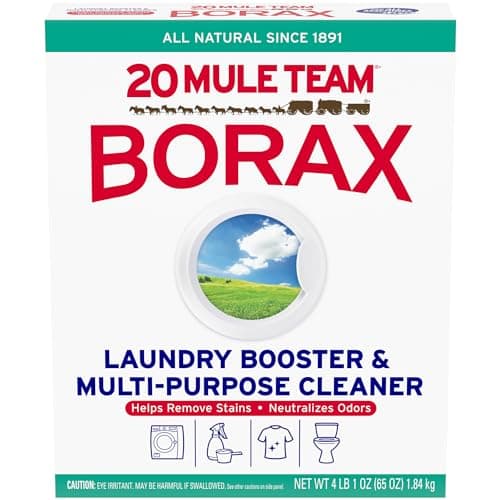
The classic box of 20 Mule Team Borax (sodium tetraborate). Mixed at about 1 cup per gallon of warm water it makes an alkaline (pH ~9.5) cleaning solution that lifts surface mold and leaves a residue mold struggles to regrow in. It is a household cleaner, not a registered pesticide, so it works as a surface cleaner and regrowth inhibitor on nonporous materials and will not penetrate the roots of mold embedded in porous drywall or bare wood.
Pros
- Cheap, widely stocked, and lasts for many batches at 1 cup per gallon
- Raises surface pH high enough to inhibit regrowth, and leaves a residue that keeps working
- Far gentler fumes than bleach — no chlorine gas risk if you keep it away from acids
Cons
- A cleaner and regrowth inhibitor, not an EPA-registered fungicide — it won't kill roots in porous material
- Wrong tool for soaked drywall, bare wood, or carpet (those need remediation, not a wipe-down)
- A mild irritant — keep off skin and eyes and out of reach of kids and pets
Where borax works — and where it fails
The whole decision is the same one that governs bleach and vinegar: is the surface porous?
| Surface | Verdict | Why |
|---|---|---|
| Tile, grout (sealed), glass, fiberglass | ✅ Use it | Nonporous; borax cleans and leaves a regrowth-inhibiting film. |
| Sealed concrete, finished wood (surface mold) | ✅ Use it | Sealed surface keeps the mold on top where borax can reach it. |
| Painted drywall, light surface spots | ⚠️ Spot-test | Works on surface mold only; spot-test for the paint, and stop if the spot keeps returning (that means roots). |
| Soaked drywall, bare/unsealed wood | ⛔ Wrong tool | Porous with embedded roots — borax can't reach them. |
| Carpet, upholstery, insulation | ⛔ Wrong tool | Mold-soaked soft goods get removed, not cleaned — see the EPA cleanup rule below. |
Borax vs bleach vs vinegar vs baking soda
The four pantry/laundry-aisle options aren't interchangeable. Pick by what you need to happen:
- Borax — alkaline cleaner and regrowth inhibitor. Best when you want the surface cleaned andsome lingering protection, and you'd rather not use bleach. Doesn't bleach out a deep stain.
- Baking soda— borax's gentler cousin. Also alkaline (around pH 8), even milder, safe around kids and pets. Fine for light surface mildew and deodorizing; weaker than borax on anything established.
- Vinegar— acidic instead of alkaline, and the usual recommendation for light surface mold on nonporous surfaces because it's cheap and low-fume. See does vinegar kill mold for where it actually holds up.
- Bleach— the fast oxidizer that whitens stains instantly, but it's mostly water and the same porous-surface trap applies. The full chemistry is in does bleach kill mold.
Hydrogen peroxide is the fifth option worth knowing — it does penetrate a little better than the others on a semi-porous surface. We break it down in hydrogen peroxide for mold.
When borax isn't enough
If the mold keeps coming back after a borax scrub, that's the surface telling you the roots are below it — or that the moisture source is still feeding the colony. Two moves:
For a surface you can save but want to stay protected, a no-bleach product that actively inhibits regrowth is the upgrade from a borax wipe-down. Concrobium works on a wider surface range and leaves an antimicrobial film, with none of borax's "it's really just a cleaner" limits:
Concrobium Mold Control (32 oz Spray, 2-Pack)
Concrobium
$34–40 (2 bottles)
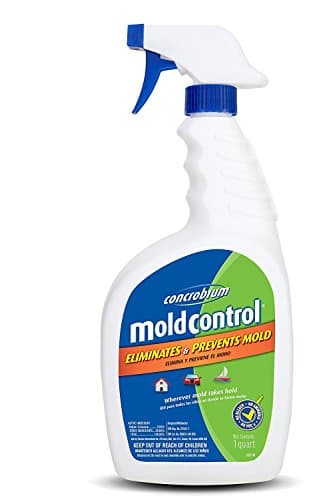
A patented, EPA-registered mold control solution that kills mold without bleach, ammonia, or VOCs. The tri-salt polymer formula crushes mold spores as it dries and leaves an invisible antimicrobial barrier to prevent regrowth. Safe for indoor use on virtually any surface.
Pros
- Non-toxic, no bleach or ammonia
- Kills mold and prevents regrowth
- Safe for use around children and pets
Cons
- Does not remove existing mold stains
- Takes longer to work than bleach-based products
- May require multiple applications for severe infestations
The broader mold killer spray and mold removal sprayguides cover the rest of the product field. But the real tell is scale: the EPA puts the DIY line at about 10 square feet of mold. Past that — or anywhere it's growing out of soaked drywall, framing, or insulation — the job is remediation, not any cleaner. The EPA's cleanup guidance says porous materials that stay moldy "may have to be thrown away," and our basement mold removal guide walks the full sequence.
Quick answers
Does borax kill black mold?It cleans and inhibits black mold on a hard, nonporous surface, but it doesn't penetrate the roots in porous material where black mold often sets up. On a tiled shower wall, borax is a fine cleaner; on soaked drywall, it's the wrong tool, and "black mold" there is a removal job.
Do you rinse borax off after cleaning mold?No — that's the one counterintuitive step. After you scrub and wipe up the loosened mold, leave the thin borax film to dry on the surface. The alkaline residue is what discourages regrowth. Rinse it away and you throw out half the benefit.
Is borax safer than bleach for mold?It has gentler fumes and no chlorine-gas risk, so in that sense yes — but it's still a mild irritant, and "safer" doesn't mean "stronger." Bleach blasts a stain faster; borax cleans and leaves lingering protection. Neither one fixes mold rooted in porous material.
Tried the borax mix and the mold came back within a couple of weeks? That's almost always a porous surface or an unfixed leak, not a weak batch — tell us the surface and whether it stays damp, and that points to whether the next step is a stronger product or actual remediation.
Frequently Asked Questions
Does borax kill black mold?
Do you rinse borax off after cleaning mold?
Is borax safer than bleach for mold?
What's the borax-to-water ratio for mold?
Related Articles
Does Vinegar Kill Mold? The Science, the Limits, and How to Use It Right
Hydrogen Peroxide for Mold: Does It Actually Work?
Does Bleach Kill Mold? The EPA Says No — Here's What Actually Works
Concrobium Mold Control Review: What It Does (and What It Won't)
Mold Killer Spray: Which Type Works on Which Surface
How to Get Rid of Mold in Your Basement (2026 Guide)
Dealing With Mold Right Now?
Our step-by-step mold removal guide walks you through testing your home, choosing the right products, and knowing when a job is too big for DIY.
Read the Removal Guide