Mold on Ceiling: Causes, Removal & When It Signals a Bigger Problem
Out of the Mold Editorial Team
Our guides are research-backed and cite EPA, CDC, and peer-reviewed sources. Product reviews are based on hands-on testing, not manufacturer claims. Read our editorial standards.
Affiliate Disclosure: Out of the Mold is reader-supported. As an Amazon Associate, we may earn a commission when you buy through links on this page — at no extra cost to you. Our picks are based on real testing and independent standards, not commissions.
Key Takeaways
- Ceiling mold is a moisture signal — a defined brown-ringed stain means a leak; diffuse spotting usually means condensation.
- Diagnose by room: bedroom = breathing condensation, kitchen = cooking steam, living room/closet = hidden leak.
- Popcorn ceilings in pre-mid-1980s homes may contain asbestos — don't scrub; test or mist-treat without abrasion.
- Clean → fix the moisture → dry → prime with a mold-killing primer → repaint. Painting over live mold fails every time.
- Call a pro for returning mold, a sagging ceiling, growth over ~10 sq ft, or multiple rooms affected.
Mold on a ceiling is almost always telling you where water is getting in or where warm, wet air is condensing on a cold surface — and the fix depends on which room you're standing in. A leak stain in a living-room ceiling, breathing condensation in a bedroom, and steam in a kitchen are three different problems with three different fixes. Clean the mold with an EPA-registered product, prime the stain with a mold-killing primer, and repaint — but only after you've found the moisture source, or it's back within weeks. One safety flag up front: if you have a textured "popcorn" ceiling in an older home, don't scrub ituntil you've ruled out asbestos.
Ceiling mold spooks people more than mold anywhere else, and reasonably so — it's over your head, the spores it releases rain down into the air you breathe, and it usually means water is coming from somewhere you can't see. But "mold on the ceiling" isn't one problem. Where it is tells you what caused it, and the cause decides the fix. (For the specific case of a bathroom ceiling, steam and exhaust fans deserve their own playbook — that's in our mold on bathroom ceiling guide. This page is for every other ceiling in the house.)
What Causes Mold on a Ceiling?
Every cause is a version of "water met a cold surface and stayed." Identify yours before you clean:
- A roof or plumbing leak above. Water intrusion from a roof, a bathroom on the floor above, or a leaking pipe in the ceiling cavity. The tell is a defined stain — often brown-ringed — that may spread or reappear after rain.
- Condensation on a cold ceiling. Warm, humid indoor air hits a cold ceiling plane and condenses. Most common in bedrooms and on exterior-wall corners, and it shows up as diffuse spotting rather than a single stain.
- Inadequate insulation.A poorly insulated ceiling has cold spots — often in a repeating pattern that traces the framing or truss above ("ghosting") — where condensation and mold form.
- Steam migration and HVAC. Kitchen and bathroom steam drifting to adjoining rooms, or a sweating duct above a drop ceiling, feeds mold on nearby ceilings.
Ceiling Mold by Room (Different Cause, Different Fix)
This is the part no general guide breaks down, and it's the part that actually saves you from cleaning the same spot twice:
- Bedroom ceiling. Usually condensation, not a leak. A sleeping adult releases roughly a pint or two of water vapor overnight through breathing and perspiration; a closed door and no ventilation trap it, and it condenses on a cold, often under-insulated ceiling — classically in the corner over the bed against an exterior wall. Fix: ventilate (crack a window or door, run a fan), check the attic insulation above that spot, and keep the room under 50% humidity.
- Kitchen ceiling. Cooking steam plus airborne grease gives mold a food source. Fix: a range hood vented to the exterior (not a recirculating one), used every time you cook.
- Basement ceiling. Rising humidity condensing on cold joists and the floor above. Fix: a dehumidifier holding the space under 50%.
- Living room, hallway, or closet ceiling.These rooms don't generate much moisture on their own, so mold here is a louder signal — usually a hidden roof leak, a plumbing leak from above, or an insulation gap. Fix: find and stop the water first; treat the mold second.
Brown Stain vs. Mold: How to Tell
Not every ceiling mark is mold, and the difference changes the job:
- Water stains are smooth, flat, often brown- or yellow-ringed, and have no smell. They mark where water was.
- Mold is textured — fuzzy, powdery, or spotted — and comes with a musty smell. It means water is or was recently present enough to grow something.
A quick check: dab a bit of diluted cleaner on a hidden edge. It lightens mold within a minute or two but won't change a dried water stain's color. Either way, both point to a moisture problem — the stain shows the path, the mold shows it's active.
Before You Scrub: The Popcorn-Ceiling Asbestos Warning
This matters enough to stop you. Textured "popcorn" ceilings in older homes may contain asbestos — its use in these products was banned by the EPA in the late 1970s, but existing inventory kept getting installed into the mid-1980s. Scrubbing, sanding, or scraping a textured ceiling from that era can release asbestos fibers, which is a far more serious hazard than the mold. If your home predates the mid-1980s and the ceiling is textured, do not disturb it — have it tested, or spray-treat the mold without abrasion (Concrobium can be misted on and left to dry) and call an abatement pro if the ceiling itself has to come down.
How to Remove Mold From a Ceiling (by Surface)
Assuming you've ruled out asbestos and found the moisture source, match the method to the surface. Gear up first — an N95-or-better respirator, goggles, and gloves, with plastic sheeting on the floor below, because working overhead rains debris straight down at your face.
3M 6391 Half Facepiece Reusable Respirator with P100 Filters
3M
$30–40
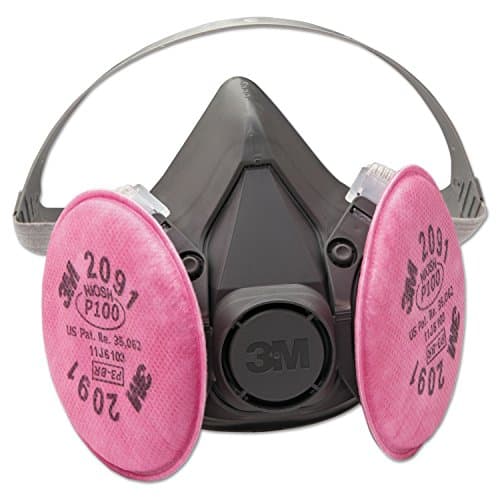
The step up from an N95 for serious mold work. The reusable half-facepiece takes P100 filters (99.97% particulate) and can pair with organic-vapor cartridges, so it handles both spores and the fumes from bleach, RMR-86, or paint strippers. This is what remediation pros wear for anything longer than a quick wipe-down.
Pros
- P100 filters block 99.97% of particles plus the bleach and ammonia fumes an N95 can't
- Reusable silicone facepiece seals better than a disposable mask
- Swappable cartridges — buy organic-vapor filters for chemical work
Cons
- Costs more upfront than a box of N95s
- Needs a clean-shaven face for a real seal, like any tight-fitting respirator
- Cartridges are a recurring cost once they clog
- Painted drywall or plaster.Mist with an EPA-registered cleaner, wait, wipe (don't soak the drywall), and dry completely. Then prime the stain and repaint (next step).
- Textured / popcorn (confirmed asbestos-free). Do not scrub — mist with Concrobium and let it dry. Abrasion destroys the texture and aerosolizes spores.
- Drop-ceiling tiles. Porous tiles that are visibly moldy are cheapest to replace ($2–$5 each); treat the metal grid with Concrobium.
- Mold on both sides of the drywall. If the mold has soaked through and is growing on the back of the board (common with a real leak), cleaning the face is pointless — that section has to be cut out and replaced.
Concrobium Mold Control
Concrobium
$10–15
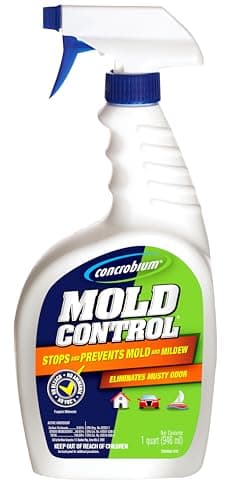
A patented, EPA-registered mold control solution that kills mold without bleach, ammonia, or VOCs. The tri-salt polymer formula crushes mold spores as it dries and leaves an invisible antimicrobial barrier to prevent regrowth. Safe for indoor use on virtually any surface.
Pros
- Non-toxic, no bleach or ammonia
- Kills mold and prevents regrowth
- Safe for use around children and pets
Cons
- Does not remove existing mold stains
- Takes longer to work than bleach-based products
- May require multiple applications for severe infestations
Prime and Repaint So the Stain Stays Gone
Once the ceiling is treated and fully dry, seal it. A mold-killing / stain- blocking primer locks down the discoloration so it doesn't bleed back through your paint, and a mildew-resistant topcoat resists regrowth. Skipping the primer is the most common reason a "cleaned" ceiling stain reappears in a month. Our mold-resistant paint guide covers the primer-then-topcoat system in full.
Zinsser Mold Killing Primer
Zinsser
$18–25
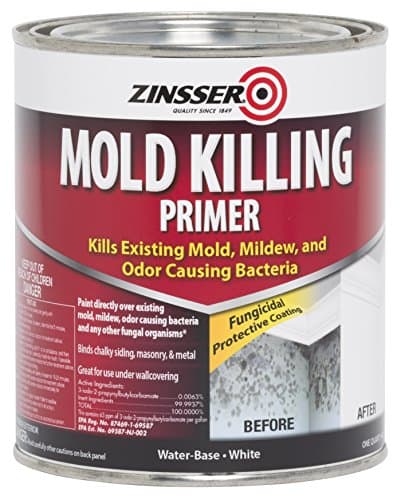
An EPA-registered fungicidal primer that kills existing mold, mildew, and odor-causing bacteria on contact. Creates a mold-resistant barrier on interior and exterior surfaces including drywall, wood, concrete, and masonry. Essential for mold remediation projects before applying topcoat paint.
Pros
- Kills existing mold on contact while priming
- EPA-registered fungicidal protective coating
- Bonds to all interior and exterior surfaces
Cons
- Strong odor during application, requires ventilation
- Water-based formula can raise grain on bare wood
- Must be topcoated with paint for lasting protection
Rust-Oleum Perma-White Mold & Mildew-Proof Interior Paint
Rust-Oleum
$25–35
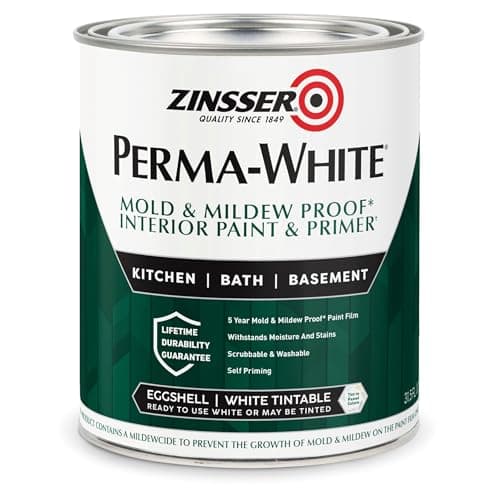
A self-priming, moisture-resistant interior paint with a 5-year mold and mildew-proof guarantee. The advanced acrylic formula resists moisture, dirt, and staining while providing a smooth satin finish. Ideal for high-humidity areas like bathrooms, basements, and kitchens.
Pros
- Self-priming formula saves time
- Guaranteed mold and mildew proof for 5 years
- Moisture-resistant, ideal for bathrooms and basements
Cons
- Limited to interior use only
- Available only in satin white finish
- Cannot be tinted to custom colors
When Ceiling Mold Signals a Bigger Problem
Sometimes the ceiling is the messenger for something structural. Call a professional — and hold off on cosmetic repair — if you see any of these:
- Mold that returns within weeks of a proper cleaning — the moisture source is unresolved.
- A ceiling that's sagging, soft, or spongy — water has compromised the drywall or plaster.
- Growth visible across the joists from the attic or floor above — the area is bigger than the patch you see.
- Multiple rooms affected — a systemic roof, ventilation, or insulation problem.
- Any moldy area over about 10 square feet — the EPA's DIY threshold.
A moisture meter helps you find the wet edge of a hidden leak before you open the ceiling, and confirms the area is dry before you prime.
Klein Tools ET140 Pinless Moisture Meter
Klein Tools
$45–60
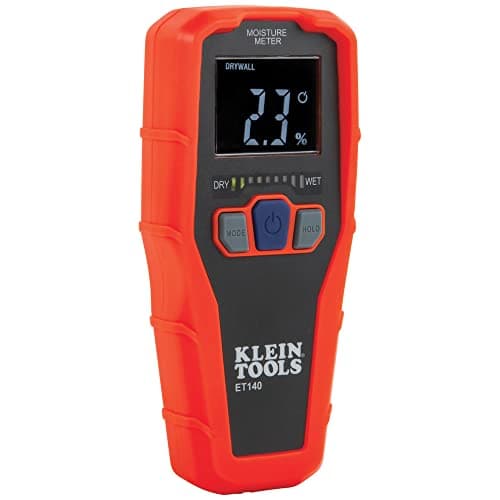
A professional-grade pinless moisture meter that detects hidden moisture in drywall, wood, and masonry without leaving holes. Uses electromagnetic sensor technology to measure moisture content up to 3/4 inch below the surface. Essential for identifying moisture problems before mold develops.
Pros
- Non-invasive pinless technology, no holes in walls
- Detects moisture up to 3/4 inch deep
- Visual and audible moisture alerts
Cons
- Less precise than pin-type meters on exact moisture percentage
- Battery not included
- Can give false readings on metallic or foil-backed surfaces
For what a professional job runs — attic-fed leaks, whole-ceiling removal, or suspected black mold — see our sourced mold removal cost benchmarks. If you're unsure what you're dealing with or anyone in the home is sensitive, a DIY mold test settles it before you spend on remediation.
Preventing Ceiling Mold by Room
- Bedroom: ventilate overnight, don't sleep with the door sealed and a humidifier running, and fix cold-ceiling insulation gaps.
- Kitchen: run an externally vented range hood every time you cook.
- Basement: a dehumidifier targeting under 50% humidity.
- Whole house: keep indoor humidity 30–50%, and inspect the roof each spring and after storms so a small leak never becomes a ceiling you have to replace.
Ceiling mold is a moisture story every time. Read which room it's in, fix the water, then clean, prime, and paint — in that order — and it stays gone.
Frequently Asked Questions
Is mold on the ceiling dangerous?
Does mold on the ceiling always mean there's a leak?
Can I just paint over mold on the ceiling?
Why is there mold on my bedroom ceiling?
Is it safe to scrub mold off a popcorn ceiling?
Related Articles
How to Remove Mold from Your Bathroom Ceiling (And Keep It Gone)
Mold-Resistant Paint: How It Works, When to Use It, and What It Can't Do
How to Get Rid of Black Mold: DIY Removal Guide
Concrobium Mold Control Review: What It Does (and What It Won't)
Hydrogen Peroxide for Mold: Does It Actually Work?
What Does Mold Smell Like? How to Identify Mold by Smell
Need Professional Mold Removal?
Get free, no-obligation quotes from licensed mold remediation specialists in your area.
Get Free Quotes