RMR-141 vs RMR-86: Disinfectant or Stain Remover — Which One You Actually Need
Out of the Mold Editorial Team
Our guides are research-backed and cite EPA, CDC, and peer-reviewed sources. Product reviews are based on hands-on testing, not manufacturer claims. Read our editorial standards.
Affiliate Disclosure: Out of the Mold is reader-supported. As an Amazon Associate, we may earn a commission when you buy through links on this page — at no extra cost to you. Our picks are based on independent standards, manufacturer specifications, and published research, not commissions.
Key Takeaways
- RMR-141 is an EPA-registered quaternary-ammonium disinfectant; RMR-86 is a bleach stain remover — opposite jobs, not two strengths of one product.
- Goal decides the bottle: erase black stains → RMR-86; sanitize/slow regrowth → RMR-141; full hard-surface job → both, in that order.
- RMR-141's kill claims need a full 10-minute wet contact time — wiping it off early is the #1 reason it 'doesn't work.'
- Both are hard, nonporous-surface products; neither penetrates porous drywall/wood or fixes the leak or humidity feeding the mold.
- Avoiding bleach? Concrobium is the no-bleach alternative — it won't erase deep stains but controls regrowth on porous surfaces.
RMR-141 is an EPA-registered disinfectant that kills mold, bacteria and viruses on hard surfaces; RMR-86 is a fast bleach-based stain remover that erases black mold marks. If you want to sanitize a surface or slow regrowth, that's RMR-141. If you want ugly black staining gone in seconds, that's RMR-86. A full hard-surface job usually uses both, in order: RMR-86 to clear the stain, then RMR-141 to disinfect.
People buy the wrong one constantly, because the two bottles look alike and the names don't explain the difference. They're not two strengths of the same product — they do opposite jobs. One distinction clears up about 90% of the confusion: RMR-86 is a bleach that removes staining, and RMR-141 is a quaternary-ammonium disinfectant that kills microorganisms. Sort out which of those you actually need and the purchase is obvious.
RMR-141 vs RMR-86 — pick in 10 seconds
| Your goal | Buy | Why |
|---|---|---|
| Remove black mold stains fast | RMR-86 | Bleach eraser — lifts set-in staining in seconds, no scrubbing |
| Kill/sanitize/slow regrowth on a hard surface | RMR-141 | EPA-registered disinfectant — kill claims on 140+ organisms |
| Do a full hard-surface mold job | Both, in order | RMR-86 destains, then RMR-141 disinfects what's left |
| Porous drywall/wood, or recurring mold | Neither alone | That's a moisture + remediation problem, not a spray |
Because a real job often needs both steps, the two are sold together — and that pairing is the honest way to buy them: erase the stain, then sanitize so it's less likely to return.
RMR-86 + RMR-141 Two-Step Mold Removal Bundle
RMR Brands
$50–60
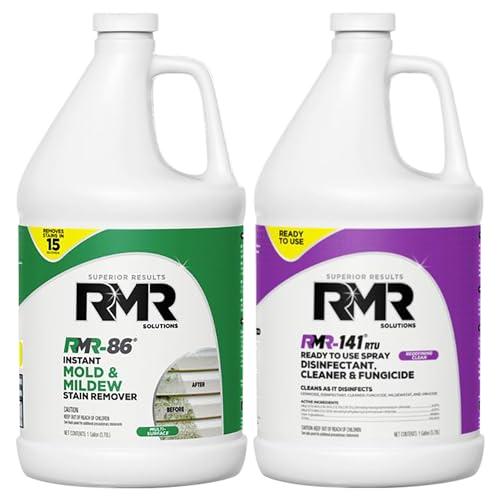
The RMR two-step pair. RMR-86 is a fast sodium-hypochlorite stain remover that lifts set-in black mold marks in seconds; RMR-141 is a quaternary-ammonium EPA-registered disinfectant that kills mold, bacteria and viruses on hard surfaces with a 10-minute contact time. Buying them together is the honest way to do a nonporous mold job — clear the staining first, then sanitize so it's less likely to come back.
Pros
- Covers both jobs in one buy: RMR-86 erases the black stain, RMR-141 disinfects the surface
- RMR-141 is an EPA-registered disinfectant with kill claims on 140+ organisms
- The honest two-step a real remediation job uses — destain, then sanitize
Cons
- Costs more than either bottle alone
- Both are hard-surface, nonporous products — neither fixes porous drywall or a moisture source
- RMR-86 is bleach-based (fumes, PPE); RMR-141 needs a 10-minute dwell to hit its kill claims
What RMR-141 actually is
RMR-141 is an EPA-registered disinfectant and fungicide built on a quaternary ammonium compound (a "quat") rather than bleach. Per RMR's product documentation, it carries kill claims against more than 140 microorganisms — mold, bacteria and viruses — and needs a 10-minute contact time on the surface to meet those claims. That dwell time is the part people skip: spray it, wipe it off in 30 seconds, and you haven't disinfected anything. Keep the surface visibly wet for the full ten minutes, then wipe. It's a hard, nonporous-surface product, and the kill claims are the reason it's the second step after a stain remover, not the first.
What RMR-86 actually is
RMR-86 is a sodium-hypochlorite (bleach) stain remover — the heavy hammer for deep-set black staining on tile, grout, and basement block. It lifts marks in as little as 15 seconds with no scrubbing, which RMR-141 won't do, because bleaching a stain and disinfecting a surface are different chemistry. Like any bleach, it's for hard, nonporous surfaces only, and it needs ventilation and PPE. The full breakdown is in our RMR-86 review, and the mechanics of why bleach lifts stains but doesn't fix porous mold are in does bleach kill mold.
RMR-86 Instant Mold & Mildew Stain Remover Spray (1 Gallon)
RMR Brands
$25–35
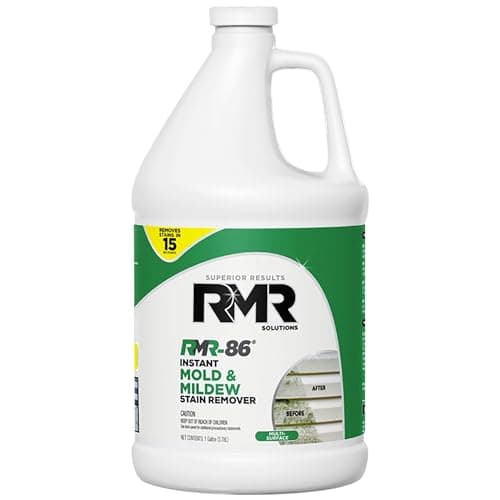
A fast-acting, commercial-strength mold stain remover that eliminates black mold stains on contact. The sodium hypochlorite formula penetrates porous surfaces to lift deep stains without scrubbing. Best used in well-ventilated areas with proper respiratory protection.
Pros
- Removes stains in as little as 15 seconds
- Works on wood, concrete, drywall, and tile
- No scrubbing required
Cons
- Strong bleach-based formula with harsh fumes
- Not safe for fabrics or colored surfaces
- Requires good ventilation and PPE
Do you actually need both?
For a visible black-mold mess on a hard surface — basement wall, shower grout, concrete — yes, and the order matters. RMR-86 first to clear the staining so you can see bare surface, then RMR-141 with its full 10-minute dwell to disinfect and knock back regrowth. That's the two-step the brand sells as a pair, and it's genuinely more effective than either bottle alone. But be clear about the boundary: neither spray penetrates porous drywall or bare wood, and neither one fixes the leak or humidity feeding the mold. If it keeps coming back, that's not a product failure — it's a moisture problem, and the fix is drying and remediation, walked through in our mold removal guide. For the broader spray category, the mold killer spray and mold removal spray rundowns compare the field.
Avoiding bleach entirely — kids, pets, a porous surface you can't hit with hypochlorite? Concrobium is the no-bleach alternative: it crushes spores as it dries and leaves an antimicrobial film instead of bleaching a stain. It won't erase deep staining the way RMR-86 does, but it's the gentler regrowth-control pick:
Concrobium Mold Control (32 oz Spray, 2-Pack)
Concrobium
$34–40 (2 bottles)
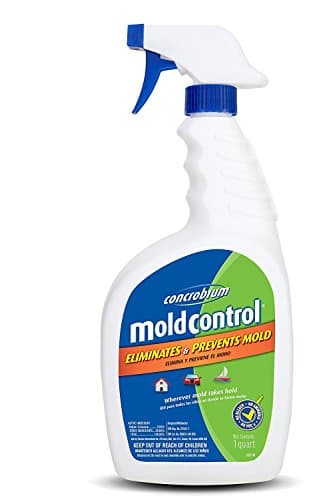
A patented, EPA-registered mold control solution that kills mold without bleach, ammonia, or VOCs. The tri-salt polymer formula crushes mold spores as it dries and leaves an invisible antimicrobial barrier to prevent regrowth. Safe for indoor use on virtually any surface.
Pros
- Non-toxic, no bleach or ammonia
- Kills mold and prevents regrowth
- Safe for use around children and pets
Cons
- Does not remove existing mold stains
- Takes longer to work than bleach-based products
- May require multiple applications for severe infestations
Using them safely
- Ventilate and wear PPE. RMR-86 is bleach — fumes, gloves, eye protection, a window open and a fan on. Treat RMR-141 with the same respect any disinfectant deserves.
- Never mix the bleach-based RMR-86 with anything. Bleach plus ammonia or acid makes toxic gas. One product per session, and rinse between steps if you're running the two-step.
- Respect the dwell times.RMR-141's kill claims depend on the full 10 minutes of wet contact; cutting that short is the most common reason it "doesn't work."
- Spot-test first on anything finished or colored, and keep both off fabric and porous materials.
Still not sure which bottle your job needs? Tell us what you're looking at — a black stain to erase, a surface to sanitize, or mold that keeps returning — and the answer is almost always one of those three, in that order.
Frequently Asked Questions
Does RMR-141 kill mold?
Is RMR-141 the same as RMR-86?
Can I use RMR-141 on drywall?
Related Articles
RMR-86 Review: Does It Really Remove Mold Stains?
Mold Killer Spray: Which Type Works on Which Surface
How to Remove Mold with Spray: The Complete 7-Step Process
Does Bleach Kill Mold? The EPA Says No — Here's What Actually Works
Best Mold Removal Products: What Works for Every Surface & Situation
Concrobium Mold Control Review: What It Does (and What It Won't)
Dealing With Mold Right Now?
Our step-by-step mold removal guide walks you through testing your home, choosing the right products, and knowing when a job is too big for DIY.
Read the Removal Guide