Tilex Mold & Mildew Remover: Where It Works, Where It Doesn't
Out of the Mold Editorial Team
Our guides are research-backed and cite EPA, CDC, and peer-reviewed sources. Product reviews are based on hands-on testing, not manufacturer claims. Read our editorial standards.
Affiliate Disclosure: Out of the Mold is reader-supported. As an Amazon Associate, we may earn a commission when you buy through links on this page — at no extra cost to you. Our picks are based on independent standards, manufacturer specifications, and published research, not commissions.
Key Takeaways
- Tilex is a chlorine-bleach spray: excellent on nonporous surfaces (tile, grout, glass, fiberglass), wrong tool on porous ones (drywall, wood).
- On porous materials it bleaches the stain but leaves the mold's roots — and the water in the spray feeds regrowth, so it comes back.
- Clorox's own directions say don't use it on wood or painted surfaces unless you'll repaint, and to avoid fabric, carpet, and paper.
- Never mix it with other cleaners — bleach plus ammonia or acid makes toxic gas. Ventilate and wear gloves and eye protection.
- Pick by job: Tilex for routine shower mildew, RMR-86 for deep-set stains on hard surfaces, Concrobium (no bleach) for porous surfaces and regrowth protection.
Clorox Plus Tilex Mold & Mildew Remover is a chlorine-bleach spray that works fast on nonporous surfaces — tile, grout, caulk, glass doors, fiberglass tubs. On porousmaterials (drywall, bare wood, grout that's lost its seal) it bleaches the stain white but leaves the mold's roots alive, so it grows back. That one distinction decides whether Tilex is the right $20 fix or a cover-up that wastes a weekend. Clorox's own directions even tell you not to use it "on wood or painted surfaces unless you plan to refinish or to repaint them" — the bottle is more honest than the shelf tag. Buy it for the shower. Don't reach for it when the mold is in the wall.
Search "tilex mold and mildew remover" and you get the Clorox page, three retailer listings, and a couple of YouTube demos — all of them selling, none of them telling you the one thing that actually matters: where this spray works and where it quietly fails. So here it is, written by people with nothing to sell you on the days Tilex is the wrong call.
The whole decision is one word: is the surface porous?
Tilex is sodium hypochlorite — chlorine bleach — in a thickened, cling-to-vertical-tile formula. Clorox's claim is that it "Kills 99.9% of mold & mildew" and lifts the stain "before your eyes." Both are true — on a surface the bleach can't soak into.
On glazed tile, glass, or fiberglass, the mold is sitting on top of a sealed surface. The bleach hits it, oxidizes the pigment, kills the surface growth, and the black ring in your grout line goes white in a minute or two. Perfect use case.
On drywall, bare wood, or unsealed grout, the mold isn't on top — it's inthe material, with roots (hyphae) threaded down into it. Here's the catch that no PDP mentions: bleach is mostly water, and the chlorine is the part that bleaches color. When it lands on a porous surface the water carries the chlorine down a little, but the chlorine burns off fast and the water stays behind — feeding the exact mold you were trying to kill. You see white. The colony sees lunch. In a week or two it's back. This is the same chemistry we lay out in detail in does bleach kill mold, and it's why the EPA, in its mold cleanup guidance, says porous materials that stay moldy "may have to be thrown away" rather than cleaned.
Where Tilex earns its place — and where it lies
Clorox lists the surfaces it's rated for, and (buried in the directions) the ones to keep it off. Here's the honest green / use caution / stop version:
| Surface | Verdict | Why |
|---|---|---|
| Glazed ceramic tile & sealed grout | ✅ Use it | Nonporous; stain lifts without scrubbing. |
| Fiberglass tubs, acrylic surrounds, sinks | ✅ Use it | On Clorox's rated-surface list. |
| Glass shower doors, vinyl curtains | ✅ Use it | Rinse vinyl right after, per the label. |
| Silicone/acrylic caulk bead | ✅ Use it | Works if the mold is surface-level; deeply embedded caulk is cheaper to cut out and re-run. |
| Painted walls / ceilings | ⚠️ Spot-test | Clorox says don't, unless you'll repaint — it can lift paint and only stains the surface, not the mold inside. |
| Natural stone, old porcelain, metal fixtures | ⚠️ Caution | Can etch stone and leave a temporary "rust" stain on metal and old porcelain — rinse fast. |
| Drywall, bare/unsealed wood, grout past its seal | ⛔ Wrong tool | Porous — bleaches the face, mold regrows from the roots. Remediate instead. |
| Fabric, carpet, paper, upholstery | ⛔ Wrong tool | Clorox says avoid contact; bleach damages these and won't remediate soaked material. |
Using it without wrecking the surface (or your lungs)
Bleach is forgiving right up until it isn't. The parts the bottle rushes past:
- Ventilate, hard. Window open, fan on, door open. The thickened formula that makes it cling to vertical tile also makes the chlorine smell linger in a small bathroom.
- Never mix it with anything.Clorox's own warning is blunt: "Dangerous fumes form when mixed with other products." Bleach + an ammonia glass cleaner, or + an acidic lime/rust remover, makes toxic gas. One product per cleaning session.
- Gloves and eye protection. The SDS flags it for skin and serious eye irritation. A splash off glossy tile into an eye is the most common way people get hurt with this stuff.
- Rinse the touchy surfaces fast. Rubber, plastic, vinyl, metal, and old porcelain all want an immediate rinse — leave it dwelling on metal and you get that temporary rust mark.
- Let it dwell, don't scrub immediately. The spray does the work; give a stained grout line a few minutes before you decide it needs a second pass.
Used that way on the right surface, it's genuinely one of the fastest bathroom-mildew fixes you can buy:
Clorox Plus Tilex Mold & Mildew Remover (32 oz, 3-Pack)
Clorox
$18–22 (32 oz, 3-pack)
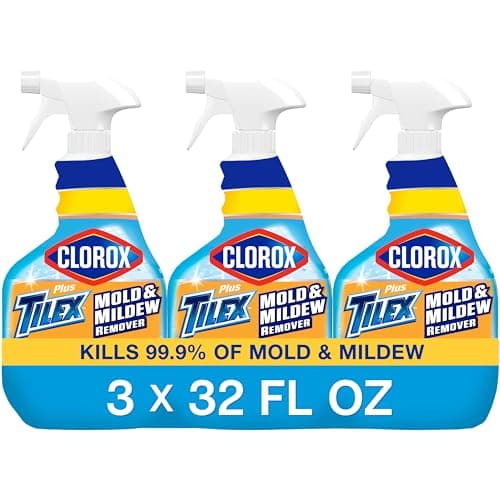
Clorox Plus Tilex is a sodium hypochlorite (chlorine bleach) spray built for nonporous bathroom surfaces. On grout, glazed tile, caulk, glass, and fiberglass it bleaches mildew stains fast without scrubbing. It is not a remediation product: on drywall, bare wood, or any porous material it whitens what you can see while the mold keeps growing underneath, and Clorox's own directions warn against wood, painted, fabric, carpet, and paper surfaces.
Pros
- Sodium hypochlorite formula lifts mildew stains from grout and caulk with no scrubbing
- Clorox rates it for grout, glazed tile, tubs, fiberglass, glass doors, and sinks
- Cheap, ubiquitous, and fast on nonporous bathroom surfaces
Cons
- Bleach — Clorox's own directions say not to use it on wood or painted surfaces unless you're refinishing, and to avoid fabric, carpet, and paper
- Removes the stain, not the moisture problem; on porous materials the mold returns
- Fumes: never mix with other cleaners, and ventilate
When Tilex is the wrong bottle entirely
If the mold is on drywall, a bare-wood windowsill, around a leaking supply line, or anywhere it's growing out of the material rather than sitting on a sealed face, Tilex is the wrong purchase. No bleach spray fixes that. The job is remediation: find and stop the moisture, then remove or treat the material. Our mold removal guidewalks the full sequence, and the EPA's ~10-square-foot rule in how to get rid of black mold tells you when it's a DIY job versus a pro one.
For porous surfaces you can save, the smarter chemistry is a no-bleach product that keeps working after it dries. Concrobium crushes spores as it dries and leaves an antimicrobial film instead of just whitening the stain — the opposite trade-off from Tilex:
Concrobium Mold Control (32 oz Spray, 2-Pack)
Concrobium
$34–40 (2 bottles)
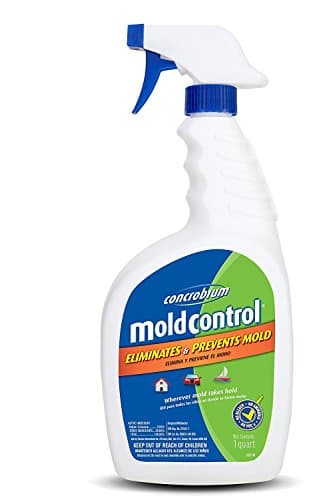
A patented, EPA-registered mold control solution that kills mold without bleach, ammonia, or VOCs. The tri-salt polymer formula crushes mold spores as it dries and leaves an invisible antimicrobial barrier to prevent regrowth. Safe for indoor use on virtually any surface.
Pros
- Non-toxic, no bleach or ammonia
- Kills mold and prevents regrowth
- Safe for use around children and pets
Cons
- Does not remove existing mold stains
- Takes longer to work than bleach-based products
- May require multiple applications for severe infestations
See our full Concrobium review for where it fits, and the broader mold removal spray and mold killer spray rundowns for the rest of the field.
Tilex vs. RMR-86 vs. Concrobium — picking by the job
These three get cross-shopped constantly and they do genuinely different things. Match the bottle to the job, not the brand:
- Tilex— cheapest, fastest, bleach. Best for routine mildew on nonporous bathroom surfaces. It's a maintenance cleaner more than a remediation tool.
- RMR-86 — the strongest stain eraser of the three, also bleach-based, built for deep-set black staining on hard surfaces like basement block and grout. Overkill for a little shower mildew; exactly right for a stained concrete wall.
- Concrobium— no bleach, no fumes, works on a far wider surface range, and leaves regrowth protection. Slower, and it won't bleach out a set-in stain the way the other two do.
For the heavy stain-removal end of that spectrum, RMR-86 is the one to reach for:
RMR-86 Instant Mold & Mildew Stain Remover Spray (1 Gallon)
RMR Brands
$25–35
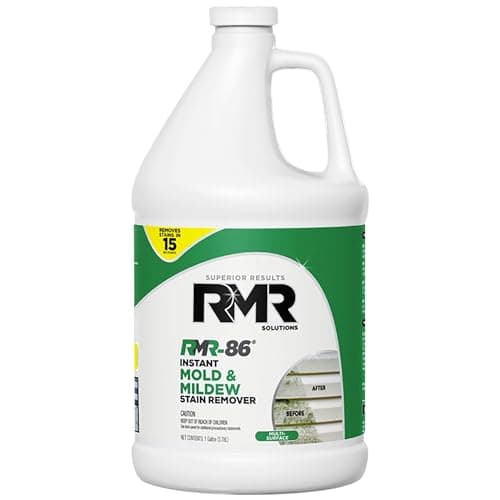
A fast-acting, commercial-strength mold stain remover that eliminates black mold stains on contact. The sodium hypochlorite formula penetrates porous surfaces to lift deep stains without scrubbing. Best used in well-ventilated areas with proper respiratory protection.
Pros
- Removes stains in as little as 15 seconds
- Works on wood, concrete, drywall, and tile
- No scrubbing required
Cons
- Strong bleach-based formula with harsh fumes
- Not safe for fabrics or colored surfaces
- Requires good ventilation and PPE
Here's the quick way to decide at the shelf. Routine shower and tile mildew on a sealed surface? Tilex. A stubborn black stain burned into grout or basement block that Tilex won't fully lift? RMR-86. Porous surface, a household with kids or pets, or you want the mold to stay gone? Concrobium. And the most common mistake we see — reaching for any spray at all when the real problem is the leak behind the wall. Fix the water first, every time; the one page where Tilex shines most is the shower, because that's a sealed, nonporous surface you can keep dry.
One honest ask: if you're not sure your grout is still sealed, drip a little water on it. If it beads, Tilex will work. If it darkens and soaks in, that grout is porous now — treat it as a remediation surface, not a bleach-and-done one.
Frequently Asked Questions
Does Tilex kill black mold?
Can I use Tilex on drywall?
Is Tilex safe to breathe?
Tilex vs Concrobium — which should I buy?
Related Articles
Best Mold Removal Products: What Works for Every Surface & Situation
Does Bleach Kill Mold? The EPA Says No — Here's What Actually Works
Concrobium Mold Control Review: What It Does (and What It Won't)
Mold Killer Spray: Which Type Works on Which Surface
How to Remove Mold from Your Shower (Step-by-Step)
RMR-86 Review: Does It Really Remove Mold Stains?
Dealing With Mold Right Now?
Our step-by-step mold removal guide walks you through testing your home, choosing the right products, and knowing when a job is too big for DIY.
Read the Removal Guide