Mold After Coastal Flooding: What to Do in the First 48 Hours
Out of the Mold Editorial Team
Our guides are research-backed and cite EPA, CDC, and peer-reviewed sources. Product reviews are based on hands-on testing, not manufacturer claims. Read our editorial standards.
Affiliate Disclosure: Out of the Mold is reader-supported. As an Amazon Associate, we may earn a commission when you buy through links on this page — at no extra cost to you. Our picks are based on independent standards, manufacturer specifications, and published research, not commissions.
Key Takeaways
- The EPA rule is 24–48 hours: dry water-damaged areas and items inside that window or mold starts growing.
- King tides hit the California coast November 24–26 and South Florida November 22–29, 2026 — a 'sunny-day' flood, not a storm, but the mold clock is identical.
- Saltwater is the twist: salt is hygroscopic, so it keeps pulling moisture back into drywall and insulation. Rinse salt-contaminated surfaces with fresh water before drying.
- Porous, salt-soaked materials (carpet, pad, insulation, soaked drywall, upholstery) usually get thrown away; hard sealed surfaces can be rinsed and kept.
- A 50-pint dehumidifier and a pinless moisture meter are the two tools that beat the window — dry to a measured number, not to the touch.
If a king tide pushes water into your home, the clock that matters is 24 to 48 hours. The EPA's rule is blunt: dry water-damaged areas and items within that window or mold starts growing. Coastal tidal flooding adds one twist a storm flood doesn't — it's saltwater, and salt left in a wall keeps pulling moisture back, so you have to rinse before you dry. This week's king tides hit the California coast November 24–26 and South Florida's Atlantic coast November 22–29, 2026. Here's exactly what to do in the window — and why.
A "king tide" isn't a storm. It's the highest tide of the season — the sun, a full moon, and the coastline lining up to pull the ocean a foot or two above a normal high — and this fall the water is already running above what the tide tables predict, with warm El Niño seas on top. That's why low-lying streets in Miami Beach, Fort Lauderdale, and the Bay Area flood on a clear, blue-sky afternoon. For a homeowner, the mold math is the same whether the water came from a hurricane or a sunny-day tide: once salt water is sitting in your baseboards, you have a day, maybe two, before the problem changes from "wet" to "moldy."
The 24–48 hour clock, and what to triage first
The number to tattoo on your brain comes straight from the EPA: "dry water-damaged areas and items within 24–48 hours to prevent mold growth." Mold spores are already in the air and the dust in every house; they don't need to arrive, they just need water and time. Give them a wet carpet pad for two days and they take it. So the entire game after a flood is winning a race against that window.
Triage in this order the moment it's safe to go back in:
- Get the standing water out.Pump, wet-vac, or mop — whatever moves it fastest. Nothing dries while it's sitting in water.
- Pull the soft stuff out of the water's path. Wet rugs, cushions, cardboard boxes, and anything stored on the floor. Soaked porous items are both the first to mold and the hardest to save.
- Open it up and move air. Windows, interior doors, cabinet doors, fans pointed at the wet surfaces. Air movement is half of drying.
- Start pulling moisture out of the air. This is where a dehumidifier earns its keep — more on the gear below.
Why saltwater flooding is its own problem
Here's the part the generic "mold after a flood" articles miss, because most of them are written for freshwater. Tidal flooding is salt water, and salt is hygroscopic — it grabs moisture out of the air. Once salt soaks into gypsum board, insulation, or the underside of a subfloor, it holds water and pulls more back. A wall can read dry on a meter one afternoon and climb again a week later when the humidity rises. Flood-restoration guidance on salt-water intrusion is explicit that affected materials have to be flushed with fresh water to dilute the salt before drying — otherwise the drying never really finishes.
Practically, that means for surfaces that held tidal water you rinse first, then dry — you don't just run fans on salty drywall and call it done. It also means you should be more willing to cut out and replace soaked porous material than you would be after a clean-water pipe leak, because salt-laden gypsum and insulation fight you the whole way.
What you can dry, and what you throw away
The hard calls are all about porous versus non-porous. Hard, sealed surfaces — tile, glass, finished metal, solid sealed wood — you can clean and dry and keep. Soft, porous materials that drank up salt water and can't be fully dried inside the window are usually a loss. The EPA is direct about this: "absorbent or porous materials, such as ceiling tiles and carpet, may have to be thrown away if they become moldy."
| Material | After tidal flooding |
|---|---|
| Carpet & pad | Toss. Salt-soaked pad can't be dried in time; it's the classic flood write-off. |
| Drywall (soaked low on the wall) | Cut out the wet section (the "flood cut") — salt stays in the gypsum. |
| Fiberglass insulation in a wet wall | Remove. Holds water and salt; dries far too slowly. |
| Tile, glass, sealed metal, solid hardwood | Rinse, clean, dry — keepable if you get to it fast. |
| Upholstered furniture, mattresses | Usually toss after salt-water saturation; porous and slow to dry. |
One honest boundary on doing it yourself: the EPA's DIY line is about 10 square feet of mold — "if the moldy area is less than about 10 square feet … in most cases, you can handle the job yourself." A whole flooded ground floor is past that. Our basement mold removal and how to get rid of black mold guides walk the DIY-versus-pro cutoff, and the broader hurricane & flood mold guide covers the insurance side if the water got into the structure.
The gear that actually moves the needle in the window
You can't out-mop a flood with towels. Two tools do the real work of beating the 48-hour clock: something to pull pints of water out of the air, and something to tell you when a surface is genuinely dry instead of just dry to the touch.
A 50-pint dehumidifier is the workhorse. Run it in the flooded room with the doors shut once you've rinsed surfaces, and it holds the air dry enough that walls and subfloor can actually give up their water — the single most useful thing you can buy the day after a flood:
hOmeLabs 50-Pint Energy Star Dehumidifier
hOmeLabs
$220–260
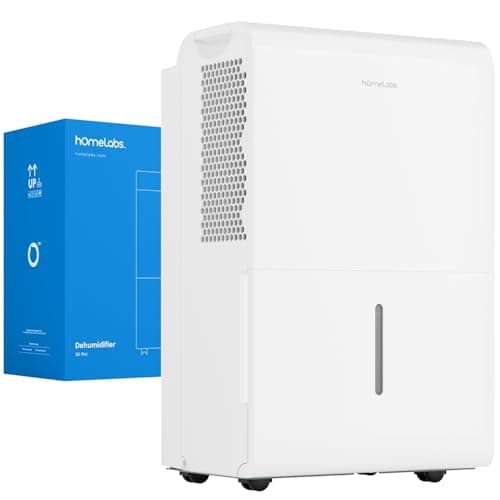
The best-selling 50-pint dehumidifier on Amazon and our top overall pick for mold prevention. Set your target humidity (aim for 45-50%) and the built-in humidistat cycles the compressor to hold it. A rear hose port allows continuous gravity draining into a floor drain, and turbo mode speeds up moisture removal after water events. Energy Star certified to keep 24/7 running costs reasonable.
Pros
- 50-pint capacity handles basements and large rooms up to 4,500 sq ft
- Built-in humidistat holds your target humidity automatically
- Continuous-drain hose port for set-and-forget operation
Cons
- No built-in pump — gravity drain or bucket emptying only
- 1.6-gallon bucket fills every 6-8 hours in very damp spaces
- Fan is audible on turbo mode
The second tool is the one that saves you from re-flooding your own repair: a pinless moisture meter. "Feels dry" is exactly how salt-contaminated drywall fools people — the surface dries while the core stays wet. A meter reads the moisture insidethe material, so you know whether it's safe to close the wall back up or whether it's still climbing:
Klein Tools ET140 Pinless Moisture Meter
Klein Tools
$45–60
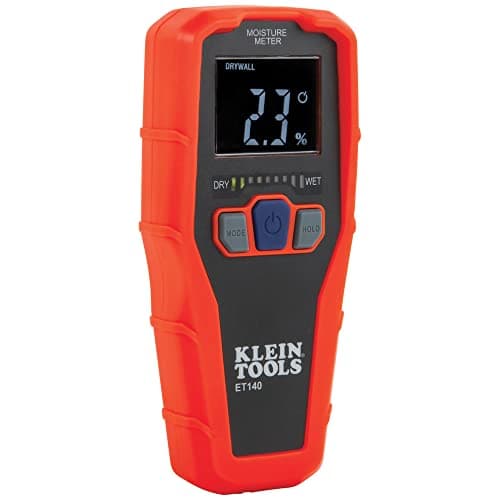
A professional-grade pinless moisture meter that detects hidden moisture in drywall, wood, and masonry without leaving holes. Uses electromagnetic sensor technology to measure moisture content up to 3/4 inch below the surface. Essential for identifying moisture problems before mold develops.
Pros
- Non-invasive pinless technology, no holes in walls
- Detects moisture up to 3/4 inch deep
- Visual and audible moisture alerts
Cons
- Less precise than pin-type meters on exact moisture percentage
- Battery not included
- Can give false readings on metallic or foil-backed surfaces
If the water pushed back out and the real job now is a persistent damp and a musty smell rather than standing water, a standing dehumidifier for mold is the long-term fix, and a lingering musty smell is the tell that something is still wet behind a surface.
The next king tide is already on the calendar
If you're on a street that floods, the best version of this whole article is the one you never have to use. The California Coastal Commission has the next round of king tides pegged for December 23–25, 2026, with more in January — and these dates come back every winter. Between now and then: know where the water comes in, keep sandbags or a flood barrier where you can reach them, get anything you care about up off the floor of a ground-level room or garage, and have the fans and dehumidifier staged before the tide, not ordered the morning after.
Weathered a king tide this week? Tell us what your moisture meter read a few days later — the surprise for most people is how long a salt-soaked wall keeps climbing after it "looks" dry. That reading is the difference between a wall you dried and a wall that's quietly growing mold behind fresh paint.
Frequently Asked Questions
How long after a flood before mold grows?
Is saltwater flooding worse for mold than freshwater?
What do you throw away after a saltwater flood?
When are the king tides around Thanksgiving 2026?
Related Articles
Hurricane Season 2026: How to Prevent and Handle Mold After a Storm
Best Dehumidifiers for Mold Prevention & Removal (2026)
How to Get Rid of Mold in Your Basement (2026 Guide)
How to Get Rid of Black Mold: DIY Removal Guide
Musty Smell in House? Here's How to Find & Fix the Source
Best Mold Removal Products: What Works for Every Surface & Situation
Dealing With Mold Right Now?
Our step-by-step mold removal guide walks you through testing your home, choosing the right products, and knowing when a job is too big for DIY.
Read the Removal Guide