Mold Fogger for Car: What It Kills, What It Won't, and How to Do It Safely
Out of the Mold Editorial Team
Our guides are research-backed and cite EPA, CDC, and peer-reviewed sources. Product reviews are based on hands-on testing, not manufacturer claims. Read our editorial standards.
Affiliate Disclosure: Out of the Mold is reader-supported. As an Amazon Associate, we may earn a commission when you buy through links on this page — at no extra cost to you. Our picks are based on independent standards, manufacturer specifications, and published research, not commissions.
Key Takeaways
- A fogger kills mold and odor it reaches but does nothing about the water that grew it — fog last, not first.
- Car mold almost always traces to the AC evaporator, a clogged condensate drain, a dirty cabin air filter, or a soaked carpet.
- A room-rated mold bomb is overkill in a cabin; follow the smallest-space dose, or use a ULV fogger you can aim into the vents.
- Treat the vents: run the fan on recirculate so the mist gets pulled over the evaporator where the colony lives.
- Ventilate completely before driving — a sealed cabin concentrates fogger residue.
A fogger kills the mold and spores it reaches and knocks out the musty smell — but it does nothing about the water that grew the mold, so if you fog without finding the wet source, it comes right back. In a car the water is almost always a clogged AC drain, a dirty cabin air filter, a leaking door or windshield seal, or carpet that got soaked and never dried. Do it in this order: find and dry the source, pull out and clean (or toss) anything soaked, replace the cabin air filter, thenfog the cabin and the vents to treat what's left. And ventilate fully before you drive it — you don't want to breathe fogger residue in a sealed box at 70 mph.
"Will a mold bomb fix my car?" is the wrong question, and it's the one most detailing posts answer badly. A fogger is a finishing tool, not a cure. It's genuinely good at what it does — pushing a fine antimicrobial mist into every vent, seam, and fiber a spray can't reach, and killing the smell — but a car that grows mold is a car with a water problem, and fog doesn't fix plumbing. Get the order wrong and you'll fog a beautiful-smelling cabin that reeks again in two weeks.
Where car mold actually comes from (it's the AC, usually)
Before you buy anything, understand the machine you're fighting, because the fix depends entirely on the source. In a car cabin, mold and the musty "mildew" smell almost always trace to one of four wet spots:
- The AC evaporator.This is the big one. The evaporator core is a cold, dark, perpetually damp coil buried in the dashboard — a near-perfect mold habitat. Every time you run the AC it condenses water on the coil; if that water doesn't drain, mold and bacteria colonize it, and the blower pushes the smell straight out your vents. That "dirty-sock" blast when you first turn on the AC is this.
- A clogged condensate drain.That evaporator water is supposed to run out a tube under the car. Leaves and grime clog the tube, water backs up into the HVAC box (or onto your floor pan), and now it's a reservoir. A wet front carpet with no obvious spill is the classic sign.
- The cabin air filter. A filter packed with damp dust, pollen, and leaves traps moisture and grows mold of its own, and all your fresh air is pulled through it. A $15 filter is often the entire fix.
- A leak soaking the carpet or foam.A failed door or windshield seal, a plugged sunroof drain, or a spilled drink left in the floor pan soaks the carpet and the padding underneath. Mold lives in the foam you can't see.
(All four mechanisms are well documented across auto-service write-ups on musty car AC — see, for example, AutoZone's guide to a musty car AC, retrieved October 2026.) The lesson: fogging the cabin without clearing the AC drain or swapping the filter treats the air and ignores the factory that's making the smell. That's why car mold "keeps coming back" — you keep treating the symptom.
Mold bomb vs. ULV fogger in a cabin
Two tools get called "foggers," and the difference matters more in a car than in a house because the volume is so tiny.
A mold bombis a set-and-leave aerosol: you activate the can, shut the doors, and it empties itself into the sealed cabin while you walk away. It's the easiest option and it reaches everywhere the air goes. The one thing to watch is dose — these cans are rated by room volume, and a car interior is a fraction of a room. A can rated for a 300-square-foot bedroom is overkill in a cabin; follow the label's smallest-space instructions, crack a window for the activation if the label allows, and don't stack two cans "to be sure."
A ULV (ultra-low-volume) cold foggeris a handheld machine you fill with a mold-control solution and aim. It's reusable, you control exactly how much goes in, and you can direct it into the vents and footwells — which is the point in a car, since you want the mist in the HVAC ducting where the mold lives. It costs more up front and you supply your own solution, but if you've got more than one car, a damp garage, or you expect to do this again, it's the better buy. Our hands-on fogger review walks through the bomb-vs-machine trade-off in detail, and the main mold fogger guide ranks both types.
BioCide Mold Bomb Fogger
BioCide Labs
$50–65
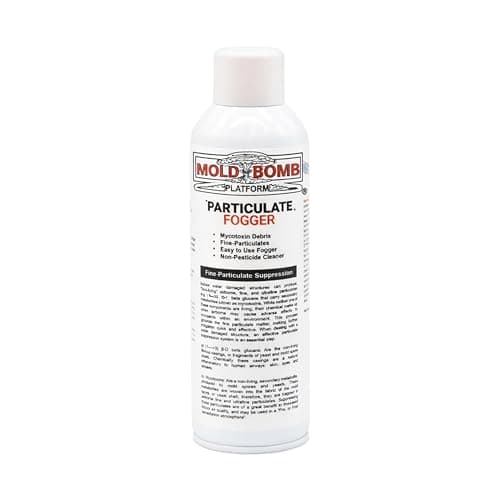
A single-use aerosol fogger that releases an EPA-registered antimicrobial mist to kill mold, mildew, and odor-causing bacteria. Simply place the canister in the center of the room, press the button, and leave the area for 2-4 hours. Treats up to 400 sq ft per can.
Pros
- One-button aerosol fogger, no equipment needed
- Treats up to 400 sq ft per can
- EPA-registered antimicrobial
Cons
- Must vacate area during and after treatment
- Chemical odor lingers for several hours
- Single-use canister is not refillable
Electric ULV Cold Fogger Machine (1.2 Gallon)
Generic
$80–130
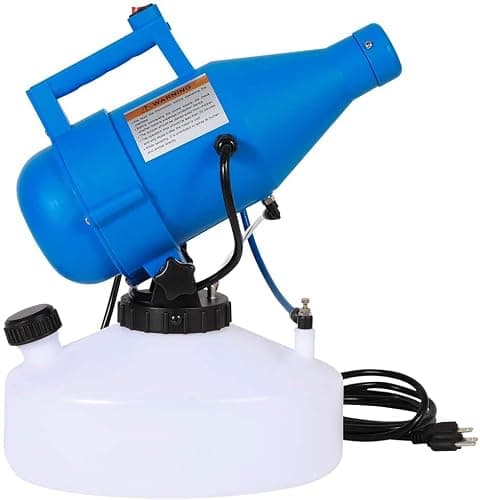
A refillable electric ULV (ultra-low-volume) cold fogger — the machine that turns a jug of Concrobium into a whole-room wet fog. Adjustable droplet size lets you dial in the fine micron output that reaches cracks and cavities a spray bottle can't. For anyone treating more than one room, owning one beats buying stacks of single-use aerosol bombs.
Pros
- Adjustable micron output handles Concrobium's viscosity at full strength
- 1.2-gallon tank fogs multiple rooms without refilling
- Reusable — pays for itself against single-use aerosol bombs after ~2 jobs
Cons
- Generic-brand build; not commercial-grade for daily use
- Corded, so you're tethered to an outlet and extension cord
- Needs a rinse-through after each use or the nozzle clogs
Fogging a car safely, step by step
- Fix and dry the source first. Clear the AC condensate drain (a clogged tube often clears with compressed air from below), replace the cabin air filter, and track down any leak. If the carpet is wet, pull it up and dry it — a fogger will not dry soaked padding.
- Remove visible growth and everything loose.Take out floor mats, food, and anything porous that's already moldy. Scrub visible mold off hard surfaces first; the fogger treats what's left, it isn't a substitute for wiping down a furry seat. A spray handles the spot-cleaning — see our mold killer spray picks.
- Nobody and nothing living in the car. No people, pets, or plants during the fog and dwell.
- Treat the vents. This is the step that makes it worth doing in a car: start the engine, set the AC to recirculate, fan on high, and introduce the fog (or run the bomb) near the cabin intake so the mist gets pulled through the ducting and over the evaporator — where the actual colony is. Then switch to fresh-air intake for a second pass if the product allows.
- Dwell, then ventilate hard. Let it sit for the full label dwell time with the doors shut, then open everything — all doors, windows, run the fan on fresh air — and let it air out completely before anyone sits in it. Do not drive it until the smell of the product is gone; a sealed cabin concentrates whatever you just sprayed.
Prevention is a habit, not a product: after the AC has been running, cut it but leave the blower on fresh air for the last few minutes of a drive to dry the evaporator, and crack the windows when parked in the heat. A refillable moisture absorber under a seat helps a car that sits a lot or lives in a humid climate.
DampRid Hanging Moisture Absorber (3-Pack)
DampRid
$12–18
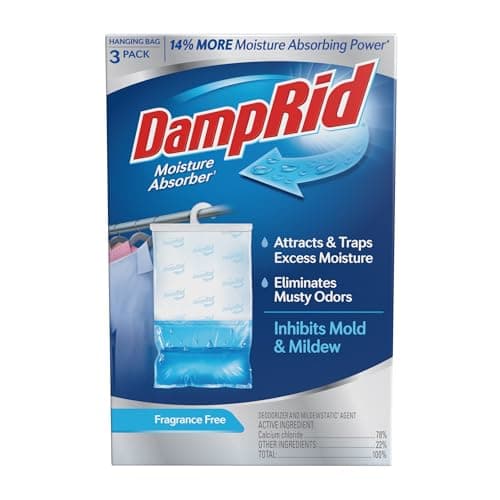
Passive calcium-chloride moisture absorbers that hang from a closet rod and pull humidity out of enclosed spaces without power. They won't fix a damp basement, but inside a closet, wardrobe, or stored vehicle they keep trapped air dry enough to stop mildew on clothes, leather, and linens. Each bag lasts roughly 45-60 days before the crystals fully dissolve.
Pros
- No electricity needed — works anywhere you can hang it
- Calcium chloride crystals absorb moisture for up to 60 days each
- Fragrance-free version won't add perfume to enclosed spaces
Cons
- Cannot meaningfully lower whole-room humidity
- Bags must be replaced once the crystals dissolve
- Collected brine must be handled carefully when disposing
When a fogger is the wrong tool
Fogging is for treating residual spores and odor on surfaces and in ducting after the water is gone. It is the wrong call when:
- The carpet or seat foam is soaked.Standing water and saturated padding need extraction and drying (or replacement), not mist on top. Fog a wet floor pan and you've treated the surface of a sponge.
- It's a flood or sewage car. A vehicle that took floodwater is a tear-down-and-dry job — carpet out, padding out, dried to the metal — covered in our full car mold removal guide.
- You haven't found the leak. No amount of fog beats an active water source. Find it first or skip the fogger entirely.
Done in the right order, a fogger is the satisfying last step that actually clears a musty cabin for good. Done first, it's an air-freshener with a dwell time. The whole game is the water, not the mist — if you only remember one thing, remember that the fog comes last.
Frequently Asked Questions
Can I fog my own car for mold?
Is it safe to sit in a car after fogging?
Mold bomb or spray for a car?
Why does car mold keep coming back after I fog it?
Related Articles
Best Mold Fogger & Mold Bomb: Machines, Solutions & Safety Guide (2026)
Mold Bomb Fogger Review: Does It Actually Work? (2026)
How to Remove Mold from Your Car Interior
Mold Killer Spray: Which Type Works on Which Surface
Musty Smell in House? Here's How to Find & Fix the Source
Fogging With Concrobium: Machine Setup, Coverage & Step-by-Step
Dealing With Mold Right Now?
Our step-by-step mold removal guide walks you through testing your home, choosing the right products, and knowing when a job is too big for DIY.
Read the Removal Guide